




Antique Ethnic Jewellery
Antique ethnic jewellery brings together wearable history from nomadic and regional traditions, offering tactile connections to past cultures through distinct silverwork and symbolic stones.
Antique Ethnic Jewellery
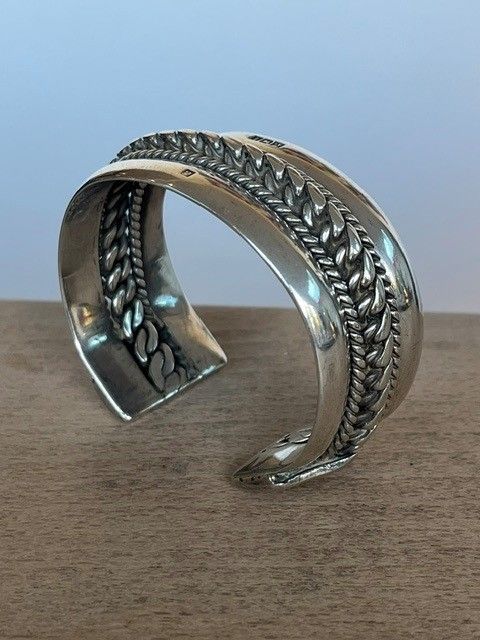
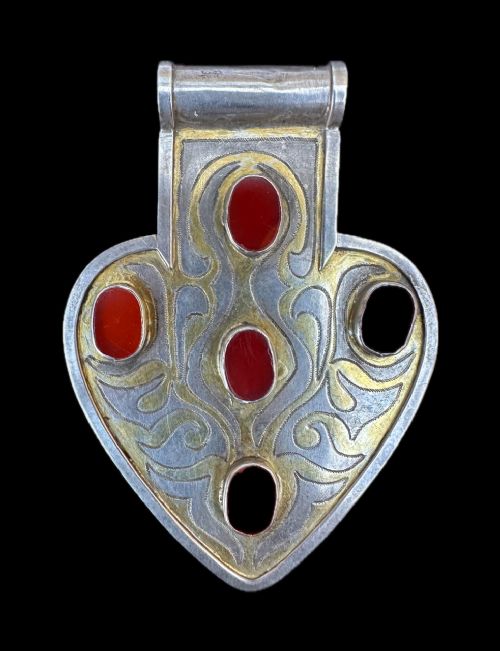
You are most likely to meet silver cuffs, cordiform pendants, and drop earrings on this page. These pieces derive from specific traditions such as Turkmen, Bedouin, Rajasthani, and Tibetan makers.
The forms range from heavy solid silver bangles to delicate filigree belts and carved bone amulets. Each object reflects the utilitarian beauty and social markers of its region of origin.
How they were made
Makers shaped these ornaments primarily from solid silver, parcel-gilt, and gold gilt, employing traditional metalworking techniques. Artisans hammered, chased, and carved the metal to create substantial cuffs and articulated pendants.
Stones such as carnelian, turquoise, and coral frequently accent the metalwork, held in bezel settings. Organic materials like carved bone also appear, polished through handling to develop a warm patina.
The listings span from the mid-nineteenth century to the mid-twentieth century, featuring silver, gold gilt, turquoise, carnelian, and coral.
What varies in quality
The distinction between standard and exceptional pieces rests upon the depth of the hand-carved detailing and the integrity of the original construction. Heavier gauge silver and well-balanced proportions elevate a piece above simpler utilitarian work.
Natural wear and surface patination contribute to the character of an item, reflecting its age and functional history. The placement and quality of set stones, alongside intricate wirework like Telkari, further differentiate the pieces.
The Antique Ethnic Jewellery Glossary
- Asyk
- A traditional heart-shaped or cordiform pendant worn by Turkmen tribes, often associated with fertility and protection. These pieces typically feature repoussé decoration and applied wirework.
- Gulak Tenecir
- A specific style of dropped earring originating from the Teke tribes of Turkmenistan. They are designed to frame the face with dangling silver elements.
- Telkari
- The traditional wire-work filigree technique practiced along the Black Sea coast of Turkey. Artisans twist fine silver threads into lace-like patterns.
- Parcel-gilt
- A metalworking process where specific areas of a silver object are selectively coated with gold leaf or wash. This creates a striking contrast between the two precious metals.
- Bedouin
- Referring to the nomadic Arab peoples of the Middle East and North Africa whose silver jewellery often incorporates chunky geometric designs.
Antique Ethnic Jewellery: Frequently Asked Questions
What is an asyk pendant?
An asyk is a heart-shaped pendant traditionally made by Turkmen tribes.
These pieces were worn as protective amulets and feature distinctive repoussé patterns.
How do I care for antique silver jewellery?
Keep the metal dry and store pieces individually to prevent scratching.
Avoid harsh commercial dips that remove the natural historical patina.
Where does Telkari work come from?
Telkari is a fine silver wire filigree technique associated with the Black Sea coast of Turkey.
Artisans solder delicate threads together to form lace-like decorative panels.
How do I date Turkmen jewellery?
Dating relies on stylistic markers, the weight of the silver, and the wear on the metal.
Pieces from the nineteenth century often show deeper hand-chasing and softer surface patination.