



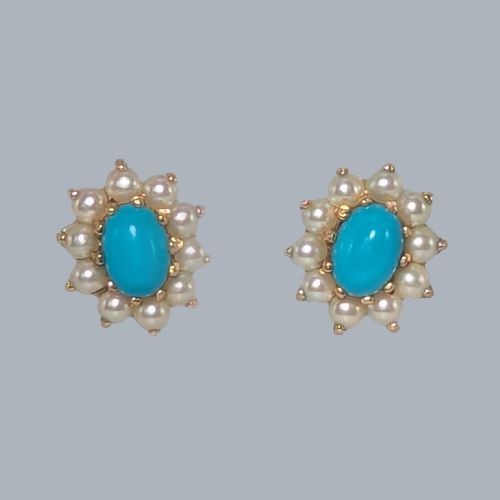

Turquoise Pearl Jewellery
Turquoise pearl jewellery combines vivid robin-egg blue stones with lustrous marine gems in gold and silver settings.
Turquoise Pearl Jewellery
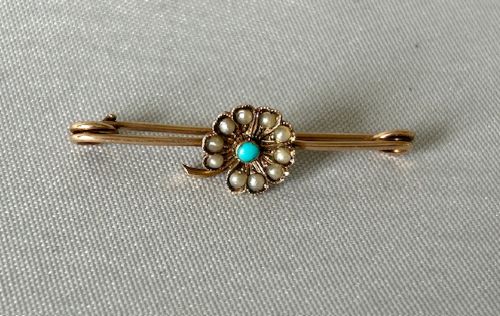
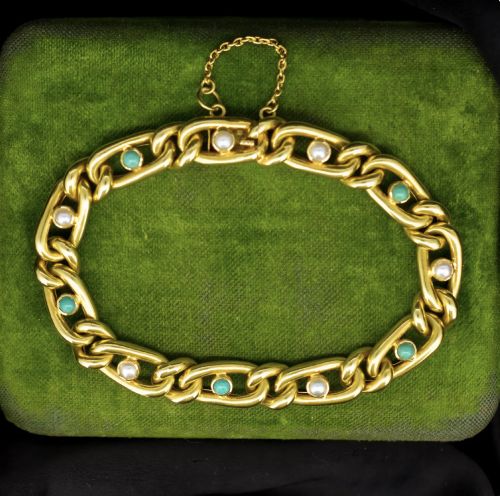
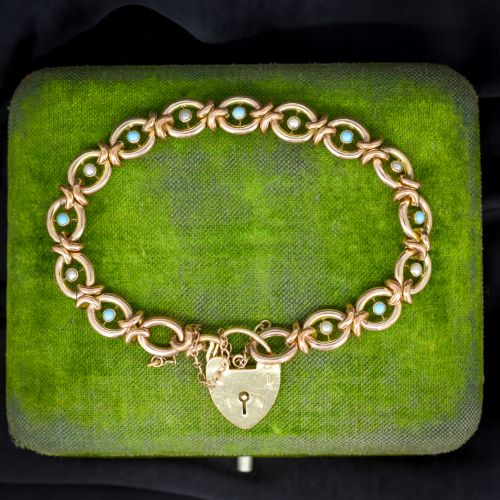
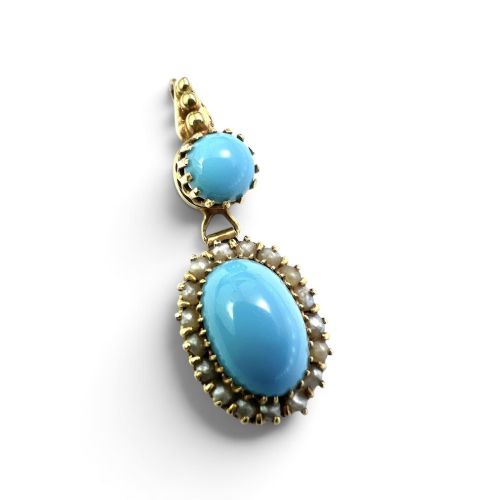
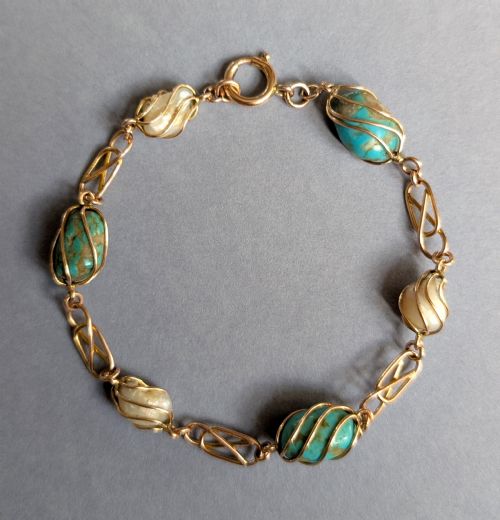
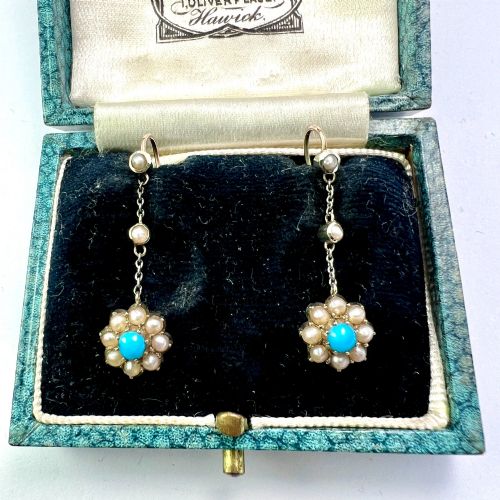
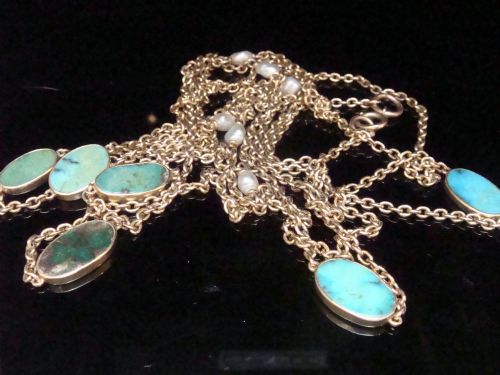
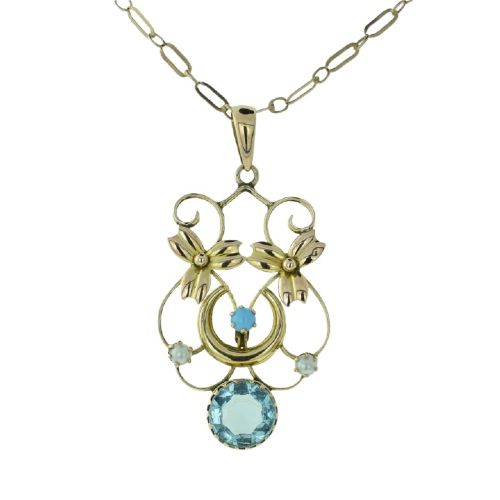
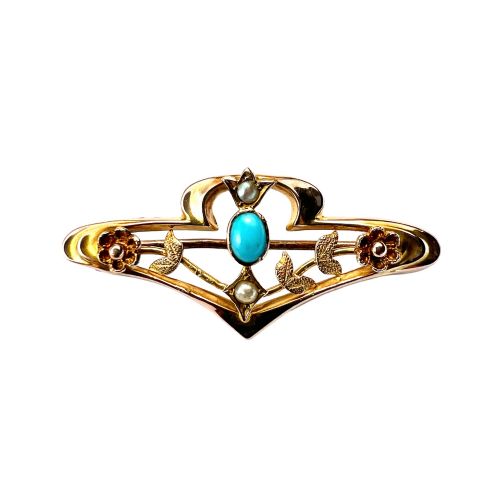
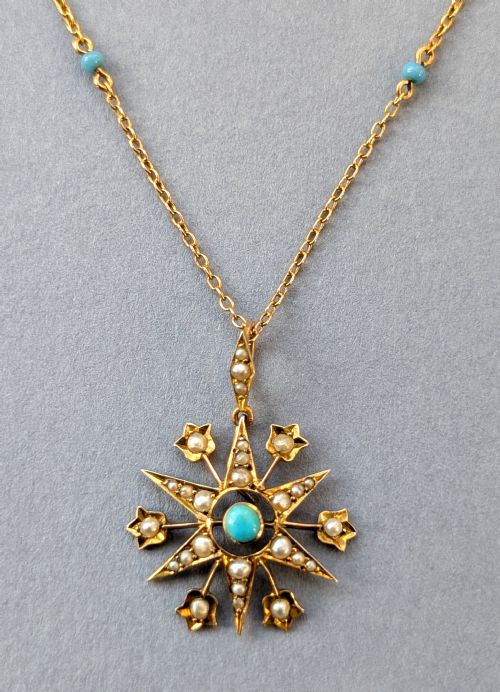
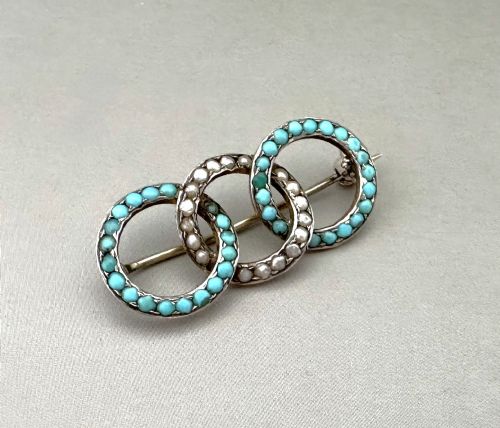
Turquoise pearl jewellery encompasses rings, bracelets, earrings, pendants, necklaces, brooches, and longuard chains originating from Victorian, Edwardian, and mid-century periods.
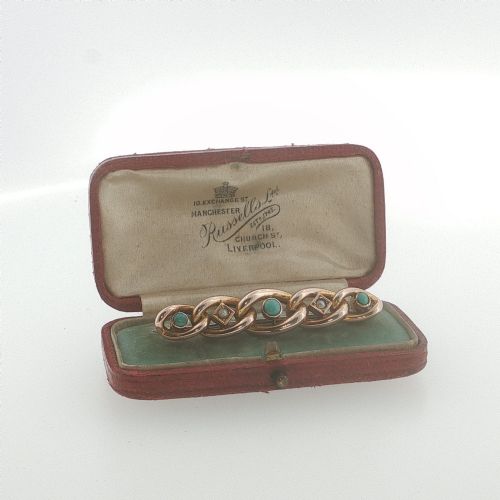
The most common items found on this page are brooches, rings, and pendant necklaces featuring cluster, floral, star, or heart motifs.
Makers and designers from the Arts and Crafts movement alongside mainstream Victorian and Edwardian jewellers utilised these materials to create distinctive wearable pieces.
Materials and construction
Goldsmiths worked with 9ct, 12ct, 14ct, 15ct, and 18ct yellow and rose gold, as well as silver, silver gilt, and rolled gold, to set the gemstones.
Pieces incorporate turquoise, seed pearls, split pearls, natural pearls, and cultured pearls, occasionally accented with diamonds, blue topaz, enamel, or blister pearls.
Turquoise Pearl Jewellery Retail Price Guide 2026
Typical asking prices for turquoise pearl jewellery among the pieces listed under this phrase on Sellingantiques today, from the lower quarter to the upper quarter. They describe what is for sale here now, not the wider market.
Evils eyes and horseshoe motifs guarded Victorians from bad luck while they admired their tiny pearls.
Quality factors in design
The density and purity of the gold alloy, ranging from lower-carat gold up to 18ct settings, establishes the foundational material standard of each piece.
The matching of stone sizes, the uniformity of pearl lustre, and the stability of turquoise matrix integration define the precision of the goldsmith's work.
Murrle Bennett·Liberty and Co
The Turquoise Pearl Jewellery Glossary
- Seed pearl
- Very small, naturally occurring pearls often used in clusters or bordering central stones. They add delicate texture to Victorian and Edwardian jewels.
- Turquoise matrix
- The webbing or host rock material visible within or supporting the turquoise stone. It appears naturally in various patterns.
- Longuard chain
- A long necklace chain worn draped or attached to a watch or locket. These chains sometimes incorporate pearls and turquoise stations.
- Suffragette chain
- Jewellery utilising the characteristic colour triad of green, white, and violet, or in this context, specific gemstone combinations associated with the movement. They date largely to the Edwardian era.
- Silver gilt
- Silver base metal coated with a layer of gold. This technique offered the appearance of solid gold at a different cost.
Turquoise Pearl Jewellery: Frequently Asked Questions
What periods do these pieces span?
The listings cover Victorian, Edwardian, and mid-century eras, alongside late Georgian and 1960s examples.
Most items date from the late nineteenth century through to the early decades of the twentieth century.
How were these items worn historically?
Brooches were pinned to garments or collars, while longuard chains and necklaces adorned the neckline.
Rings and bracelets were worn daily, often incorporating sentimental motifs like hearts, bows, and horseshoes.
What metals support turquoise and pearls?
Goldsmiths utilised various gold purities including 9ct, 15ct, and 18ct yellow and rose gold for these combinations.
Silver, silver gilt, and rolled gold also appear regularly across the surviving inventory.
How do I care for turquoise pearl jewellery?
Turquoise is a porous stone that reacts to oils, cosmetics, and water immersion.
Pearls require gentle cleaning with a soft cloth to preserve their natural lustre without harsh chemical exposure.