


Turquoise Gemstone Ring
These turquoise gemstone ring selections bring together vibrant blue stones and rich gold settings from past eras for daily wear.
Turquoise Gemstone Ring
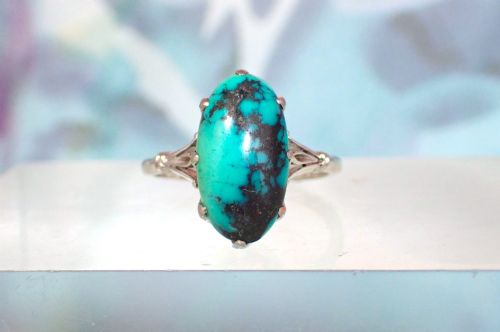
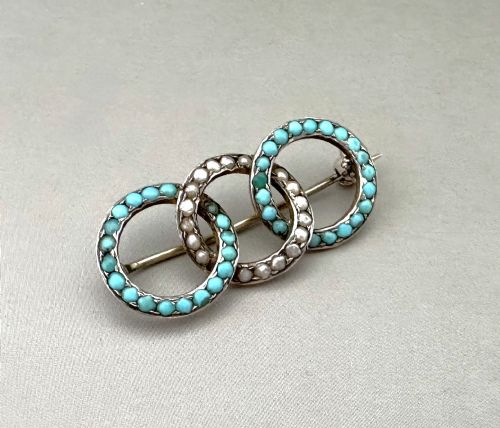
A turquoise gemstone ring displays the distinct robin's egg blue or greenish-blue mineral set into precious metals, most frequently appearing in Victorian and Edwardian examples on this page. Buyers examining these pieces encounter various configurations, from simple single bands to complex multi-stone clusters.
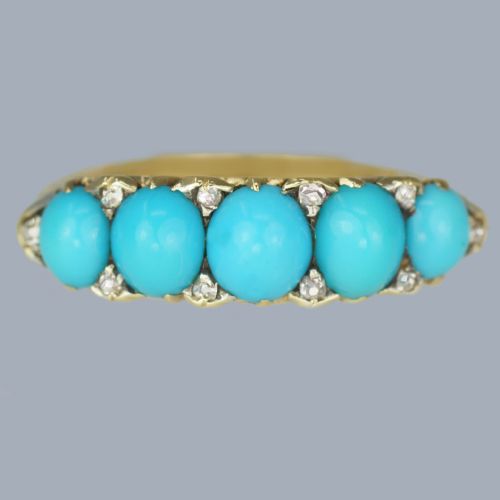
The most common style met here is the Victorian five stone or cluster design, often pairing the bright blue matrix alongside diamonds or pearls in yellow gold. These historic pieces reflect the romantic and sentimental jewellery traditions of the nineteenth and early twentieth centuries.
Materials and construction
Goldsmiths constructed these rings primarily using 18ct yellow gold, 18ct white gold, and silver gilt, securing the turquoise stones alongside diamonds and pearls. The metals were cast or fabricated into detailed band shapes such as buckle designs, navette clusters, and star settings.
Stones were typically hand-cut and shaped into round, oval, or flat cabochons to sit snugly within claw or bezel settings. Jewellers balanced the softer turquoise material with harder gemstones like diamonds to create durable cluster and multi-stone arrangements.
Victorian makers once carved solid gold into literal belts and buckles, letting wearers literally buckle down their commitment with turquoise.
Distinctions in quality
Quality in a turquoise gemstone ring rests upon the saturation and uniformity of the stone's colour, alongside the crispness of the surrounding gold work. Finer examples display minimal matrix web patterns and retain a smooth, polished surface without pitting or discolouration.
The finesse of the accompanying gemstones and the structural integrity of the metal setting elevate certain pieces above standard production. Hand-finished engraving and secure, even claw work distinguish superior workshop output from simpler commercial variants.
The Turquoise Gemstone Ring Glossary
- Cabochon
- A gemstone shaped and polished with a smooth, convex domed surface rather than faceted edges. This cut is standard for opaque stones like turquoise to display their colour and natural matrix.
- Navette
- A boat-shaped gemstone arrangement or ring face that tapers to sharp points at both ends. Also known as a marquise design, it elongates the appearance of the finger.
- Silver gilt
- Sterling silver that has been coated with a thin layer of gold through chemical or electrochemical methods. This technique provided the appearance of solid gold while utilising a silver base.
- Matrix
- The host rock or web-like material remaining embedded within a turquoise gemstone. Some collectors prize clean stones, while others appreciate the natural veining patterns.
- Cluster
- An arrangement of smaller gemstones clustered tightly around a central stone or focal point. This configuration maximises sparkle and colour contrast in historic rings.
Turquoise Gemstone Ring: Frequently Asked Questions
How do I clean a turquoise gemstone ring?
Turquoise is a porous and relatively soft gemstone that requires gentle care to maintain its colour and structural integrity. You should wipe the stone clean with a soft, damp cloth and avoid submerging it in water or using harsh chemical jewellery cleaners.
Exposing the ring to oils, cosmetics, and ultrasonic cleaning machines can permanently damage the stone. Store the piece away from direct sunlight and other hard jewellery items to prevent scratching.
Can I wear a turquoise ring every day?
Wearing a turquoise ring daily requires mindfulness because the stone rates lower on the hardness scale than diamond or sapphire. Gentle everyday wear is acceptable provided you remove the ring during heavy manual tasks, gardening, or swimming.
Historic gold settings also benefit from occasional checks by a jeweller to ensure the stone claws remain tight. Proper precautions will keep a delicate antique band safe through regular rotation.
How do I date a Victorian turquoise ring?
Dating a Victorian turquoise ring involves examining the gold carat marks, setting styles, and overall structural characteristics of the band. Pieces from this era often feature heavy 18ct yellow gold, intricate claw work, and combinations with seed pearls or old-cut diamonds.
British hallmarking stamps, when present inside the shank, offer precise year and assay office data. Stylistic clues like navette clusters and buckle motifs further narrow the manufacturing window.
What is the difference between Victorian and Edwardian rings?
Victorian rings generally feature heavier 15ct or 18ct yellow gold settings, deeper colour profiles, and robust cluster or five-stone arrangements. The designs lean toward romantic symbolism, often incorporating heavy hand-engraved bands and closed-back settings in earlier examples.
Edwardian pieces introduce lighter platinum and 18ct white gold work, favouring delicate openwork filigree and airy diamond pairings. The aesthetic shifts toward refined elegance while maintaining classic turquoise and pearl combinations.