
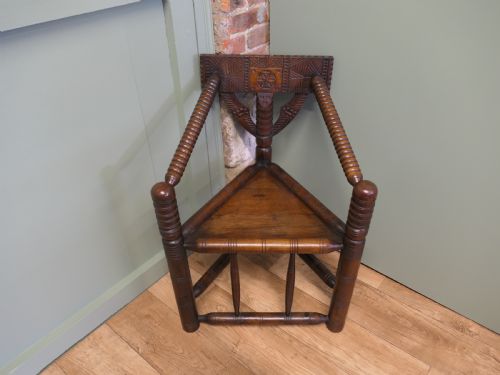
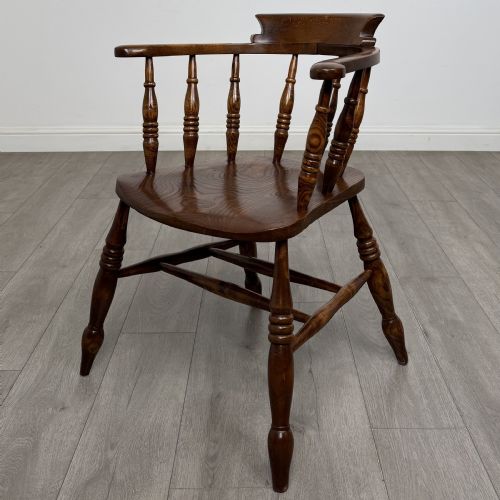
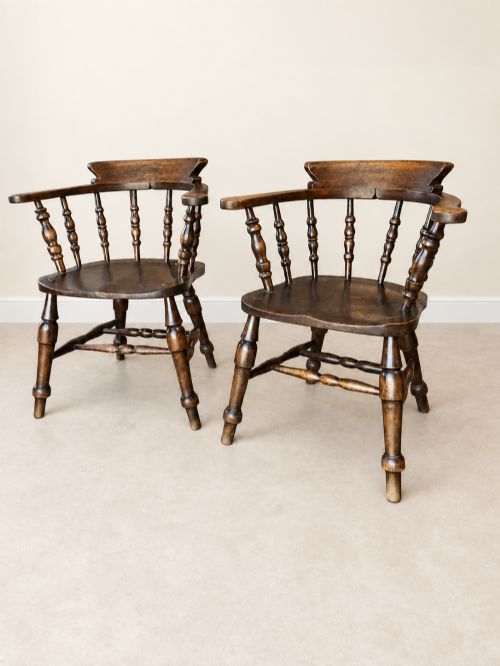
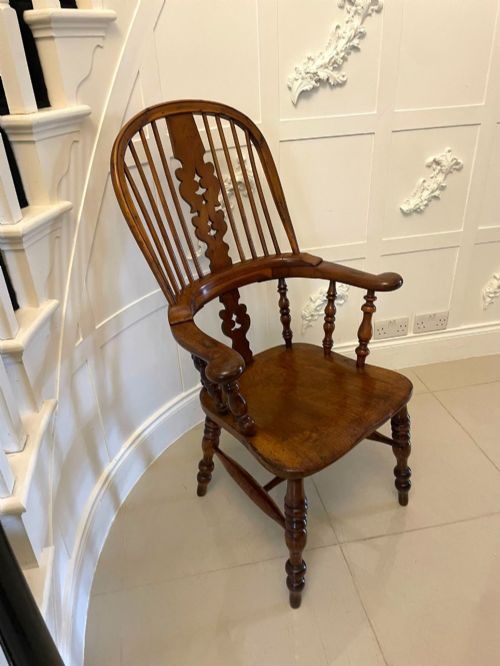

Turned Wooden Armchair
A turned wooden armchair brings honest craft and tactile grain to any room, offering robust seating shaped by vernacular traditions.
Turned Wooden Armchair
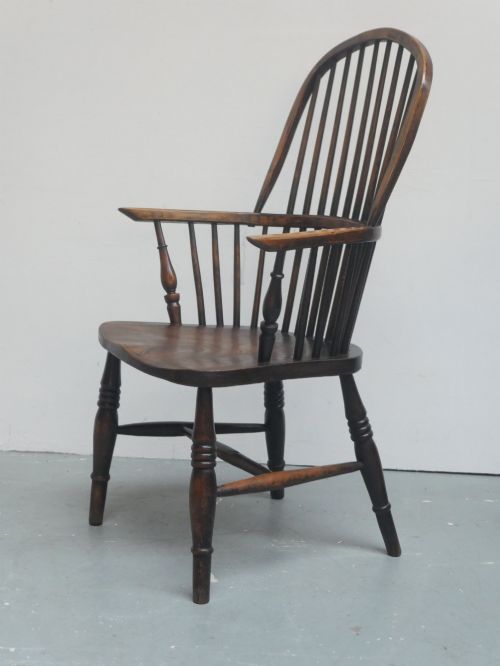
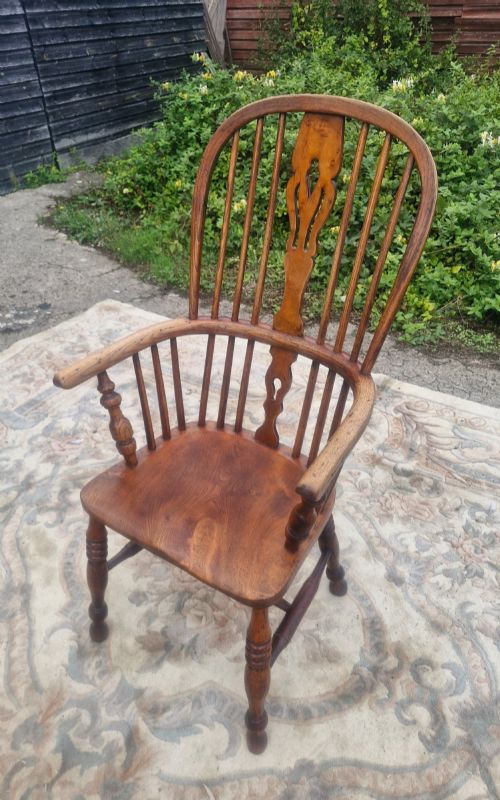
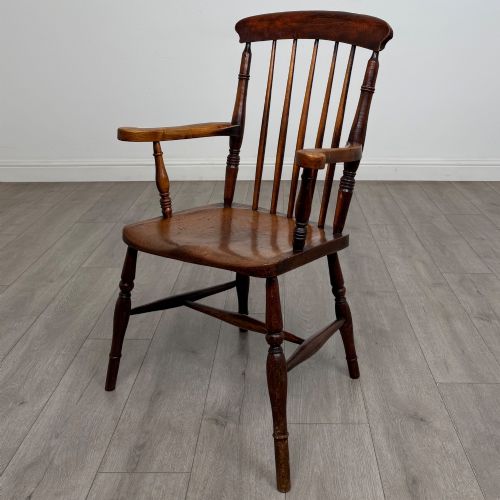
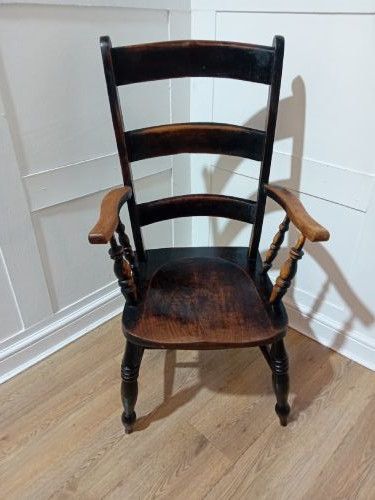
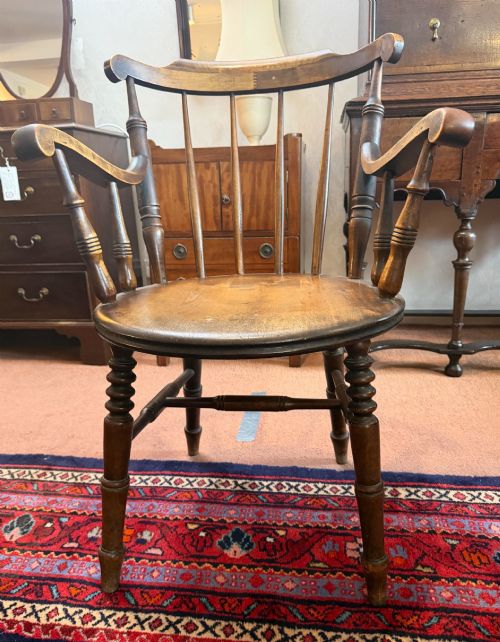
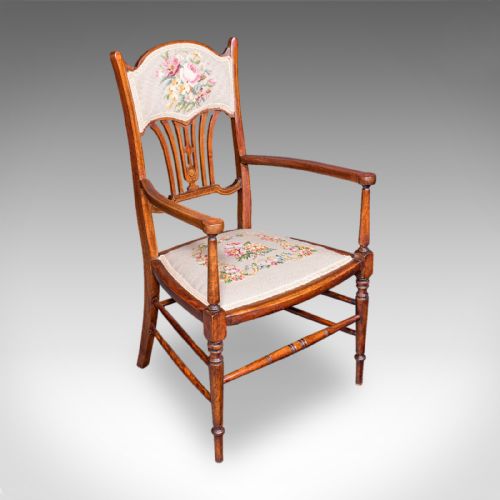
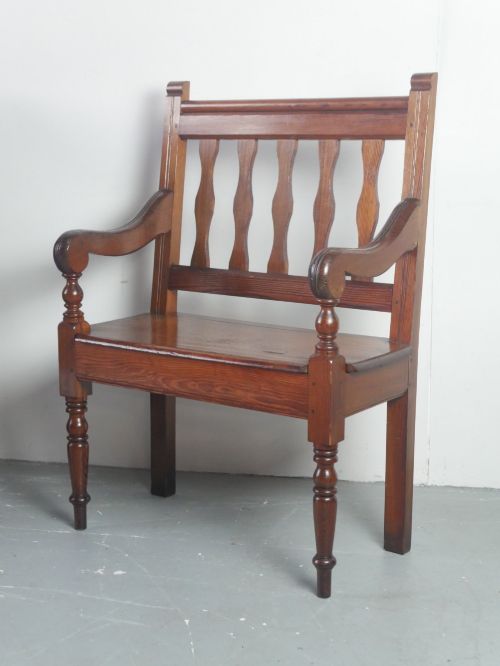
A turned wooden armchair sits firmly within country house and vernacular traditions, utilising structural turnings that give the frame both rigidity and visual rhythm. Buyers searching for a turned wooden armchair encounter robust forms built for everyday utility rather than formal parlour display.
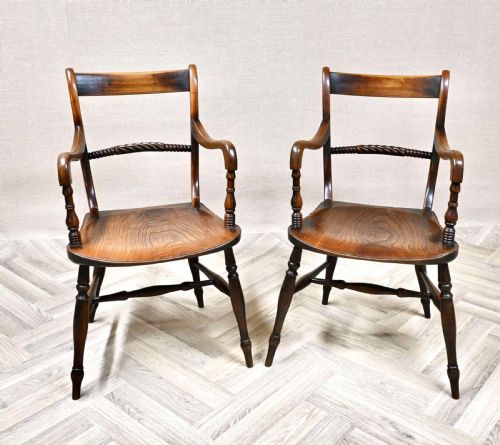
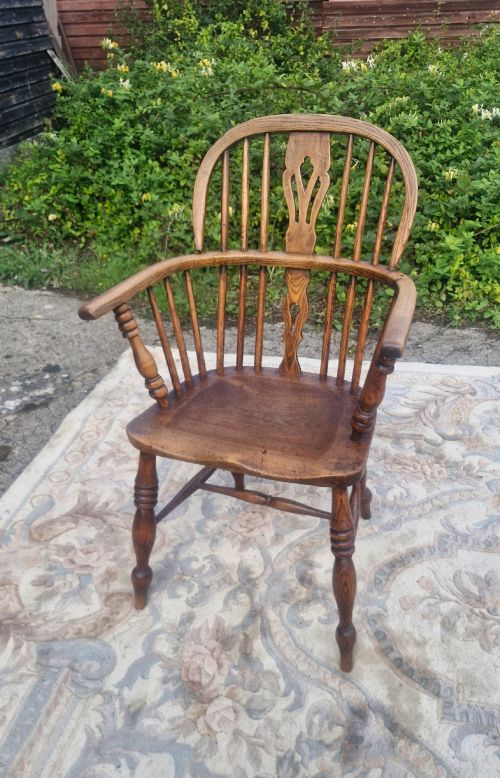
The selections span nineteenth century periods, incorporating Victorian, Edwardian, and Regency examples alongside Arts and Crafts movements. Common configurations include Windsor variants, low back and high back profiles, captain chairs, smoker bows, and rocking chairs.
Originating largely from English rural workshops and regional centres such as the Thames Valley or Lincolnshire, these chairs display local timber preferences. Regional variations dictate whether a piece takes the form of a low kitchen seat or a substantial spindle back.
Materials and construction
Maker traditions rely on combining timbers for distinct structural roles, pairing flexible elm for seats with resilient ash or beech for spindles and legs. Yew and mahogany also appear in finer examples, matched with rush or upholstered drop-in pads where specified.
Turning lathes shape cylindrical components, while steam bending governs the curving crest rails and arm bows characteristic of Windsor seating. Traditional joinery utilises wedged tenons and wedged mortise joints to lock the uprights securely into solid plank seats.
Listings feature woods including elm, ash, beech, oak, yew, birch, laburnum, and mahogany across nineteenth-century periods.
Assessing quality
Quality rests upon the harmony of proportions and the integrity of the original timber rather than excessive ornamentation. A well-balanced frame demonstrates confident lathe work and thoughtful wood selection, where grain patterns complement the chair silhouette.
Surface finish dictates much of the visual character, separating honest patination from heavy modern intervention. Pieces retaining original surface finishes display depth and tactile warmth built through generations of domestic use.
Morris & Co·Philip Webb·J Spencer
The Turned Wooden Armchair Glossary
- Windsor
- A chair built with a solid wooden seat into which the legs, back spindles, and arms are separately tenoned. This construction method provides exceptional stability.
- Smoker bow
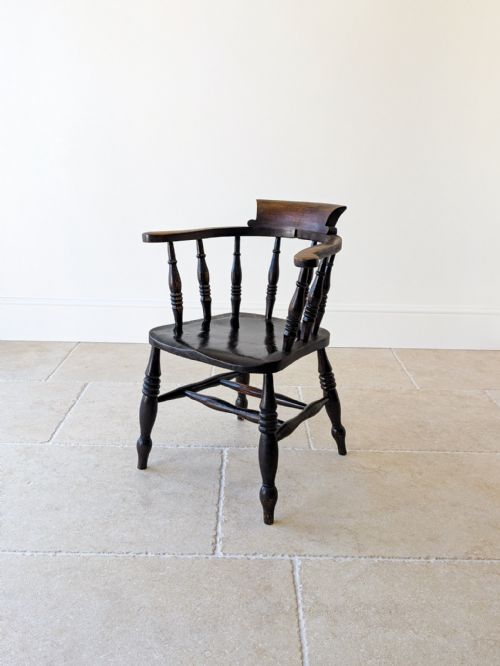
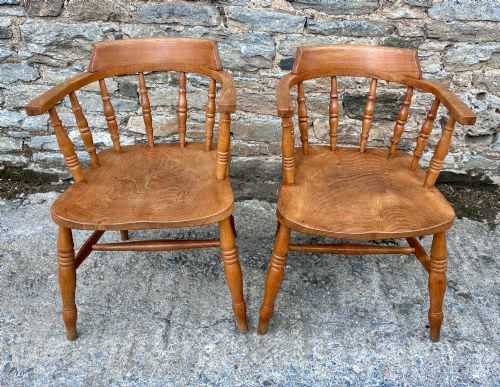
- A low-backed Windsor armchair featuring a continuous curved arm rail supported by turned spindles above a saddle seat. These pieces often serve as desk or smoking chairs.
- Bobbin framing
- A decorative turning technique producing a series of rounded wooden spheres resembling spools or bobbins along the uprights. It defines specific nineteenth-century vernacular styles.
- Captain chair
- A sturdy low-backed armchair designed for office or library use, typically featuring a rounded top rail supported by numerous spindles. Elm and ash remain the standard timbers.
- Rush seat
- A woven seating surface constructed from dried marsh rushes twisted into cords and hand-plaited across the frame. It provides a supportive and elastic base.
Turned Wooden Armchair: Frequently Asked Questions
What is a Windsor chair?
A Windsor chair is a seating form defined by a solid wooden saddle seat into which all structural members fit directly. The back and legs are turned or shaved independently before assembly.
This method creates an exceptionally rigid framework without relying on a conventional box frame underneath.
How do I identify a captain chair?
Captain chairs feature a low, continuous back rail that forms both the arms and the upper support, sitting on a sturdy wooden base. They were designed for functional utility in offices or dining rooms.
Most examples employ elm seats paired with ash or beech spindles.
Where were these chairs made?
Most pieces originate from regional English workshops, including traditions associated with the Thames Valley, Lincolnshire, and various rural farmhouse settings. Local timber availability heavily influenced the choice of woods.
Regional variations appear in the crest rails, spindle counts, and turning profiles.
How do I care for antique timber?
Maintain antique wooden surfaces by keeping them away from direct heat sources and sudden humidity shifts that cause shrinkage. Regular gentle dusting preserves the underlying patina.
Apply traditional microcrystalline wax sparingly when the wood appears dry to protect the finish.