






Turned Wood Urns
Turned wood urns are decorative vessels shaped on a lathe, bringing rich timber grains and classical form to a room.
Turned Wood Urns
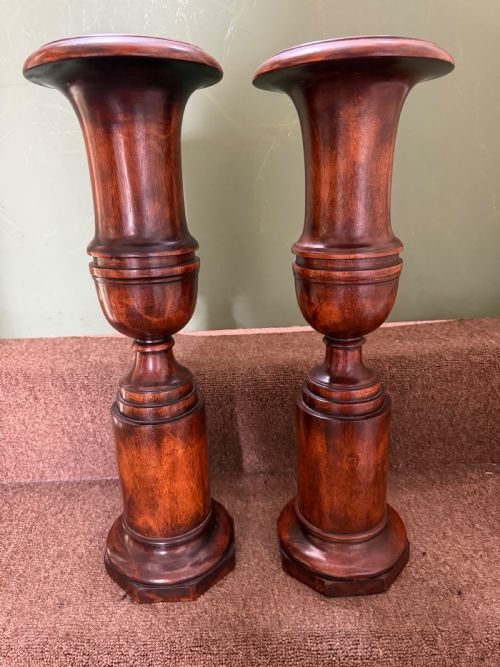
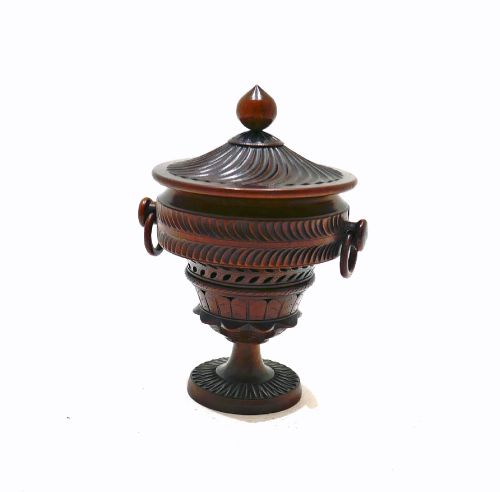
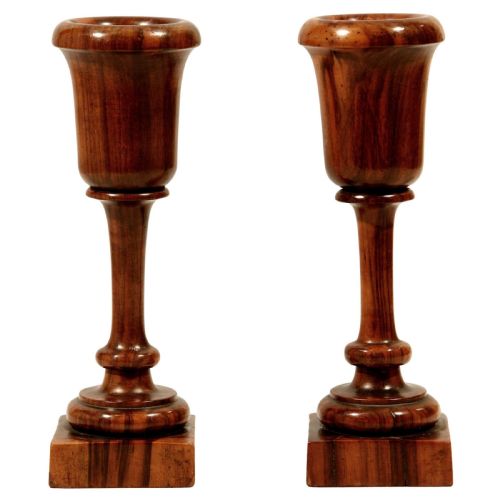
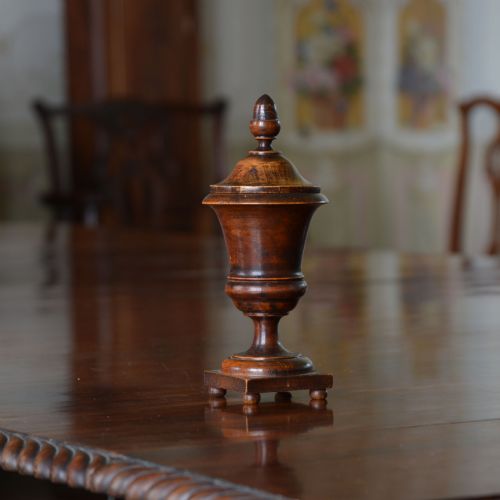
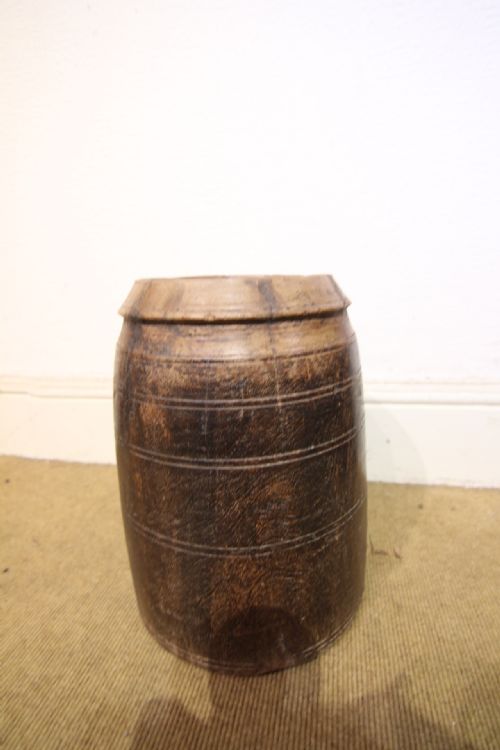
Turned wood urns include decorative vases, campana shapes, and lidded vessels produced across the eighteenth and nineteenth centuries. These pieces reflect neoclassical design alongside simpler treen forms and primitive turned objects.
Buyers encounter walnut, fruitwood, mahogany, oak, yew, and boxwood varieties shaped into stems, vases, and lidded pomanders. Many examples originate from the Victorian, Edwardian, and Georgian periods, showcasing English and continental craftsmanship.
How they were made
Woodturners shaped dense timbers such as walnut, mahogany, lignum vitae, and fruitwood upon a lathe to achieve symmetrical, balanced profiles. Artisans utilised contrasting woods and ebonised details to accent the neoclassical lines.
Hollowing solid blocks of timber required skilled hand-chiselling to produce thin-walled vessels, spill vases, and lidded containers without splitting the grain.
What varies in quality
The choice of timber dictates the visual weight and richness of a piece, with figured rosewood, yew, and burr walnut representing the finer end of turning. Dense native hardwoods and fruitwoods show crispness in the lathe lines and clean proportions.
Proportion and fidelity to neoclassical design separate standard utilitarian items from ambitious decorative pieces. Superior examples maintain balance between the base, body, and rim, letting the natural grain patterns follow the curvature.
Druce & Co London
The Turned Wood Urns Glossary
- Treen
- Small handmade wooden domestic objects. This term covers everything from turned vases and lemon squeezers to lidded cups.
- Campana
- A bell-shaped vessel form. This classical silhouette appears frequently in eighteenth and nineteenth-century decorative urns.
- Ebonised
- Wood treated to imitate ebony. Cabinetmakers stained lighter timbers black to create sharp visual contrast.
- Lignum vitae
- A dense and heavy tropical hardwood. Turners valued this material for its durability and oily grain.
- Neoclassical
- A style drawing inspiration from classical antiquity. It introduces formal symmetry and urn motifs to nineteenth-century decorative arts.
Turned Wood Urns: Frequently Asked Questions
What are turned wood urns?
Turned wood urns are decorative vessels and vases shaped on a lathe from timbers such as mahogany, walnut, fruitwood, and yew. They follow classical neoclassical lines or simpler nineteenth-century treen traditions.
These pieces were produced as ornamental objects, spill vases, and lidded containers, combining natural timber grain with symmetrical turning.
How were they used historically?
These wooden vessels served largely as decorative ornaments on mantelpieces, side tables, and display stands. Some functioned specifically as spill vases to hold matches near fireplaces.
Lidded examples and pomanders held dried herbs or spices, serving functional roles in period domestic interiors alongside their decorative presence.
How do I date a turned wood urn?
Dating relies upon timber selection, turning profile, and stylistic cues such as neoclassical proportions or Victorian ebonisation. Eighteenth-century pieces frequently employ fruitwood, oak, or yew with hand-finished surfaces.
Nineteenth-century examples often utilise walnut, rosewood, or exotic hardwoods with crisper machinery-assisted lathe work and bolder classical ornamentation.
How do I care for wooden urns?
Keep wooden vessels away from direct sunlight and sudden temperature shifts to prevent the timber from drying and splitting. Dust gently with a soft dry cloth.
Apply occasional neutral wax polish if the timber appears dry, buffing lightly to maintain the natural sheen of the grain.