


Turned Wood Treen
Turned wood treen comprises small domestic wooden objects shaped on a lathe, prized by collectors for their tactile surfaces and historic utility.
Turned Wood Treen
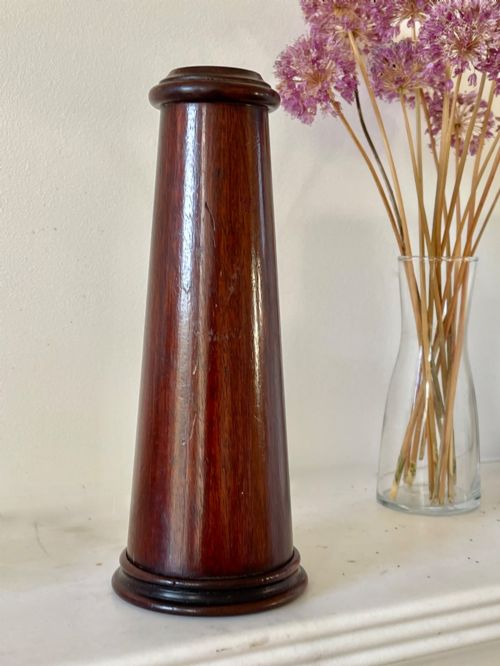
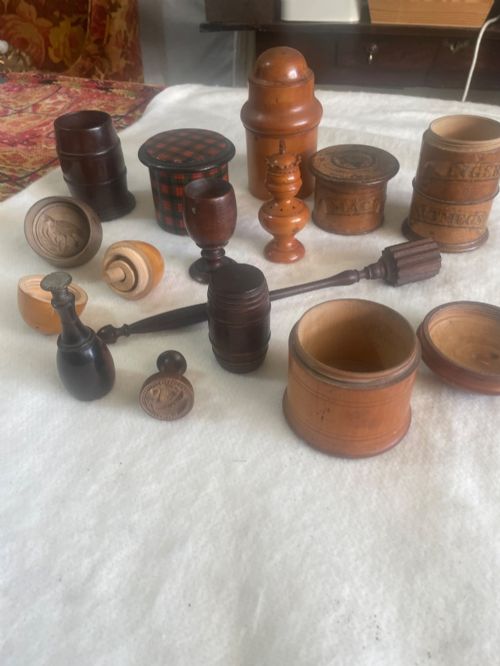
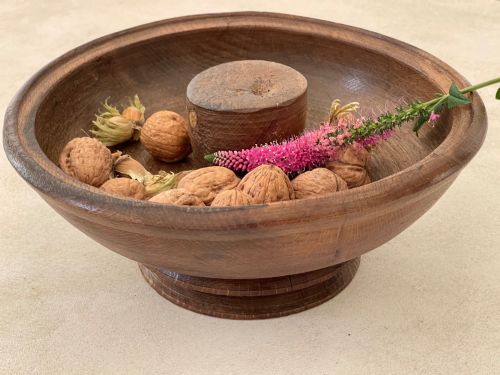
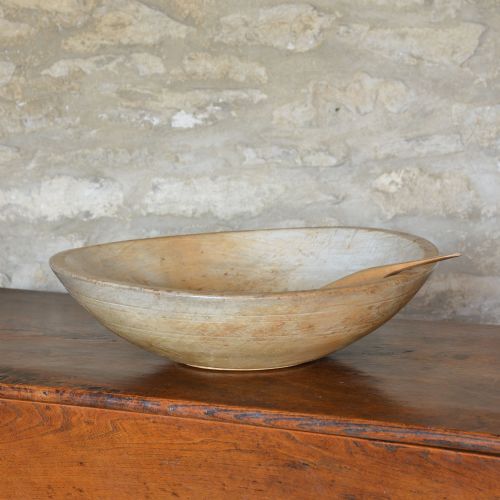
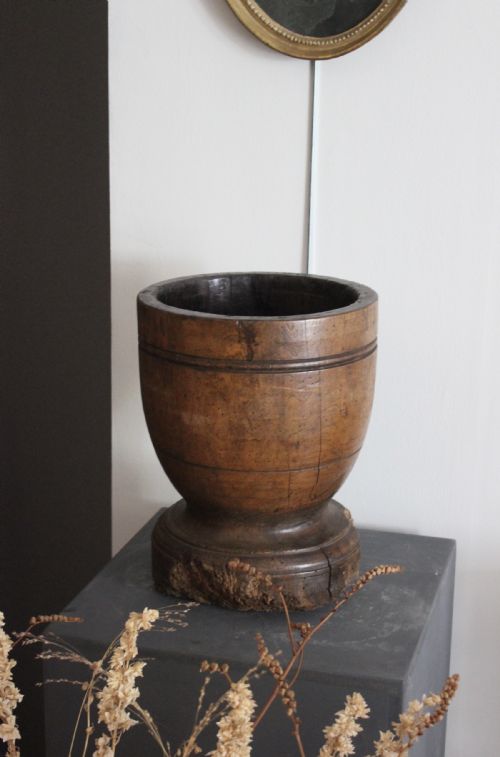
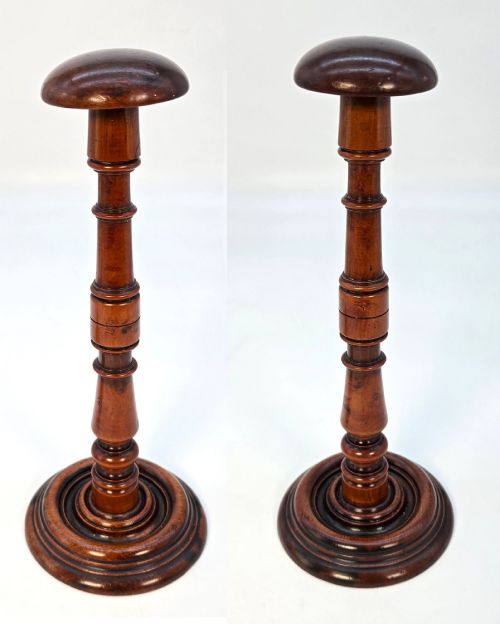
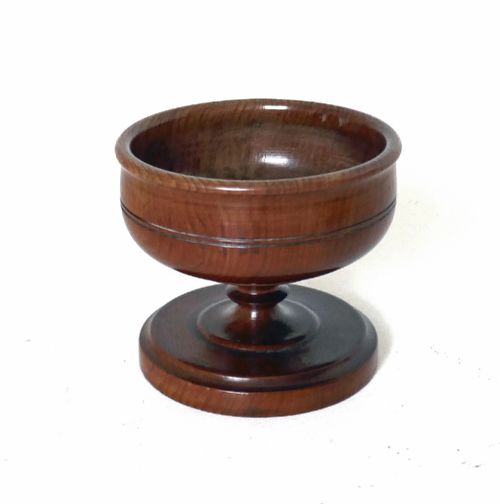
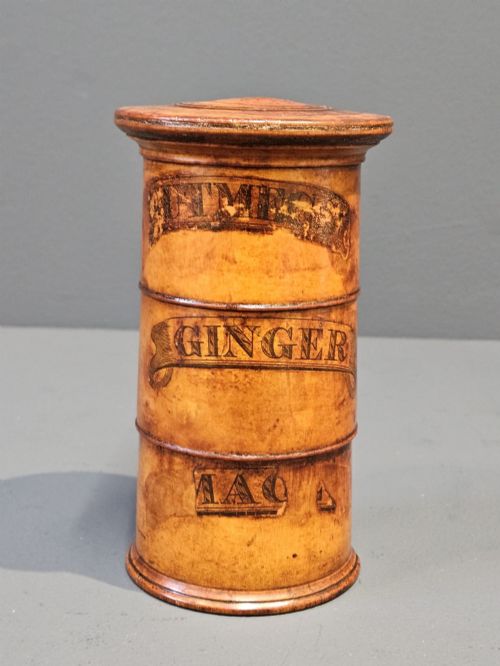
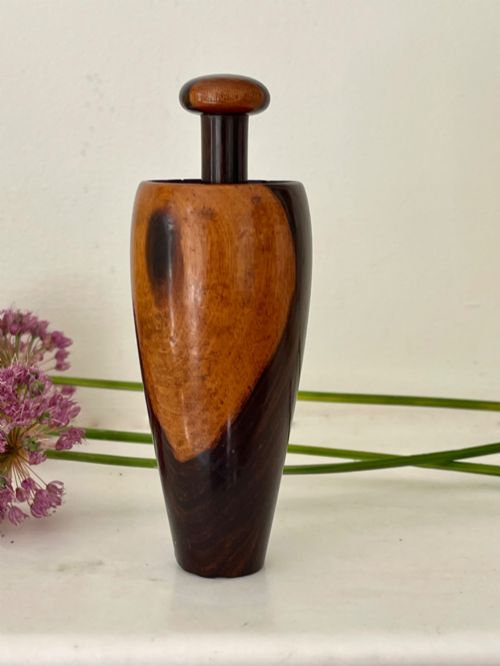
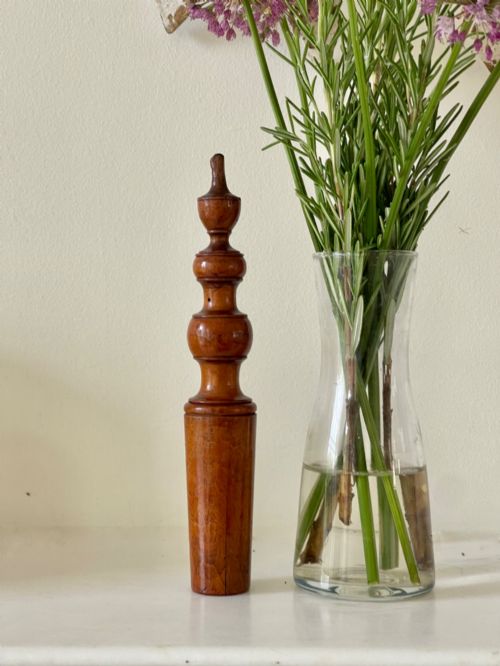
Turned wood treen spans everyday utility and domestic decoration, taking forms such as salts, goblets, bowls, mortars, and spice containers. These objects originate largely from domestic and kitchen contexts across the eighteenth and nineteenth centuries.
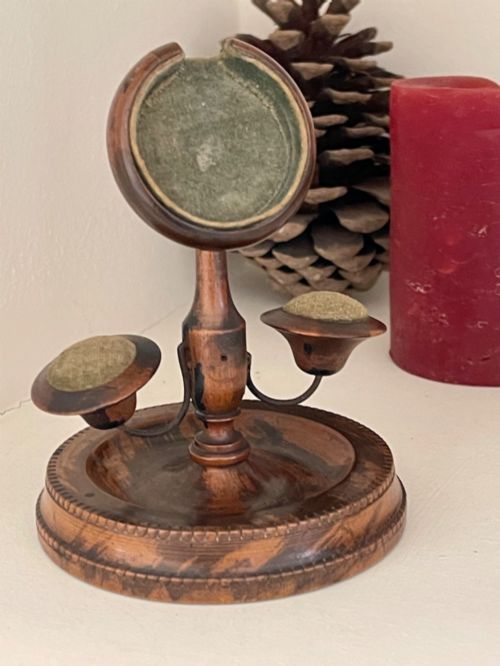
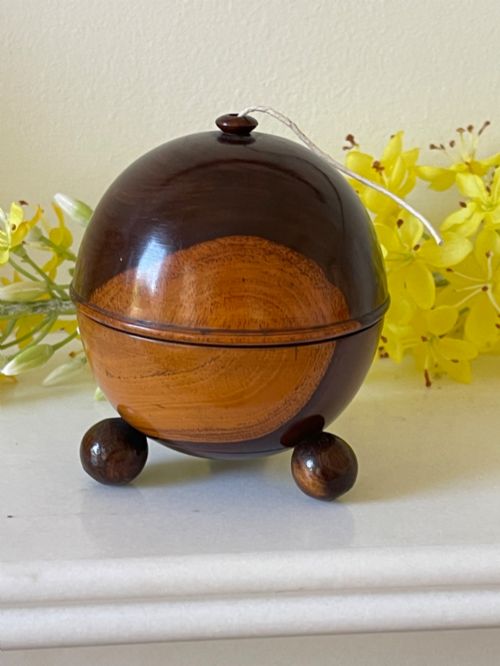
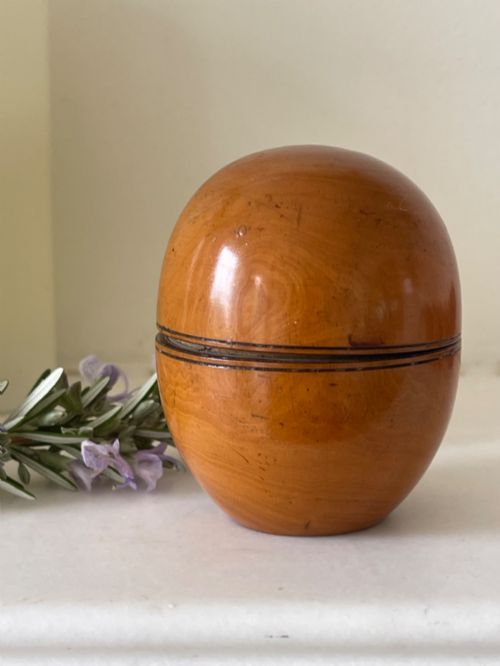
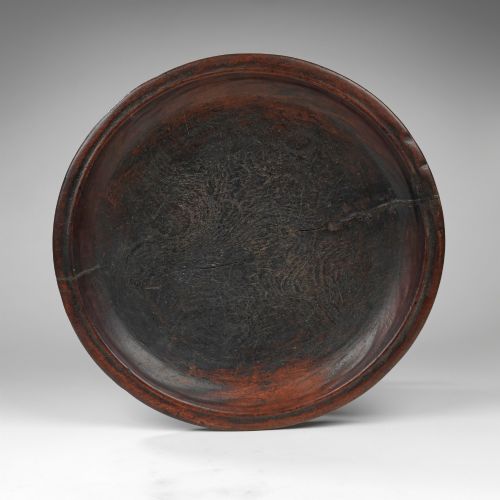
The selection on this page centres heavily on fruitwood, sycamore, and lignum vitae vessels, alongside smaller personal items like snuff boxes and sewing clamps. Buyers encounter Georgian and Victorian domestic woodenware that served functional purposes in historical households.
How they were made
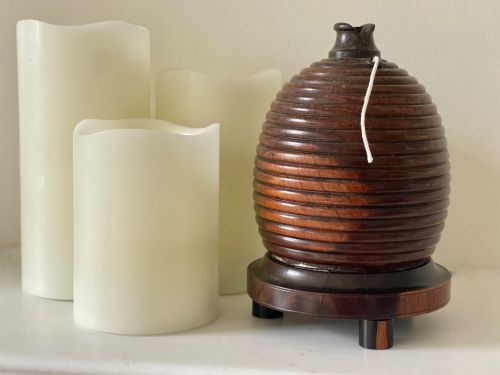
Craftsmen shaped these items using a lathe, working dense hardwoods like lignum vitae, boxwood, walnut, and fruitwoods such as pear and apple. Turning allowed makers to achieve symmetrical profiles, hollowed vessels, and tight-fitting lids for domestic containers.
Makers selected timber for grain pattern and density, often finishing pieces with simple oils or leaving the bare wood to age naturally through handling. Secondary techniques included engine turning on small decorative items like snuff boxes and powder flasks.
Turned Wood Treen Retail Price Guide 2026
Typical asking prices for turned wood treen among the pieces listed under this phrase on Sellingantiques today, from the lower quarter to the upper quarter. They describe what is for sale here now, not the wider market.
What varies in quality
Quality rests upon the crispness of the original lathe work, the retention of original surface patination, and the proportion of the turned form. Pieces that retain their lids, matched components, and clear tool marks command greater attention from collectors.
The choice of timber heavily influences desirability, with dense exotic woods like lignum vitae or figured fruitwoods yielding superior surface depth compared to plain utility timbers. Wear patterns from centuries of handling enhance the tactile appeal of a well-preserved piece.
The Turned Wood Treen Glossary
- Treen
- Small handmade wooden domestic objects. The term derives from the Middle English word for tree.
- Lignum vitae
- A dense and heavy hardwood native to the Americas, frequently utilised for mortars and goblets. Its natural oils give the turned surface a distinctive dark greenish-brown tone.
- Fruitwood
- An umbrella term for timber gathered from fruit-bearing trees such as apple, pear, and plum. Cabinetmakers favoured these fine-grained woods for detailed lathe turning.
- Spice tower
- A multi-tiered vessel designed for holding different powdered spices. These stackable turned containers unscrew at each level.
- Spurtle
- A traditional Scottish stirring stick shaped on a lathe, used primarily for porridge. Examples survive from the eighteenth and nineteenth centuries in dense hardwoods.
Turned Wood Treen: Frequently Asked Questions
What was treen used for?
These wooden objects served practical daily functions in historical kitchens, dairies, and parlours. People used them for grinding spices, serving food, measuring liquids, and personal grooming.
Over centuries, items like dairy bowls, mortars, and goblets became indispensable tools in domestic life before mass production replaced them.
How do I date turned wood treen?
Dating relies on identifying the timber species, the tool marks left by the lathe, and the overall stylistic proportions of the object. Georgian and Victorian examples often exhibit distinct profiles tied to domestic fashions of those eras.
Wear patterns, shrinkage cracks, and the accumulation of natural patination also offer clues to the age of a turned wooden piece.
How should I clean my treen?
Treen requires minimal intervention, needing only a gentle dusting with a dry cloth to preserve its historic surface. Water and modern cleaning agents damage the dry timber and strip away centuries of accumulated patina.
Applying occasional microcrystalline wax helps protect dry fruitwoods and hardwoods without altering their natural colour or matte finish.
Why is lignum vitae so heavy?
Lignum vitae is among the densest woods known, containing natural resins that make it remarkably heavy and resistant to splitting. Makers utilised this specific timber for high-impact items like mortars, pestles, and heavy drinking vessels.
Its weight and self-lubricating properties made it ideal for demanding kitchen and apothecary tasks where standard woods would fail.