
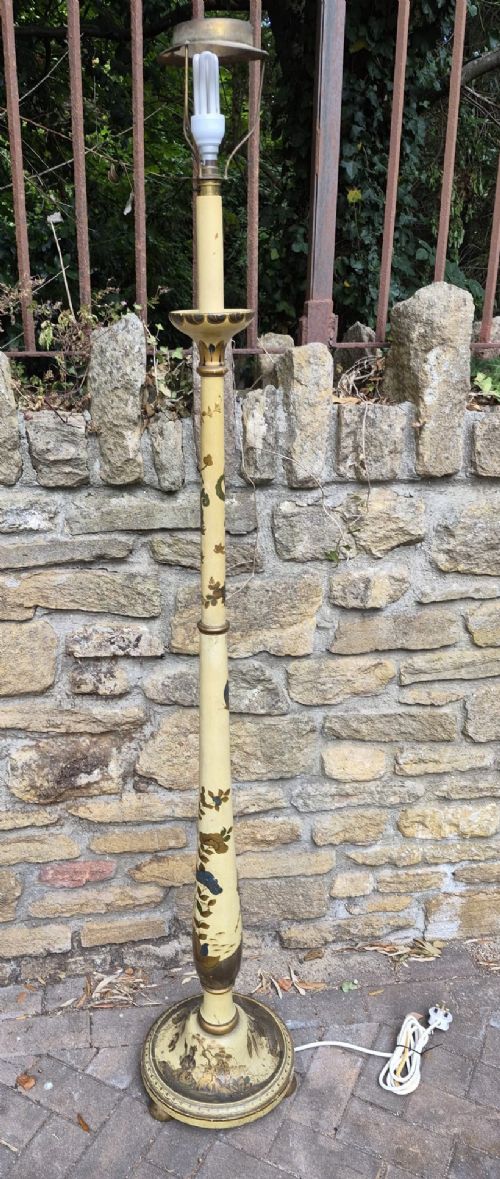
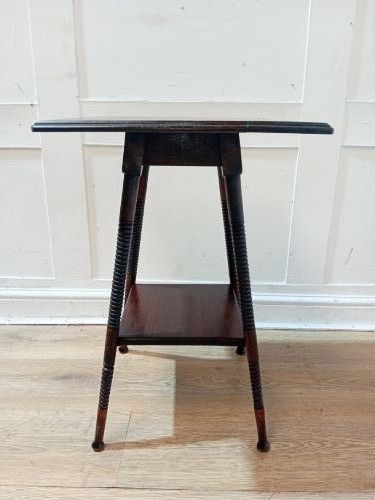
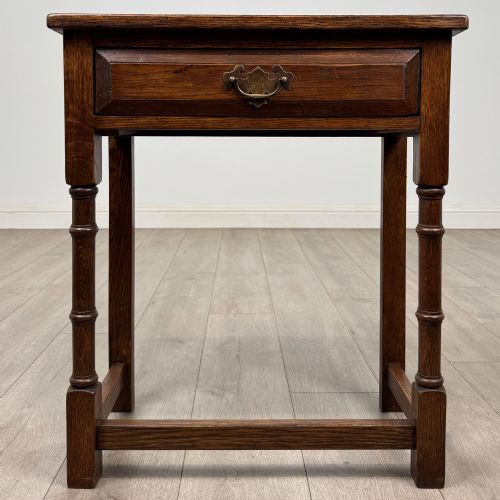
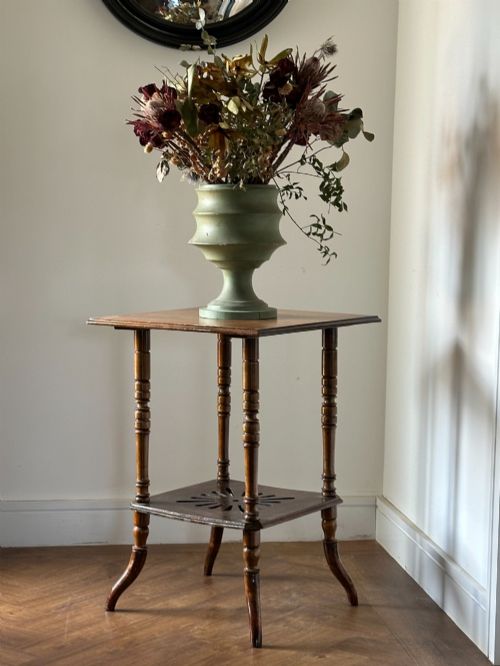
Turned Wood Standing Lamp
Turned wood standing lamp pieces are substantial vertical lighting fixtures that anchor a room, and collectors choose them for their warmth and architectural presence.
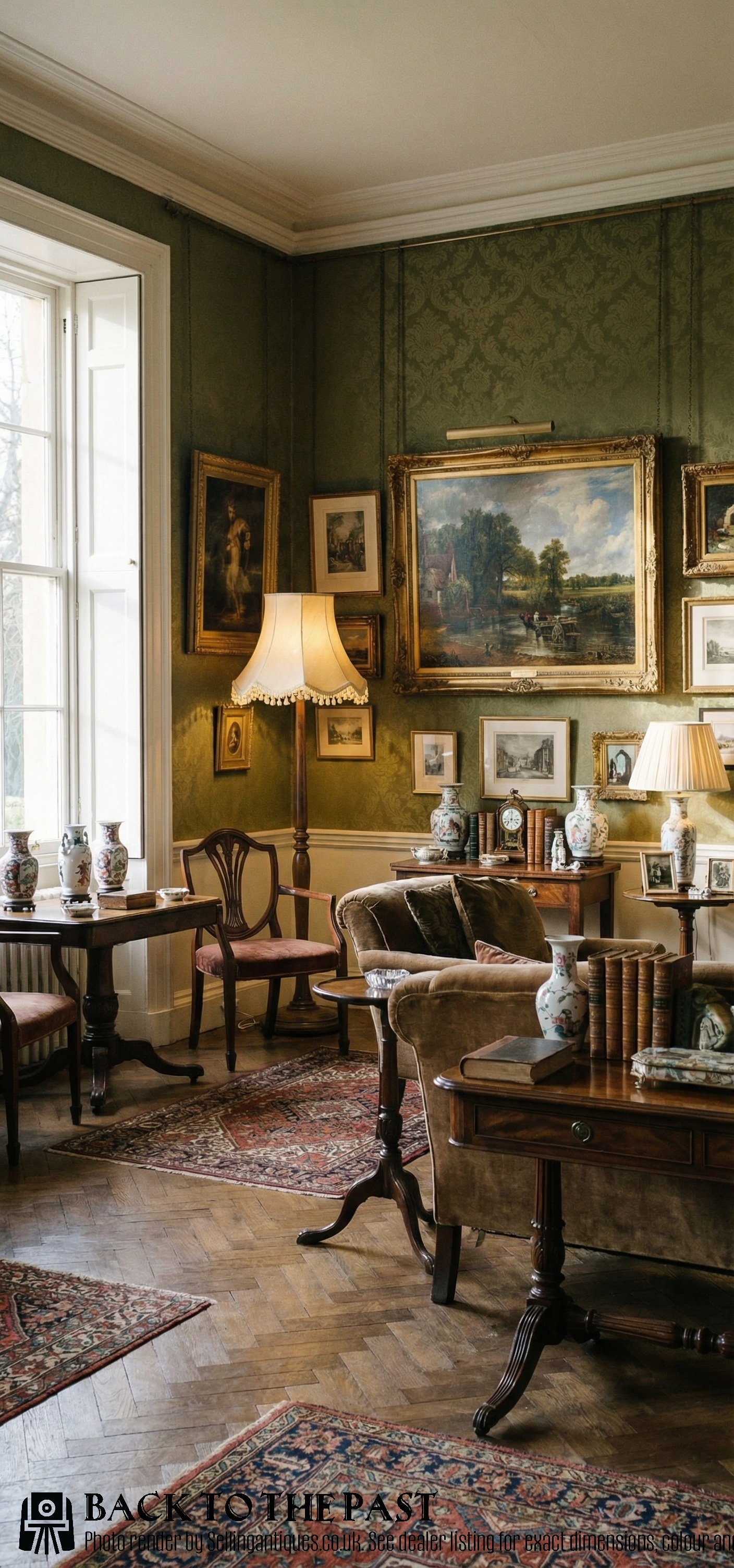
Turned Wood Standing Lamp
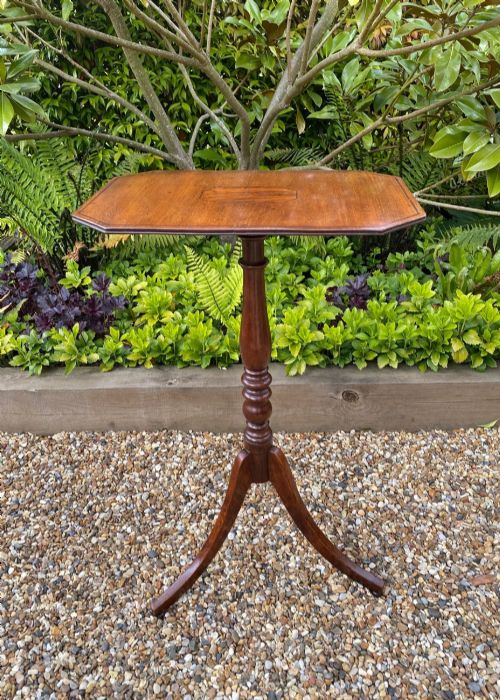
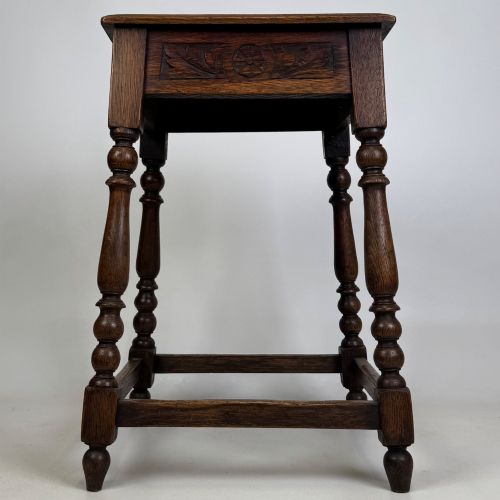
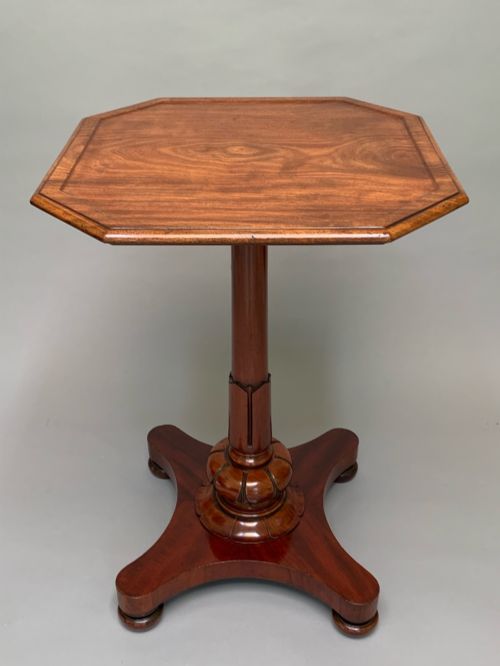
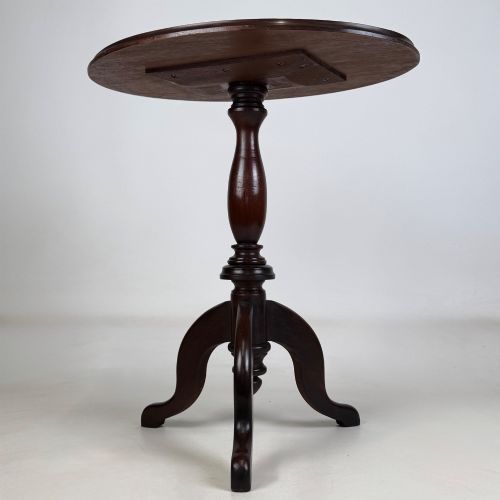
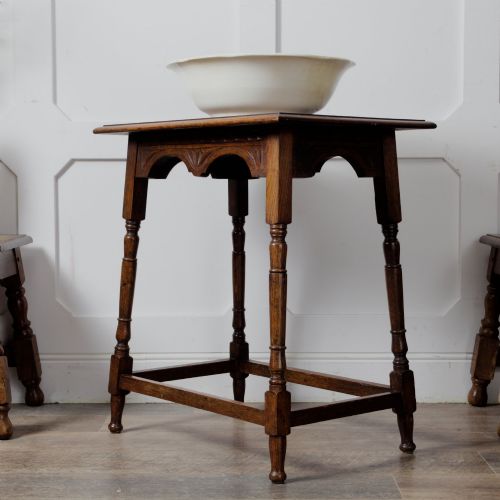
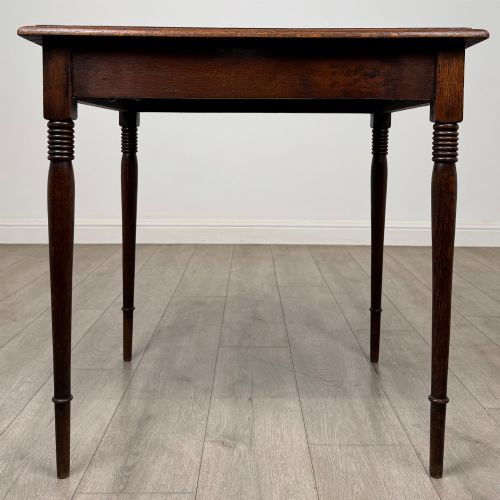
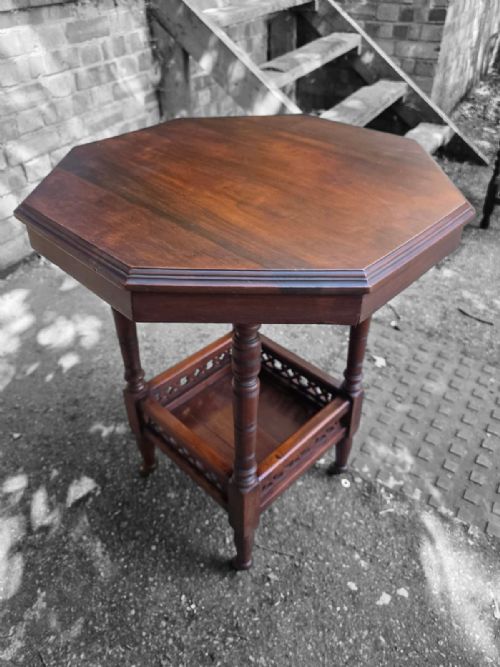
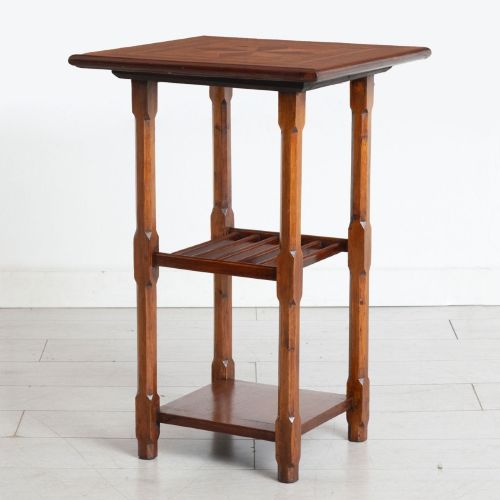
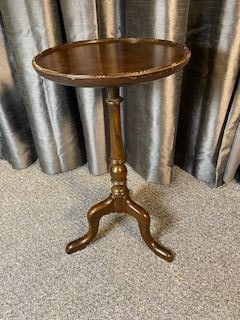
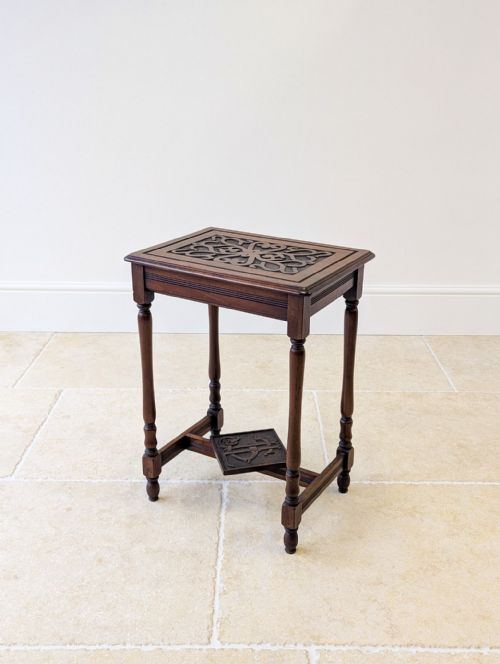
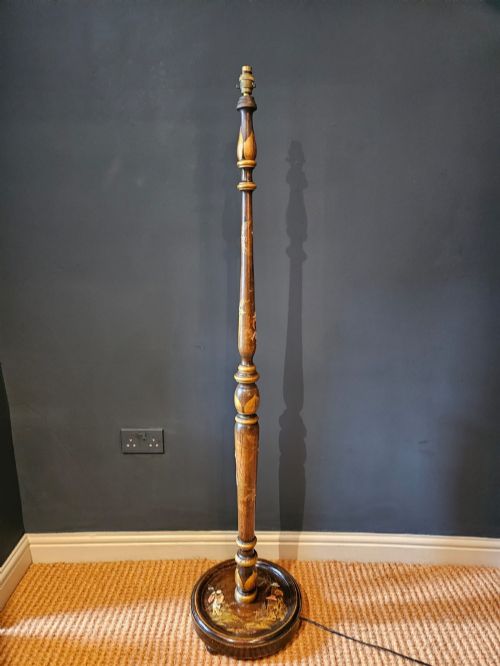
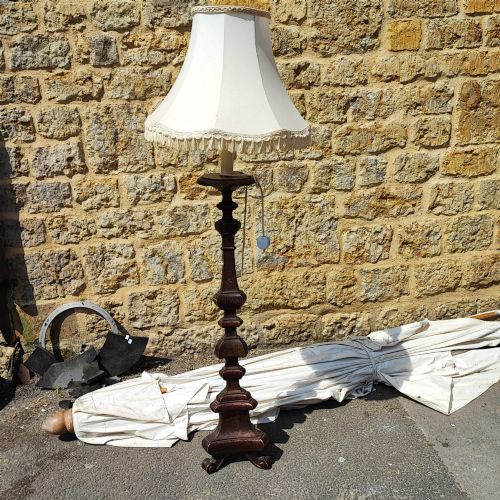
A turned wood standing lamp is a tall floor-standing lighting fixture shaped on a lathe, appearing across periods from the Georgian era through to the 1930s. When searching for a turned wood standing lamp, buyers encounter floor-standing and standard lamp forms alongside related occasional and side tables that share the same turned timber vocabulary.
The pieces on this page span the Victorian, Edwardian, Arts and Crafts, and Regency styles, reflecting the domestic lighting and occasional furniture needs of British homes over two centuries. Most examples date from the late nineteenth and early twentieth centuries, featuring upright shafts supported on tripod or weighted bases.
How they were made
Craftsmen shaped these lamp standards and associated tables on a lathe using dense hardwoods such as mahogany, oak, walnut, rosewood, and ebonised wood. Brass components and fabric shades were frequently integrated into later twentieth-century examples to complete the fitting.
Joinery techniques relied on sturdy tripod legs, turned central columns, and occasional parcel gilt or painted surface embellishments. The timber was selected for grain pattern and strength, ensuring the tall upright shaft could support the weight of the fitting and shade without warping.
Standard lamps and floor lamps appear alongside wine tables, side tables, and occasional tables.
What varies in quality
Quality in a turned wood standing lamp depends upon the crispness of the lathe work and the selection of the timber. Finely profiled mouldings and well-proportioned tripod bases separate superior examples from plain utility pieces.
The integrity of the structural joints and the richness of the natural wood grain determine the standing of an individual lamp. Subtle decorative details, such as parcel gilt accents or carved knops, elevate the piece from simple joinery to accomplished furniture design.
LIBERTY of LONDON·WILLIAM BIRCH·Druce & Co London·E.W Godwin
The Turned Wood Standing Lamp Glossary
- Standard lamp
- A tall floor-standing lamp designed to illuminate a room from a vertical timber shaft. These pieces often match the decor of adjacent side and occasional tables.
- Tripod base
- A three-legged support structure commonly found beneath lamp standards and wine tables. This configuration ensures stability on uneven floorboards.
- Lathe
- A woodworking machine used to rotate timber while cutting tools shape symmetrical columns and legs. This process creates the characteristic turned rings and spindles of the shaft.
- Aesthetic Movement
- A late nineteenth-century design style focusing on visual beauty rather than narrative meaning. Pieces from this movement often feature ebonised wood and clean geometric lines.
- Chinoiserie
- European decorative style employing imitated Chinese motifs and lacquerwork. This aesthetic appears on decorated lamp standards from the early twentieth century.
Turned Wood Standing Lamp: Frequently Asked Questions
What is a turned wood standing lamp?
A turned wood standing lamp is a tall vertical lighting support shaped on a lathe from timbers such as mahogany, oak, and walnut. These fixtures provide ambient room illumination while displaying traditional cabinetmaking skills.
They serve as both functional household items and decorative focal points within traditional interiors, often coordinating with nearby occasional tables.
How do I date a lamp standard?
Dating relies on observing the prevailing style, timber choices, and turning profiles associated with specific eras like the Victorian or Edwardian periods. Details such as brass fittings and shade styles also offer clues to the decade of manufacture.
Cross-referencing the construction methods with documented furniture designs from the same period helps narrow down the production year.
Where should I place a standing lamp?
These tall floor lamps work well in corners, beside reading armchairs, or next to matching occasional and side tables. Their vertical presence helps balance low-ceilinged rooms and fills empty wall space.
Ensure the lamp is positioned near a power socket to avoid trailing wires across walking areas in the room.
How do I care for wooden lamp bases?
Maintain the timber by dusting regularly with a soft, dry cloth and applying occasional quality beeswax to nourish the grain. Keep the lamp away from direct heat sources and strong sunlight to prevent the wood from drying out.
Check the electrical wiring periodically to ensure safety while preserving the historic wooden structure.