



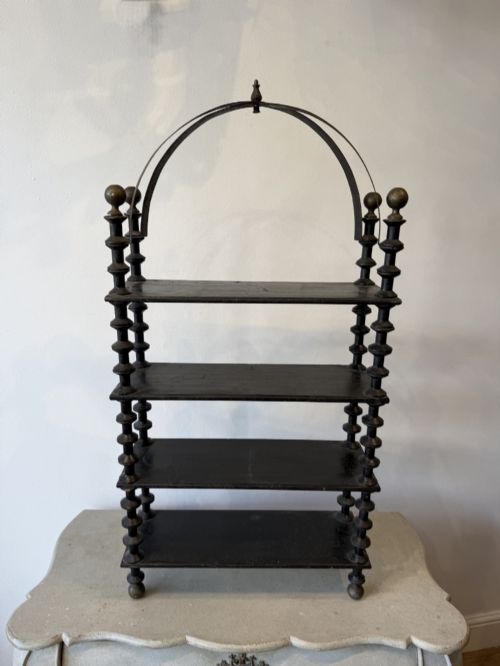

Turned Wood Shelves
Turned wood shelves combine practical display space with sturdy vertical supports, offering useful storage for books and ornaments.
Turned Wood Shelves
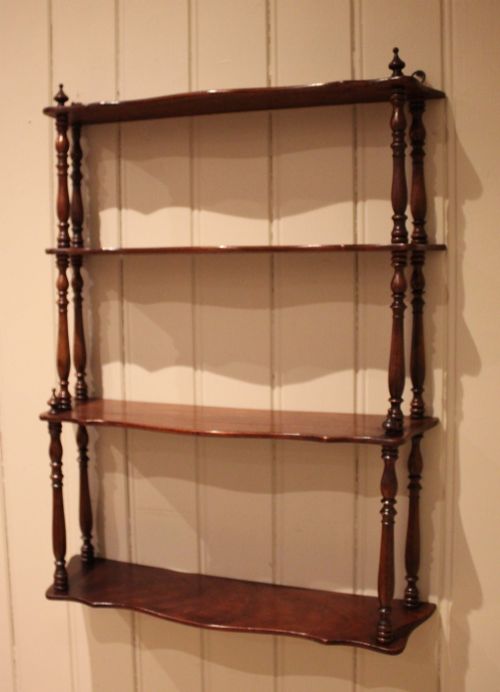
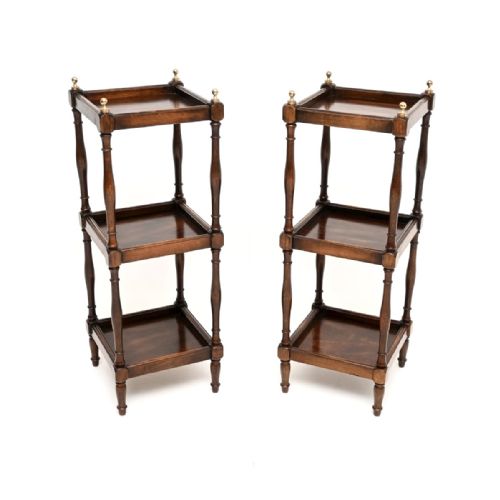
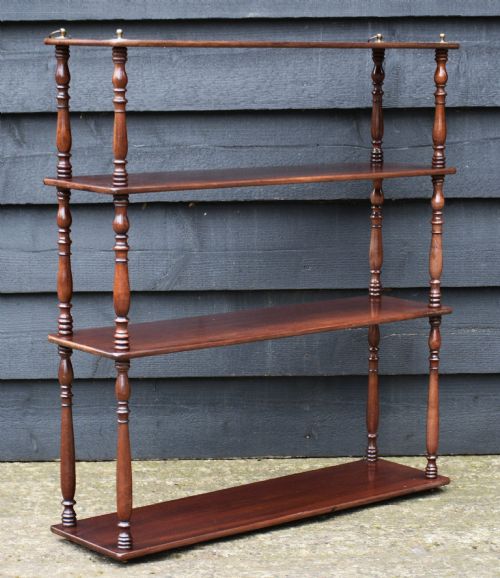
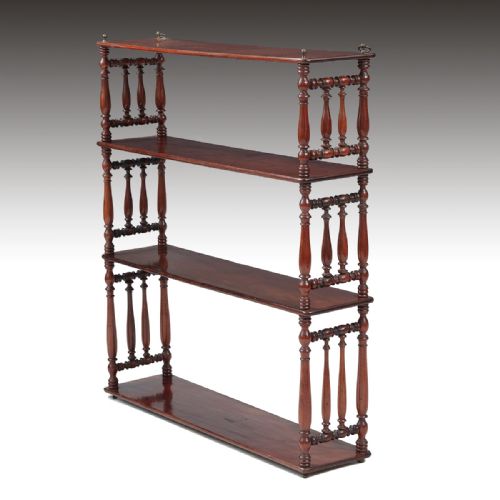
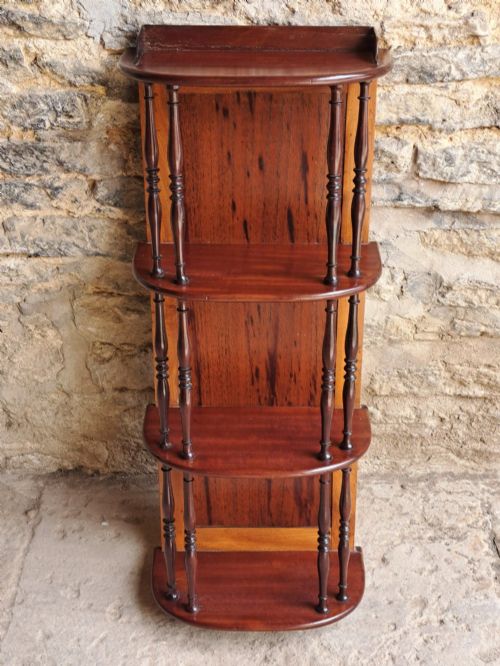
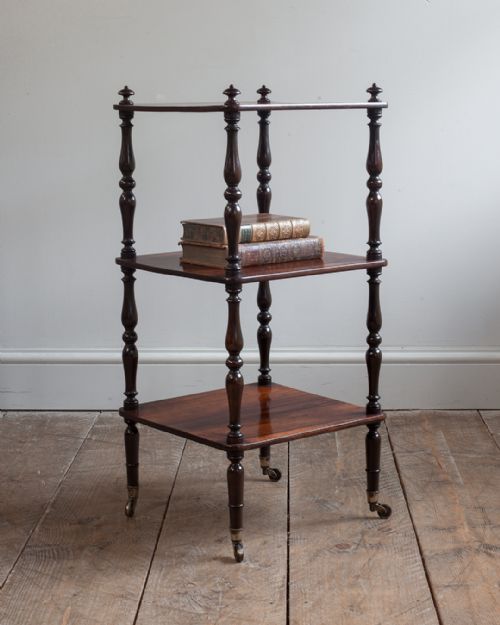
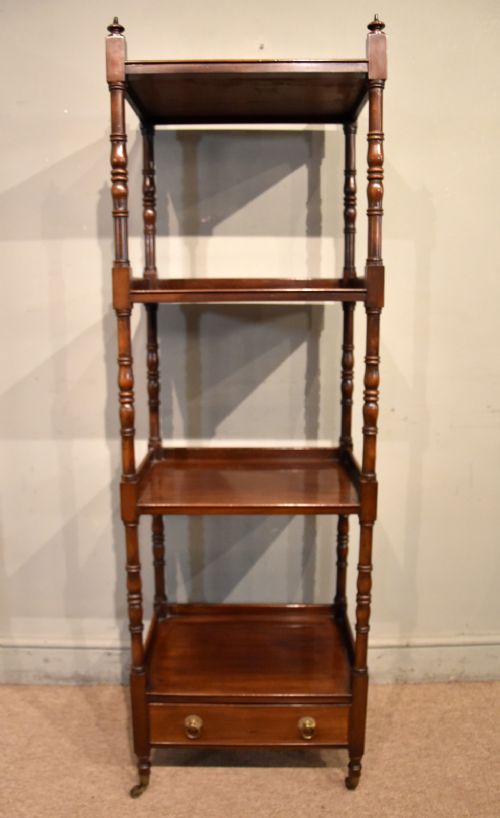
Turned wood shelves appear across multiple periods including the Georgian, Regency, and Victorian eras, taking forms such as wall-hanging units, multi-tiered whatnots, and corner shelves. Buyers seeking turned wood shelves will encounter designs ranging from simple hanging wall tiers to elaborate floor-standing etageres.
The selection includes pieces constructed in styles from English Country and Arts & Crafts to French Chateau, reflecting diverse historical interiors. These items serve to organise and display possessions while adding architectural interest to a room through their shaped vertical supports.
Construction and Materials
Cabinet makers utilised dense hardwoods such as mahogany, oak, walnut, rosewood, and satin birch to build these tier units and wall shelves. Ebonised wood and cherry wood also appear in the inventory, providing varied dark and light surface tones.
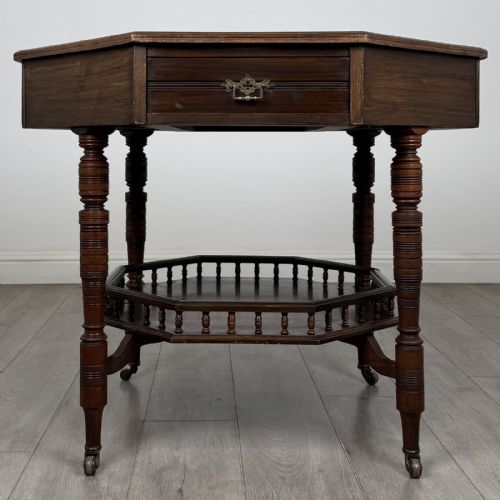
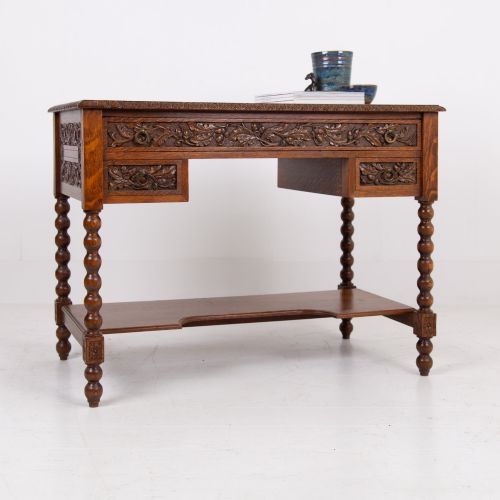
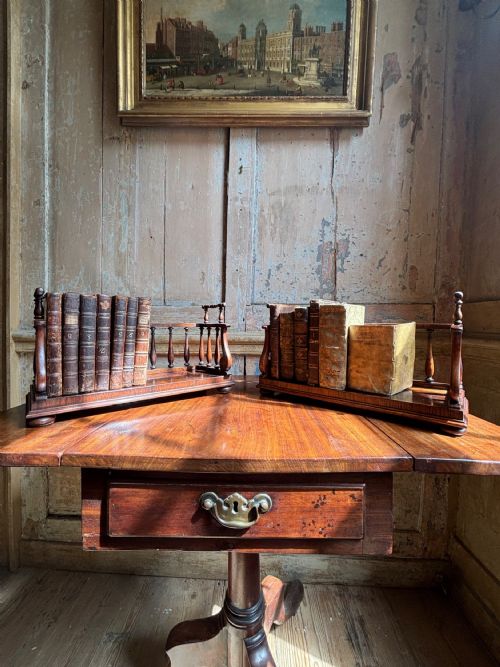
Vertical uprights and structural columns were shaped on a lathe to create characteristic bobbin and turned profiles. Brass elements occasionally supplement the wooden construction, particularly in gallery rails and fittings.
Turned Wood Shelves Retail Price Guide 2026
Typical asking prices for turned wood shelves among the pieces listed under this phrase on Sellingantiques today, from the lower quarter to the upper quarter. They describe what is for sale here now, not the wider market.
French bobbin shelves bring tactile charm to plain walls, turning simple thread-reel shapes into sturdy architectural support.
Judging Quality
Excellence in these pieces rests upon the precision of the turning work on the uprights and the choice of timber figure. Dense grains in mahogany, walnut, and rosewood elevate the visual impact of multi-tiered structures.
Construction methods such as secure joinery between the shelves and turned supports dictate the physical stability of tall hanging shelves and freestanding whatnots.
The Turned Wood Shelves Glossary
- Bobbin
- A style of wood turning resembling a string of rounded reels or bobbins. It creates a decorative, tactile profile along vertical supports.
- Etagere
- A French term for a set of open shelves used for display. These pieces often incorporate graduated tiers supported by turned wooden columns.
- Galleried
- A shelf or table top enclosed by a low openwork rail or spindle gallery. This feature prevented items from sliding off the edge.
- Satin birch
- A light-coloured timber with a natural sheen used for cabinet work. It provides a distinct contrasting tone to darker woods like mahogany.
Turned Wood Shelves: Frequently Asked Questions
What are turned wood shelves used for?
These pieces provide functional surface space for organising books, ceramics, and decorative objects in living spaces. Their vertical design makes efficient use of wall or floor areas without dominating the room.
Freestanding and hanging versions offer flexible display options depending on the layout of the interior. They suit studies, hallways, and reception rooms alike.
How do I identify a Georgian whatnot?
Georgian examples typically feature mahogany construction with clean structural lines and carefully turned support columns. They date from the late eighteenth or early nineteenth century.
These pieces often display a tiered format with open shelves designed for practical display. The proportion and timber selection offer clues to their age.
What is the difference between a whatnot and a wall shelf?
Whatnots generally stand on the floor as multi-tiered storage units supported by four vertical posts. They often incorporate drawers or cupboards at the base.
Wall shelves are designed to be fixed directly to vertical surfaces, hanging securely without floor supports. Both variants frequently utilise turned wooden elements.
Which woods are most common in these pieces?
Mahogany appears most frequently across various periods, prized for its strength and rich reddish-brown colour. Walnut, oak, and rosewood also feature prominently in many designs.
Alternative timbers such as satin birch, cherry wood, and ebonised wood provide lighter or darker aesthetic options. Brass details sometimes accent these wooden structures.