




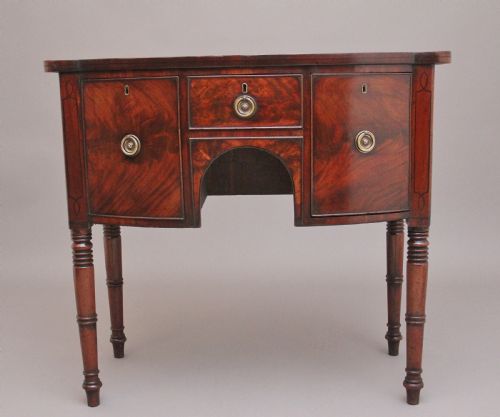

Turned Wood Server
A turned wood server provides sturdy utility and classic lines for a dining room or hall.
Turned Wood Server
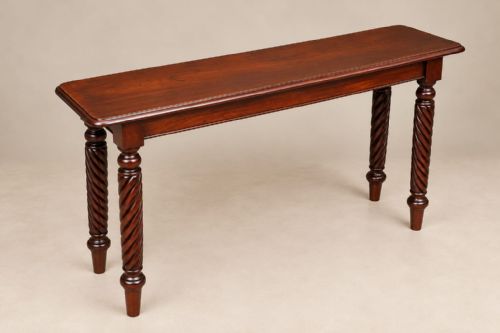
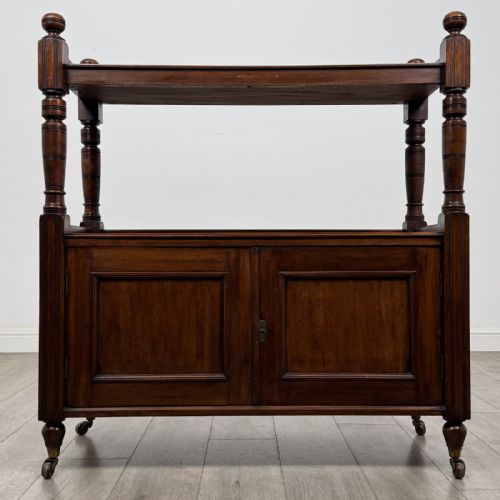
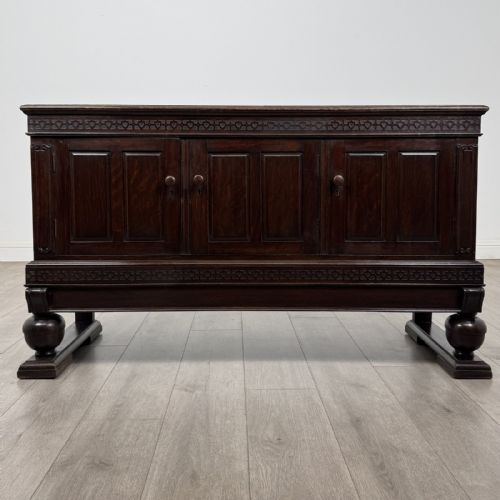
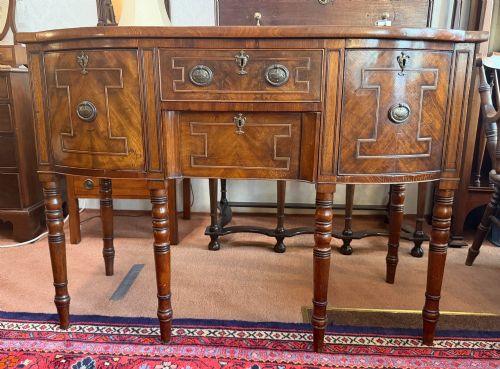
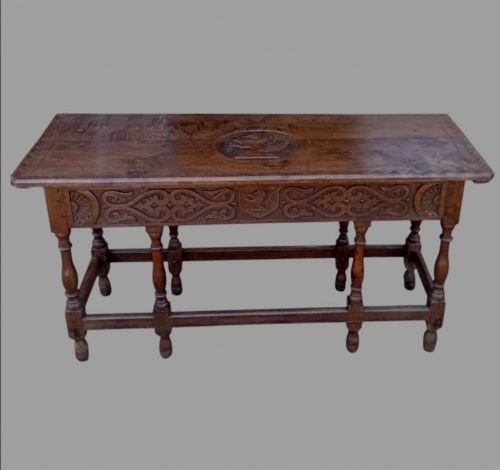
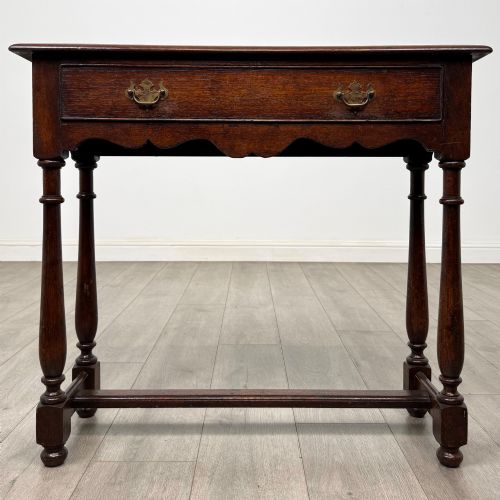
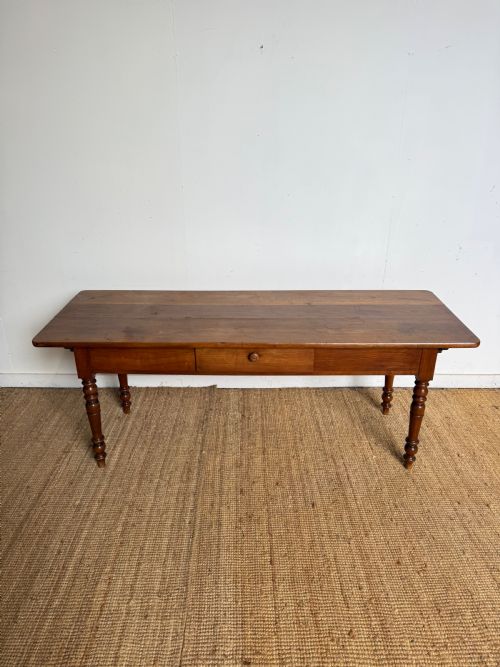
When you search for a turned wood server, you are looking at practical serving surfaces and storage furniture built from timber with characterful lathe-turned supports. The pieces on this page span several centuries and styles, taking the form of sideboards, console tables, dumb waiters, and side tables.
The most common versions you will meet here date from the 19th Century and the Victorian period, alongside earlier Georgian and 18th Century examples. These items served dining rooms and kitchens for holding food, tableware, and silver.
Makers utilised native and imported hardwoods like mahogany, oak, walnut, and cherrywood to construct these functional items. Regional variations include English country designs and French country pieces.
How they were made
Cabinet makers shaped solid timbers such as mahogany, oak, walnut, and cherrywood using traditional joinery methods. Lathes turned the structural legs and columns into smooth baluster or spindle forms.
Surfaces frequently feature flame mahogany veneer or simple polished timber tops, whilst secondary woods like pine appear in internal framing. Drawers show hand-cut dovetailing and oak linings in many period pieces.
Turned Wood Server Retail Price Guide 2026
Typical asking prices for turned wood server among the pieces listed under this phrase on Sellingantiques today, from the lower quarter to the upper quarter. They describe what is for sale here now, not the wider market.
Listings span the 17th, 18th, 19th, and 20th centuries, featuring oak, mahogany, walnut, cherrywood, and pine.
What varies in quality
The choice of primary timber and the crispness of the lathe work set better pieces apart from standard utility items. Dense mahogany, figured walnut, and richly grained oak show greater depth than plain pine or secondary softwoods.
Subtlety in proportion and the integration of turned elements dictate overall elegance. Pieces with precise joinery and well-figured veneer represent the upper end of what you encounter here.
The Turned Wood Server Glossary
- Dumb waiter
- A tiered stand or serving table used to hold dishes near a dining table without servants present. These often feature central turned columns supporting multiple round shelves.
- Console table
- A table designed to stand flat against a wall, frequently supported by decorative brackets or turned legs. They served hallways and principal rooms for display.
- Bow-front
- A furniture front that curves outward in a convex shape. This profile softens the rectangular lines of sideboards and serving tables.
- Potboard dresser
- A kitchen or dining base featuring an open lower shelf for storing pots and heavy vessels. These heavy oak pieces anchored rural and country houses.
- Lowboy
- A small table with drawers, raised on four legs, functioning as a dressing table or side serving surface. 18th century examples display fine proportions in walnut or mahogany.
Turned Wood Server: Frequently Asked Questions
What is a turned wood server used for?
These items function as serving surfaces, sideboards, or display tables in dining rooms and hallways. They hold serving dishes, lamps, and daily objects.
Historically, tier variations like dumb waiters kept food within reach during meals without requiring attendants.
How do I date an antique server?
Examine the wood species, construction marks, and secondary timbers used in the drawers and backing. Georgian and 18th century pieces display specific hand-cut joinery.
Victorian and later 19th century items often incorporate heavier proportions and machine-assisted elements alongside traditional turning.
Where should I place a console table?
Console tables fit well against hallway walls or in living rooms beneath mirrors and artwork. Their shallow depth allows them to occupy narrow passages.
They provide a convenient surface for drop items while introducing period character to a room.
What woods were used in these pieces?
Cabinet makers relied heavily on mahogany, oak, walnut, and cherrywood for visible surfaces. Flame mahogany veneer added decorative grain patterns to drawer fronts and tops.
Secondary timbers like pine frequently appear inside drawers and carcass backs.