

Turned Wood Lamps
Turned wood lamps are practical items of domestic illumination that bring character and period charm to any room through their lathe-shaped columns.
Turned Wood Lamps
Turned wood lamps encompass standard lamps and floor lamps designed to illuminate living spaces with traditional craftsmanship.
Buyers browsing turned wood lamps encounter forms produced during periods such as the Edwardian era, the 1930s, and the Victorian age.
Materials and Construction
Craftsmen shaped these lamp bodies on a lathe using hardwoods including oak, walnut, mahogany, elm, and yew.
Construction frequently incorporated brass fittings and fabric components to complete the functional electrical or lighting apparatus.
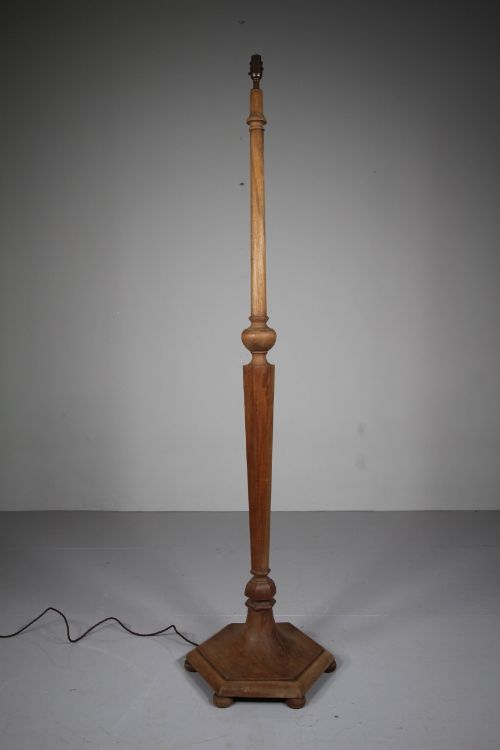
A solitary 1930s floor lamp stands tall among tables, waiting to shed light on centuries of stray crumbs.
Quality and Distinction
Excellence in turned wood lamps rests upon the crispness of the lathe work and the selection of figured timber.
Proportion and stability separate standard utility pieces from finer examples designed with balanced proportions and decorative turning.
Heals
The Turned Wood Lamps Glossary
- Standard Lamp
- A tall freestanding floor lamp designed to hold a shade and light bulb at an elevated height.
- Lathe
- A woodworking machine used to rotate timber against cutting tools to create symmetrical turned columns.
- Bobbin Turning
- A decorative woodwork style featuring rounded spool-like shapes carved in succession along a spindle.
- Hardwood
- Dense timber sourced from broad-leaved deciduous trees such as oak, walnut, and mahogany.
Turned Wood Lamps: Frequently Asked Questions
What periods do these lamps come from?
The available pieces span various historical eras, including the Edwardian period, the Victorian age, and the 1930s.
Craftsmen produced these items using traditional woodwork methods characteristic of their respective decades.
How were turned wood lamps used?
These tall floor lamps and smaller bases served to illuminate dark corners and provide ambient light in domestic rooms.
They stood beside seating areas to hold fabric shades and direct light downward for reading.
Are these lamps rewired for modern use?
Many examples are updated with modern electrical wiring to ensure they meet contemporary safety standards for home illumination.
Rewiring allows antique and vintage lamp bodies to function safely with standard modern wall sockets.
What woods were used for lamp bases?
Maker workshops utilised sturdy hardwoods including oak, walnut, mahogany, elm, and yew for stability and visual grain.
These timbers were selected for their durability on tall vertical columns subject to daily knocks.