


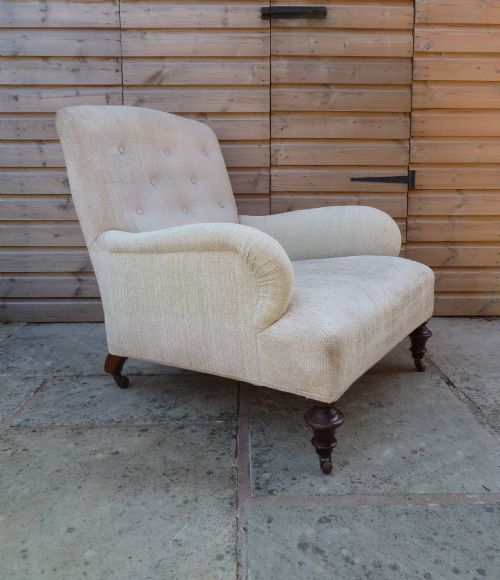
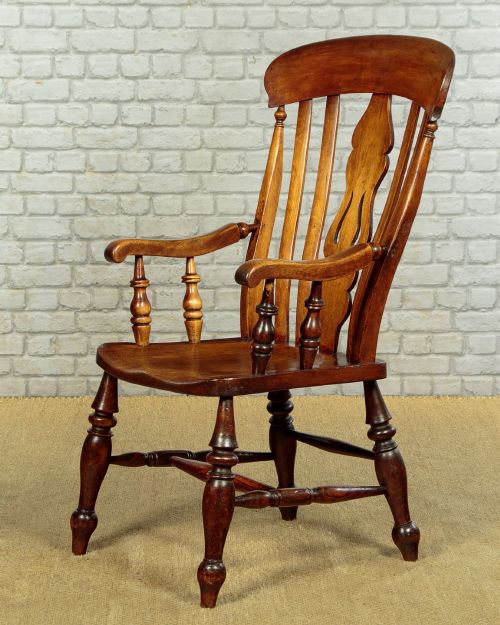
Turned Wood Country Armchair
When you handle a turned wood country armchair, you hold centuries of rural craft shaped from native timber and bound for cottage hearths.
Turned Wood Country Armchair
A turned wood country armchair brings together the honest utility of domestic seating and the vernacular traditions of regional workshops. When you search for a turned wood country armchair, you meet sturdy seating forms designed for daily household use rather than formal drawing rooms.
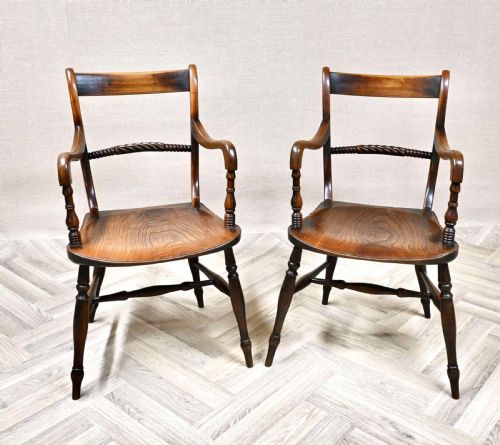
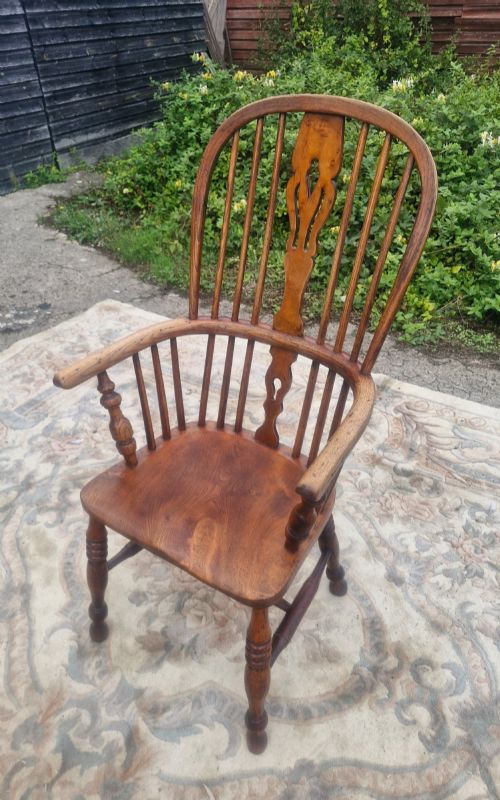
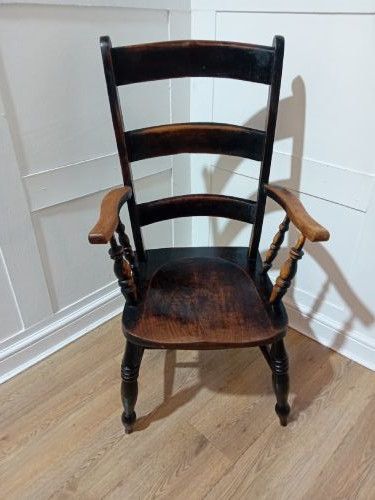
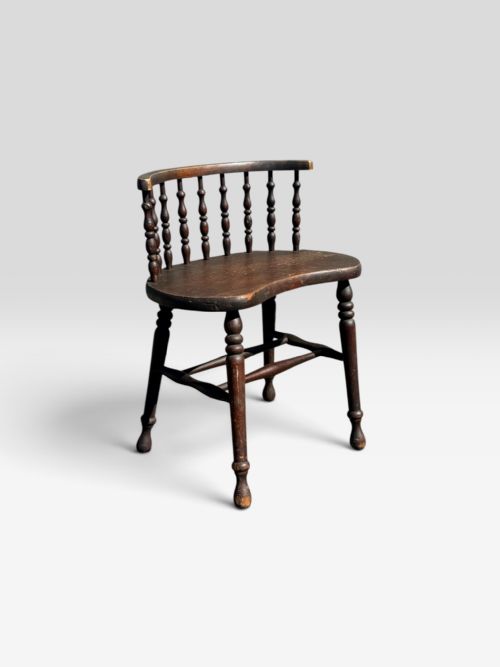
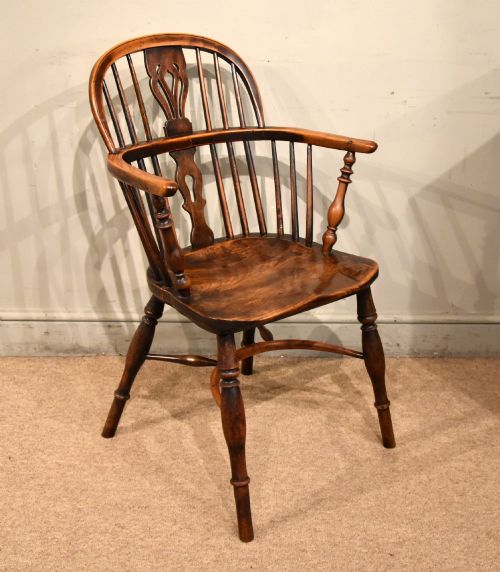
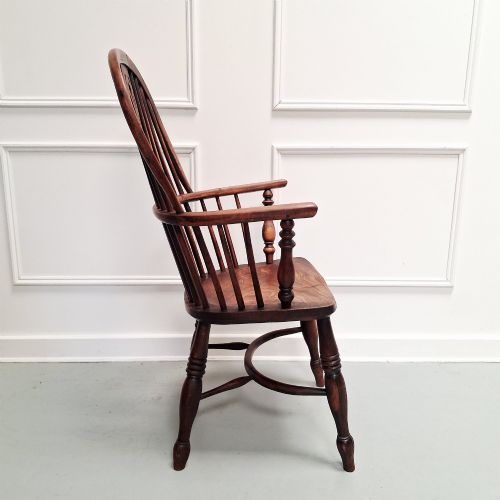
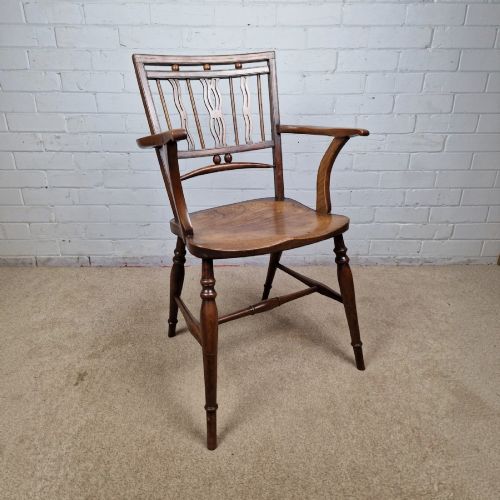
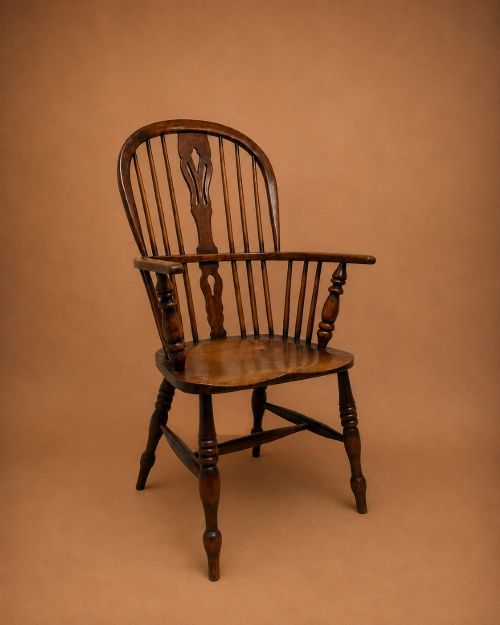
The most common examples on this page are Windsor chairs and spindle-back chairs originating from nineteenth-century English counties. These pieces typically combine solid timber seats with slender turned components to provide reliable support.
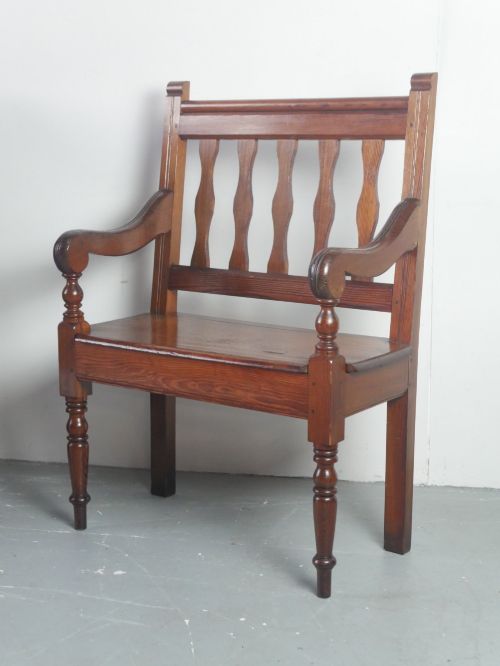
Makers drew on local timber stocks and traditional joining methods, producing armchairs with high backs, stick backs, and occasional rocking frames. Each piece reflects the specific regional preferences of turners and chair bodgers working across Britain.
How they were made
Craftsmen built these armchairs using a combination of dense hardwoods for frames and seats, pairing elm seats with ash, beech, or yew for spindles and legs. Turning lathes shaped individual stretchers and uprights from green timber, which tightened as it seasoned around pegged joints.
Seats were carved from solid planks of elm, hollowed into comfortable saddle shapes using adzes and scorps. Other variations incorporate woven rush drop-in seats supported by beech or ash frameworks.
Some nineteenth-century makers utilised simulated rosewood paint finishes when actual exotic timber was too costly for rural households.
What varies in quality
The distinction between ordinary and superior examples rests in the selection of timber and the harmony of the turning. Yew wood examples with rich grain patterns and well-proportioned wheel-backs or hoop-backs stand at the higher end of the scale.
Construction integrity determines longevity, seen in tight wedged tenons and original surface patination rather than over-restored finishes. Chairs retaining their early or original patinated surfaces demonstrate greater integrity than those stripped down to bare wood.
J Spencer·E W Godwin
The Turned Wood Country Armchair Glossary
- Windsor chair
- A chair built with a solid wooden saddle seat into which the legs, back spindles, and bow are separately inserted. This construction method provides exceptional rigidity.
- Bodger
- A travelling wood-turner who worked in the woods near the felled timber, using a pole lathe to produce chair legs and spindles. Their work supplied local chair-makers.
- Crinoline stretcher
- An arched or bowed stretcher connecting the legs of a Windsor chair to provide structural reinforcement. It takes its name from the shape of nineteenth-century hoop skirts.
- Rush seat
- A seating surface woven from dried marsh rushes around a wooden frame. This technique produces a durable, flexible seat common in vernacular chairs.
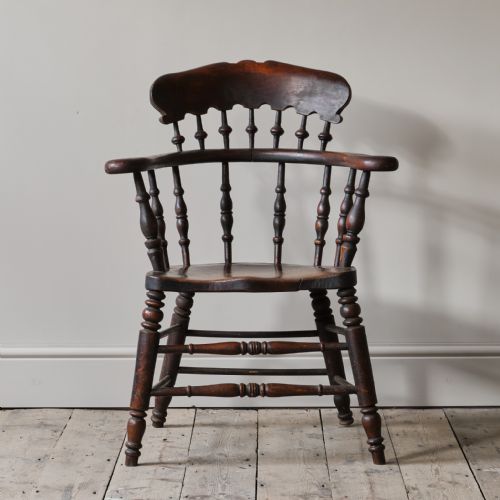
- Smokers bow
- A low-backed Windsor armchair with a continuous curved armrail resting on short spindles. These chairs were widely used in domestic parlours and country inns.
Turned Wood Country Armchair: Frequently Asked Questions
How do I identify a Windsor armchair?
A Windsor armchair is recognised by its solid wooden seat into which the legs and back components are tenoned directly, without a continuous upholstered frame.
Most examples feature shaped wooden seats, turned undercarriages, and stick or hoop backs built for daily domestic use.
What woods were used for these armchairs?
Rural makers selected native timbers based on their specific structural properties, combining dense woods for durability with flexible woods for spindles.
Elm was chosen for solid carved seats because it resists splitting, while ash and beech provided strong, pliable material for turned legs and curved backs.
How do I care for a rush-seated armchair?
Rush seats require stable indoor humidity and gentle cleaning to prevent the natural fibres from drying out and fracturing over time.
Keep these chairs away from direct heat sources and damp environments, using a soft brush to remove dust from the woven strands.
How can I tell the age of a country armchair?
Age is determined by observing construction methods, tool marks, timber shrinkage, and the overall style of the turning and joinery.
Earlier nineteenth-century and eighteenth-century examples display hand-turned variations in the spindles and deeper patination on the exposed wooden surfaces.