






Turned Timber Urns
Turned timber urns are classic decorative vessels shaped on a lathe, prized by collectors for bringing warm grain and sculptural form into a room.
Turned Timber Urns
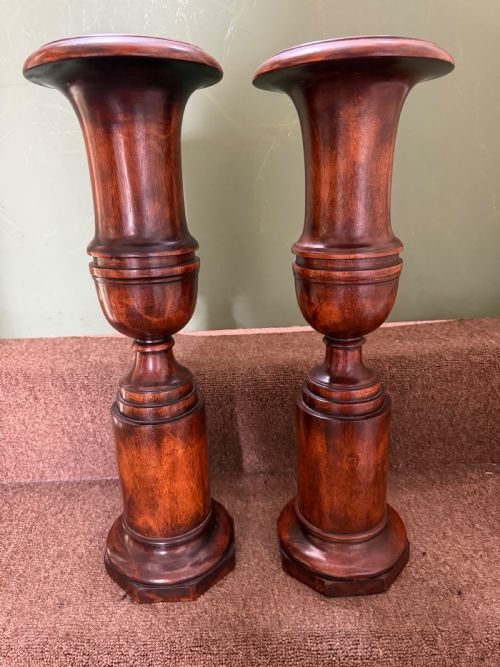
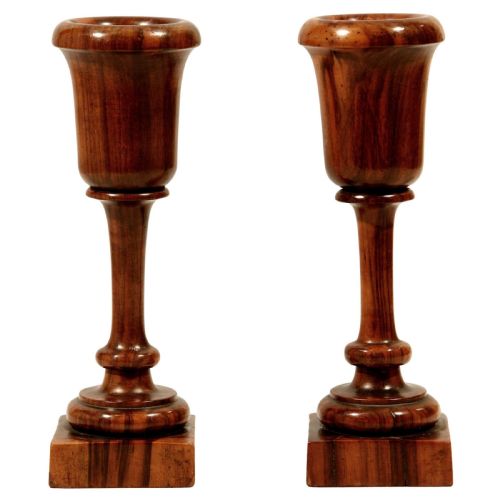
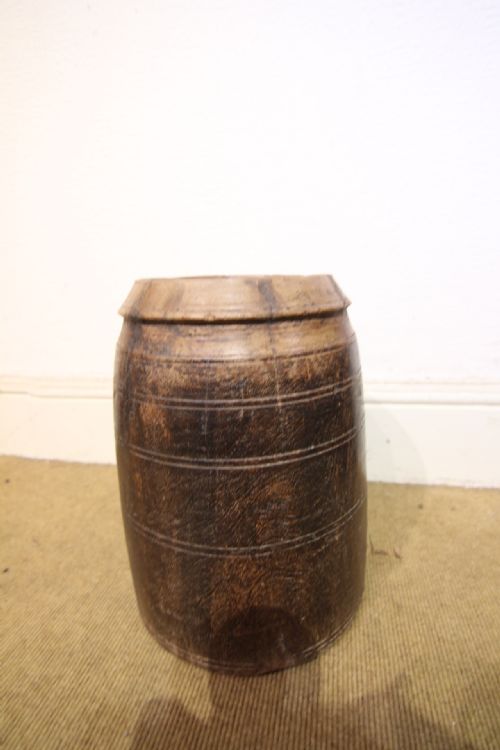
Turned timber urns span decorative vases, spill vases, and architectural pedestals dating from the eighteenth and nineteenth centuries. These wooden vessels display classical influences, ranging from Georgian and Regency forms to rustic primitive styles.
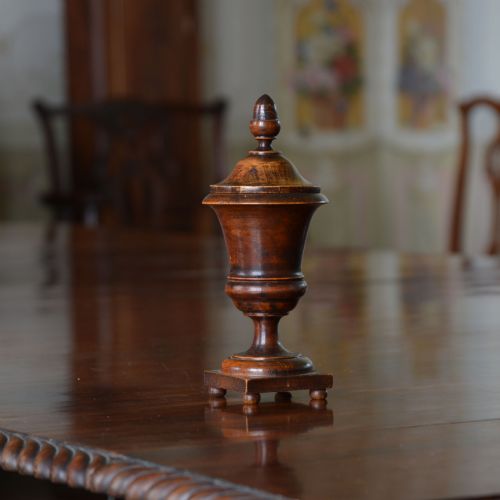
The versions most commonly found here are walnut, mahogany, and fruitwood pieces shaped with traditional lathe techniques. Makers drew upon neoclassical design vocabulary, producing campana shapes and tall decorative vases meant for display.
Beyond purely decorative vases, the category includes treen items such as lemon squeezers and spill vases, alongside larger plant stands and display pedestals. Each piece highlights the natural figuring of timber through careful turning.
How they were made
Woodturners shaped these urns and vessels on a lathe, utilising dense timbers like lignum vitae, boxwood, walnut, and mahogany. These hard and close-grained woods allowed artisans to cut crisp neoclassical profiles and thin walls without splitting.
Makers selected fruitwoods and yew wood for their rich, variegated grain patterns, turning sections symmetrically before finishing the surfaces by hand. Simpler rustic pieces relied on straightforward lathe work, while neoclassical examples required precise collared rims and stepped bases.
Someone spent hours spinning heavy lignum vitae on a lathe just so you could put dried stems in it.
What varies in quality
The refinement of the lathe work largely separates standard utility items from superior decorative pieces. Crisp proportions, well-balanced collars, and clean stepped bases indicate a skilled hand at the bench.
The choice of material heavily dictates distinction, with dense exotic hardwoods like lignum vitae or finely figured yew wood commanding greater visual presence than plain utilitarian timber. The integrity of the turned form and the depth of the natural wood grain determine the overall success of the piece.
The Turned Timber Urns Glossary
- Campana urn
- A bell-shaped vessel with an everted rim, originating from classical antiquity and frequently interpreted in timber.
- Treen
- Small handmade wooden household objects and decorative items produced before the widespread use of plastics.
- Spill vase
- A small upright vessel designed to hold slender tapers of wood or paper used for lighting fires and candles.
- Lignum vitae
- A remarkably heavy and dense heartwood obtained from trees of the genus Guaiacum, prized for its oily self-lubricating nature and dark coloration.
- Neoclassical
- A style spanning the eighteenth and nineteenth centuries that revived the classical forms and motifs of ancient Greece and Rome.
Turned Timber Urns: Frequently Asked Questions
What are turned timber urns?
Turned timber urns are decorative and functional wooden vessels shaped on a lathe using traditional woodworking methods. They encompass classical vases, treen items, and display pedestals.
Most examples date from the eighteenth and nineteenth centuries, reflecting periods such as the Georgian and Victorian eras. Their forms draw heavily on neoclassical design, showcasing the natural grain of woods like walnut, mahogany, and fruitwood.
How were wooden urns used?
These turned wooden objects served both decorative and practical purposes in historic interiors. Many functioned purely as ornamental vases on side tables or mantelpieces.
Smaller examples like spill vases held wooden tapers near hearths, while utilitarian treen pieces such as lemon squeezers performed daily kitchen tasks. Larger turned timber pieces acted as pedestals and plant stands for displaying sculpture.
How do I care for antique timber?
Antique turned wood requires stable indoor conditions away from direct heat sources and sudden temperature fluctuations. Excessive dryness can cause timber to shrink and split.
Maintain the surface by dusting gently with a dry cloth and occasionally applying a suitable traditional wax polish sparingly. Avoid liquid cleaners and modern silicone sprays, which can penetrate and damage aged wooden finishes.
How do I tell periods apart?
Identifying the period relies on observing wood species, turning styles, and structural proportions. Eighteenth-century pieces often feature rich fruitwoods and yew with simpler, heavier classical lines.
Nineteenth-century examples frequently utilise dark dense timbers like walnut and lignum vitae, sometimes displaying crisper neoclassical detailing or heavier Victorian proportions. Comparing the turning technique against known historical furniture styles helps narrow the date of manufacture.