



Turned Stem Tilt Table
A turned stem tilt table offers the practical charm of a flexible surface, folding away neatly when floor space matters.
Turned Stem Tilt Table
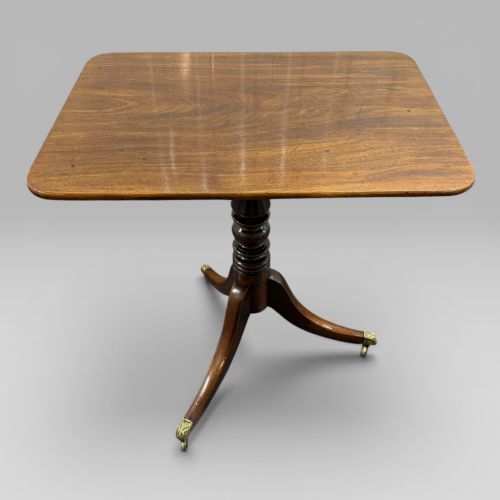
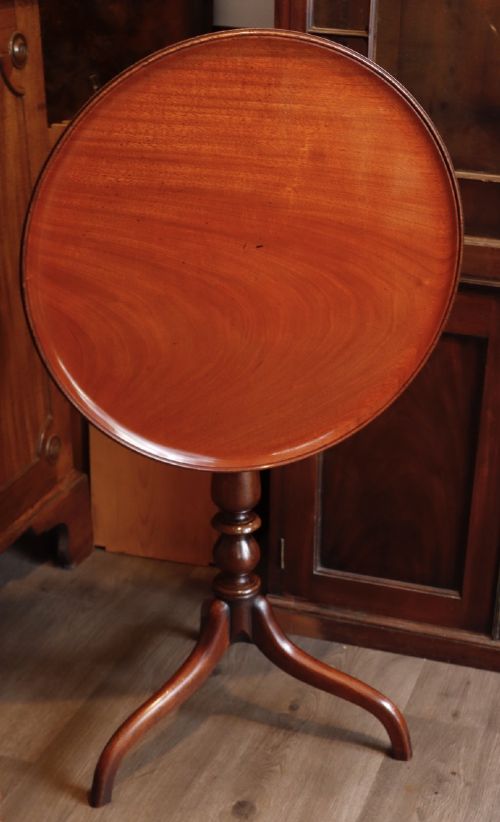
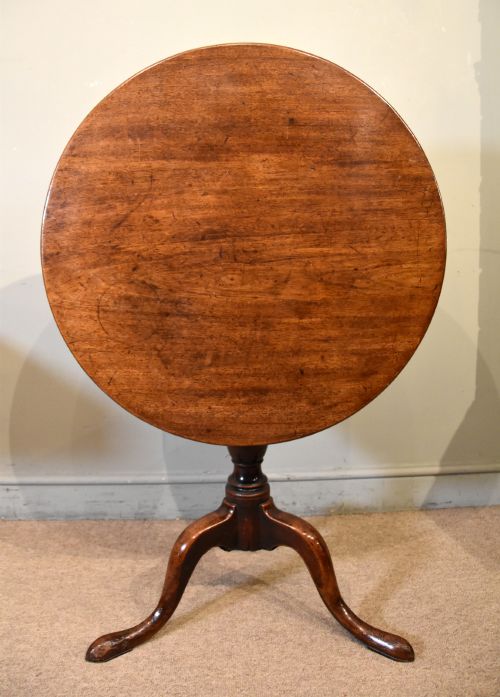
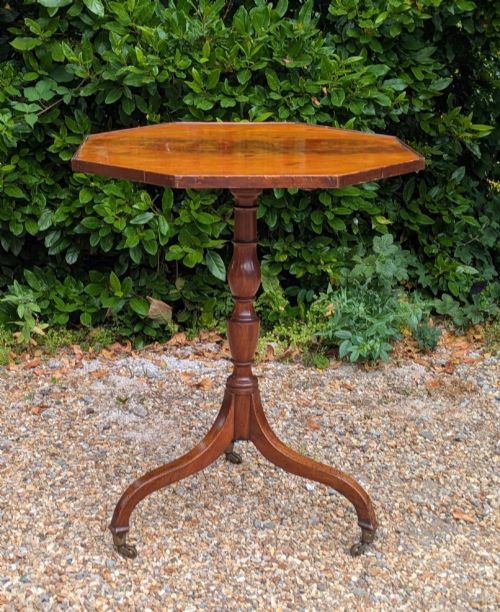
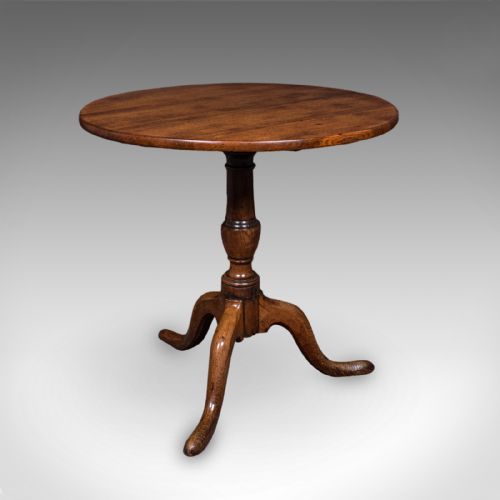
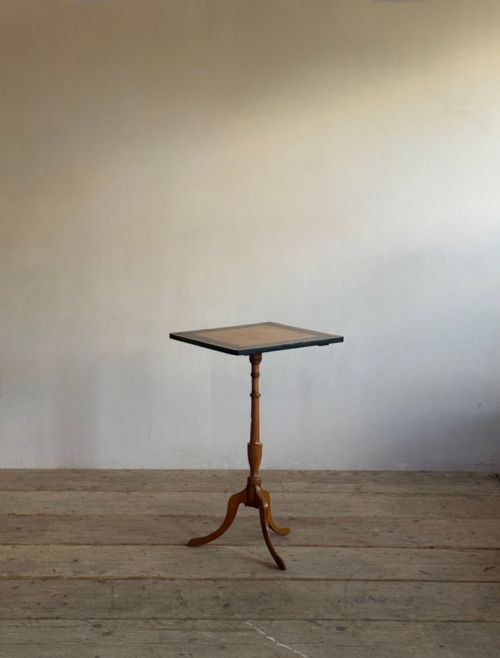
A turned stem tilt table combines a circular or occasional top with a central turned column and three support legs. Buyers searching for a turned stem tilt table will encounter various forms across this selection, including wine tables, lamp tables, and occasional tables designed for compact spaces.
The material palette spans from dense hardwoods like mahogany and oak down to lighter fruitwoods, ash, sycamore, and beech. Many examples date from the Georgian and Regency periods, stretching into the nineteenth century with occasional twentieth-century iterations.
Most pieces feature a tilt-top action mechanism, allowing the tabletop to pivot into a vertical position for storage against a wall. This utilitarian function dictated the tripod base construction, keeping the table stable on uneven floors while remaining light enough to move easily around a room.
How they were made
Cabinetmakers shaped the central supports on a lathe, producing the distinct turned profiles that define these stems. Selected timbers such as mahogany, oak, and fruitwood formed the circular tops, occasionally enhanced by decorative elements like penwork or sunburst veneers.
Joinery techniques relied on sturdy central blocks and tenoned legs to bear the weight of the tilting mechanism. Brass components often secured the catch mechanism beneath the tabletop, ensuring the surface remained locked in place when horizontal.
Turned Stem Tilt Table Retail Price Guide 2026
Typical asking prices for turned stem tilt table among the pieces listed under this phrase on Sellingantiques today, from the lower quarter to the upper quarter. They describe what is for sale here now, not the wider market.
Listings feature woods spanning mahogany, oak, fruitwood, beech, sycamore, ash, and palm wood across Georgian, Regency, and Victorian periods.
What varies in quality
Quality rests primarily in the choice of timber and the execution of the turned stem. A single-piece solid mahogany top commands greater attention than a multi-plank construction, whilst crisply carved tripod legs demonstrate superior craftsmanship.
The precision of the tilt action mechanism also dictates the grade of the piece, where smooth movement without excessive play separates standard utility items from finer parlour examples.
The Turned Stem Tilt Table Glossary
- Tilt top
- A tabletop mounted on a pivot mechanism that allows the surface to fold vertically when not in use. This clever design saved valuable floor space in historical rooms.
- Tripod base
- A three-legged support structure attached to a central column. It ensures stability on uneven historic floorboards without rocking.
- Wine table
- A small occasional table traditionally used for holding glassware or bottles during evening gatherings. These usually feature compact circular tops.
- Plum pudding mahogany
- A prized cut of mahogany displaying swirling, speckled grain patterns resembling Christmas pudding. Cabinetmakers reserved this decorative timber for high-status surfaces.
- Penwork
- A surface decoration technique using ink to draw intricate motifs directly onto wood. It creates detailed contrasting patterns without heavy carving.
Turned Stem Tilt Table: Frequently Asked Questions
What was a turned stem tilt table used for?
These pieces served as moveable lamp tables, wine stands, or general occasional surfaces for parlours and drawing rooms.
When not in use, the tabletop tilted vertically so the entire frame could slide away against a wall or into a corner.
How do I spot a Georgian period table?
Look for dense timbers like mahogany or fruitwood paired with hand-turned stems and traditional tripod leg proportions.
Construction details such as pegged tenons and hand-cut joinery often point toward eighteenth-century workshop practices.
Are tilt top mechanisms delicate?
The brass catches and wooden pivot blocks were built for daily utility, though centuries of use can introduce minor looseness.
Operating the catch carefully ensures the mechanism remains stable whether the table is locked flat or stored upright.
Where should I place one at home?
Their compact footprints make them well suited beside reading chairs, sofas, or empty corners in a hallway.
You can keep the top lowered for holding drinks and lamps, or tilt the face outward to display the decorative wood grain.