


Turned Mahogany Lamps
Turned mahogany lamps and related occasional tables combine dense hardwood with column supports, offering steady surfaces for illumination and display across Georgian, Regency, Victorian, and Edwardian interiors.
Turned Mahogany Lamps
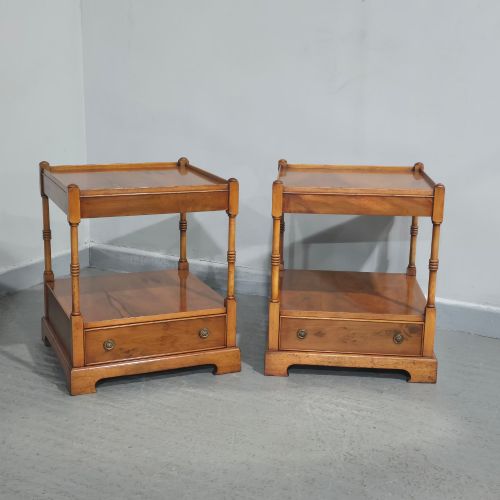
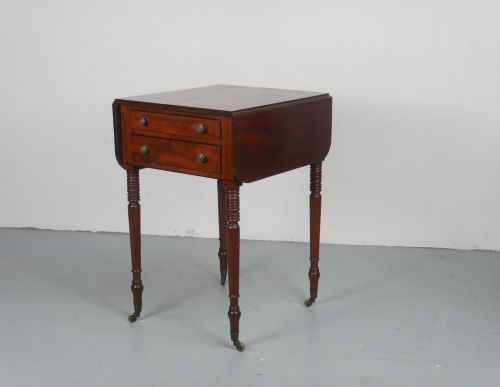
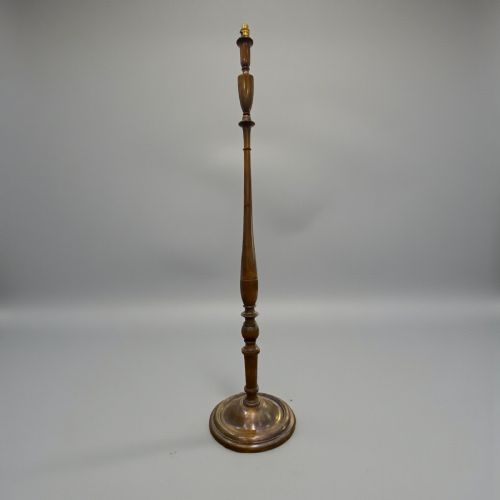
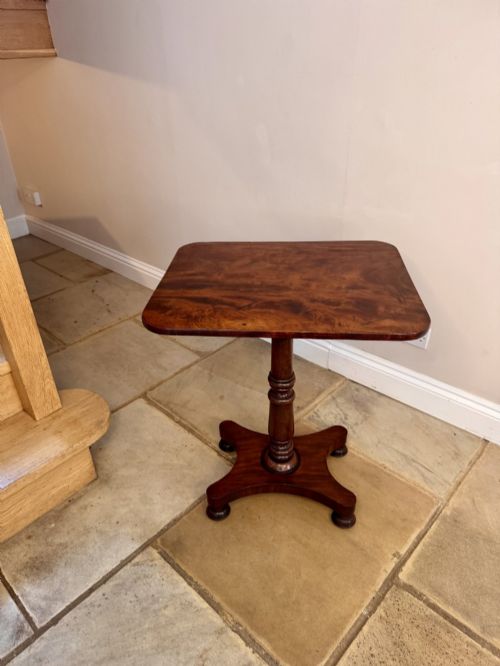
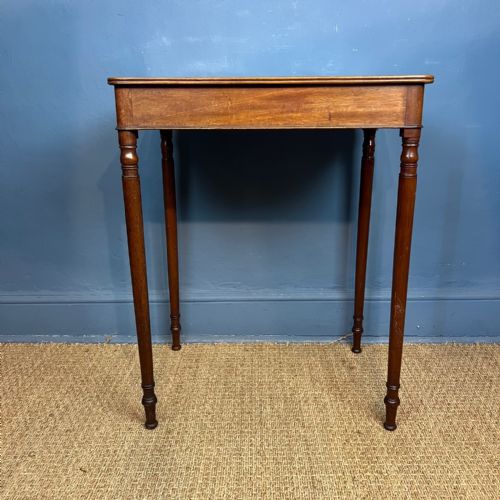
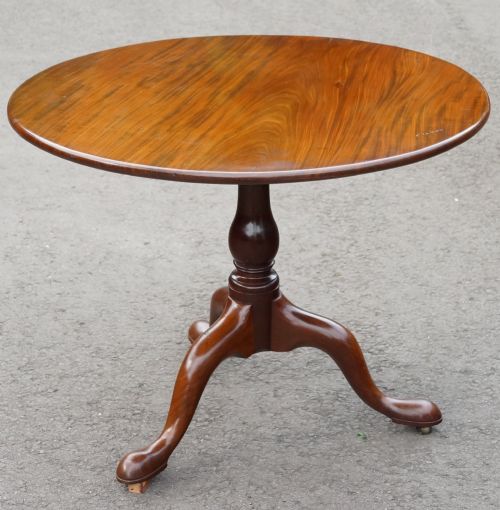
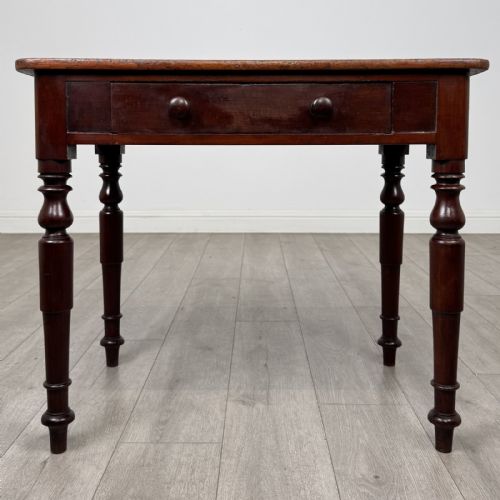
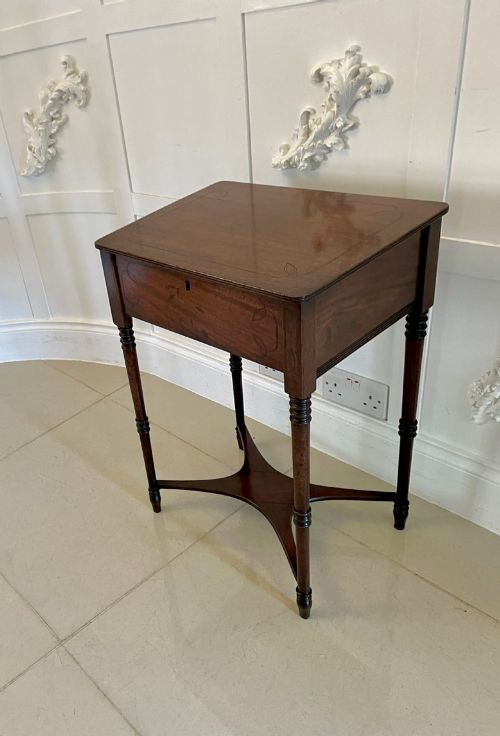
When you search for turned mahogany lamps, you encounter a selection of solid timber pieces that serve primarily as lamp stands, side tables, or wine tables. The listings span the Georgian, Regency, Victorian, and Edwardian periods, alongside early twentieth-century examples.
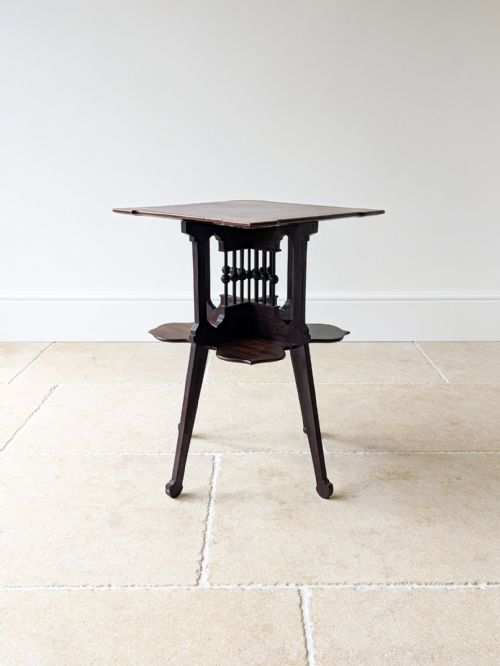
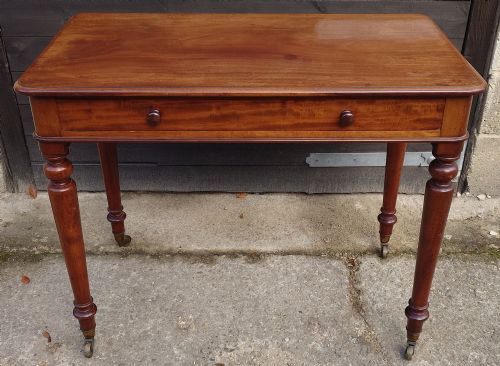
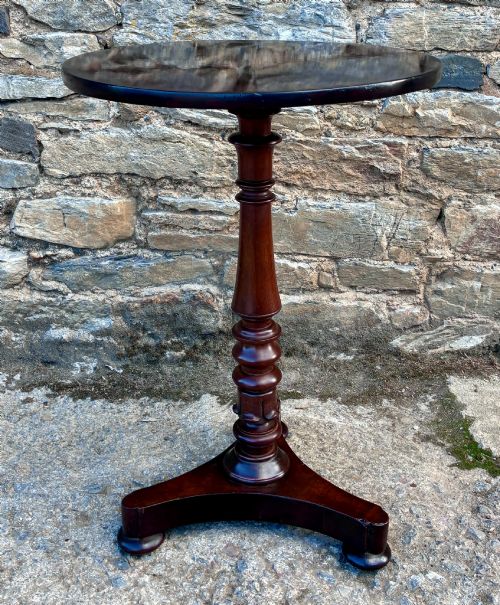
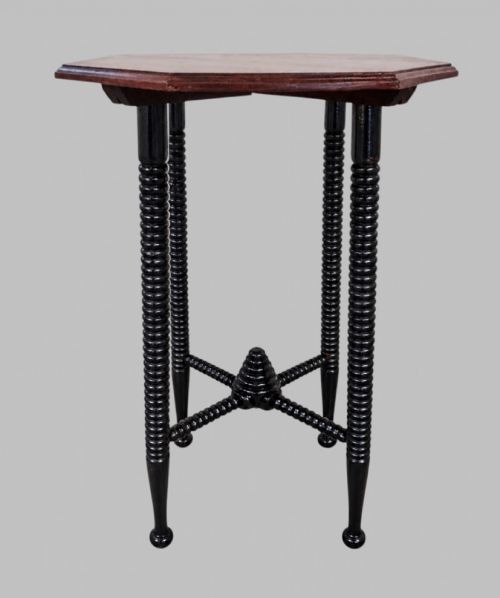
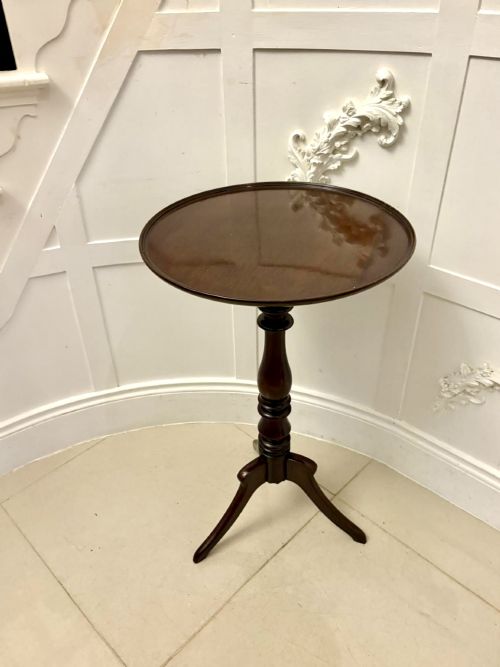
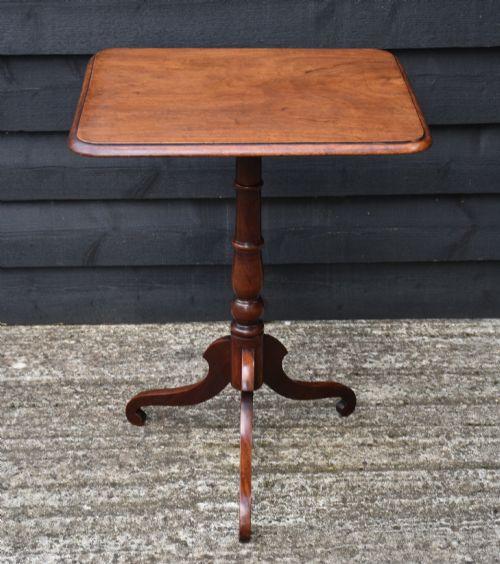
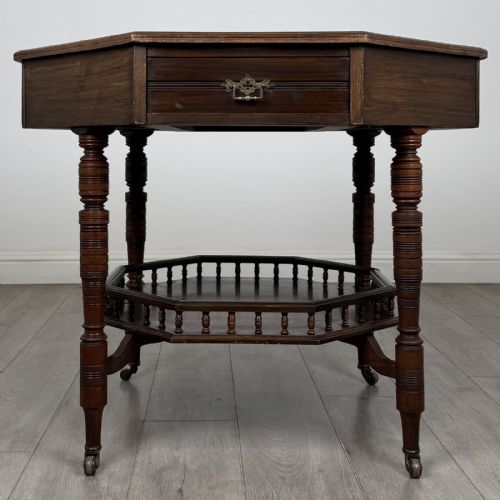
The dominant forms on this page include tripod wine tables, octagonal occasional tables, rectangular lamp tables, and standard floor lamps. These items generally function as portable surfaces placed beside seating or in corners to hold lighting.
Origins stretch across the nineteenth and early twentieth centuries, incorporating stylistic revivals such as William IV and Regency variants. The timber remains consistently dark and heavy, reflecting standard British furniture production methods of those eras.
Materials and construction
Makers relied on solid mahogany and hardwood for the structural frames, tabletops, and turned columns. Brass components often appear as fittings, castors, or gallery rails, while secondary materials such as boxwood inlay, leather inserts, and gold leaf provide decorative contrast.
Lathe-turning shaped the central pedestals and vertical supports into bobbin, column, or tripod profiles. Joinery typically involved pegged mortise and tenon joints or threaded central screws to secure tabletops to turned pedestals.
Turned Mahogany Lamps Retail Price Guide 2026
Typical asking prices for turned mahogany lamps among the pieces listed under this phrase on Sellingantiques today, from the lower quarter to the upper quarter. They describe what is for sale here now, not the wider market.
Several modest wine tables masquerade as serious scholarly writing desks until a stray coffee cup reveals their true station.
Quality differences
The highest quality examples demonstrate precise lathe work on the turned columns and well-proportioned tripod or pedestal bases. Cabinetmakers who selected richly figured mahogany grain achieved a deeper visual texture than those using plain timber.
Proportion and stability separate standard production items from finer workshop pieces. Superior items feature tightly fitted joints, balanced tripod legs that sit flat without rocking, and crisp inlay or moulded edges rather than plain, unadorned surfaces.
Druce & Co London·Gillows
The Turned Mahogany Lamps Glossary
- Mahogany
- A dense, durable tropical hardwood with a deep reddish-brown grain that darkens with age. It was the primary material for high-grade British furniture from the eighteenth century onwards.
- Tripod base
- A support structure featuring three legs radiating from a central turned column. This design prevents rocking on uneven floors.
- Wine table
- A small occasional table with a circular or rectangular top, historically used for holding glasses or bottles. Many double as lamp tables in modern interiors.
- Bobbin turned
- A decorative turning technique on a lathe that creates a series of spherical or spool-like shapes along the length of a wooden column or leg.
- Galleried shelf
- A raised wooden or brass rim around the edge of a table shelf to prevent small items or lamps from sliding off.
Turned Mahogany Lamps: Frequently Asked Questions
What are turned mahogany lamps used for?
These pieces provide stable surfaces for table lamps, candles, and decorative objects in living spaces and hallways.
Their compact footprints allow them to fit easily beside armchairs, sofas, or beds.
How do I identify a Georgian lamp table?
Georgian examples generally display restrained classical proportions, simple tripod legs, and unadorned mahogany surfaces.
They rely on the natural grain of the timber rather than heavy carving for visual effect.
Are these tables suitable for modern homes?
The modest scale of these stands makes them adaptable to contemporary room layouts as bedside surfaces or lamp stands.
Their dark timber tones integrate easily with both traditional and minimalist interior schemes.
How can I tell Victorian pieces from Edwardian ones?
Victorian models typically feature heavier mahogany turned pedestals, occasional bobbin work, and darker finishes.
Edwardian versions often present lighter framing, occasional cabriole legs, and simpler geometric layouts.