

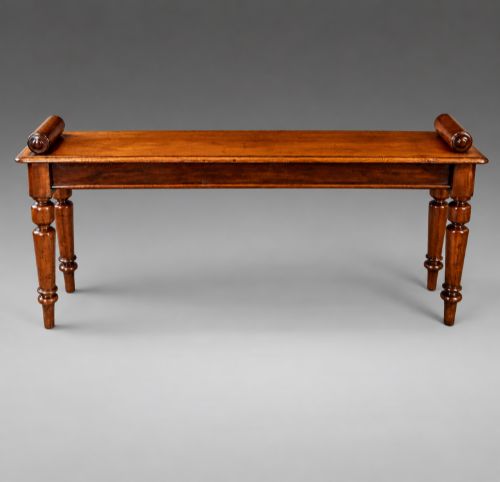
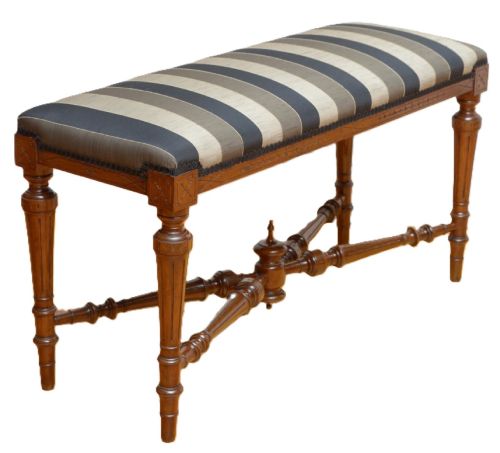
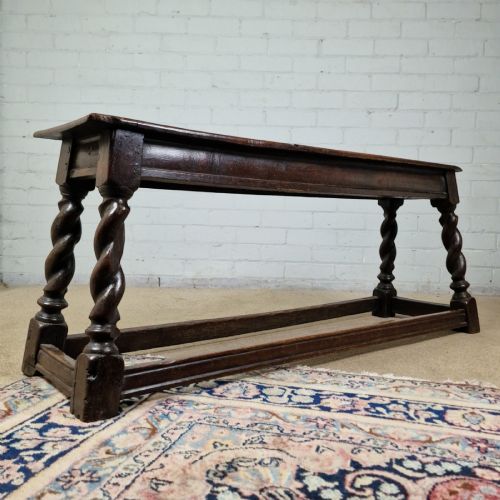
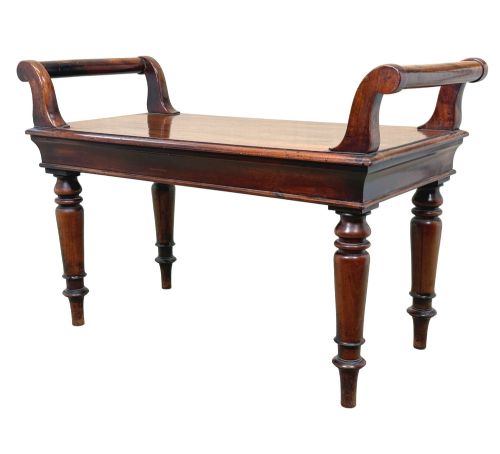




Turned Leg Window Stool
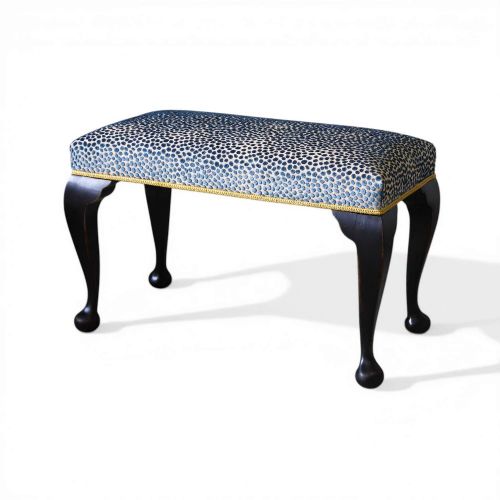
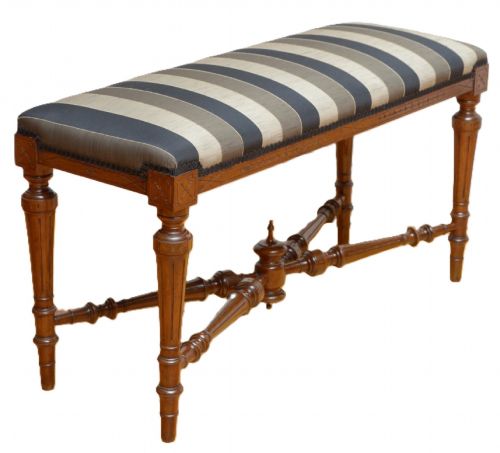
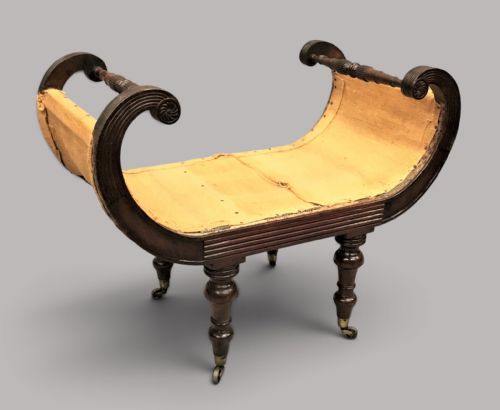
These turned leg window stool examples provide compact seating and low resting surfaces, bringing solid timber frames and soft upholstery to hallways and rooms.
Turned Leg Window Stool
A turned leg window stool serves as a versatile seat or low bench designed for placement near low glazing or within hallways. Buyers seeking a turned leg window stool encounter various forms including long stools, duet stools, and daybeds.
The selection ranges across several eras, appearing in 18th Century, Georgian, Regency, William IV, Victorian, and Edwardian guises. These pieces function equally well as footstools, dressing stools, and hall benches depending on their length.
Makers historically adapted these forms for specific domestic spaces, utilising sturdy timbers and textiles to create functional household seating. Most examples incorporate turned supports beneath upholstered or cane platforms.
Materials and construction methods
Cabinetmakers constructed these frames using hardwoods such as mahogany, walnut, oak, and ebonised wood, occasionally incorporating burr maple. Timber selection dictated the strength of the underframe and the crispness of the turned components.
Upholstery methods involved textiles, fabric, linen, and kilim coverings, alongside woven cane panels for seat bases. Master upholsterers secured these materials over webbed or sprung foundations to provide durable support.
Turned Leg Window Stool Retail Price Guide 2026
Typical asking prices for turned leg window stool among the pieces listed under this phrase on Sellingantiques today, from the lower quarter to the upper quarter. They describe what is for sale here now, not the wider market.
The listings encompass multiple eras, ranging from 18th Century and Georgian pieces through Victorian and Edwardian examples.
Distinctions in construction and design
Superior examples display balanced proportions and precise timber turning that complement the overall frame architecture. The integration of the upholstery with the wooden framework determines the visual harmony of the piece.
Heavier timbers and refined carving or fluting on the legs separate standard workshop output from exceptional furniture commissions. The choice of covering material, from plain linen to decorative textile, reflects the original status of the commission.
The Turned Leg Window Stool Glossary
- Turned leg
- A wooden support shaped on a lathe to create circular profiles and rings. This traditional woodworking technique strengthens the vertical member while adding decorative detail.
- Window seat
- A long, narrow form of stool or bench specifically proportioned to sit beneath a window sill. These seats often feature upholstered tops designed for extended sitting.
- Duet stool
- An extended seating bench designed to accommodate two people simultaneously. They frequently appear in music rooms or large hallways.
- Ebonised wood
- Timber treated with a dark finish to imitate expensive ebony. This process became particularly popular during the Victorian period for accentuating grain and form.
- Cane seat
- A woven plant material surface forming a resilient, breathable platform. This technique lightens the visual weight of heavy wooden frames.
Turned Leg Window Stool: Frequently Asked Questions
Where should I place a window stool?
These pieces fit naturally beneath low windows, along narrow hallways, or at the foot of a bed. Their modest depth allows them to occupy circulation spaces without blocking movement.
They also serve well as occasional seating in living rooms or as dressing stools in bedrooms.
How do I identify a Victorian example?
Victorian pieces frequently employ dense timbers like walnut and mahogany, often paired with turned or fluted legs. Upholstery on these items ranges from buttoned fabric to woven cane panels.
Design influences from this era often lean towards robust proportions and dark, polished finishes.
What is the difference between a bench and a stool?
Benches generally offer greater length and often incorporate backrests or arm supports, though window benches frequently remain backless. Stools provide simpler, open platforms for sitting or resting feet.
Both forms utilise similar turned leg structures across different historical periods.
Can these stools support everyday seating?
Solid hardwood frames and traditional joinery make these pieces suitable for regular daily use. The underlying wooden structure determines the weight capacity rather than the upholstery.
Reupholstered pieces with modern internal webbing offer reliable structural integrity for daily domestic life.