

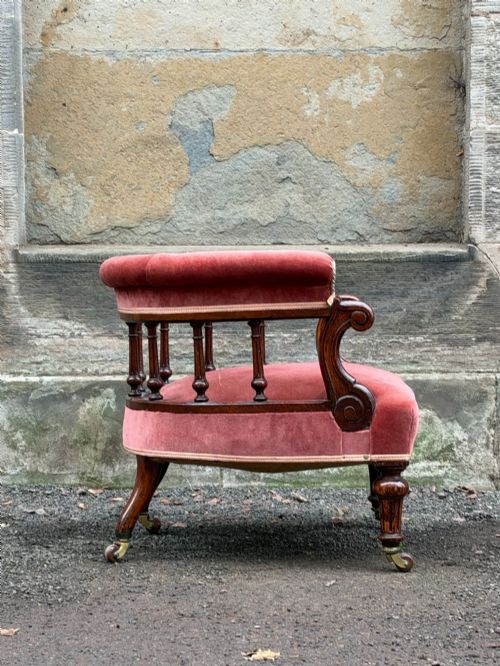
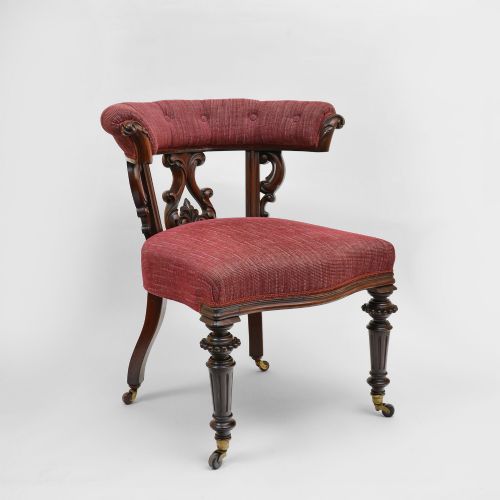
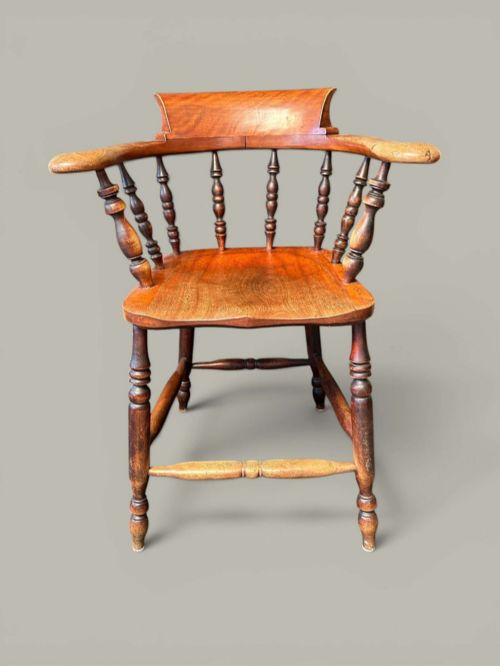
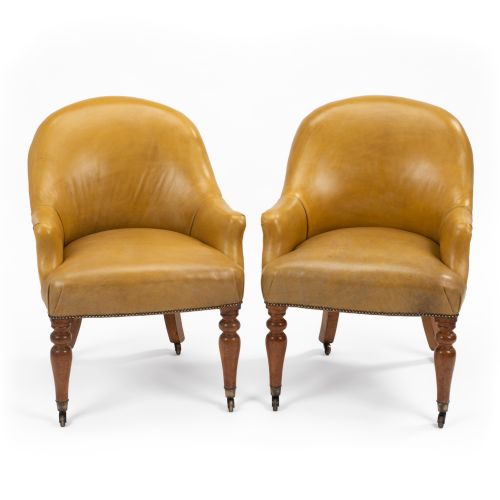
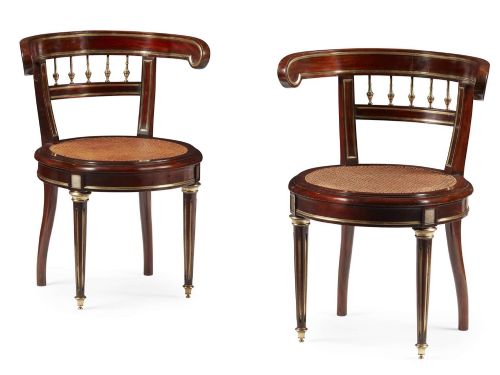
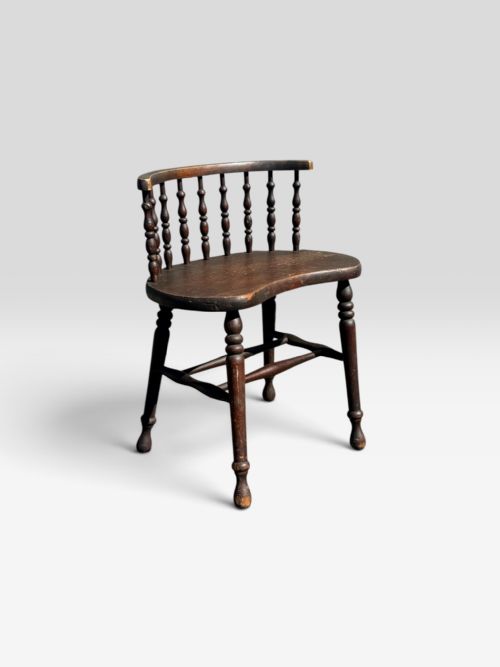
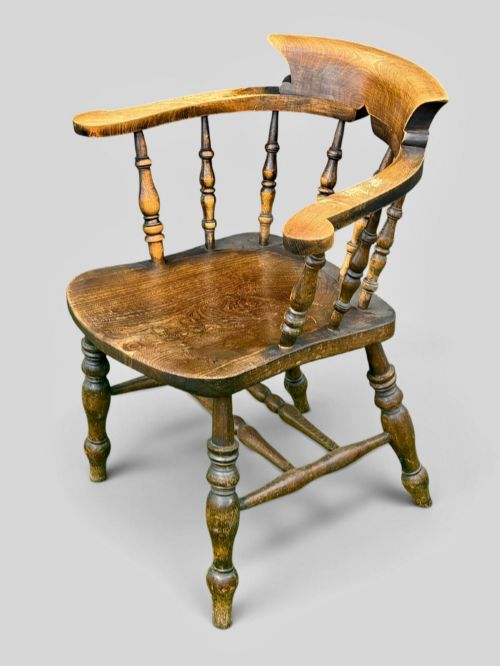
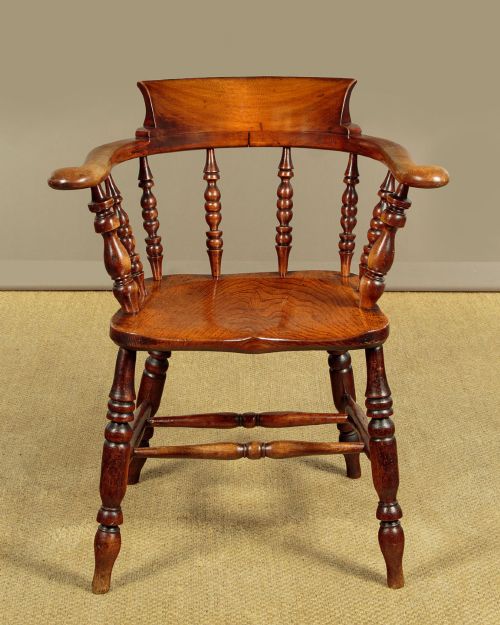
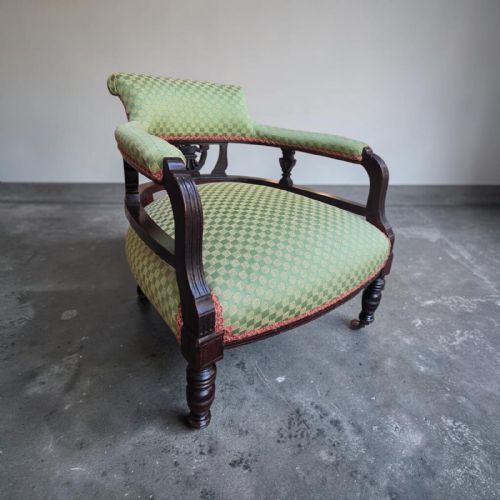
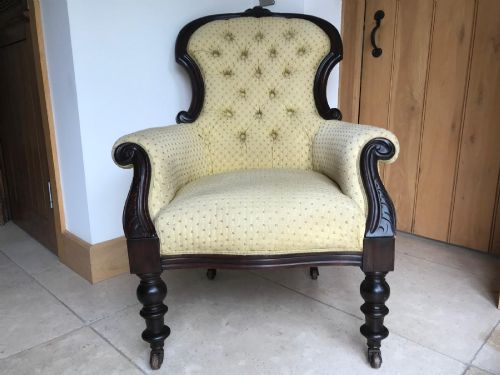
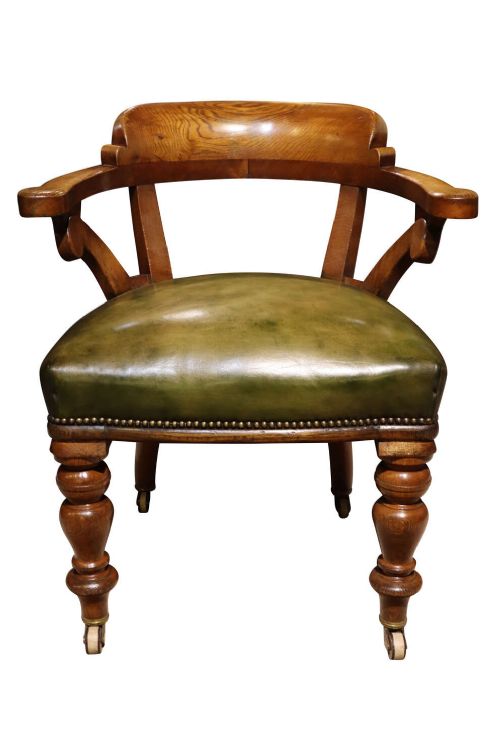
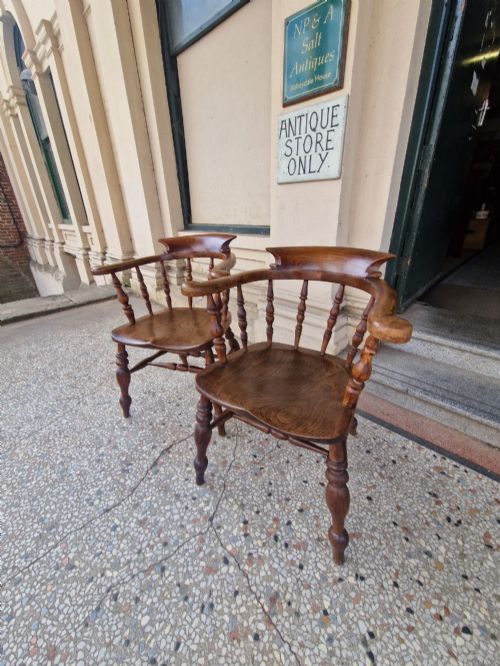
Turned Leg Tub Armchairs
Turned leg tub armchairs combine curved upholstered enclosures with slender turned timber supports, offering solid support for reading and writing desks.
Turned Leg Tub Armchairs
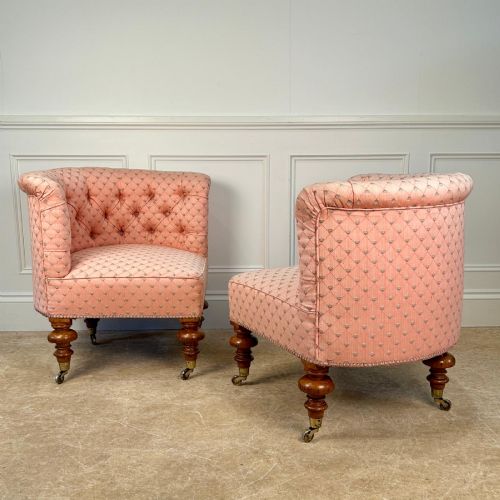
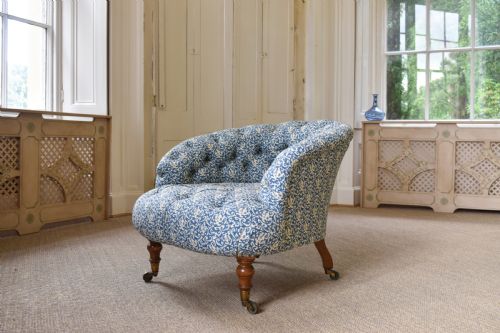
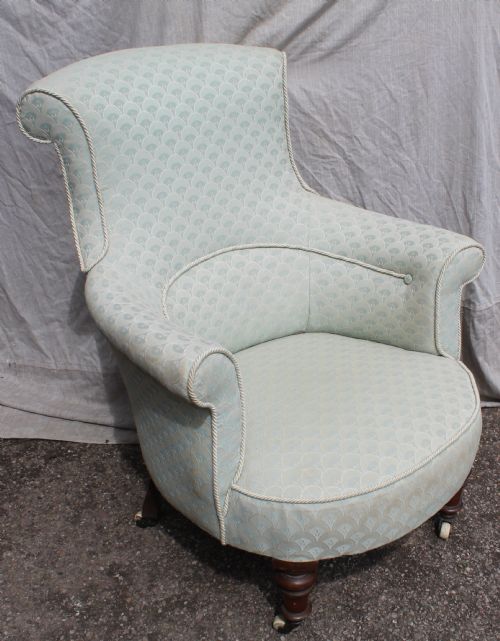
Turned leg tub armchairs bring together a rounded enclosing backrest and distinctive cylindrical or shaped wooden supports beneath the seat. When searching for turned leg tub armchairs, a buyer encounters forms that bridge domestic libraries, studies and formal parlours.
The materials span traditional hardwoods like mahogany, oak, walnut and beech alongside robust secondary timbers such as elm and ash. Many examples feature upholstered or leather-covered backs, while others rely on curved wooden staves and spindle arrangements.
Originating predominantly from the nineteenth century, these seating pieces range from Regency library chairs to Victorian captain's chairs and Edwardian parlour variations. The turned legs provide both structural stability and visual lightness to the substantial rounded frames above.
Materials and construction
Cabinet makers utilised dense hardwoods for primary frames, turning structural supports on lathes to achieve consistent cylindrical profiles. Mahogany and walnut appear alongside golden oak, rosewood and ebonised finishes.
Curved backrests rely on steam-bent timber or segmented joined construction to form the continuous tub enclosure. Secondary woods like elm and ash provide resilient seats and arms capable of withstanding daily use in studies and offices.
Upholstery techniques involve traditional stuffing secured with hessian, cotton, leather or velvet, often finished with buttoning or brass stud work. Turned legs frequently terminate in castors to facilitate movement across carpeted library floors.
Turned Leg Tub Armchairs Retail Price Guide 2026
Typical asking prices for turned leg tub armchairs among the pieces listed under this phrase on Sellingantiques today, from the lower quarter to the upper quarter. They describe what is for sale here now, not the wider market.
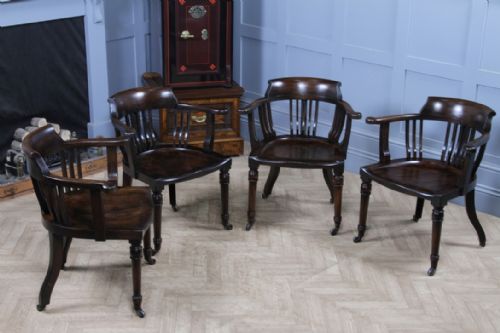
Several armchairs are recorded as smoker's bows, proving that nineteenth-century relaxation required serious elbow room.
Evaluating craftsmanship and proportion
The harmony of proportion between the rounded tub back and the turned leg supports dictates the visual success of the piece. Superior examples maintain crisp turning detail in the timber without losing structural integrity at the joints.
The choice of primary timber and the execution of carved or polished surfaces separate standard utility seating from high-status library armchairs. Grain selection in mahogany and walnut indicates the workshop's initial tier of production.
Original upholstery materials and untouched wooden frames demonstrate historical integrity, whereas unsympathetic re-covering or heavy-handed timber repairs alter the character and balance of the design.
Howard and Sons·Gillows·Miles and Edwards·Hindley and Sons·Hampton and Sons
The Turned Leg Tub Armchairs Glossary
- Tub chair
- An armchair featuring a continuous curved back and armrest that forms a protective, rounded enclosure. This shape provides comfortable lateral support.
- Smoker's bow
- A sturdy Windsor-style wooden armchair with a low curved back and turned spindles, commonly associated with nineteenth-century office and captain's seating.
- Bergere
- An upholstered armchair with an enclosed cane or fabric-webbed back and sides, frequently executed in mahogany or simulated rosewood during the Regency period.
- Library chair
- A heavy, durable armchair designed for reading rooms, often upholstered in leather and supported on robust turned legs with castors.
Turned Leg Tub Armchairs: Frequently Asked Questions
How do captain's chairs differ from tub chairs?
Captain's chairs generally feature a low, curved wooden bow back supported by spindles rather than fully upholstered sides. They rely on solid timber seats shaped for prolonged sitting.
Tub chairs, by contrast, prioritise cushioned upholstery and enclosing padded arms designed for reading and relaxation.
Which woods were used for these armchairs?
Cabinet makers utilised a range of hardwoods depending on the period and style. Mahogany, walnut and rosewood dominate formal library and parlour examples.
Sturdier utility pieces frequently employ elm, ash, beech and oak for their resilient seats and turned structural legs.
Where were these armchairs placed originally?
These seating pieces found their primary use in domestic libraries, studies and home offices alongside writing desks. Their sturdy construction also suited commercial offices and boardrooms.
Smaller upholstered versions served as parlour or drawing-room chairs where conversational groupings required comfortable seating.