




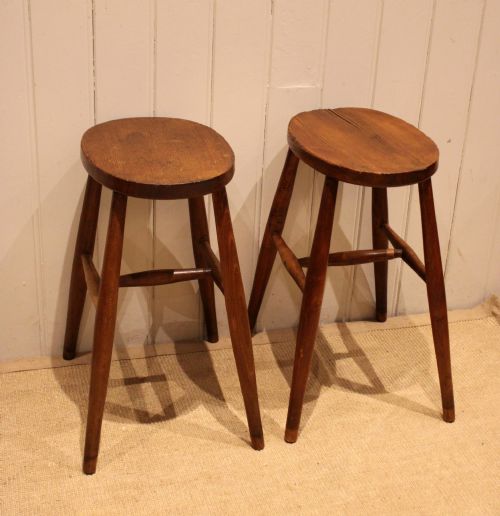


Turned Leg Tall Stool
A turned leg tall stool brings genuine domestic utility into a room, offering height and honest country craftsmanship from the nineteenth century.
Turned Leg Tall Stool
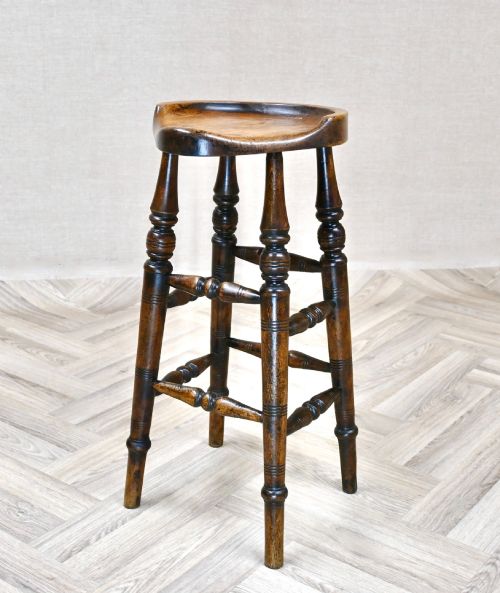
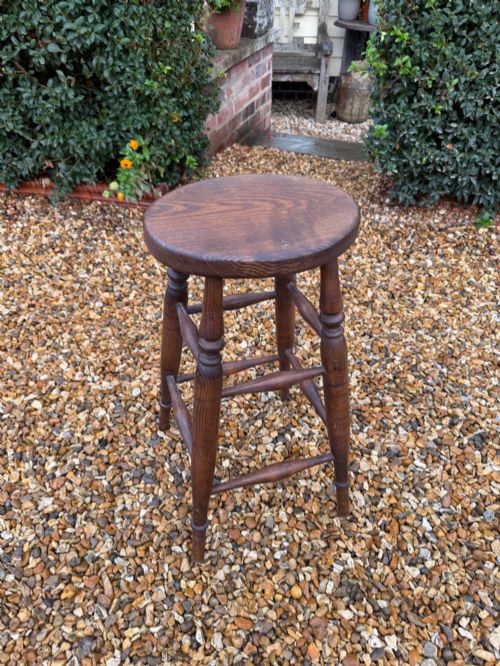
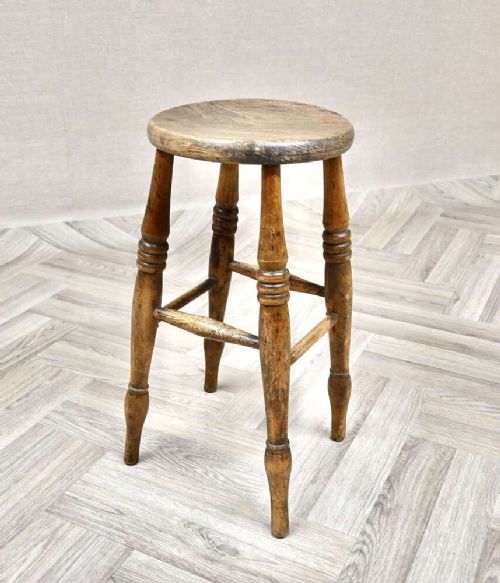
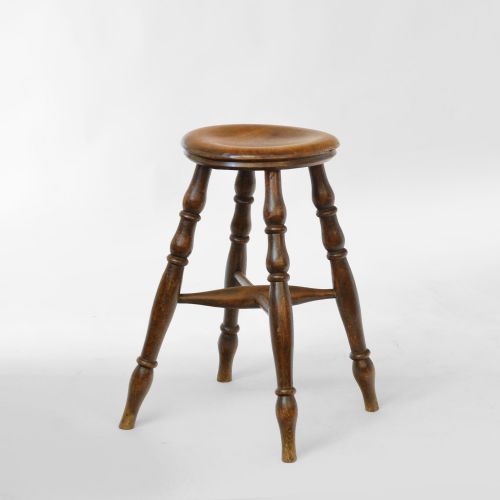
When you search for a turned leg tall stool, you are looking at elevated seating designed for practical trades, taverns, and country houses during the nineteenth century. These pieces include clerk's stools, pub and tavern stools, bar stools, dairy stools, and general purpose country house stools.
The versions you are most likely to meet on this page hail from the Victorian period, spanning the nineteenth century, eighteen-fifty, and nineteen-hundred. They appear in styles such as Victorian country, rustic country, English country, and Victorian vernacular, reflecting everyday rural and commercial life.
Forms vary from simple round tops to rush and caned seats, supported by slender frames made for height. They served working men in pubs, clerks at high desks, and workers in dairies, carrying the functional marks of their original environments.
How they were made
These stools are built predominantly from solid native timbers recorded as wood, elm, wild elm, pine, hardwood, sycamore, beech, oak, birchwood, and sycamore. Makers selected these durable woods to withstand heavy daily use in commercial and agricultural settings.
Construction relies heavily on traditional turning techniques to shape slender legs, paired with sturdy joined seats. Some examples feature painted surfaces or woven rush and cane tops, combining turned wooden frames with flexible seating materials.
Turned Leg Tall Stool Retail Price Guide 2026
Typical asking prices for turned leg tall stool among the pieces listed under this phrase on Sellingantiques today, from the lower quarter to the upper quarter. They describe what is for sale here now, not the wider market.
A nineteenth-century clerk's stool still bears the invisible weight of endless ledgers and hurried ink-dipping.
What varies in quality
Quality in these pieces rests upon the selection of timber and the proportion of the turned frame. Heavier hardwoods like wild elm, oak, and sycamore hold their structural integrity better than softer woods over generations of use.
The grace of the turned legs dictates the visual success of the piece, moving from utilitarian thickness to slender, well-balanced elegance. Original surfaces, such as early paint finishes or undisturbed timber patination, elevate the standing of a stool far above stripped or over-restored examples.
The Turned Leg Tall Stool Glossary
- Clerk's stool
- A tall seating form designed for a writer or accountant working at a high sloping desk. These pieces prioritise height and stability over upholstery.
- Pub or tavern stool
- A commercial seating piece constructed to stand at tall counters or tables. They frequently show sturdy footrests and hard-wearing timber construction.
- Rush seat
- A seating surface woven from dried marsh plants, providing a resilient and textured top. It appears on country examples meant for domestic or informal use.
- Vernacular style
- Furniture made by local tradesmen using regional traditions rather than high-fashion metropolitan designs. These objects prioritise local materials and straightforward utility.
- Patina
- The surface sheen and colour acquired by wood through age, handling, and wear. It develops naturally over decades of use in a domestic or working environment.
Turned Leg Tall Stool: Frequently Asked Questions
What is a turned leg tall stool used for?
These tall stools served practical working roles in nineteenth-century life, from clerks at high desks to patrons in taverns and workers in dairies. They were built for elevation and heavy daily use.
Today, they function well as breakfast bar seating, occasional perches in kitchens, or display stands in a hallway, bringing height and historic character to a room.
How do I date a turned leg tall stool?
Dating relies on observing timber characteristics, tool marks, and construction methods typical of the nineteenth century. Most examples on this record date from eighteen-fifty to nineteen-hundred.
Look for the patination of the wood, the style of the turning on the legs, and whether the timber is native hardwood like elm, beech, or sycamore rather than modern commercial stock.
Are all tall stools made of the same wood?
No, makers utilised a wide variety of native timbers depending on local availability and the intended function of the stool. Listings record woods such as elm, wild elm, sycamore, beech, oak, birchwood, and pine.
Some stools also incorporate woven rush or cane for the seating surface, combining turned wooden frames with flexible natural fibres.
How do I care for a nineteenth-century stool?
Maintain the timber by keeping the piece away from direct heat sources and sudden humidity changes, which can cause old wood to split or dry out. Feed the surface gently with appropriate wax.
Avoid harsh modern cleaning products that strip the historic patination and painted surfaces, allowing the natural wear of the wood to remain visible.