
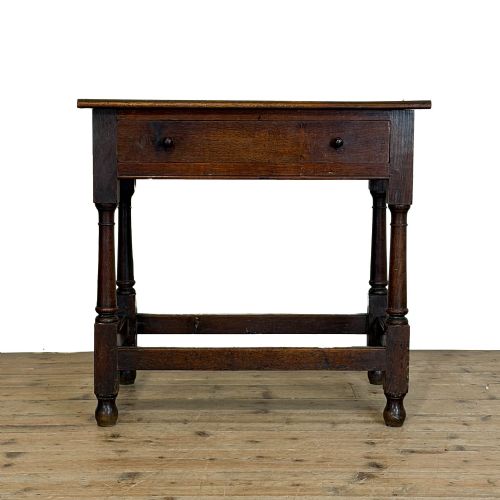
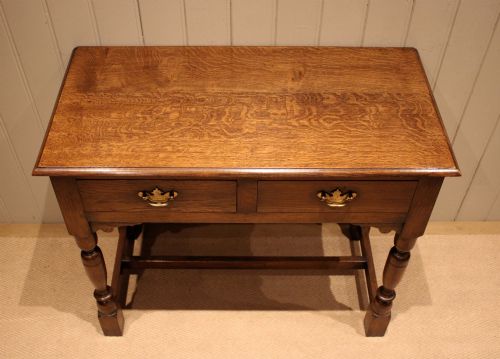
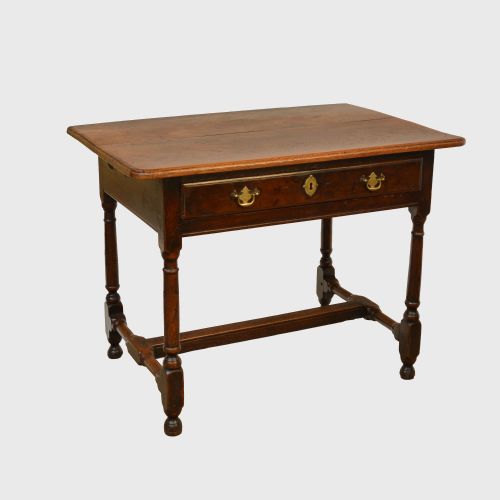
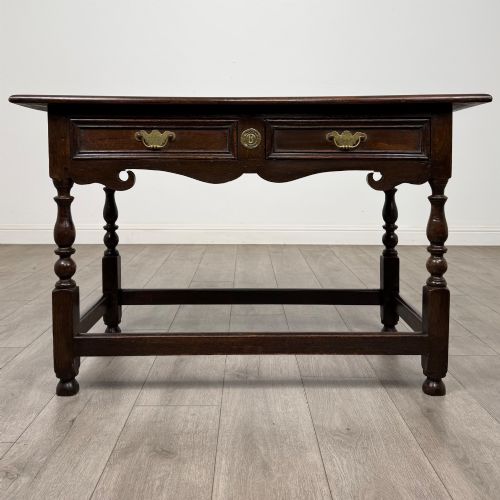
Turned Leg Lowboy
A turned leg lowboy brings compact eighteenth-century utility and turned timber to a room, offering small-scale surface space with functional drawers.
Turned Leg Lowboy
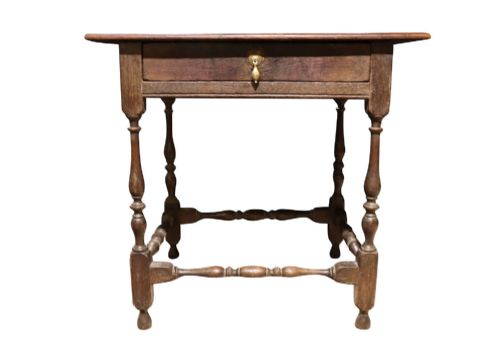
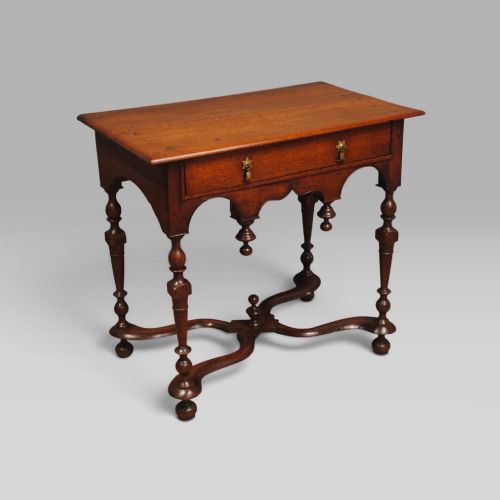
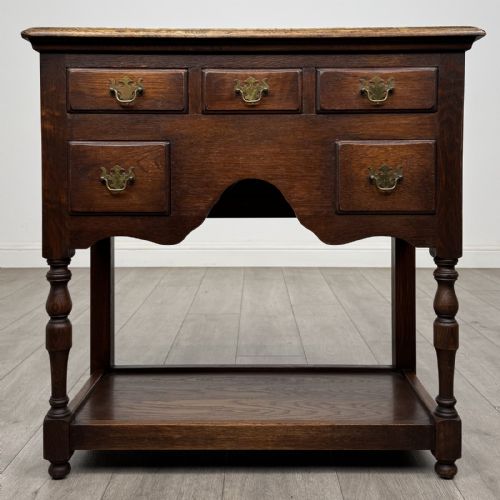
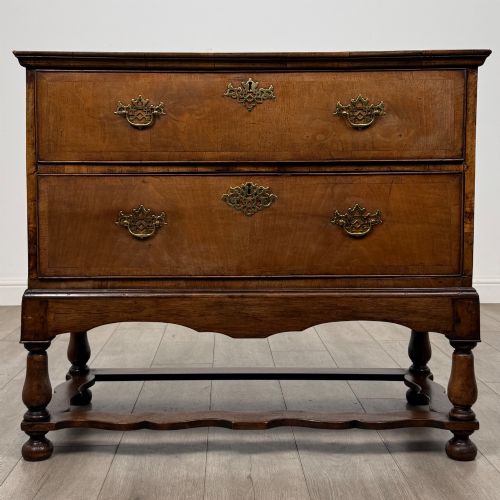
A turned leg lowboy is a small table with one or more drawers, originating primarily in the seventeenth and eighteenth centuries.
The versions met on this page appear mostly in oak, walnut, and elm, spanning periods from the late seventeenth century through the Georgian era.
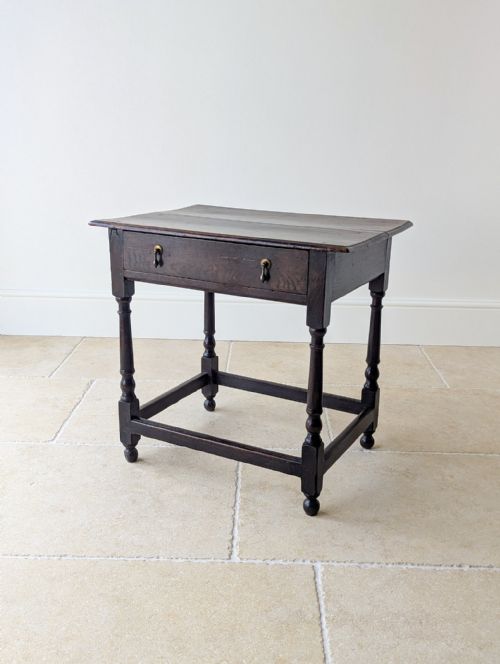
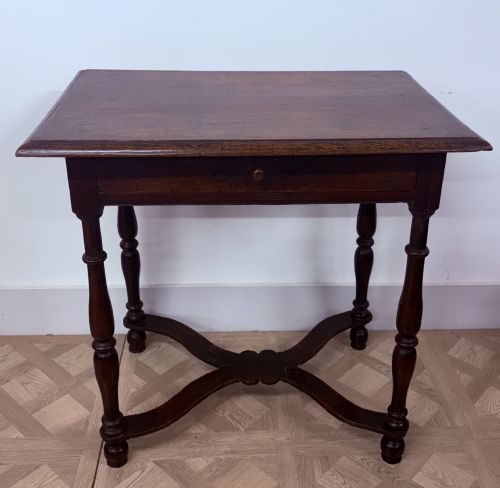
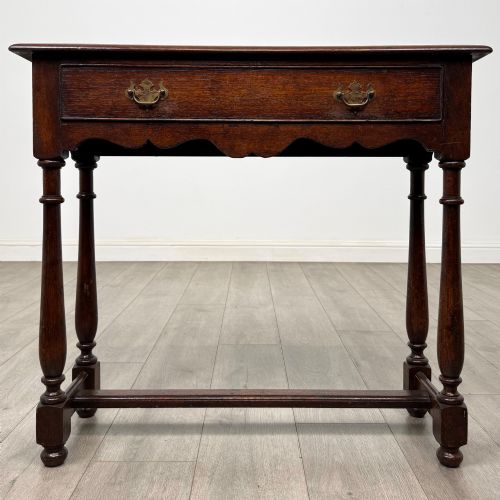
Makers constructed these pieces as side tables, writing tables, and low dressers, often fitted with turned legs and stretchers.
Materials and construction
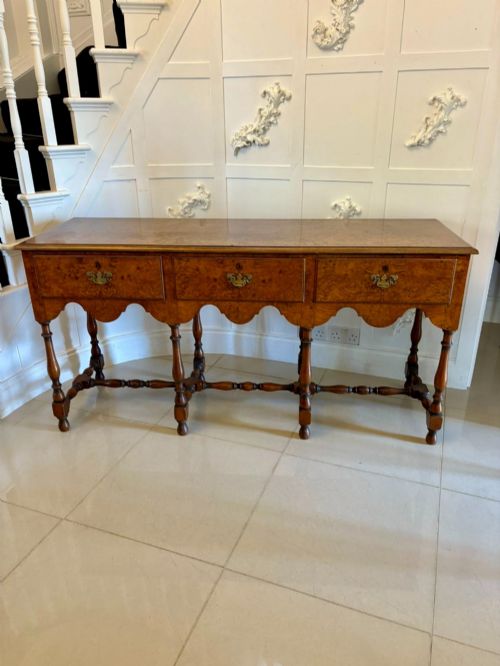
Cabinetmakers built these tables using solid native timbers such as oak, elm, walnut, and yew, occasionally applying burl veneers to principal surfaces.
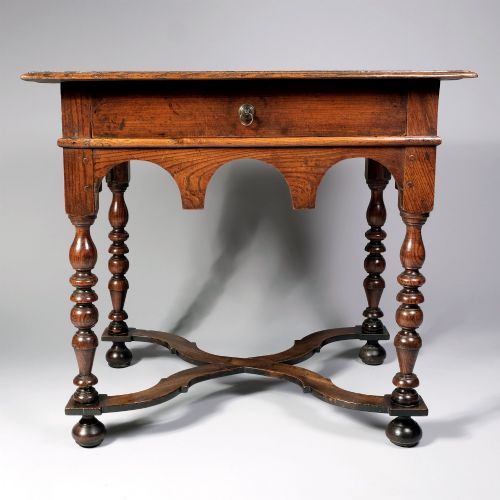
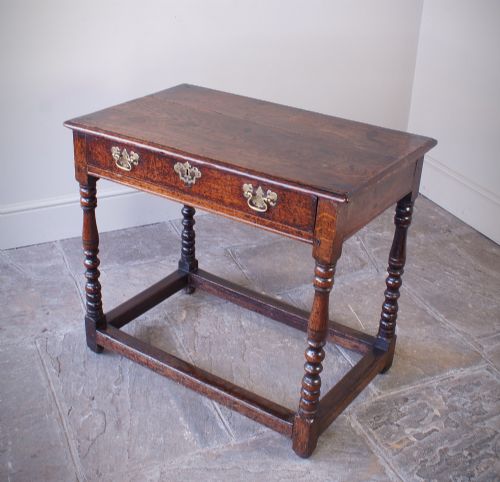
Legs and stretchers were shaped on a lathe to create distinctive turned profiles, joined to the frame using traditional pegged joinery.
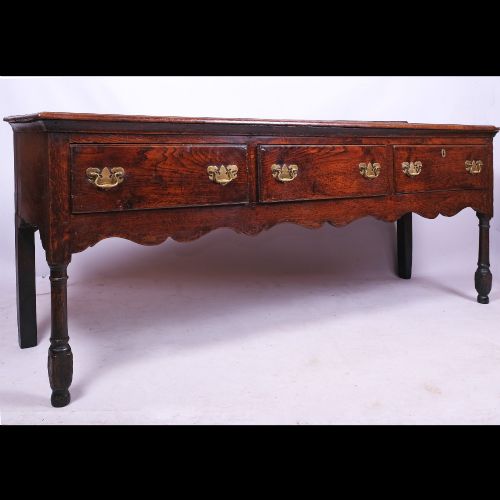
Brass drop handles and escutcheons were fitted to the drawer fronts, complementing the dark grain of the timber.
What separates examples
Quality rests in the choice of timber and the crispness of the wood-turning, where finer examples display well-balanced proportions and rhythmic leg profiles.
The integrity of the construction, including original drawer linings and minimal timber replacement, dictates the standing of a piece.
Gillows
The Turned Leg Lowboy Glossary
- Lowboy
- A small oak or walnut table with drawers, typically standing on four legs and used as a dressing or side table. These compact tables provide concealed storage beneath a flat top surface.
- Stretcher
- A horizontal timber connecting the legs of a table to provide structural stability. Turned versions add decorative detail near the floor.
- Oyster veneer
- Slices cut transversely from small branches to create circular patterns of grain. This technique appeared on walnut surfaces during revival and baroque periods.
- Geometric moulding
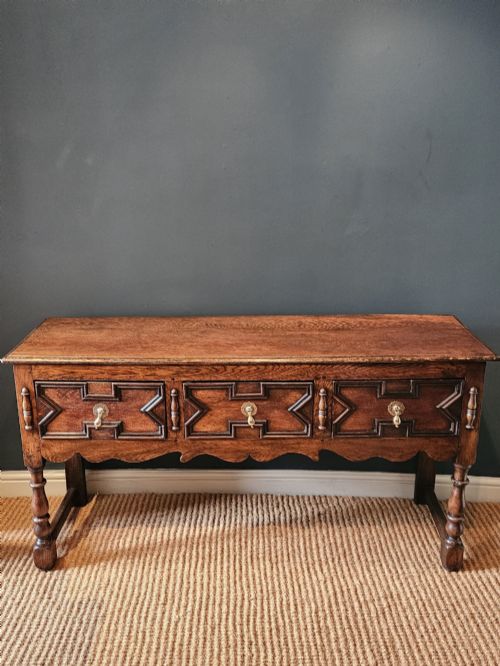
- Raised wooden mouldings applied to drawer fronts in rectilinear patterns. This decorative approach characterises seventeenth-century case furniture.
Turned Leg Lowboy: Frequently Asked Questions
What is a turned leg lowboy used for?
These tables function well as compact writing desks, hallway surfaces, or dressing tables in modern interiors. Their small footprint allows them to fit into tight spaces while providing drawer storage.
Historically, they served similar domestic purposes for writing, grooming, or holding small household items.
How do I date an oak lowboy?
Dating relies on examining construction methods, timber choice, and hardware styles. Early pieces from the seventeenth century often show hand- split oak boards and simpler joined frames.
Later Georgian examples incorporate more refined drawer construction and specific turning patterns characteristic of the eighteenth century.
Are walnut and oak lowboys different in style?
Walnut versions frequently display baroque styling, including oyster veneers and more slender turned elements. They tend to originate from court and urban workshops.
Oak examples often reflect country house furniture traditions, showing sturdier framing and straightforward geometric drawer fronts.
How should I care for an antique lowboy?
Keep wooden tables away from direct heat sources and dramatic humidity fluctuations to prevent timber splitting. Regular dusting with a dry, soft cloth maintains the finish.
Occasional application of traditional wax helps nourish older oak and walnut surfaces without building up heavy residues.