
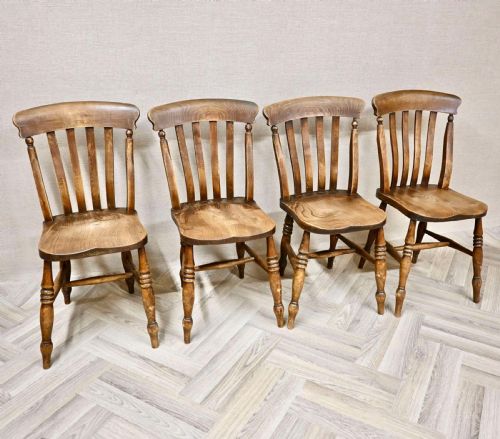
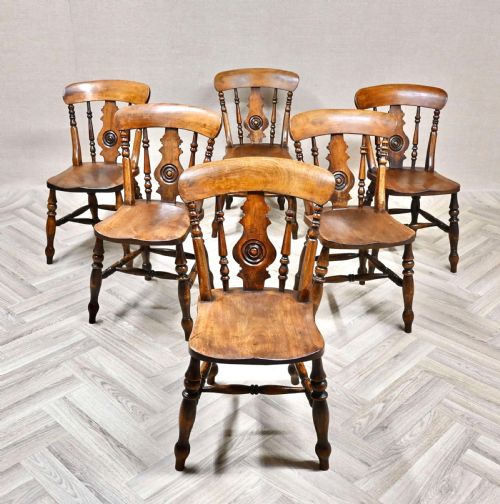
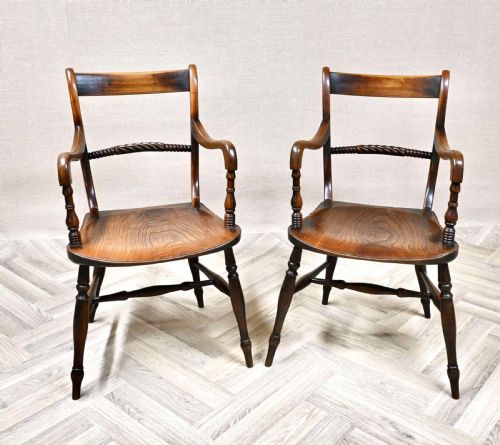
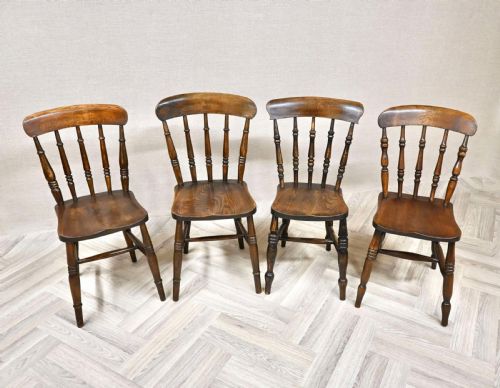

Turned Leg Elm Chairs
Turned leg elm chairs are robust country seating built for everyday utility, prized for their figured timber seats and sturdy turned supports.
Turned Leg Elm Chairs
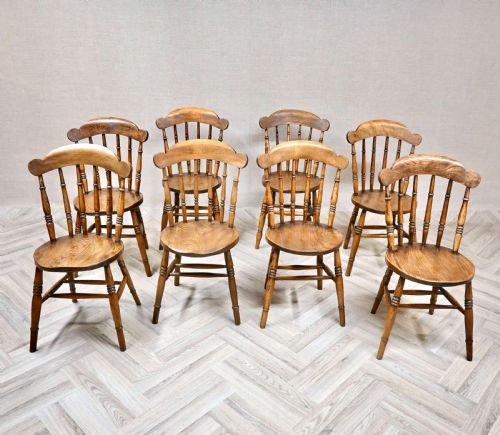
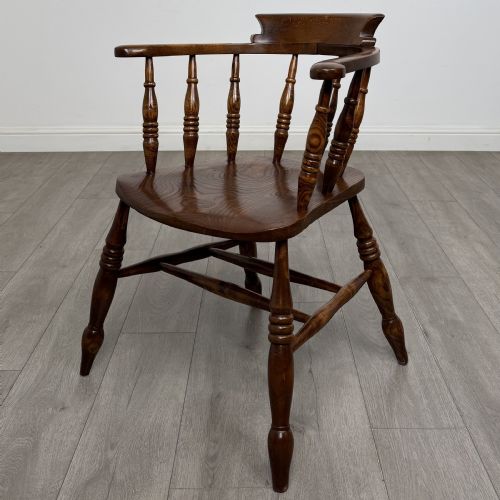
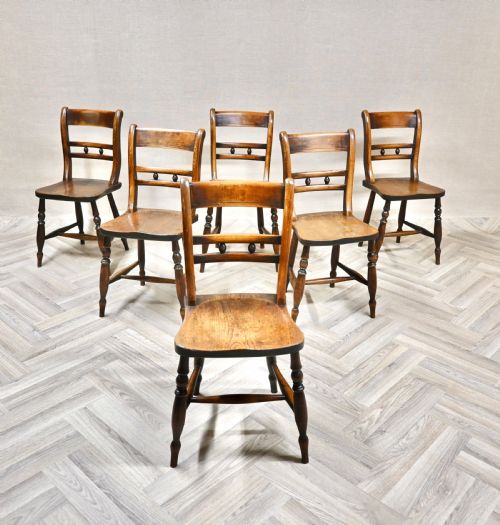
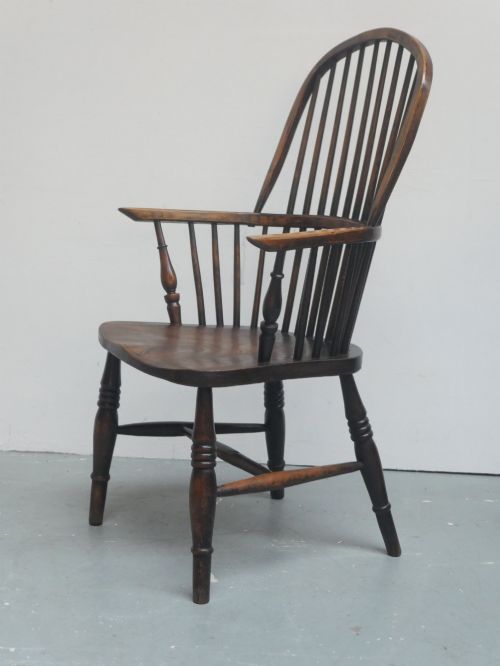
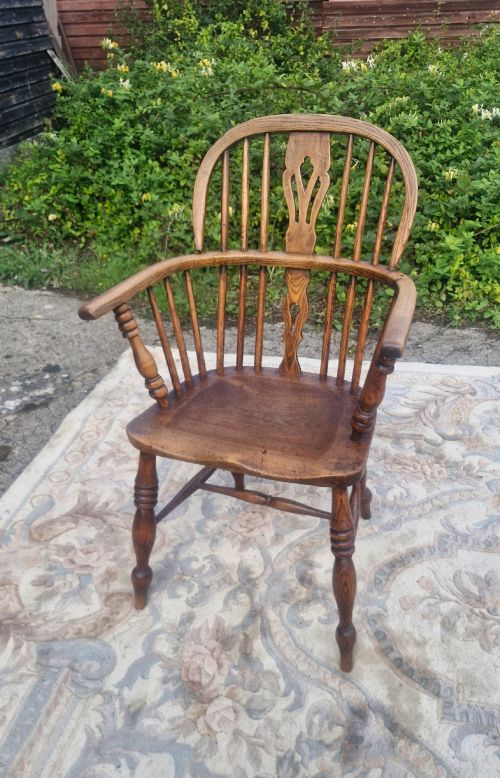
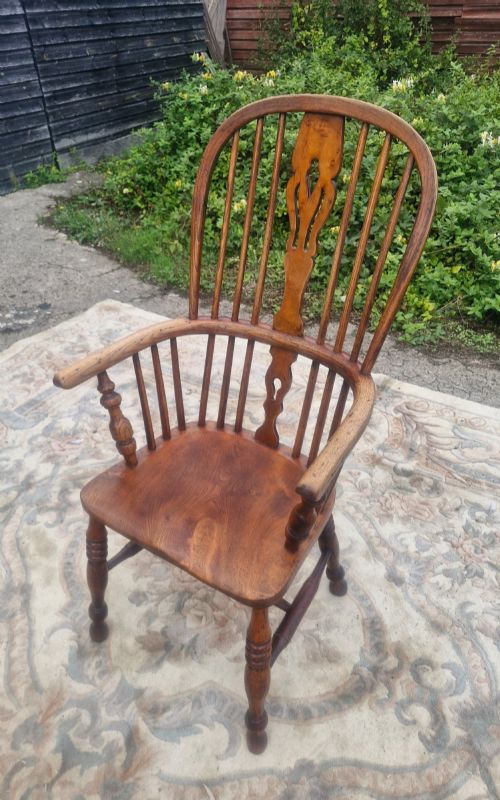
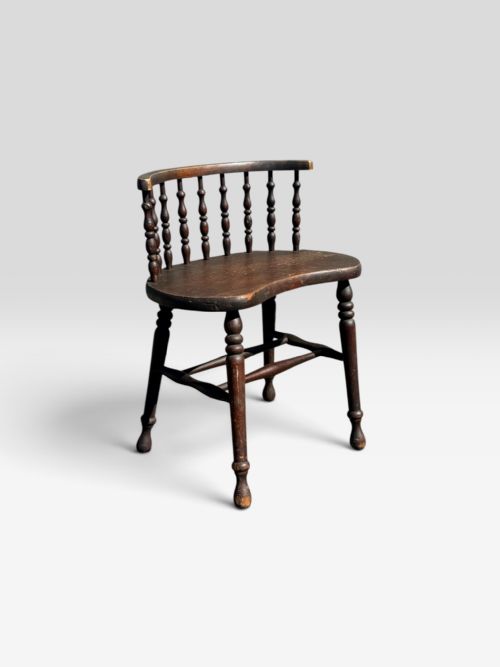
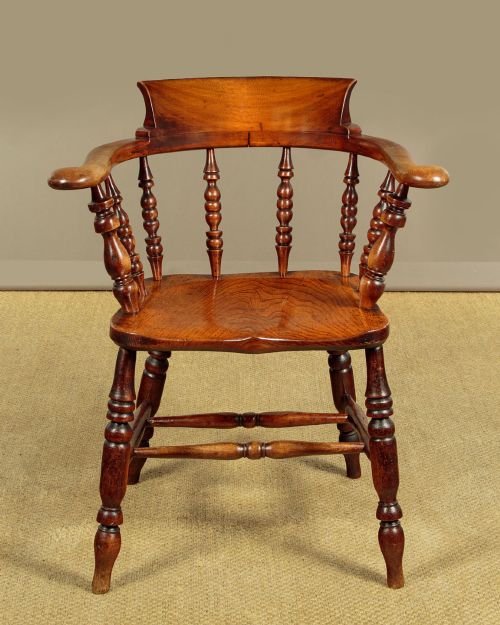
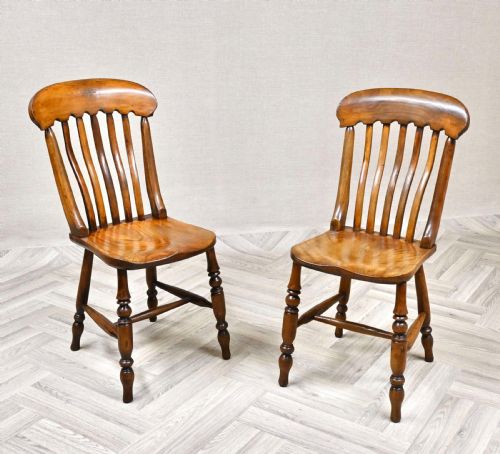
Turned leg elm chairs encompass a range of vernacular seating forms, most frequently encountered as kitchen dining chairs, Windsor armchairs, and smokers' bows from the nineteenth century. These pieces belong to English country traditions, displaying regional variations from Thames Valley stick backs to Lincolnshire high backs.
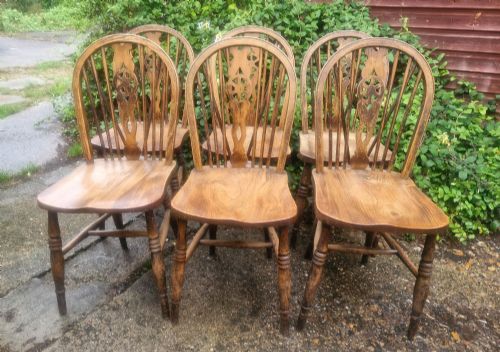
The form relies on solid timber construction where turned wooden components form the underframe and spindles. Buyers encounter single armchairs, pairs, and full dining sets intended for heavy domestic use in farmhouses and kitchens.
What varies in quality
Quality rests upon the selection of timbers and the crispness of the lathe turning on the legs and stretchers. Figuring in the elm seat and the retention of original matching sets elevate individual examples above standard utility pieces.
Proportion and structural integrity define the higher tier of these chairs, particularly where steam-bent members retain their original sweep without distortion. The harmony between the turned underframe and the upper comb or wheel back distinguishes fine vernacular work.
Object forms include dining chairs, armchairs, high chairs, rocking chairs, and stick backs with traditional turned legs.
The Turned Leg Elm Chairs Glossary
- Windsor chair
- A wooden chair built with a solid thick timber seat into which the legs and back sticks are independently inserted. These chairs utilise turned components and bentwood arches.
- Smoker's bow
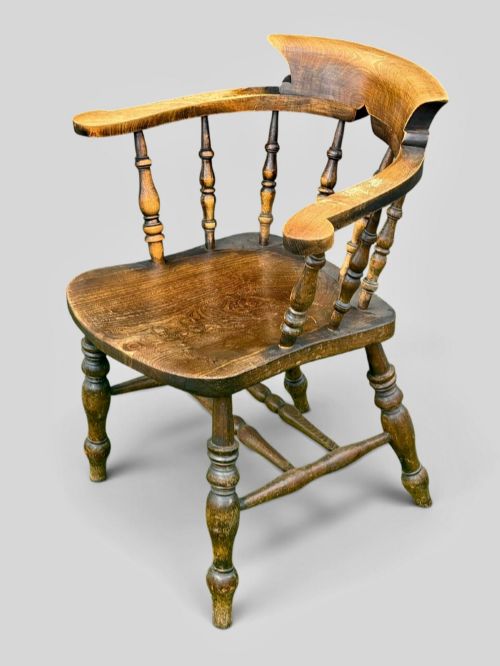
- A low-backed Windsor armchair featuring a continuous curved armrail supported by turned spindles. This form offers compact seating suitable for domestic parlours and smoking rooms.
- Crinoline stretcher
- An arched or curved underframe stretcher linking the legs of a chair to provide extra rigidity. This feature often appears on mid-nineteenth-century Windsor examples.
- Wheel back
- A chair back incorporating a central pierced splat shaped like the wheel of a cart. This decorative motif is common on nineteenth-century kitchen dining chairs.
Turned Leg Elm Chairs: Frequently Asked Questions
What periods do these chairs come from?
Most examples date from the nineteenth century, spanning the Victorian era and earlier Regency periods through to Edwardian times. Makers continued traditional regional country patterns well into the early twentieth century.
Dates are identified through construction methods, timber ageing, and specific regional design styles such as Thames Valley stick backs or ladder backs.
How were these chairs used originally?
These chairs served as robust everyday seating around farmhouse kitchen tables and in cottage parlours. Armchairs were often placed by the hearth or used as captains' chairs at desks.
Their heavy construction allowed them to withstand constant domestic service without losing structural stability over decades of daily handling.
How do I care for antique elm furniture?
Keep elm seating away from direct heat sources and sudden temperature shifts to prevent the solid timber seats from splitting. Natural beeswax polish maintains the surface sheen without building up heavy chemical residue.
Check the underframe joints periodically to ensure the turned legs remain firmly seated in the wooden bases.
Are these chairs comfortable for daily seating?
The solid sculpted elm seats are shaped to fit the body, offering surprising support during extended sitting. High backs and curved armbows provide comfortable upper body posture for dining or reading.
Adding loose seat pads can increase comfort while preserving the historic timber surfaces beneath.