



Turned Foot Commode Chest
A turned foot commode chest is a practical storage piece defined by its characteristic turned supports, offering solid proportions and timeless utility for the home.
Turned Foot Commode Chest
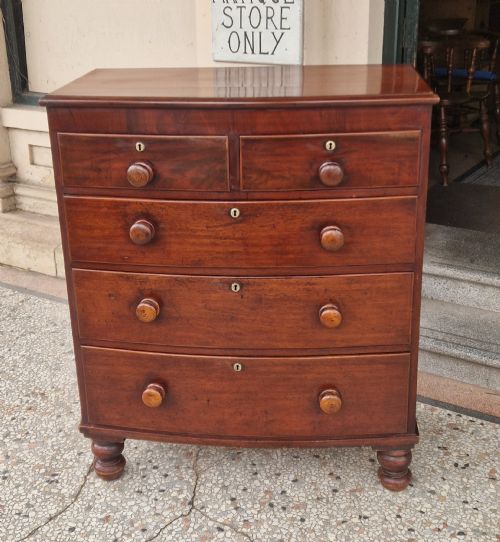
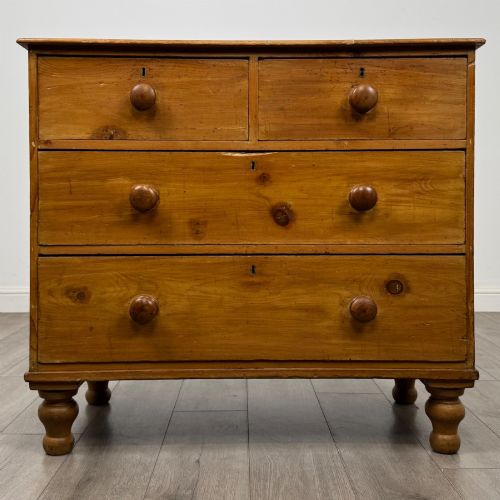
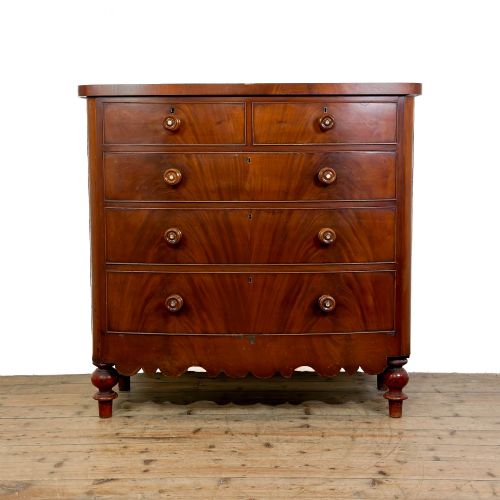
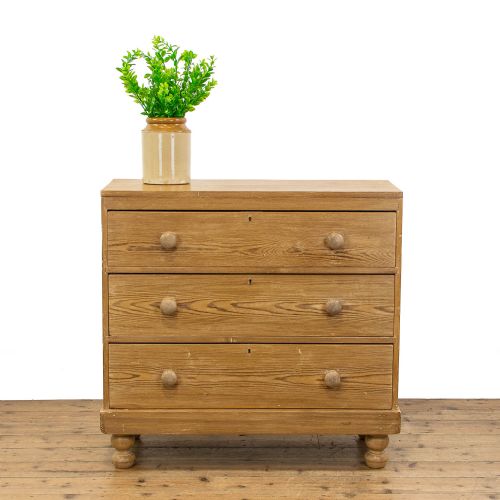
A turned foot commode chest is primarily encountered as a chest of drawers, ranging from modest country pine examples to substantial mahogany pieces. These items serve as traditional bedroom or hallway storage, standing upon distinct turned feet that elevate the main carcass.
The pieces available span several distinct historical periods, including the Georgian, Regency, and Victorian eras. Buyers frequently meet Victorian pine and mahogany variations, alongside earlier George IV and 19th-century interpretations showing bow fronts and graduated drawer arrangements.
How they were made
Cabinetmakers constructed these chests using primary timbers such as mahogany and pine, often incorporating wood veneer over secondary woods. Structural integrity relied on traditional joinery techniques suited to heavy timber drawer frames and solid carcases.
Surface finishes include original paintwork on softer woods and polished mahogany surfaces that highlight the natural grain. Details such as brass hardware and occasional mother of pearl accents completed the decorative scheme of finer Regency and Victorian examples.
Turned Foot Commode Chest Retail Price Guide 2026
Typical asking prices for turned foot commode chest among the pieces listed under this phrase on Sellingantiques today, from the lower quarter to the upper quarter. They describe what is for sale here now, not the wider market.
Mother of pearl accents occasionally catch the eye on drawer escutcheons, proving that Victorian cabinetmakers loved a little flash.
What varies in quality
Quality rests upon the selection of timbers and the precision of the cabinetmaker's construction. Finer examples display carefully matched veneers, smooth drawer operation, and well-proportioned turned feet that complement the overall scale of the chest.
The integrity of the original surface finish heavily influences desirability, distinguishing honest patination from unsympathetic later alterations. Details such as original brass handles and intact drawer linings elevate an individual chest above utilitarian workshop output.
The Turned Foot Commode Chest Glossary
- Bow front
- A convex curved front to a chest of drawers that swells outwards in the centre. This decorative shape became particularly popular during the Georgian and Regency periods.
- Commode chest
- A low chest of drawers used for domestic storage. The term often describes robust bedroom case furniture from the 19th century and earlier.
- Turned foot
- A cylindrical support shaped on a lathe. These feet lift the base of the chest off the floor and vary from simple bun shapes to more elongated tapering forms.
- Satin birch
- A pale, lustrous timber utilised for cabinetmaking during the Victorian period. It provides a distinctive blond grain pattern for drawer fronts and carcases.
- Veneer
- A thin layer of superior wood applied over a secondary timber base. This technique allowed makers to display rich mahogany grain patterns efficiently.
Turned Foot Commode Chest: Frequently Asked Questions
How do I date a turned foot commode chest?
Dating relies on examining the timber species, construction methods, and overall stylistic details. Earlier Georgian and Regency pieces often feature finely figured mahogany and delicate proportions, while Victorian examples frequently utilise pine or satin birch.
The presence of original hardware, drawer linings, and specific foot styles provides further clues to the manufacturing period.
Where should I place a turned foot commode chest?
These chests suit bedrooms, hallways, or living spaces where substantial storage and traditional character are required. Their flat top surfaces also accommodate lamps, mirrors, or decorative objects.
Ensure placement avoids direct heat sources and strong sunlight to protect historic wood finishes and prevent timber movement.
Are painted pine chests authentic?
Painted pine chests are entirely authentic domestic items, particularly within the Victorian country tradition. Many utility pieces received protective or decorative painted finishes during the 19th century.
Original paint surfaces add significant character and historical value to softer wood furniture.