

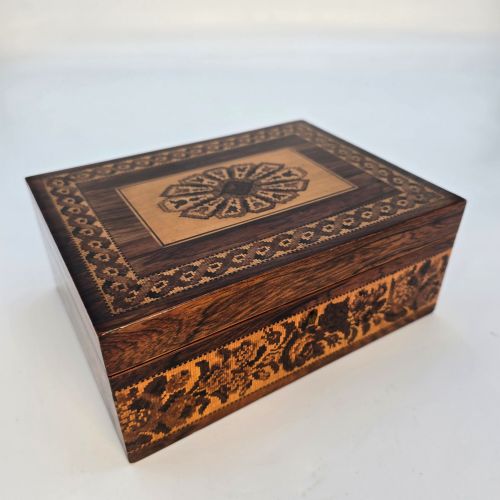


Tunbridge Mosaic Box
A tunbridge mosaic box is an intricate wooden vessel decorated with tiny, precise wood mosaic tesserae, prized for its astonishing pictorial detail and intricate geometric banding.
Tunbridge Mosaic Box
A tunbridge mosaic box represents the pinnacle of nineteenth-century English decorative woodworking, originating from the spa town of Tunbridge Wells. These containers take many functional forms, including tea caddies, jewellery boxes, stationery boxes, and sewing baskets.
The pieces you encounter most frequently on this page date from the Victorian period, spanning the mid to late nineteenth century, alongside occasional Regency examples. Their outer surfaces are completely transformed by elaborate wood mosaic patterns depicting castles, flowers, or geometric borders.
Makers utilised these lidded vessels to showcase an immense variety of British and exotic timbers arranged with mathematical precision. Owning one offers a tangible connection to a meticulous regional craft that flourished before industrial packaging took over.
Materials and Construction
Craftsmen constructed these boxes using a solid carcase of timber such as rosewood, walnut, or mixed hardwood veneers, which provided a stable foundation for the delicate surface work. The intricate mosaics were created by bundling hundreds of microscopically thin rods of different coloured woods together in precise patterns, glued, and then sliced transversely to produce identical picture tiles.
Woods including boxwood, holly, and sycamore supplied the diverse natural palette required for shading without the use of artificial stains. Once the mosaic strips and pictorial panels were laid onto the surface, the boxes were fitted with interior linings of silk and sometimes brass hardware before receiving a polished finish.
Tunbridge Mosaic Box Retail Price Guide 2026
Typical asking prices for tunbridge mosaic box among the pieces listed under this phrase on Sellingantiques today, from the lower quarter to the upper quarter. They describe what is for sale here now, not the wider market.
Some mosaic tiles were so minuscule that a single square inch could contain dozens of distinct wood blocks.
Distinguishing Quality
The primary distinction in quality lies in the density and microscopic precision of the wood mosaic work itself, where pictorial fidelity and complexity separate standard items from masterworks. A box featuring a detailed architectural view, such as Hever Castle, requires far greater skill than simple geometric banding.
Condition and completeness heavily influence the standing of an individual piece, particularly the survival of the fragile mosaic tesserae without loss and the integrity of any original interior silk fittings. The choice of primary timber, such as well-figured burr walnut or rich rosewood, also elevates the overall desirability.
Edmund Nye·Henry Hollamby
The Tunbridge Mosaic Box Glossary
- Mosaic tesserae
- The tiny individual blocks of coloured wood glued together to form the pictorial or geometric motifs on a box. These blocks are sliced from finely assembled multi-wood bundles.
- Marquetry
- The art of applying pieces of veneer to a structure to form decorative designs and pictures. In these pieces, it describes the elaborate surface decoration.
- Tea caddy
- A lidded container originally designed to store loose tea leaves securely. Many surviving examples feature elaborate inlaid wood decoration.
- Stringing
- Thin lines of contrasting wood inlay used to create geometric borders and frame panels on furniture and boxes. It provides a crisp linear definition to the design.
Tunbridge Mosaic Box: Frequently Asked Questions
What were tunbridge mosaic boxes used for?
These boxes served affluent households as secure receptacles for valuable personal items such as jewellery, sewing implements, correspondence, and tea. They sat prominently on parlour tables and desks as both practical accessories and displays of refined taste.
Their intricate designs made them popular gifts and souvenirs for visitors to Tunbridge Wells. Owners appreciated them for keeping delicate belongings organised while adding visual warmth to a room.
How do I date a tunbridge mosaic box?
Dating relies primarily on the style of the box construction, the choice of primary wood, and the specific motifs used in the mosaic panels. Regency examples often feature distinct neoclassical shapes, while Victorian pieces frequently incorporate bolder floral bands or specific architectural landmarks.
Examining the interior linings and paper labels can also provide clues to the decade of manufacture. Comparing the mosaic complexity helps place the object within the nineteenth-century timeline of the craft.
How do I care for a wooden mosaic box?
Protect the box by keeping it away from direct sunlight and strong sources of heat, which can cause the tiny wood mosaic tiles to dry out and loosen. Maintain a stable indoor environment to prevent the timber carcase from warping.
Dust the surface gently with a soft, dry cloth and avoid using liquid polishes or harsh chemical cleaners. The delicate veneer and glued tesserae require a gentle touch to preserve their historical surface.
How do I tell different types of boxes apart?
Distinctions between types depend largely on their internal partitions and intended function, such as tea caddies containing foil-lined compartments or sewing boxes fitted with small trays. Stationery boxes typically feature upright slots for letters, whereas trinket and jewellery boxes offer open or velvet-lined storage.
Inspecting the interior layout usually reveals the original purpose of the container. The exterior decorative motifs often mirror the intended function or the status of the piece.