





Tufted Velvet Arm Chair
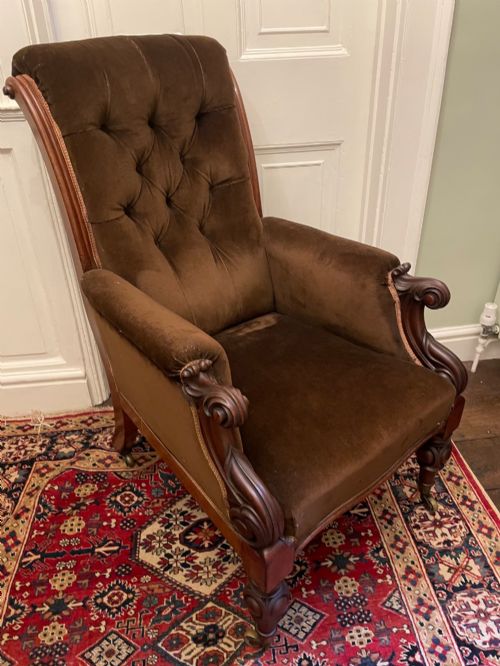
These tufted velvet arm chair pieces bring deep buttoning and rich textiles together, offering a stately seat for a traditional interior.
Tufted Velvet Arm Chair
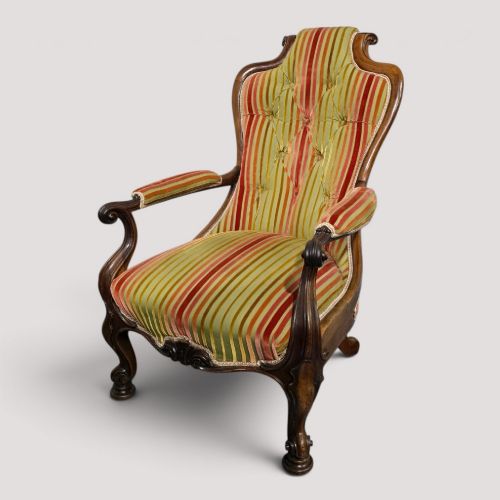
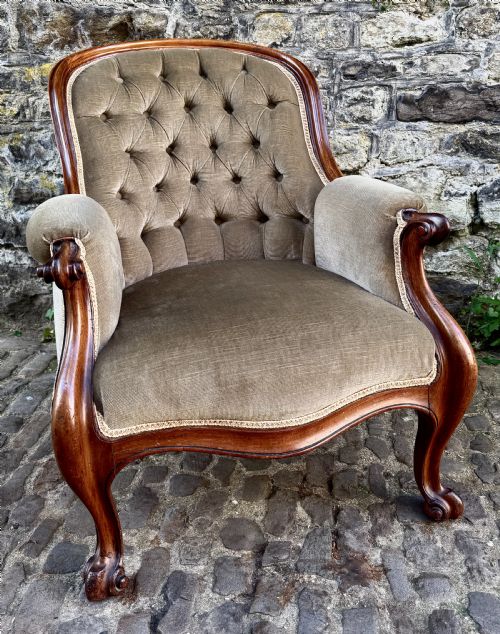
When searching for a tufted velvet arm chair, you enter a field dominated by nineteenth century Victorian and Edwardian seating. The forms span fireside chairs, spoon back armchairs, occasional chairs, and open arm variants.
Most examples rely on walnut or mahogany frames, upholstered in fabric and velvet with characteristic buttoning. You will also encounter occasional pieces like rocking chairs and desk chairs.
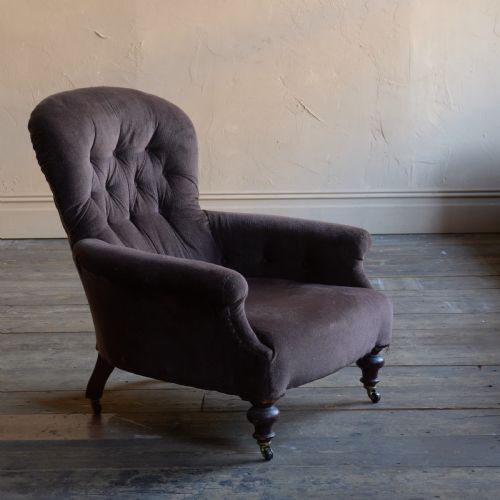
Early Victorian and Regency influences appear frequently across the selection, alongside Howard style frames covered in pink or brown velvet. Walnut remains the predominant timber framing these upholstered seats.
How they were made
Makers constructed the structural frames using hardwoods such as walnut, mahogany, beech, and general timber. Carved details and exposed wooden arms show traditional joinery and turning techniques.
Upholstery relies on fabric and velvet stretched over internal padding, secured with deep buttoning that creates the characteristic tufted surface. Brass elements and ceramic components occasionally finish the feet or castors.
Tufted Velvet Arm Chair Retail Price Guide 2026
Typical asking prices for tufted velvet arm chair among the pieces listed under this phrase on Sellingantiques today, from the lower quarter to the upper quarter. They describe what is for sale here now, not the wider market.
Among the stately velvet seats sits an ebonised bentwood rocking chair, proving the Victorians loved a gentle sway.
What varies in quality
The definition of the wood carving and the choice of primary timber separate standard frames from finer works. Walnut and mahogany frames with crisp carved ornament sit above simpler hardwood structures.
The precision of the buttoning and the depth of the velvet pile dictate the success of the upholstery. Superior examples maintain firm, even tufting that holds the textile taut across the spoon back or fireside profile.
The Tufted Velvet Arm Chair Glossary
- Spoon back
- An upholstered chair back shaped like the bowl of a spoon, curving inward to fit the human spine. This ergonomic design gained popularity during the Victorian period.
- Button back
- Upholstery pulled deep into the padding with buttons arranged in a regular diamond pattern. This technique secures the stuffing and creates the signature tufted texture.
- Howard style
- A deeply comfortable upholstered armchair design originating in the nineteenth century. These pieces typically feature low arms and generous cushioning.
- Open arm chair
- A seating form with un-upholstered wooden armrests that expose the carved walnut or mahogany frame. The arm supports connect the seat rail directly to the knuckle.
- Fireside armchair
- A low-slung seat designed to sit near a hearth for warmth. They often feature high backs and wings or buttoned velvet upholstery to keep out drafts.
Tufted Velvet Arm Chair: Frequently Asked Questions
What is a tufted velvet arm chair?
A tufted velvet arm chair is a nineteenth or early twentieth century seat featuring deep buttoning and soft textile upholstery over a hardwood frame. These pieces often take the form of fireside chairs, spoon back chairs, or Howard style seating.
Walnut and mahogany provide the structural framework for most examples. The style draws heavily on Victorian and Edwardian design traditions.
How do I date a tufted velvet arm chair?
Dating relies on examining the timber frame, the upholstery style, and the overall silhouette. Early Victorian and Regency pieces often feature exposed mahogany or walnut with hand-carved details.
Later Edwardian and nineteenth century variants introduce different wood types and proportions. The presence of specific design markers like spoon backs helps narrow the era.
How were these armchairs used historically?
These armchairs served as comfortable seats in parlours, drawing rooms, and country house firesides. Their padded velvet surfaces and deep buttoning provided warmth and support during long periods of sitting.
Specific variants like desk chairs and rocking chairs fulfilled more specialised domestic tasks. Open arm versions allowed space for voluminous period clothing.
How do I care for velvet upholstery?
Velvet requires gentle brushing to maintain the nap and prevent the pile from crushing. Keep these chairs away from direct sunlight to preserve the richness of the fabric colour.
Professional cleaning is recommended for antique textiles to avoid damaging the underlying buttoning and stuffing. Regular light dusting helps prevent dirt settling into the tufted folds.