

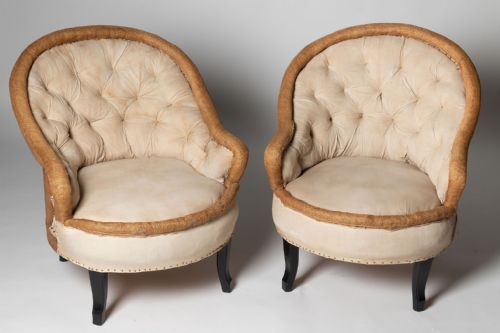
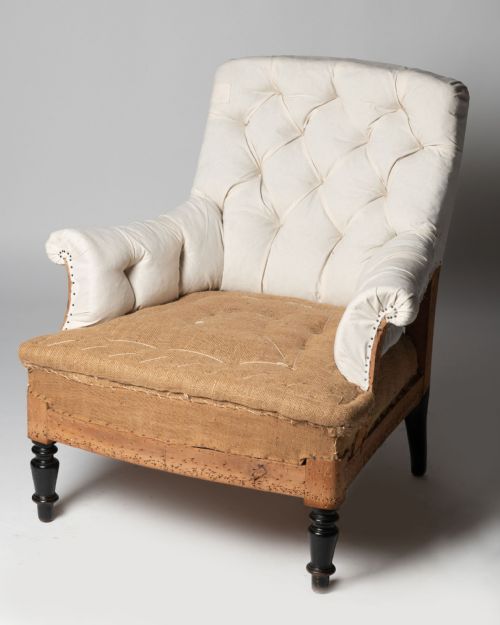
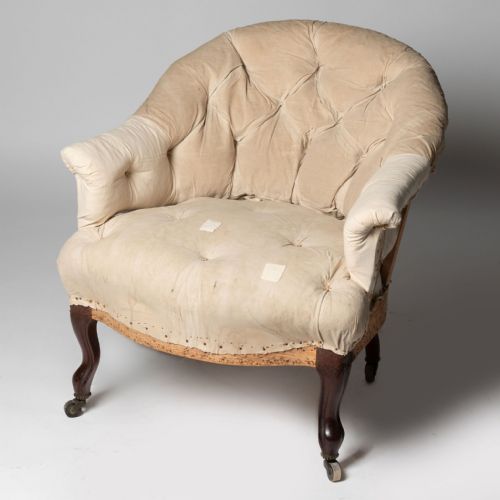
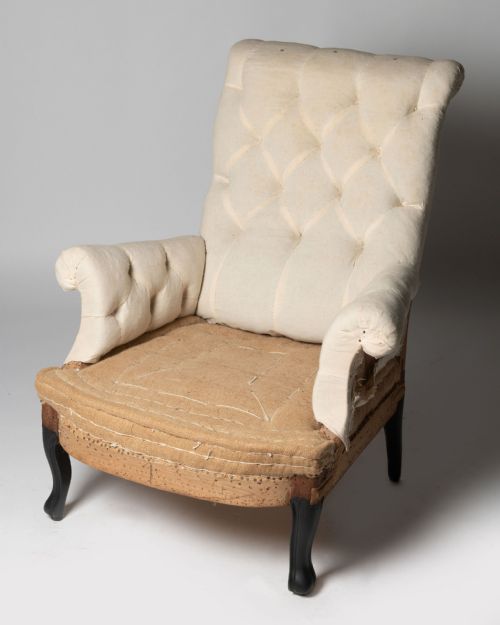
Tufted French Chair
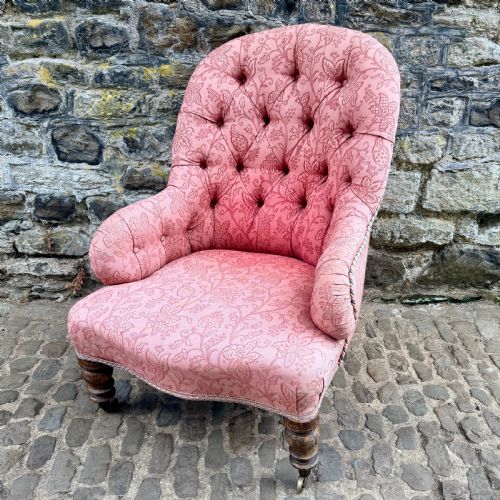
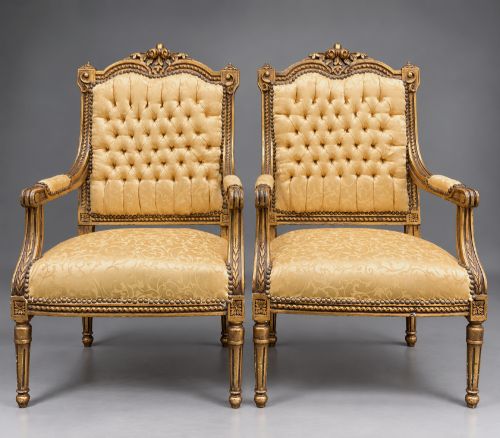
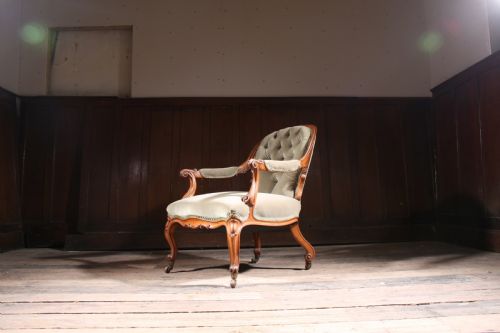
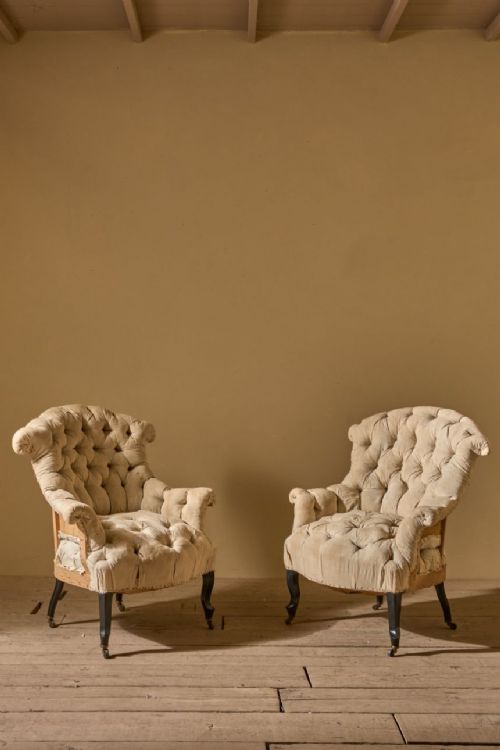
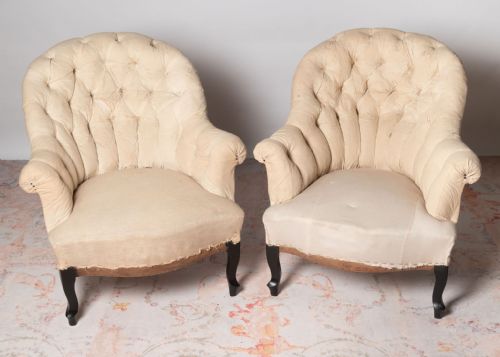
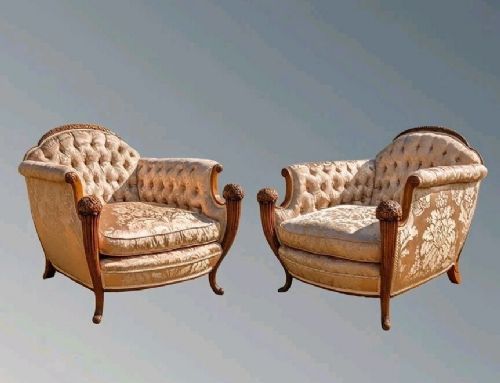
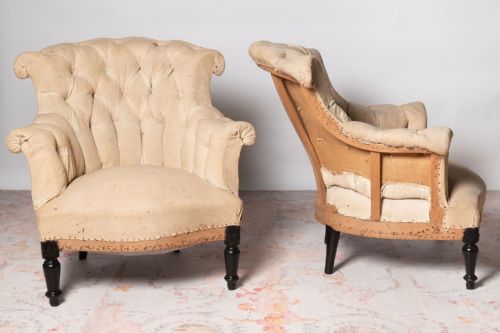
These tufted french chair examples bring buttoned upholstery and carved frames into a room, offering period seating designed for formal reception spaces and parlours.
Tufted French Chair
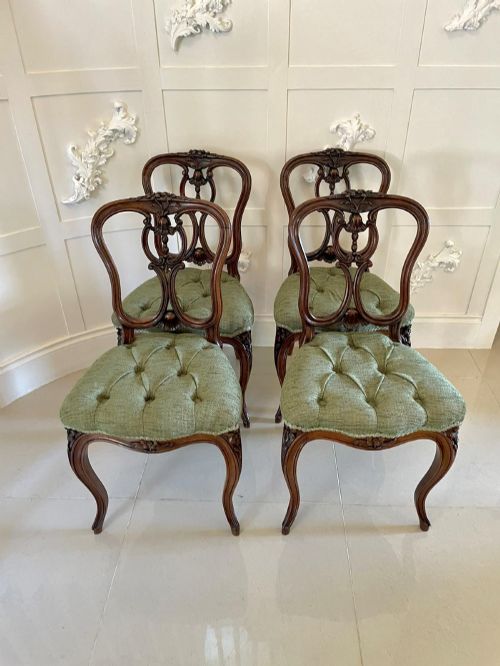
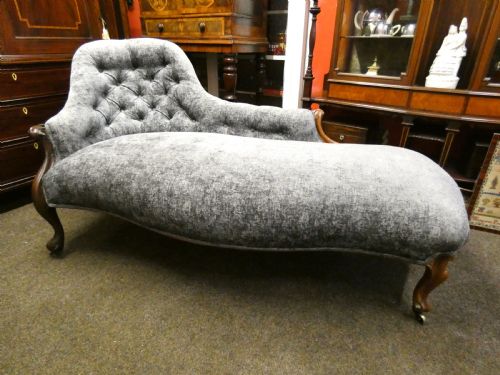
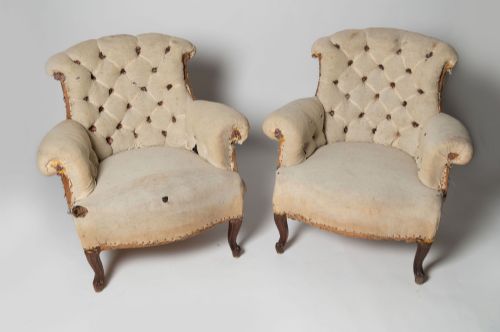
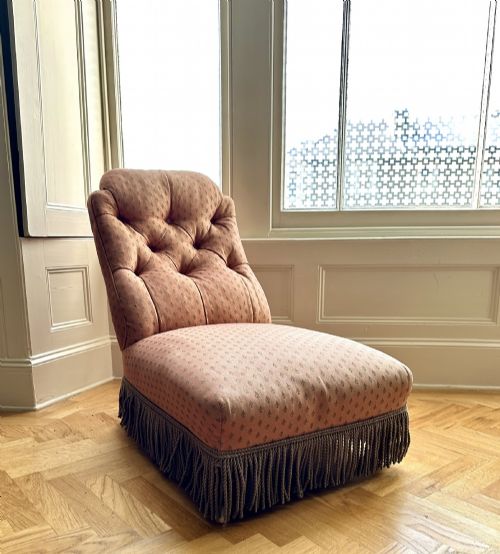
When searching for a tufted french chair, buyers encounter nineteenth-century pieces alongside revival styles spanning the Victorian era through the early twentieth century. Armchairs, side chairs, slipper chairs, and chaise longues dominate the selection, often featuring buttoned upholstery and carved wooden frameworks.
The nineteenth century provides the bulk of the examples, particularly Napoleon III buttoned designs and Louis XV or XVI revival pieces. These forms range from low bedroom seating to grand library armchairs upholstered in silk, velvet, calico, or cotton.
How they were made
Frames rely on timber construction, utilising walnut, beech, and giltwood shaped into curved legs and ornamental crests. Brass details and simulated bamboo finishes appear on specific nineteenth-century and early twentieth-century variations.
Upholstery defines the character of the seating, employing deep buttoning techniques across fabric, silk, velvet, and leather. Interior padding supports the buttoned backrests and seats, finished with fringe trim or exposed polished woodwork.
Tufted French Chair Retail Price Guide 2026
Typical asking prices for tufted french chair among the pieces listed under this phrase on Sellingantiques today, from the lower quarter to the upper quarter. They describe what is for sale here now, not the wider market.
Listings feature walnut, beech, and giltwood frames combined with silk, velvet, and leather upholstery across the Victorian and Napoleon III periods.
What varies in quality
The distinction between tiers rests upon the carving depth of the timber frame and the precision of the buttoned upholstery work. Solid walnut and intricate giltwood execution elevate a piece above simpler beech frames.
Fabric selection and textile condition dictate the upper range, where pure silk, velvet, or vintage cotton retain their integrity alongside the structural rigidity of the wooden armature.
Thomas Chippendale
The Tufted French Chair Glossary
- Buttoning
- Upholstery technique where twine secures deep indentations across the backrest or seat in a geometric pattern. This method creates characteristic tufted cushions.
- Giltwood
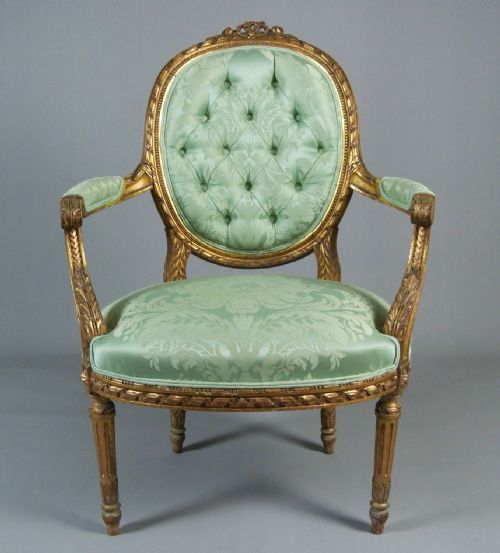
- Timber treated with gold leaf or metallic gilding to produce a reflective surface finish. It appears frequently on formal nineteenth-century revival seating.
- Fauteuil
- An open-armed upholstered armchair with exposed wooden sides originating in France. These seats feature prominently in Napoleon III and Louis revival styles.
- Chaise Longue
- An elongated seating form combining an armchair with an extended footrest for reclining. Examples range from Victorian walnut frames to day beds.
Tufted French Chair: Frequently Asked Questions
What defines a french armchair?
French armchairs encompass styles like the open-armed fauteuil and buttoned Napoleon III seating, characterised by exposed carved wooden frames.
These pieces draw on eighteenth-century design revivals executed in walnut, beech, and giltwood during the nineteenth and early twentieth centuries.
How do I identify a napoleon iii chair?
Napoleon III chairs typically display deep buttoned upholstery on curved backrests and seats, often paired with elaborate woodwork.
Origins trace to the mid-to-late nineteenth century in France, where makers embraced eclectic revivals of earlier monarchical styles.
Where should I place a chaise longue?
A chaise longue or day bed suits bedrooms, drawing rooms, or spacious reading corners where length allows full reclining.
Victorian and nineteenth-century examples work well as focal seating when paired with matching stools or open armchairs.
What fabrics cover antique French seating?
Upholstery materials span silk, velvet, cotton, calico, and leather, frequently secured with button tufting.
Original or restored textiles define the tactile quality of the piece, supported by wooden frames in walnut, giltwood, or ebonised finish.