

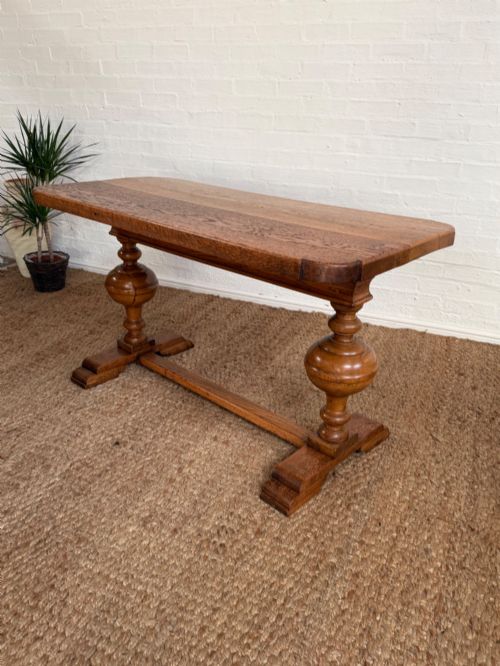

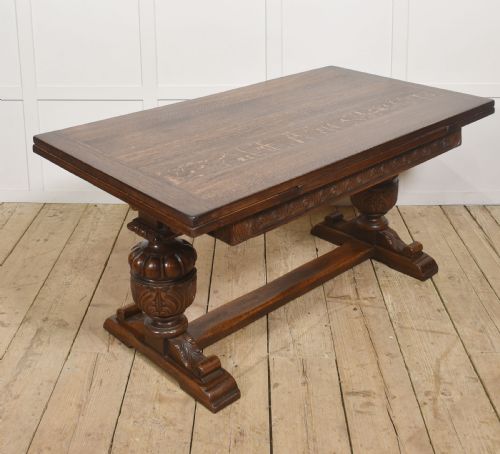


Tudor Style Table
These pieces built in a tudor style table design bring substantial timber presence and period character into modern rooms.
Tudor Style Table
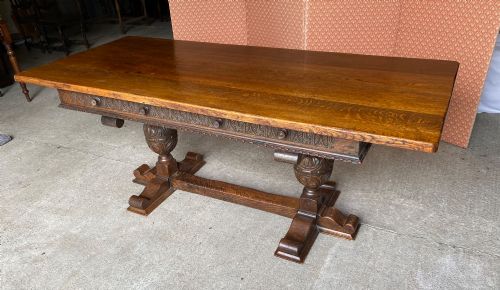
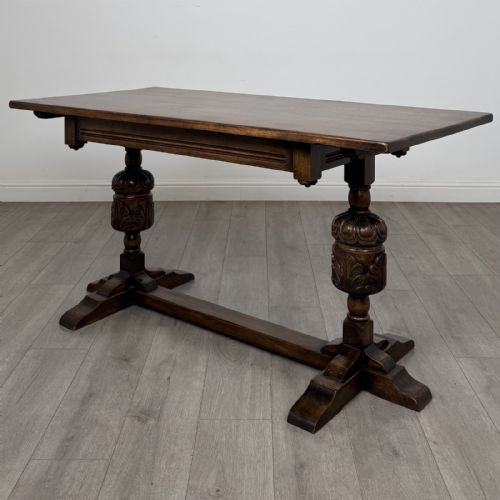
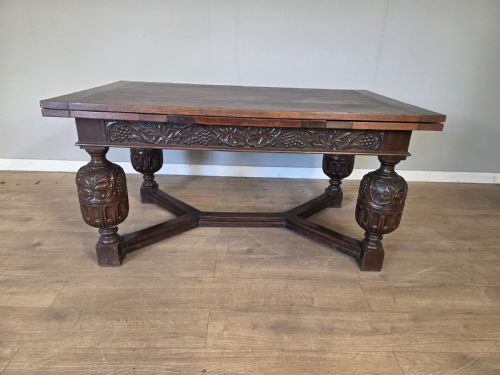
A tudor style table search brings up heavy timber furnishings rooted in revival aesthetics, most commonly seen as refectory dining tables with extending leaves. These items draw heavily from earlier centuries while being produced across the nineteenth and twentieth centuries.
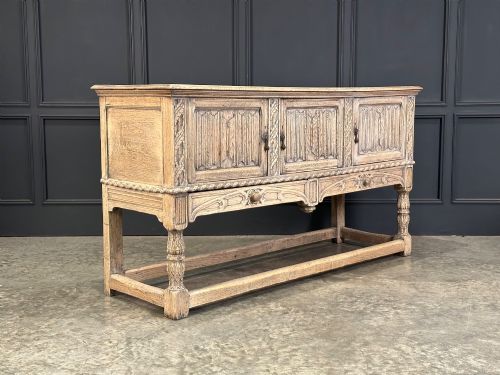
Beyond dining pieces, the selection spans coffee tables, writing desks, cupboards, dressing tables, and hall benches built to mimic older vernacular forms. Oak dominates the grouping, providing the visual weight expected from these revival eras.
Buyers encounter numerous variations labelled under Jacobean and Elizabethan revivals alongside rustic farmhouse interpretations. The forms remain functional while carrying deep surface carving and sturdy stretcher bases.
What varies in quality
Depth and sharpness of the hand-carved ornamentation separate standard production pieces from finer examples. Crisp lines in linenfold panels and properly aligned extension mechanisms indicate superior workshop execution.
Timber selection dictates the overall presence, with dense grain and uniform colour marking better grades of solid oak. Construction solidity in the stretcher base determines how well the piece withstands heavy use over decades.
Tudor Style Table Retail Price Guide 2026
Typical asking prices for tudor style table among the pieces listed under this phrase on Sellingantiques today, from the lower quarter to the upper quarter. They describe what is for sale here now, not the wider market.
Listings span periods from the Georgian era through the 1930s, featuring oak, iron, glass, and fabric materials.
The Tudor Style Table Glossary
- Refectory table
- A long, narrow dining table historically used in monasteries and large halls, featuring sturdy legs joined by low stretchers. These forms dominate the current selection of heavy wooden tables.
- Linenfold
- A style of carved wooden panelling that resembles folded fabric, commonly seen on cupboard doors and panelled furniture. This motif recurs frequently in revival pieces.
- Draw leaf table
- An extending table equipped with leaves stored beneath the main top that pull out to lengthen the surface. This mechanism allows smaller tables to expand for larger gatherings.
- Joint stool
- A sturdy, short wooden seat put together with tight mortise and tenon joints rather than turned legs alone. These items serve as compact seating or small side supports.
- Jacobean revival
- A nineteenth and twentieth-century design movement copying the heavy, geometric furniture styles of the early seventeenth century. Pieces from this movement often feature bold turning and flat carving.
Tudor Style Table: Frequently Asked Questions
What is a refectory table?
A refectory table is a long, narrow dining table designed for communal dining spaces, typically supported by thick legs connected with a low wooden stretcher for added stability.
These pieces provide substantial surface area and form the core of timber dining options found in revival styles.
How do extending leaves work?
Extending mechanisms on these tables often use pull-out leaves positioned beneath the primary surface that slide out when extra length is required.
This design allows the table to remain compact for daily use while expanding to seat larger groups.
What wood is used most often?
Oak and solid oak appear across the majority of pieces, chosen for their strength and ability to take deep carving and traditional dark finishes.
Lighter fruitwoods also occasionally appear in specific refectory dining tables.
How do I date these tables?
Dating relies on examining the construction methods, hardware types, and the specific revival movement noted in the description, such as Elizabethan or Jacobean styles.
Many items date from the nineteenth and twentieth centuries despite mimicking older seventeenth-century proportions.