




Tudor Revival Oak Cupboard
These pieces of tudor revival oak cupboard bring heavy timber and centuries-old architectural carving into modern rooms.
Tudor Revival Oak Cupboard
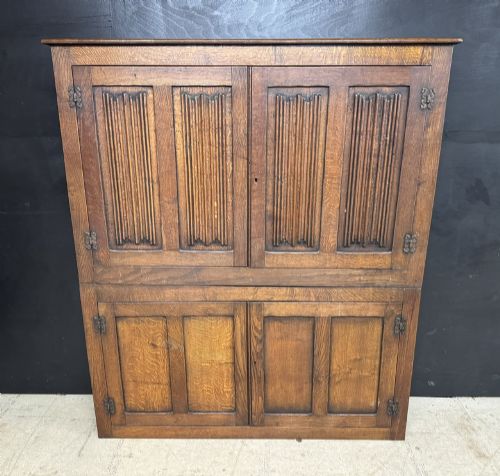
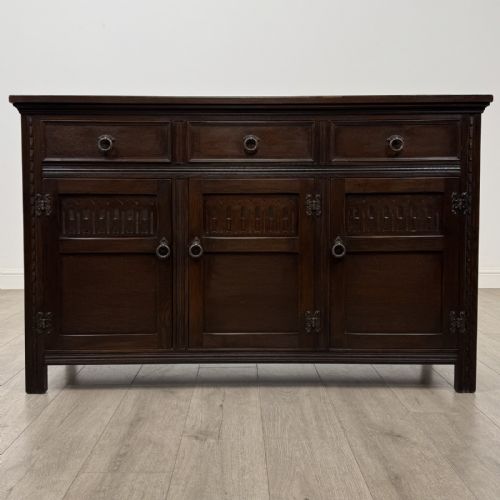
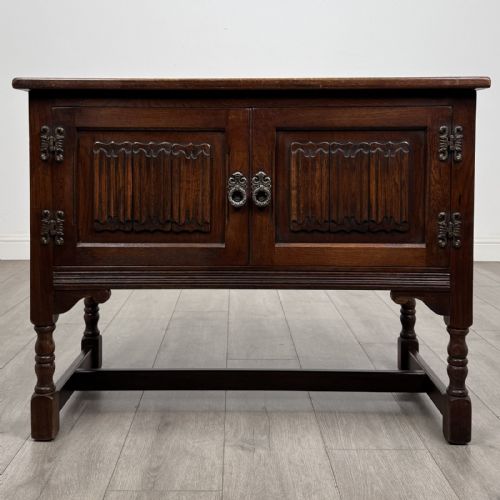
A tudor revival oak cupboard borrows heavily from sixteenth-century motifs, appearing on this page mostly as court cupboards, side cabinets, and linenfold storage pieces. These items draw on historical aesthetics, utilising the robust proportions and dark timber finishes typical of earlier eras while serving contemporary storage needs.
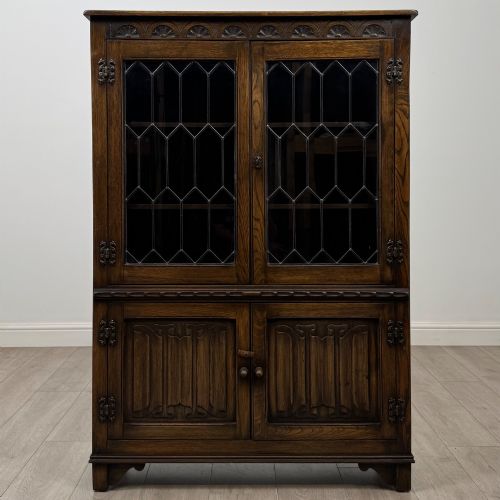
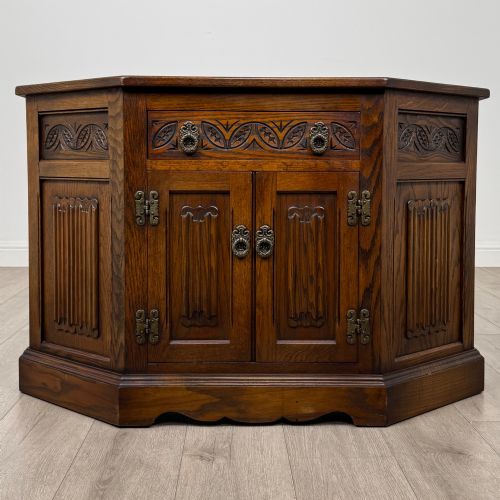
The selection here spans the nineteenth and twentieth centuries, taking in Edwardian and 1930s interpretations alongside older 19th Century craftsmanship. Buyers will encounter court cupboards featuring carved panels and recessed upper stages, as well as smaller side cabinets and wardrobes fitted with linenfold doors.
Most examples rely on solid oak construction, sometimes accented with iron or brass hardware, and occasionally incorporating glass or lead in associated display formats. The overarching style looks back to Jacobean, Gothic, and Tudor precedents, creating a distinct presence through deep relief carving and sturdy frames.
How they were made
Makers built these pieces primarily from solid oak, employing traditional joinery methods that relied on pegged mortise and tenon joints to ensure structural rigidity. The timber often received a dark stain or wax finish to emulate the aged appearance of genuine sixteenth-century furniture.
Carving defines the surface detail on many items, executed directly into the solid oak panels rather than applied as separate mouldings. Iron and brass hinges, handles, and escutcheons secure the doors and drawers, while specialist elements like linenfold panels require precise gouging to mimic folded fabric.
Tudor Revival Oak Cupboard Retail Price Guide 2026
Typical asking prices for tudor revival oak cupboard among the pieces listed under this phrase on Sellingantiques today, from the lower quarter to the upper quarter. They describe what is for sale here now, not the wider market.
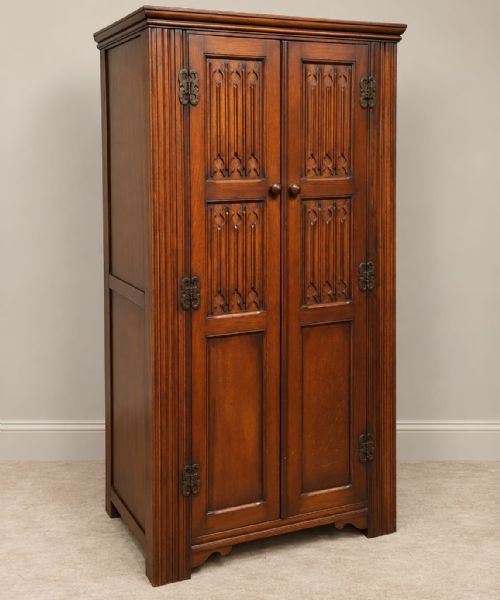
A solitary hall robe hides folded linen behind its door, keeping sixteenth-century fabric secrets safe in the twentieth century.
What varies in quality
Depth and crispness of the hand-carving separate standard production pieces from finer examples, as does the choice of timber figure, such as golden oak or highly grained sections. Well-executed relief work on court cupboards retains sharp edges and clean geometric or floral patterns.
The integrity of the construction and the quality of the hardware also set items apart, with heavy solid oak assemblies outlasting lighter builds. Original brass or iron fittings that complement the period style enhance the overall cohesion of the piece.
The Tudor Revival Oak Cupboard Glossary
- Court cupboard
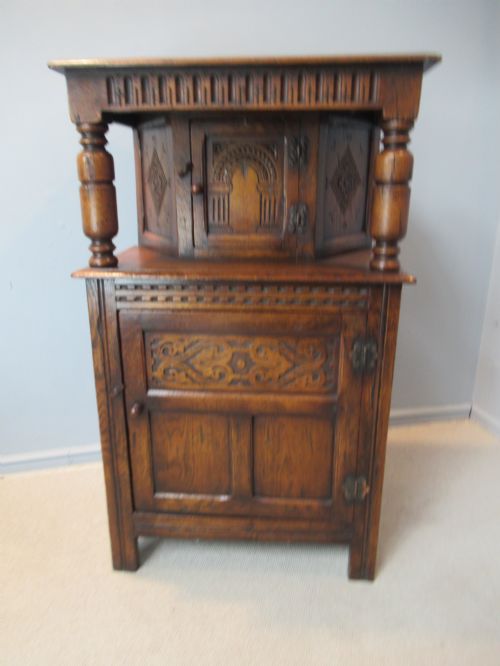
- A traditional English sideboard or storage cabinet featuring a recessed upper section supported by pillars, commonly decorated with heavy carving.
- Linenfold
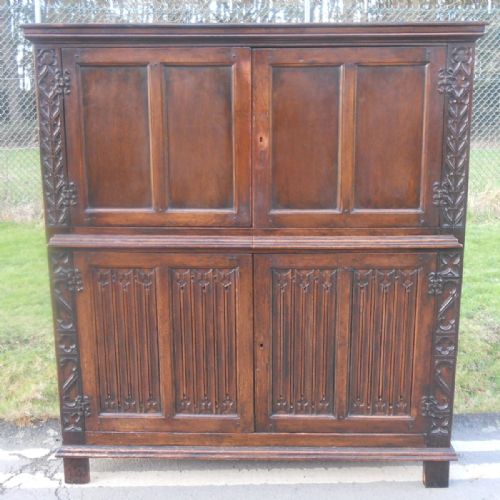
- A style of wood carving that imitates the folds of vertical sheets of linen, frequently seen on panels of early twentieth-century wardrobes and cupboards.
- Jacobean revival
- A nineteenth and twentieth-century design movement that reinterprets the ornate, solid furniture styles of the early seventeenth century.
- Mortise and tenon
- A traditional woodworking joint where a projecting tongue fits snugly into a corresponding cavity, holding the frame together securely without reliance on modern adhesives.
Tudor Revival Oak Cupboard: Frequently Asked Questions
What is a court cupboard?
A court cupboard is a traditional form of storage furniture featuring two tiers, often with a recessed upper section supported by carved posts or columns. These pieces provide enclosed cabinet space alongside surface display areas.
Originally developed in earlier centuries for storing food and utensils, twentieth-century revival versions function primarily as statement sideboards and storage cabinets in dining rooms or hallways.
How do I date an oak cupboard?
Dating these items involves examining the timber preparation, the style of the hardware, and the specific characteristics of the joinery and carving. Edwardian and 1930s revival pieces often combine historical motifs with twentieth-century construction techniques.
Turned elements, linenfold patterns, and the colour of the oak finish help distinguish nineteenth-century examples from later twentieth-century interpretations.
Are these pieces made of solid oak?
Many of the items listed use solid oak construction, providing a heavy and durable structure that defines the revival aesthetic. The natural grain of the timber forms a major part of the visual appeal.
Hardware components such as brass hinges and iron handles accompany the solid timber frames to complete the historical appearance.
How do I care for a carved oak cupboard?
Maintaining these pieces requires keeping them away from direct heat sources and sudden humidity changes to prevent the solid oak from splitting. Regular dusting with a soft cloth preserves the carved details.
Applying a traditional beeswax occasionally helps nourish the wood surface and maintain the deep sheen characteristic of these dark timber finishes.