



Tripod Adjustable Stool
These tripod adjustable stool examples combine mechanical ingenuity with domestic comfort, offering flexible seating shaped by Victorian and Georgian hands.
Tripod Adjustable Stool
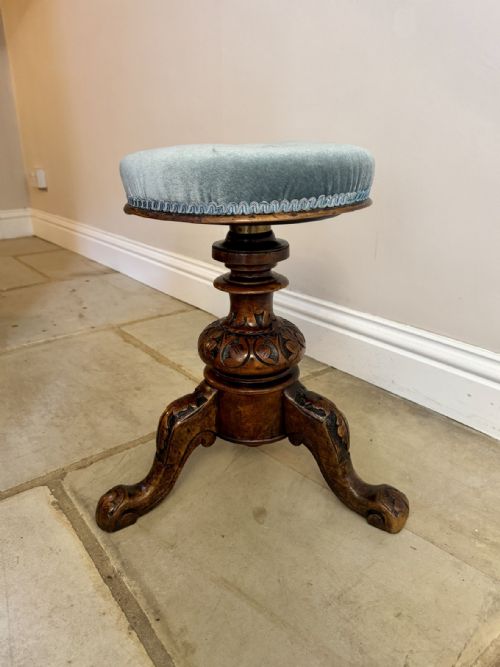
A tripod adjustable stool serves primarily as seating for musicians and dressing tables, allowing players to alter their height via a central screw mechanism. When you examine a tripod adjustable stool on this page, you will most frequently encounter Victorian walnut and rosewood piano stools supported by three carved legs.
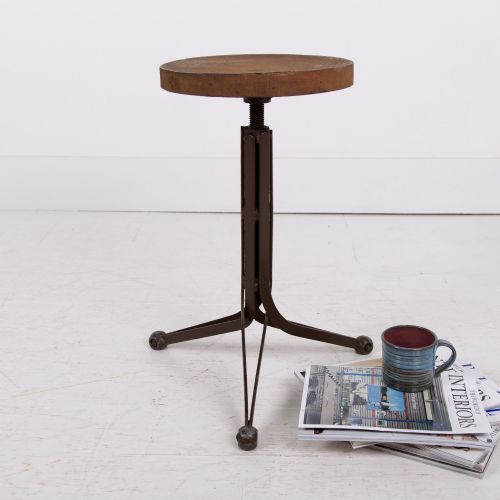
Makers produced these pieces across the nineteenth century, ranging from simple industrial workshop seats to ornate domestic furnishings. The selection moves between Georgian forms, Victorian carved walnut variants, and robust industrial cast iron designs.
Most examples function through a revolving top or a rise and fall screw action that adjusts the seat level. Walnut and rosewood remain the dominant timbers, often paired with velvet, leather, or fabric upholstery.
Materials and construction methods
Carpenters shaped these seats from dense hardwoods including walnut, rosewood, and mahogany, selecting timbers capable of taking intricate carved detail. Turned pedestals and cabriole legs provide the structural support needed to balance the central adjustable mechanism.
Metal components such as cast iron and brass form the internal screws and revolving pivots that allow the height to shift. Upholsterers finished the tops with velvet, leather, or fabric stuffed over padding to ensure comfort during long periods at a piano or dressing table.
Tripod Adjustable Stool Retail Price Guide 2026
Typical asking prices for tripod adjustable stool among the pieces listed under this phrase on Sellingantiques today, from the lower quarter to the upper quarter. They describe what is for sale here now, not the wider market.
Listings span the Georgian, Victorian, and Edwardian periods, utilising walnut, rosewood, mahogany, iron, and leather.
Distinguishing quality in adjustable seating
The refinement of the carving on the pedestal and legs marks the distinction between standard workshop output and superior cabinet work. Crisp foliate carving and well-proportioned tripod bases indicate skilled craftsmanship.
The precision and smoothness of the mechanical screw action dictate the functional standard of each piece. Heavier gauge ironwork and robust revolving joints provide greater stability when the seat reaches its maximum height.
Rubery Owen Blade Workshop
The Tripod Adjustable Stool Glossary
- Revolving stool
- A seat featuring a top that turns on a central pivot, allowing the user to rotate freely.
- Rise and fall
- A mechanical mechanism operated by a screw thread that raises or lowers the seat height when turned.
- Tripod base
- A support structure consisting of three legs radiating from a central pillar for stability on uneven floors.
- Piano stool
- A height-adjustable seat specifically designed for keyboard players to maintain proper posture.
- Cabriole leg
- A furniture leg that curves outward and then tapers inward, finishing in a pad or carved foot.
Tripod Adjustable Stool: Frequently Asked Questions
How do I adjust the height?
You rotate the upholstered seat clockwise or counter-clockwise so the internal wooden or metal screw thread moves up or down the central column.
Some models utilise a side lever or a threaded spindle that raises the platform independently of the turning top.
Were these only used for pianos?
While most surviving examples served musicians at keyboards, makers also designed them for dressing tables and general parlor use.
Industrial workshops employed similar heavy iron and wood swivel seats for specific trades and bench tasks.
How do I date a Victorian example?
Examinations of the timber choice, joinery methods, and the style of the carved pedestal provide the primary clues to the decade of manufacture.
Mid-nineteenth-century pieces often feature rich rosewood and heavy walnut with detailed cabriole tripod legs.
Are the upholstery materials original?
Most antique stools have undergone re-upholstery over the decades to replace worn fabric, leather, or velvet surfaces.
Underneath the outer cover, the padding and webbing frequently show later repairs while the wooden and metal frame remains untouched.