



Triform Base Hall Table
A triform base hall table brings architectural presence to an entrance, supporting a circular marble or timber top on three substantial legs.
Triform Base Hall Table
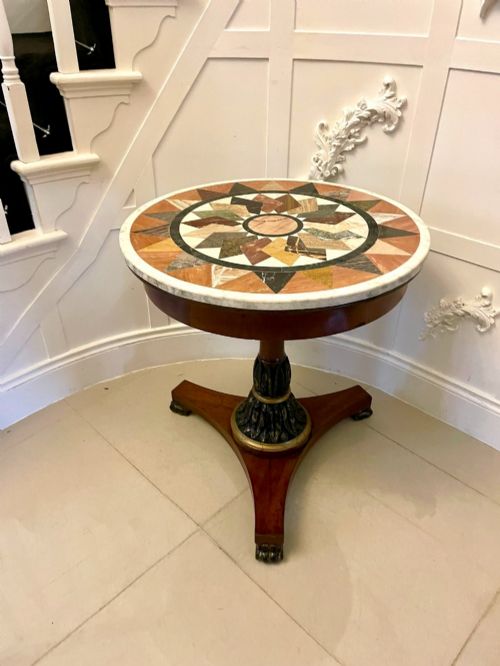
A triform base hall table centres on a three-sided support structure that anchors the table firmly to the floor while carrying a circular surface above. These pieces function primarily as centre tables or occasional tables in entrance halls, drawing rooms and reception spaces.
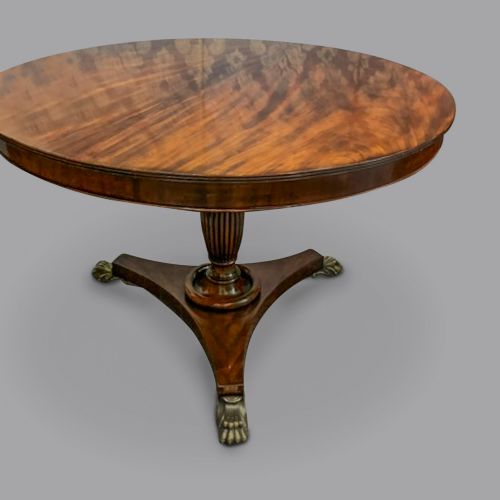
The versions most commonly met on this page span the Georgian, Regency and Victorian eras, often taking the form of a freestanding centre table or a compact occasional lamp table. Makers frequently utilised circular tops of solid mahogany, figured rosewood or inset marble.
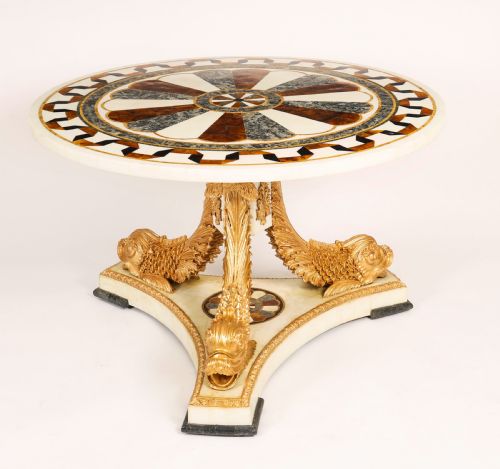
Design influences range from classical French Empire and Neoclassical Revival styles to distinct British periods such as William IV and George III. The tripartite arrangement beneath provides steady balance without crowding the floor area.
Materials and construction
Cabinet makers constructed these tables using dense timbers such as mahogany and rosewood, frequently applying burr walnut or exotic veneers across the surface to display dramatic grain patterns. Parcel gilt accents and giltwood highlights add contrast to dark woods in pieces influenced by French Empire and Regency aesthetics.
Heavy stone and marble tops appear frequently, resting directly upon the wooden frame or supported by carved wooden columns and dolphin motifs. Brass fittings, inset mounts and wooden pedestal structures provide structural integrity for the heavy circular tops.
Triform Base Hall Table Retail Price Guide 2026
Typical asking prices for triform base hall table among the pieces listed under this phrase on Sellingantiques today, from the lower quarter to the upper quarter. They describe what is for sale here now, not the wider market.
Table forms on this page include centre tables, occasional tables and gueridons with circular tops.
Factors of quality
The quality of a triform base hall table rests upon the crispness of the carving on the three-way pedestal and the selection of timber used for the top. Finely figured rosewood, burr walnut or thick slab marble indicate a higher standard of production.
Proportion and stability separate standard examples from finer commissions, as the three legs must maintain absolute balance beneath a heavy stone or timber slab. Subtle details like parcel gilding and precise veneering reveal the skill of the original workshop.
The Triform Base Hall Table Glossary
- Triform base
- A three-sided support structure beneath a table top. This configuration provides a stable footprint and characteristic architectural silhouette.
- Gueridon
- A small French table supported by a central column or figures. These pieces often feature circular marble tops.
- Parcel gilt
- Partially gilded with gold leaf or paint. This technique highlights specific carved details on wood or metal.
- Veneer
- A thin layer of figured wood applied to a secondary timber base. This method displays striking grain patterns while maintaining structural strength.
- Neoclassical Revival
- A style drawing inspiration from classical antiquity. It incorporates architectural motifs and balanced proportions.
Triform Base Hall Table: Frequently Asked Questions
What is a triform base hall table?
A triform base hall table is a freestanding circular table supported by a three-sided pedestal or leg arrangement. These pieces serve as striking focal points in entrance halls and reception rooms.
Originating largely in the Georgian, Regency and Victorian periods, they combine functional surface area with sculptural three-dimensional pedestals.
How were these tables used historically?
Historically, these tables stood in the centre of large entrance halls to receive callers, hold lamps or display decorative objects. Their circular tops and accessible pedestals allowed people to walk around them easily.
In domestic settings, they also functioned as occasional tables or card tables depending on the height and top construction.
How do I identify a Regency period table?
Regency tables often feature dark tropical timbers such as rosewood and mahogany, frequently enhanced with brass inlay or parcel gilt details. The silhouettes draw heavily from classical antiquity and French Empire design.
Proportions tend to be bold and architectural, with substantial central pedestals resting on tripartite plinths.
Can these tables hold heavy objects?
Yes, many of these tables feature heavy marble tops or dense mahogany slabs designed to bear substantial weight. The three-way base construction provides inherent stability and distributes the downward load evenly.
When placing items on top, ensure the weight remains centered to maintain balance across the tripartite support structure.