

Trestle Style Dining Table
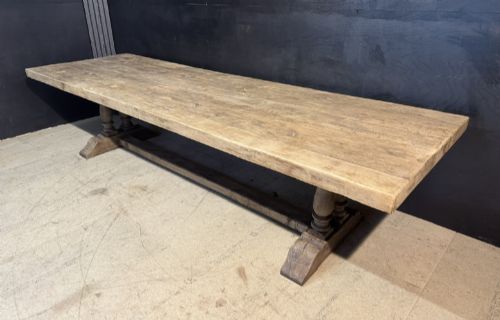
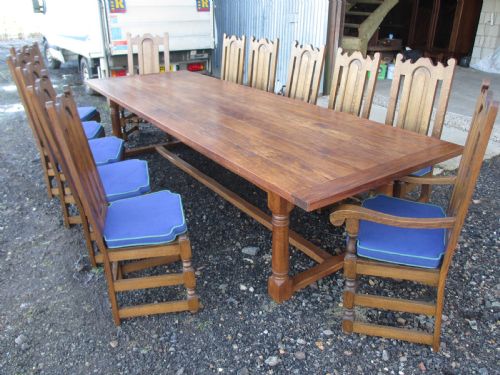
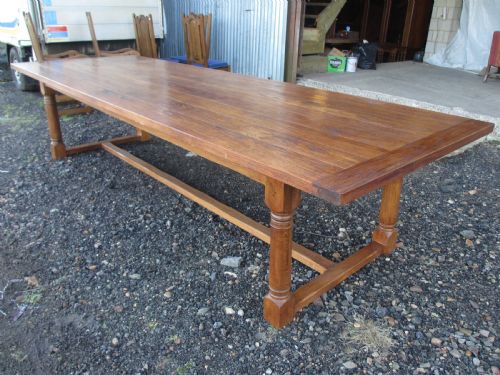
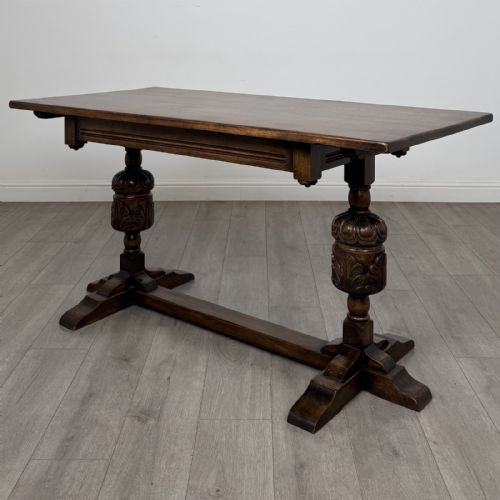
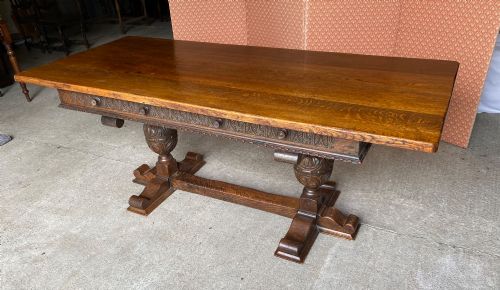
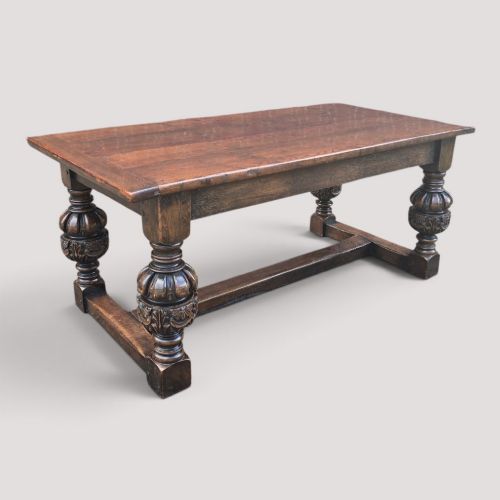
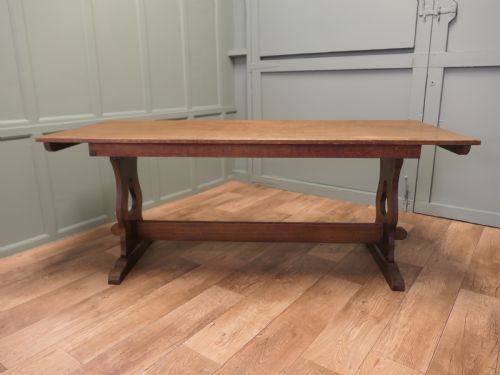
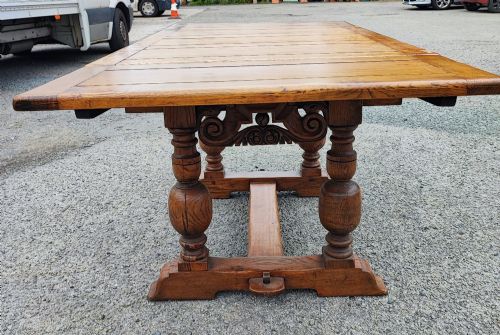
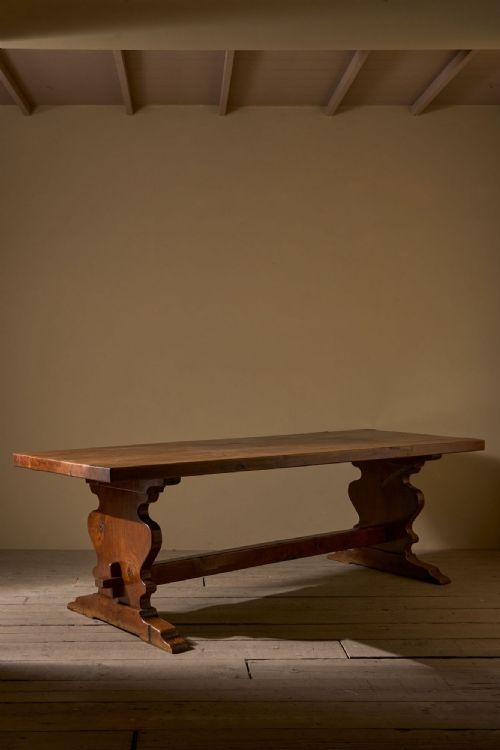
A trestle style dining table provides robust dining space with character, drawing on historic refectory designs to anchor a room.
Trestle Style Dining Table
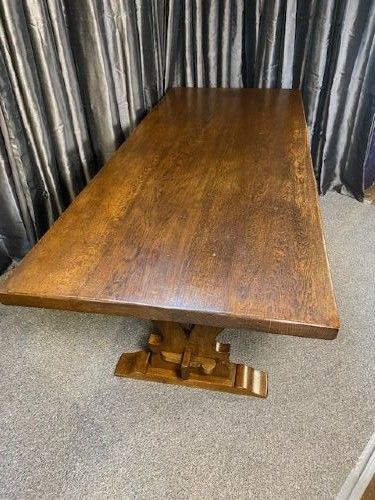
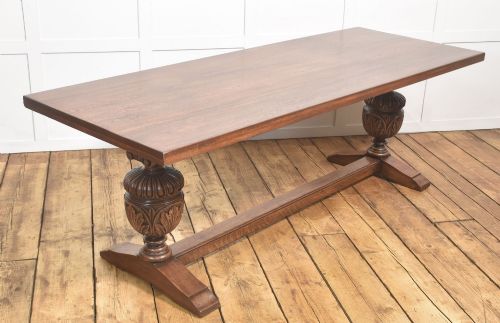
When searching for a trestle style dining table, buyers encounter a range of sturdy surfaces grounded by end supports rather than standard corner legs. These pieces draw heavily on historic refectory and monastery prototypes adapted for domestic dining.
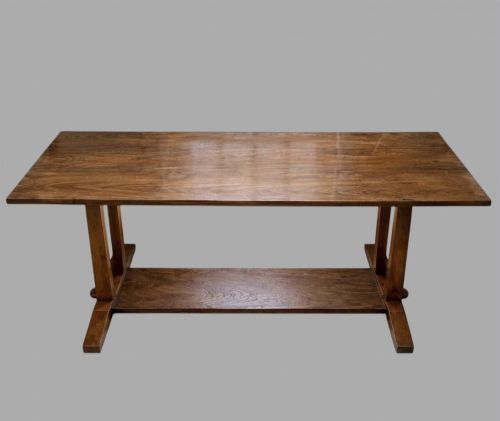
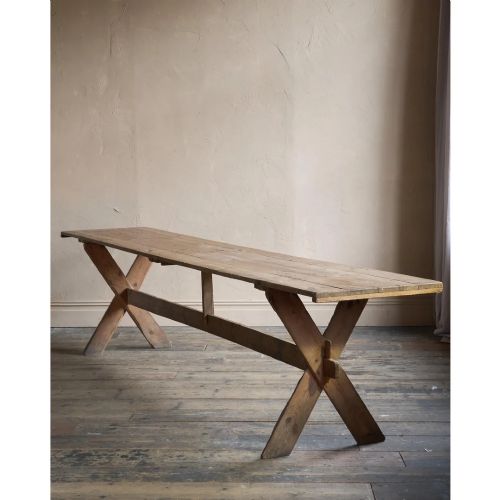
The selections span from seventeenth-century originals through nineteenth-century revivals up to twentieth-century interpretations, including Arts and Crafts iterations and farmhouse formats. Oak dominates the inventory, alongside walnut, pine, and painted wood.
Buyers most frequently meet twentieth-century adaptations and Edwardian or Victorian revival pieces that utilise traditional construction methods. These tables often incorporate draw leaves or plank tops suitable for everyday dining use.
Materials and Construction
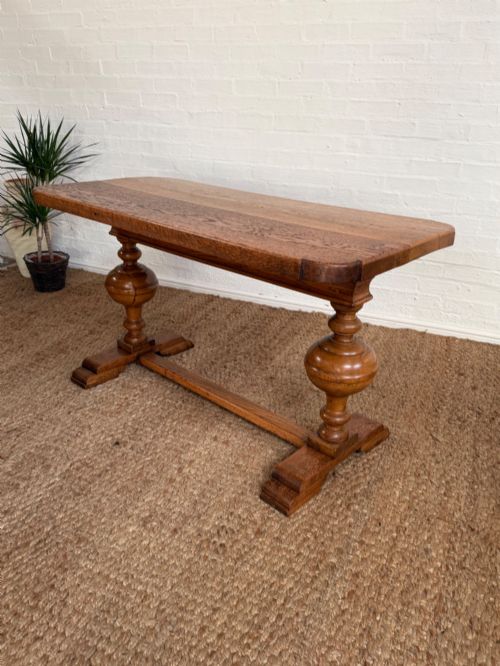
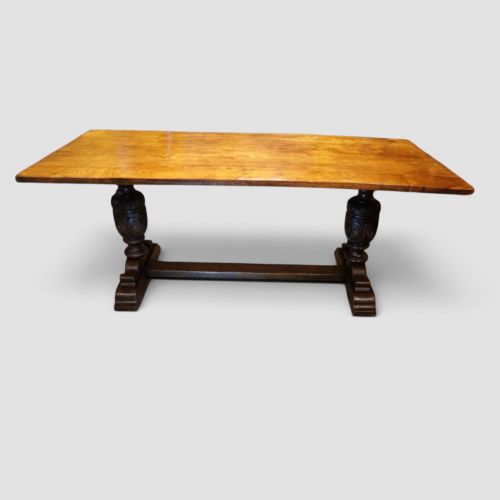
Makers relied principally on solid oak, frequently quarter-sawn to reveal dense medullary rays, alongside walnut and pine for softer regional pieces. Timbers were selected for structural integrity, often forming thick plank tops supported by pegged joints and substantial trestle feet.
Wrought iron braces or stretchers occasionally reinforced the timber undercarriages, particularly in Spanish baroque or continental variants. Joinery relied on traditional mortise and tenon techniques secured with wooden pins rather than modern metal fixings.
Trestle Style Dining Table Retail Price Guide 2026
Typical asking prices for trestle style dining table among the pieces listed under this phrase on Sellingantiques today, from the lower quarter to the upper quarter. They describe what is for sale here now, not the wider market.
Several tables arrive with historic ink stains and knife marks, quietly testifying to centuries of communal dining and kitchen preparation.
Distinctions in Quality
Quality rests upon the selection of timber and the integrity of the joinery rather than surface ornamentation alone. Superior examples display dense, well-figured grain in solid oak or walnut, with hand-planed surfaces that retain tactile depth.
Construction details separate standard workshop production from finer pieces, visible in the snug fit of draw-leaf mechanisms and the rigidity of the trestle base. Well-made tables balance visual weight with precise joinery that maintains stability across large plank tops.
Heals·Sir Robert Lorimer
The Trestle Style Dining Table Glossary
- Refectory table
- A long dining table historically used in monasteries for communal meals. These forms inspired many later revival dining tables.
- Quarter-sawn oak
- Timber cut radially to the growth rings, producing a distinct striped figure known as medullary rays. This method yields stable boards resistant to warping.
- Draw leaf
- An extension system featuring leaves hidden beneath the main top that pull out from each end. It allows the table surface to expand quickly.
- Trestle
- A structural support consisting of a horizontal beam fixed to two splayed feet. It leaves leg room clear along the length of the table.
- Mortise and tenon
- A joint formed by inserting a shaped projection into a corresponding cavity, often secured with a wooden peg. This traditional method underpins sturdy antique furniture.
Trestle Style Dining Table: Frequently Asked Questions
How do I seat people around a trestle table?
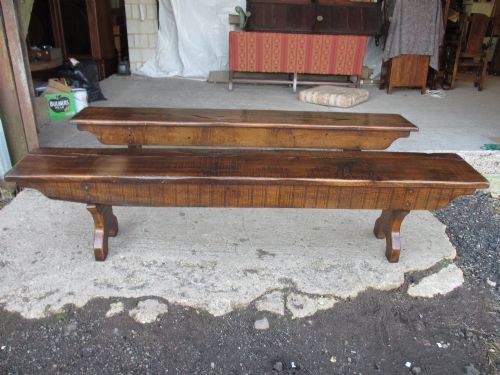
The absence of corner legs allows diners to sit along the full length of the surface without obstruction. Benches or chairs fit easily between the end supports.
Position chairs to account for the central stretchers or trestle feet underneath. This layout accommodates flexible seating arrangements for gatherings.
Are these tables suitable for daily family use?
Solid timber construction makes these surfaces resilient for everyday dining and kitchen activities. Many examples feature robust oak tops that withstand regular wear.
Routine maintenance involves wiping spills promptly and applying wax to nourish the wood. Sturdy joinery ensures the tables remain stable through daily use.
How can I tell an older table from a revival piece?
Examination of the timber movement, tool marks, and joinery reveals the likely period of manufacture. Hand-cut peg holes and uneven board widths often indicate nineteenth-century or earlier craftsmanship.
Revival pieces from the Edwardian era or the twentieth century employ similar historic styles but exhibit more uniform machine preparation. Comparing the wear patterns on the feet and top helps clarify the age.
What interior styles suit a refectory table?
These tables anchor contemporary rustic dining spaces as well as traditional period rooms. Their architectural trestle bases provide a strong focal point in open-plan kitchens.
Pairing the wood tones with simple modern seating creates a balanced contrast. The varied finishes, from weathered pine to golden quarter-sawn oak, adapt to diverse decorative schemes.