



Travelling Writing Box
These travelling writing box examples are portable desks of wood and leather built to carry correspondence on the move.
Travelling Writing Box
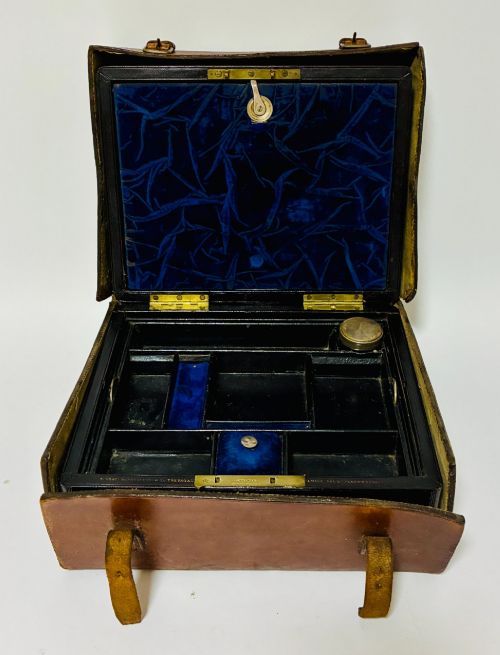
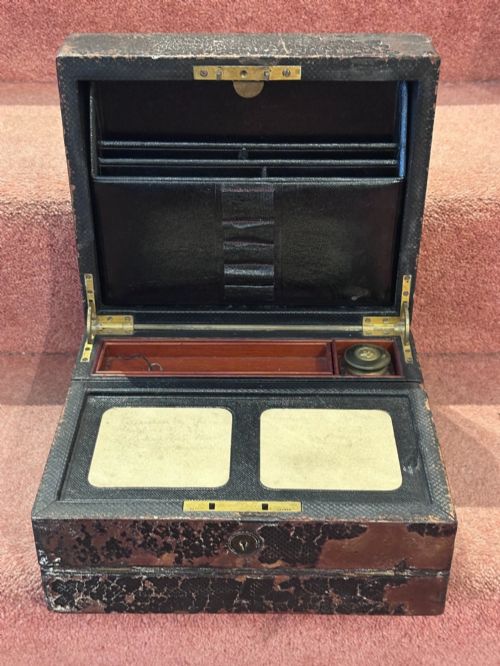
A travelling writing box takes the form of a portable desk designed to fold out into a writing surface while storing paper, ink and pens inside. When you search for a travelling writing box, you encounter pieces intended for officers, travellers and ladies on the move.
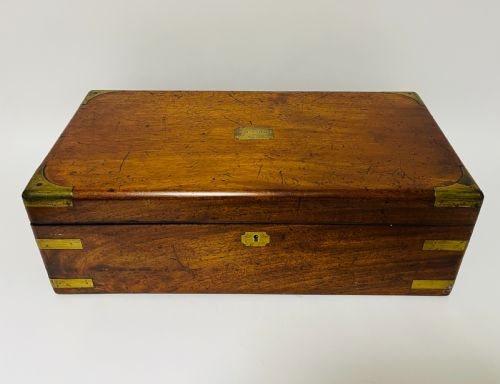
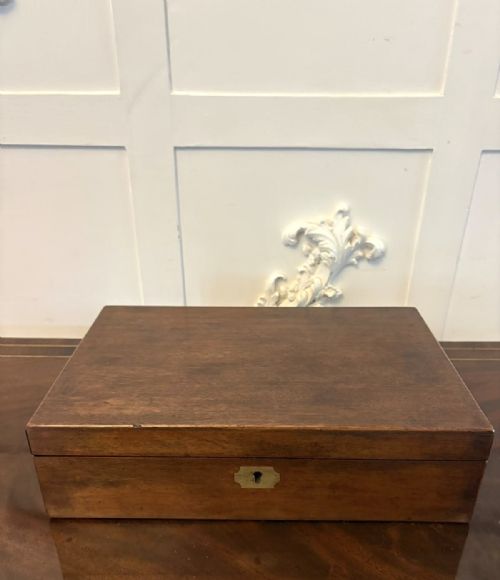
The versions most likely to meet you on this page belong to the Victorian period, alongside Georgian and early twentieth-century examples. They appear as mahogany and rosewood writing slopes, leather-bound cases, and campaign boxes fitted with brass corners.
Many of these portable desks combine multiple functions, serving as sewing cases, dressing boxes or clerical swing-out containers alongside their primary role for correspondence.
How they were made
Cabinetmakers constructed these boxes in solid or veneered hardwoods including mahogany, rosewood, walnut, camphor wood and burr walnut. These timbers provided the structural rigidity needed for frequent transport while presenting a polished exterior.
Makers reinforced the corners and edges with brass banding and incorporated leather linings, velvet writing surfaces and mother-of-pearl inlay. Interiors featured secret compartments, fitted inkwells and specialised slots for pens and paper.
Travelling Writing Box Retail Price Guide 2026
Typical asking prices for travelling writing box among the pieces listed under this phrase on Sellingantiques today, from the lower quarter to the upper quarter. They describe what is for sale here now, not the wider market.
Listings feature items from the Victorian period alongside Georgian and 1920 examples, constructed in mahogany, rosewood, walnut and leather.
What varies in quality
The distinction between standard utility boxes and finer examples lies in the selection of timber and the precision of the brass hardware. Finer pieces utilise dense rosewood, burr walnut or camphor wood with flush-fitting campaign brasses rather than surface-mounted plates.
Internal organisation and the complexity of the fitted compartments also separate tiers of production. Elaborate secret drawers, bespoke leather bindings and named maker's stamps indicate superior workshops and higher investment by the original purchaser.
F West·Mappin And Webb·P And F Shafer
The Travelling Writing Box Glossary
- Writing slope
- A portable box with a hinged sloping lid that opens to reveal a flat or inclined writing surface and internal storage compartments.
- Campaign box
- A piece of furniture or a box reinforced with brass corners and recessed handles designed for military officers on active service.
- Secret compartment
- A hidden drawer or concealed space built into the interior of a box to secure valuables and confidential papers.
- Tunbridgeware
- Wooden items decorated with mosaic patterns created by gluing together tiny coloured wood blocks to form geometric or pictorial designs.
- Dressing case
- A fitted travelling box containing compartments for grooming bottles, brushes and personal accessories alongside writing materials.
Travelling Writing Box: Frequently Asked Questions
How do campaign boxes differ?
Campaign boxes were built for military officers and travellers requiring durable containers that could withstand rough transit. They feature robust timbers such as camphor wood or mahogany combined with flush brass corners and recessed carrying handles.
These additions prevented the hardware from catching on clothing or other luggage while allowing the box to withstand changing climates.
How are different periods identified?
Periods are determined through a combination of timber selection, construction techniques and hardware styles. Georgian and Victorian examples frequently employ solid mahogany or rosewood with hand-cut dovetails and traditional brass fittings.
Later pieces from the twentieth century introduce materials like crocodile skin and attaché formats that reflect changing travel habits.
Were these boxes used by women?
Many travelling boxes served as ladies' writing slopes and sewing cases designed for personal correspondence and domestic tasks away from home. These smaller examples often featured delicate inlay, mother-of-pearl decoration and velvet-lined compartments.
They functioned as portable personal desks for use in country houses and during extended journeys.