






Travel Clock with Case
A travel clock with case is a portable timepiece designed for journeys, combining mechanical precision with robust housing to survive the road.
Travel Clock with Case
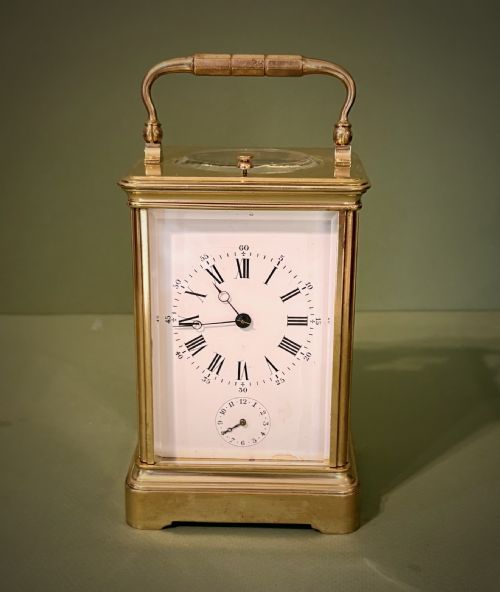
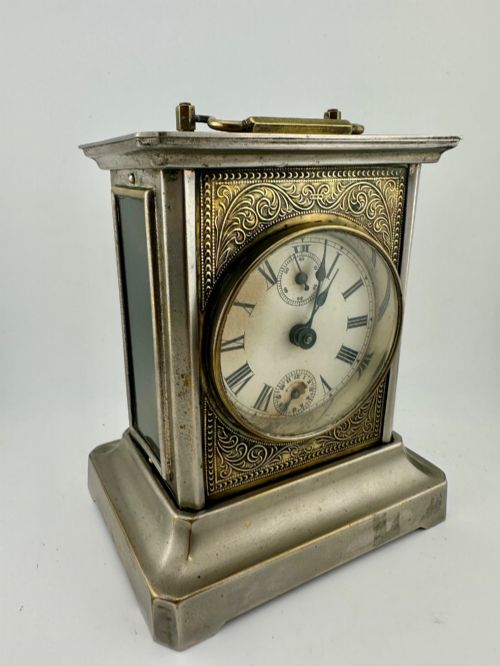
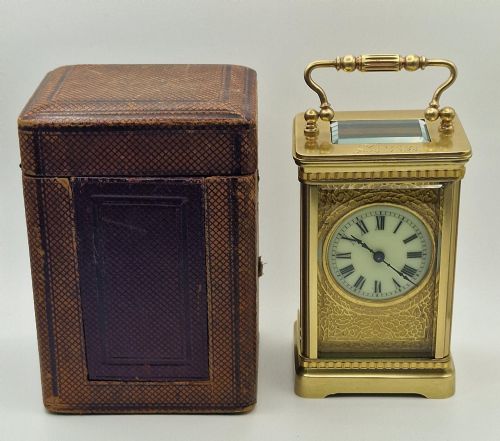
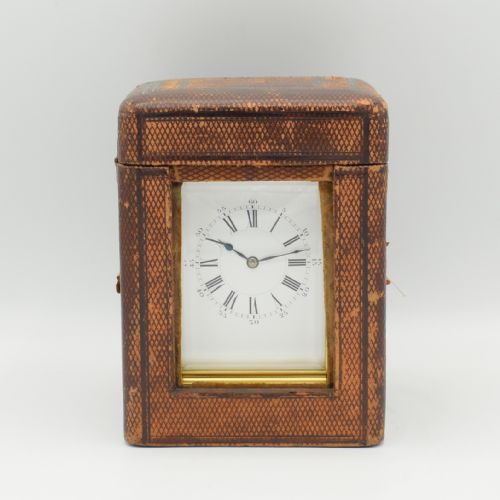
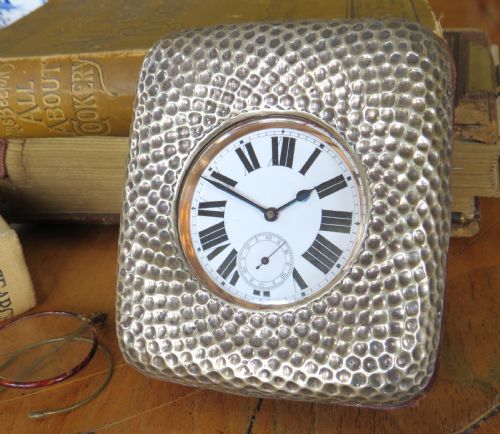
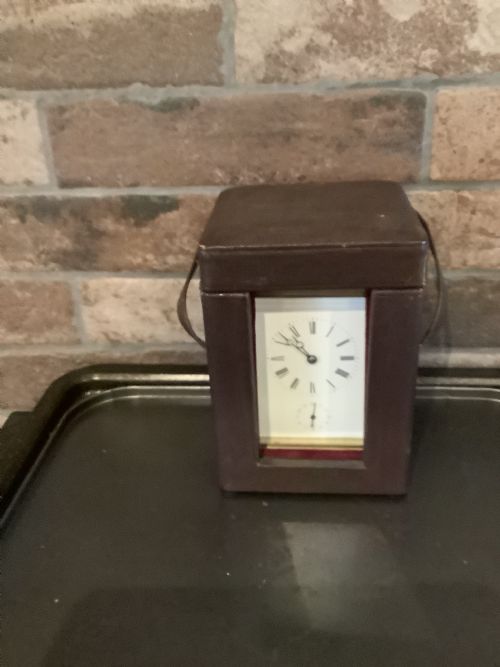
When you search for a travel clock with case, you encounter portable timepieces primarily originating from the nineteenth and early twentieth centuries. These objects frequently take the form of carriage clocks or dedicated folding travel alarms housed within protective outer shells.
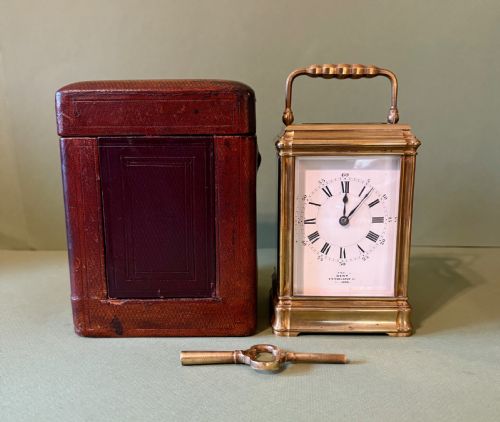
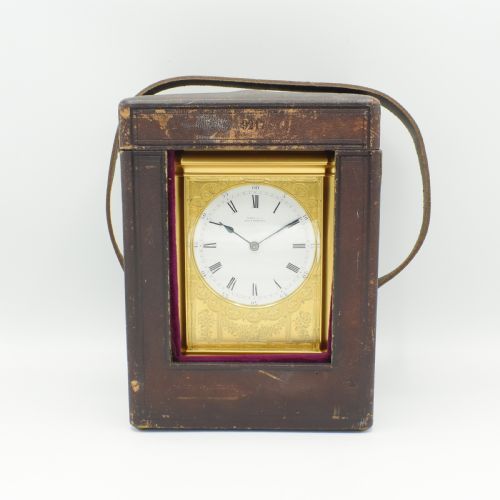
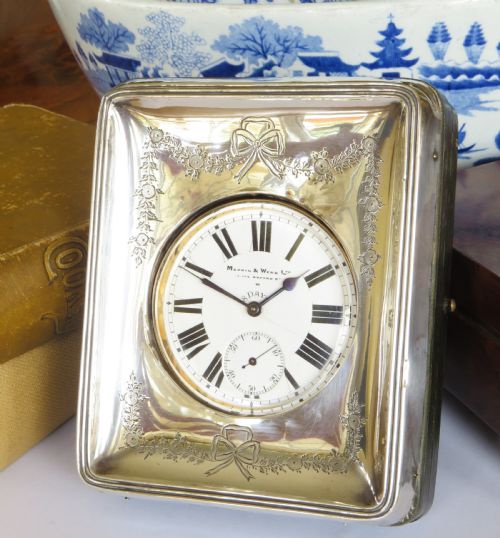
The versions most commonly met on this page span the Victorian and Edwardian eras, with French and English examples predominating. They arrive in brass, gilt brass, and silver housings accompanied by original leather travel cases or fitted boxes.
How They Were Made
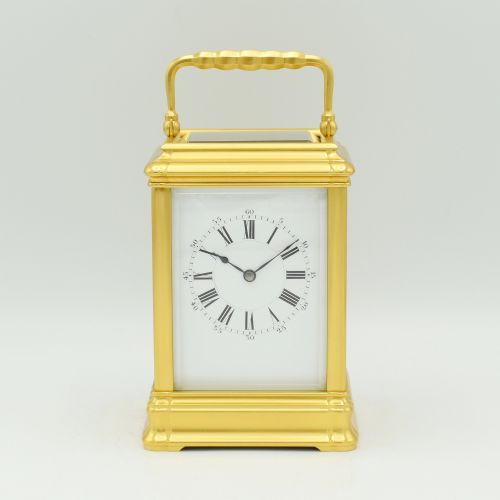
The construction relies on heavy brass, gilt brass, or silver frames fitted with bevelled glass panels to protect the delicate movement within. Makers utilised leather for the protective outer travel cases, often lining them with velvet or silk.
Movements incorporate steel components and frequently feature Swiss or French mechanisms with escapements designed to withstand motion. Cases are constructed in distinct architectural styles such as gorge, corniche, or plain polished metal.
Travel Clock with Case Retail Price Guide 2026
Typical asking prices for travel clock with case among the pieces listed under this phrase on Sellingantiques today, from the lower quarter to the upper quarter. They describe what is for sale here now, not the wider market.
One exceptional giant travel clock includes a built-in compass and thermometer for the truly prepared Victorian explorer.
What Varies in Quality
The sophistication of the internal mechanism dictates the grade of the piece, moving from basic timepieces up to complex petite sonnerie, grande sonnerie, or alarm complications. Additional indicators include the presence of extra complications such as compasses or thermometers.
The survival and integrity of the original outer leather case and key heavily influence the standing of the piece. Superior examples exhibit refined gilding, original glass, and maker signatures from established horologists.
Henri Jacot·Pickford of London·Clerke Royal Exchange·Delépine·Drocourt·Richard and Co·Jaz
The Travel Clock with Case Glossary
- Carriage clock
- A portable spring-driven timepiece designed during the nineteenth century for officers and travellers. These clocks typically feature a rectangular brass case with glass panels and a swing handle.
- Gorge case
- A specific style of carriage clock housing characterised by stepped mouldings to the top and base. This form is frequently associated with high-grade French makers.
- Corniche case
- A simpler architectural style of carriage clock housing featuring rounded columns at the four corners. It represents one of the standard frameworks for nineteenth-century portable clocks.
- Petit sonnerie
- A striking clock mechanism that chimes the hours and the passing quarters automatically. It is a complex complication found in superior nineteenth-century movements.
- Grande sonnerie
- A movement that chimes both the hours and every quarter hour as it passes. This represents a high tier of horological craftsmanship.
- Repeat mechanism
- A function activated by pressing a button on the case, causing the clock to restrike the last hour or quarter. This allowed travellers to check the time in the dark.
Travel Clock with Case: Frequently Asked Questions
What is a travel clock with case?
A travel clock with case is a portable mechanical timepiece, often featuring a brass frame and glass panels, protected by a fitted leather outer box for journeys.
These pieces were built for portability during the nineteenth and twentieth centuries, allowing owners to maintain accurate time away from home.
How do I wind a vintage travel clock?
Winding requires a dedicated key inserted into the arbours located on the backplate of the movement. Care must be taken not to overwind the mainspring.
Most surviving examples require winding every eight days, though some simpler models operate on a daily cycle.
Are these clocks suitable for daily use?
While mechanically robust, antique travel clocks benefit from gentle handling and regular professional servicing to maintain their gear trains.
Many owners choose to run them periodically rather than keeping them in continuous daily operation.
How do I identify the period of a carriage clock?
Dating relies on stylistic clues within the brass case architecture, escapement type, and any engraved signatures on the backplate. Victorian and Edwardian examples each display distinct proportional shifts.
The presence of original leather cases and retailer inscriptions also helps establish the era of manufacture.