



Transferware Soup Tureen
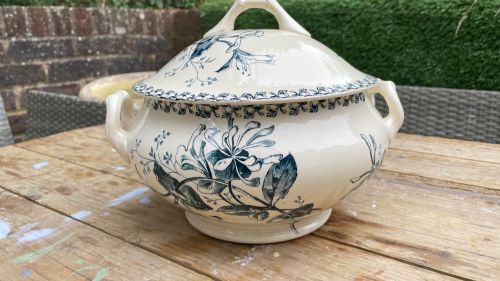
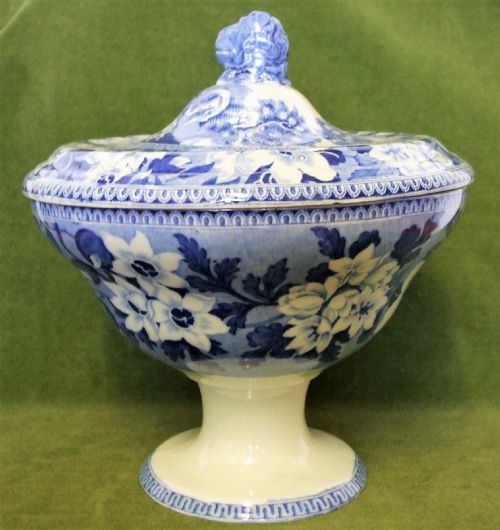
A transferware soup tureen brings robust 19th-century ceramic art to the table, offering a patterned serving vessel that anchors a traditional dining room.
Transferware Soup Tureen
When you search for a transferware soup tureen, you encounter large ceramic vessels designed to hold and serve soup at formal meals. These pieces originate predominantly from the 19th century, spanning the Georgian, Regency, and Victorian periods.
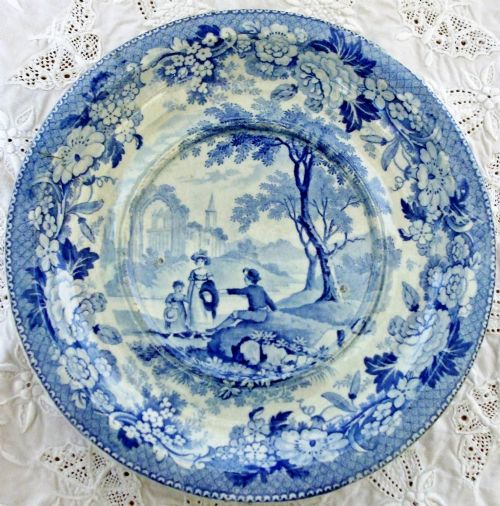
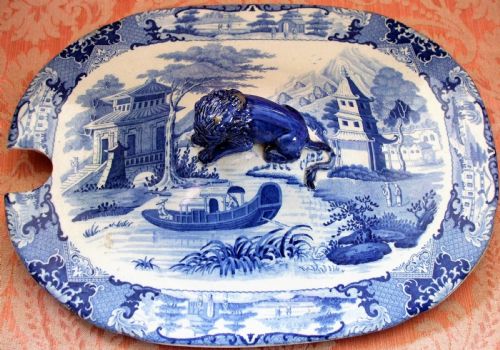
The versions most commonly met on this page include lidded tureens decorated with blue and white transfer prints. Makers often applied pastoral, architectural, or exotic motifs such as the Canton River Scene, Castle, or Elephant patterns across the earthenware body.
Complete sets frequently comprise the tureen body, a matching cover, and occasionally a coordinating ladle or servingware pieces. Smaller vegetable tureens and larger dinner service components also appear within these Staffordshire-produced groups.
How they were made
Potters shaped these vessels from earthenware or ironstone ceramics before applying detailed designs via cobalt oxide transfer printing. Craftsmen then coated the printed ceramic body in a clear glaze to protect the blue pigment during high-temperature firing.
Makers such as John Rogers & Son, J. & R. Clews, and Robert Hamilton utilised specialised copperplate engraving techniques to transfer intricate patterns onto tissue paper before pressing them onto the damp clay.
Transferware Soup Tureen Retail Price Guide 2026
Typical asking prices for transferware soup tureen among the pieces listed under this phrase on Sellingantiques today, from the lower quarter to the upper quarter. They describe what is for sale here now, not the wider market.
Some tureens feature handles shaped like vegetables or whimsical birds, reminding us that 19th-century diners enjoyed a hearty dose of playfulness with their soup.
What varies in quality
Quality in a transferware soup tureen rests upon the crispness of the blue print and the depth of the glaze. Finer examples display sharp, well-registered patterns without smudging or heavy pooling of the cobalt oxide.
The artistic merit of the transfer pattern itself and the prestige of the Staffordshire pottery responsible for the earthenware body elevate certain pieces above standard utilitarian wares.
Robert Hamilton·John Rogers & Son·J. & R. Clews·Ridgways·Copeland & Garrett·Doulton Burslem
The Transferware Soup Tureen Glossary
- Transferware
- Earthenware or ceramic pottery decorated by applying a printed design from an engraved copper plate onto the unglazed biscuit surface. This mechanical printing method allowed Staffordshire potteries to produce detailed pictorial patterns efficiently.
- Ironstone
- A dense, durable type of heavy earthenware patented in the 19th century to imitate Chinese porcelain. It provides a strong body well suited to large serving vessels like soup tureens.
- Cobalt oxide
- A metallic compound utilised by potters to achieve the deep blue colour characteristic of early transfer-printed ceramics. It withstands the intense heat of the kiln without losing its vivid tone.
- Staffordshire
- The English county that served as the primary centre of ceramic manufacturing during the Georgian and Victorian eras. Numerous potteries operated here to produce domestic and export dinnerware.
- Tureen
- A deep, bowl-like serving vessel equipped with a cover, designed specifically for bringing soup or broth to the dining table. They frequently include integral handles and a matching ceramic ladle.
Transferware Soup Tureen: Frequently Asked Questions
How were transferware soup tureens used historically?
These vessels sat centrally on formal dining tables during the 19th century, holding hot broth or soup for guests. Servants would lift the matching cover at the table to ladle portions into individual bowls.
Beyond formal dining, large tureens functioned as decorative centrepieces when not in active use during a meal. Their generous capacity made them practical for serving hearty portions to large Victorian households.
Can I still use an antique tureen for serving soup?
While structurally sound earthenware can hold warm liquids, historical ceramics require careful handling. Thermal shock from boiling soup may stress the 19th-century glaze or body.
Most collectors prefer to display these pieces or utilise them for dry arrangements rather than daily dining service. Hand washing is essential to preserve the integrity of the antique ceramic material.
How do I distinguish Georgian tureens from Victorian ones?
Georgian and Regency examples often display distinct blue and white pictorial transfer patterns with deep, rich cobalt tones and robust earthenware bodies. Makers during this earlier period favoured classical, architectural, or exotic landscape motifs.
Victorian pieces, produced from the mid-19th century onward, frequently incorporate heavier ironstone bodies and more varied decorative treatments. Copeland & Garrett and Doulton Burslem marks help pinpoint these later Victorian productions.
What should I look for when collecting matching ladles?
Finding a soup ladle that matches the pattern and period of the tureen is uncommon. Look for consistent blue and white tones and similar earthenware or ceramic composition.
Details such as bird claw motifs on the reverse of the handle indicate specific Staffordshire production eras around the 1840s.