




Tramp Art Folk Art
These tramp art folk art pieces bring layered, chip-carved surfaces and vernacular ingenuity directly into a room.
Tramp Art Folk Art
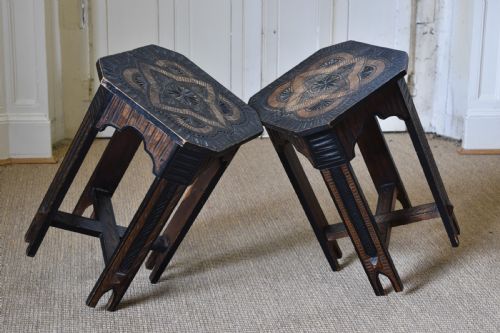
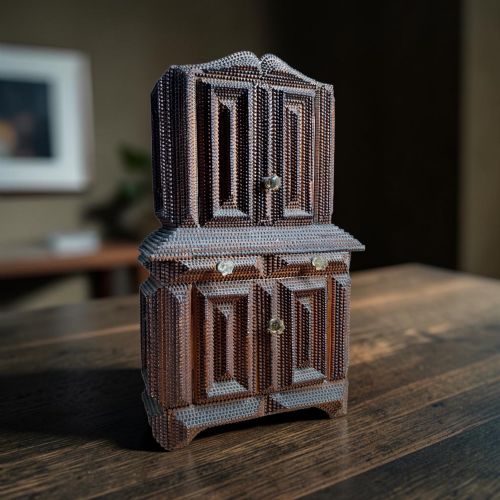
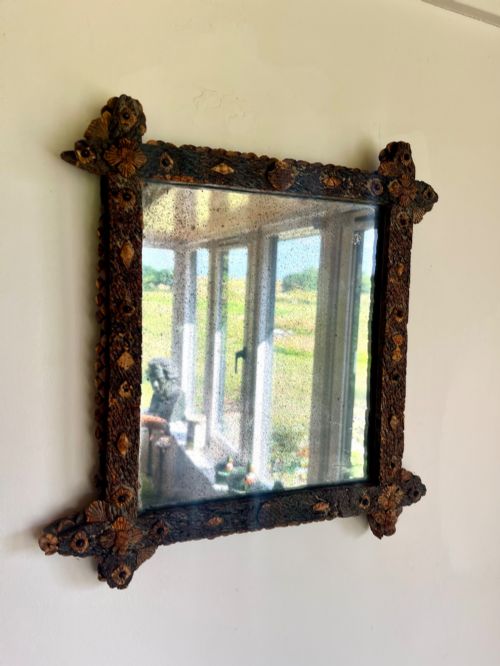
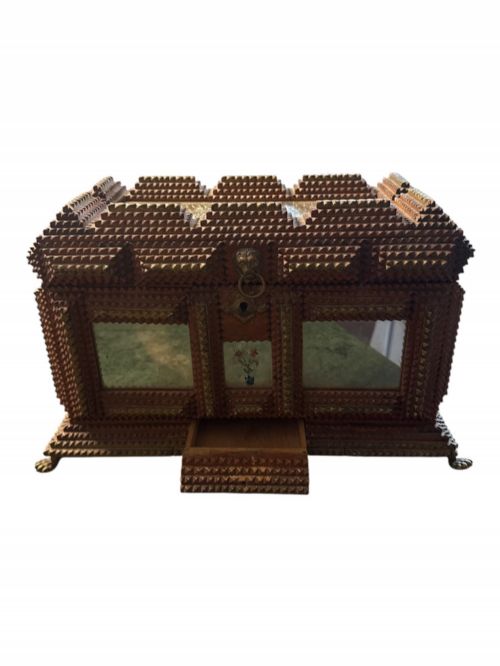
When you search for tramp art folk art, you encounter a distinct genre of vernacular creation built from humble materials. The pieces appearing here span decorative boxes, picture frames, side tables, wall mirrors, architectural models, and small cabinets.
The forms you are most likely to meet on this page range from Victorian and early twentieth century examples to nineteenth century items. Makers shaped these objects using simple hand tools, often working within domestic or institutional settings.
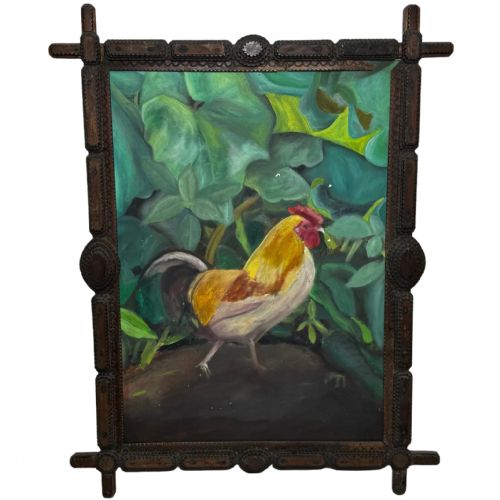
Alongside chip-carved wooden boxes and frames, the selection includes related folk art expressions such as oil paintings, lithographs, dioramas, and carved figures. Each piece carries the distinct touch of its maker, showing varied regional interpretations from British, American, French, and Spanish traditions.
How they were made
Makers constructed these objects primarily from wood, utilising pine, oak, and stained wood alongside unconventional elements like cork and paper. The defining technique involves chip carving and notch carving, where small fragments of wood are removed layer by layer to build up stepped, geometric reliefs.
Many works incorporate recycled materials, repurposing discarded packaging crates and cigar boxes into intricate architectural forms. Brass fittings and glass elements appear selectively to accent frames, cabinets, and display pieces.
Surface finishes vary from natural bare timber to applied dark stains and painted layers. The patience required to notch and glue thousands of tiny wooden chips dictates the slow, meticulous pace of their creation.
The listings on this page span the 19th Century, Victorian period, and the early decades of the 20th Century up to 1930.
What varies in quality
The distinction between ordinary and exceptional pieces rests upon the discipline of the carving and the complexity of the geometry. Superior examples display uniform, tightly spaced chips that create a crisp architectural rhythm across the entire surface.
Proportion and structural ambition also separate the better works from simple utilitarian items. Elaborate picture frames and multi-tiered cabinets that maintain structural integrity without excessive glue residue demonstrate a higher level of maker skill.
The Tramp Art Folk Art Glossary
- Chip carving
- A technique of removing small triangles or chips of wood from a single piece to create geometric surface patterns. This method forms the decorative foundation of nearly every wooden piece in this category.
- Vernacular
- Objects made by self-taught artisans outside the formal traditions of academic fine art and professional cabinetmaking. These pieces reflect local materials and regional customs rather than metropolitan styles.
- Diorama
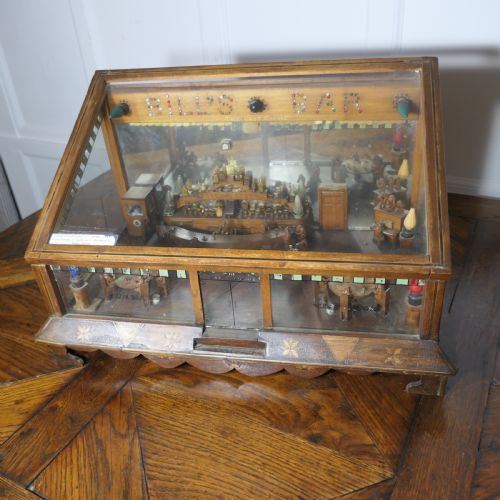
- A three-dimensional scene housed within a shallow box or cabinet, often incorporating carved figures and painted backgrounds. Early twentieth century examples in this category depict narrative environments like interior saloon bars.
- Architectural model
- A small-scale representation of a building or house constructed by hand from timber or discarded packaging. These models frequently employ chip-carved surfaces to mimic masonry, roof tiles, and exterior detailing.
- Americana
- Artefacts originating from the United States that reflect the cultural history and folk traditions of the nation. In this category, the term encompasses nineteenth century lithographs and prisoner art.
Tramp Art Folk Art: Frequently Asked Questions
What is tramp art?
Tramp art is a form of folk art where makers chip-carve small pieces of wood, often from discarded cigar boxes and crates, into geometric, layered patterns. These items were produced largely by self-taught artisans from the late nineteenth century through the early decades of the twentieth century.
The resulting objects range from small trinket boxes and picture frames to wall mirrors and architectural models, all characterised by their stepped, notched surfaces and tactile construction.
How were tramp art boxes used?
Makers constructed these boxes to serve as personal receptacles for letters, photographs, jewellery, and other small household valuables. Their intricate, decorative exteriors meant they were displayed openly on tabletops, mantelpieces, and side tables rather than hidden away.
Over time, these pieces functioned both as practical containers and as cherished domestic ornaments that showcased the patient handiwork of their creators.
How do I date a tramp art piece?
Dating these objects relies heavily on examining the base materials, construction techniques, and any accompanying evidence such as old paper linings or dated inscriptions. Pieces from the Victorian era often feature darker stains and heavier, more imposing proportions compared to later twentieth century examples.
The presence of specific secondary materials, such as early nineteenth century hardware or period newspapers used as internal reinforcement, also helps narrow down the decade of manufacture.
Where should I place tramp art in my home?
These pieces suit spaces where their textured, tactile surfaces can be appreciated at close range, such as on a hallway side table, a bookshelf, or a living room mantelpiece. Their neutral wooden tones allow them to sit comfortably alongside both contemporary interiors and traditional furnishings.
Wall-mounted pieces like mirrors, picture frames, and small wall boxes benefit from placement in well-lit areas where the layered, chip-carved depths cast subtle shadows.