

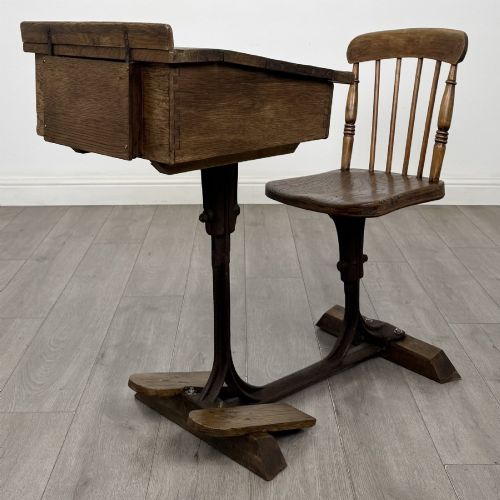
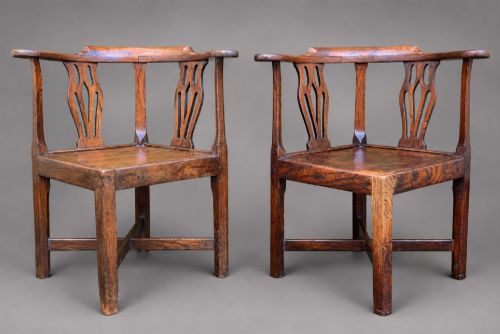
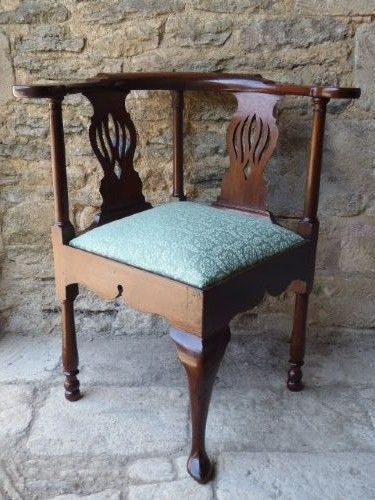
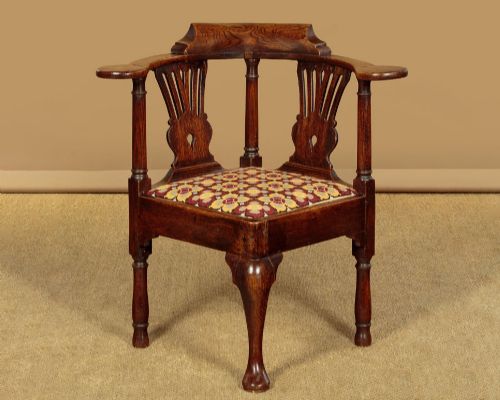
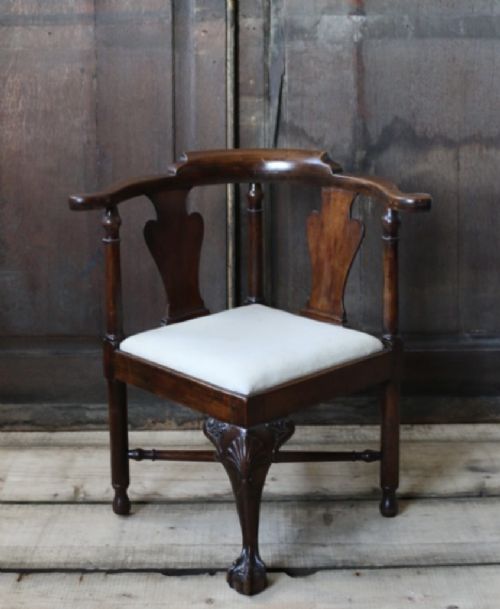


Traditional Writing Chair
These traditional writing chair examples offer practical desk seating built from mahogany, oak, and walnut across Georgian and Victorian periods.
Traditional Writing Chair
A traditional writing chair provides functional seating designed for desks and libraries, appearing frequently in forms such as corner chairs, desk chairs, and library chairs. Buyers encounter pieces spanning the eighteenth and nineteenth centuries, reflecting styles from the Georgian era through to the Victorian period.
The selection ranges from George II walnut and mahogany models to oak corner chairs originating from the north country or country workshops. These seating options combine practical workspace utility with historical timber framing.
Materials and construction methods
Constructed predominantly from solid hardwoods like mahogany, oak, and walnut, these chairs utilise traditional joinery and carved detailing. Workshops shaped sturdy frames designed to withstand daily desk use.
Seating portions incorporate leather, fabric, velvet, rush, and needlepoint inserts. These upholstery materials provide functional comfort while complementing the timber framework.
Traditional Writing Chair Retail Price Guide 2026
Typical asking prices for traditional writing chair among the pieces listed under this phrase on Sellingantiques today, from the lower quarter to the upper quarter. They describe what is for sale here now, not the wider market.
Listings feature eighteenth and nineteenth century periods, utilising mahogany, oak, walnut, leather, rush, and fabric materials.
Distinctions in quality
Quality differences emerge through the selection of timber, such as figured mahogany or rich walnut, alongside the refinement of carved details on the arms and legs. Superior examples display tighter joinery and more harmonious proportions across the frame.
The choice of seating material, ranging from simple rush to finely fitted leather or needlepoint, alters the finish of the piece. Earlier periods often exhibit more robust country craftsmanship compared to later revival pieces.
The Traditional Writing Chair Glossary
- Corner chair
- A seating form designed to fit into room angles, featuring a diagonal seat plan and continuous curved armrests supported by turned columns.
- Desk chair
- A sturdy seat built for writing tables and libraries, often incorporating swivelling mechanisms or upholstered arm supports.
- George II
- A stylistic period spanning the mid eighteenth century, characterised by substantial proportions and rich walnut or mahogany utilisation.
- William IV
- A nineteenth century design phase bridging Regency and early Victorian tastes, known for robust mahogany framing and carved details.
Traditional Writing Chair: Frequently Asked Questions
What is a traditional writing chair?
A traditional writing chair is a historic seat designed for desks, tables, and libraries, offering support for reading and correspondence.
These chairs appear in forms such as corner chairs and desk chairs, utilising timbers like mahogany, oak, and walnut.
How were these chairs used?
They were placed at writing desks, secretaries, and library tables to provide comfortable seating for daily administrative tasks.
Their sturdy construction accommodated long hours of work in studies and offices.
How do I identify a Georgian desk chair?
Georgian desk chairs are identified by period timber choices such as mahogany and walnut, alongside characteristic styling from the eighteenth century.
Look for traditional joinery, carved wooden frames, and period specific design motifs.
What materials are used for the seats?
Seats are finished in a variety of materials including leather, fabric, velvet, rush, and needlepoint depending on the chair type.
Hardwoods like oak and mahogany form the primary structural frames supporting these upholstered or woven surfaces.