

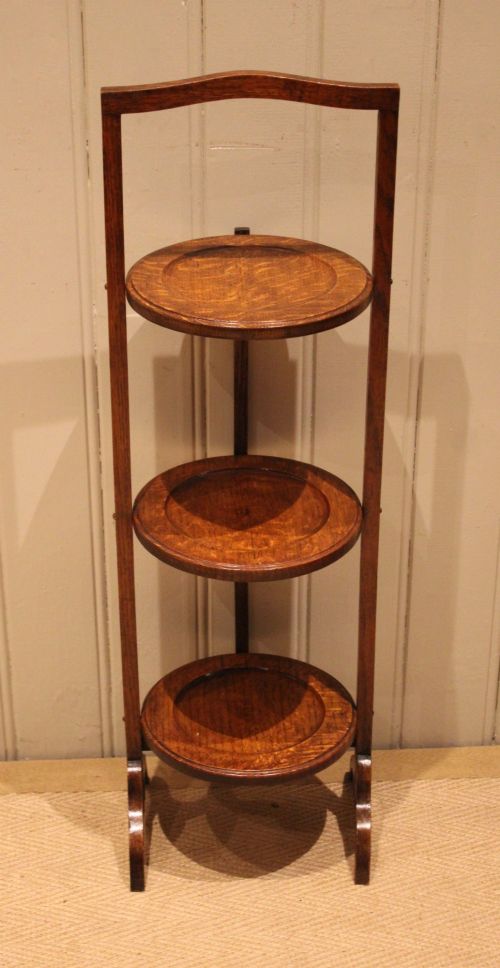
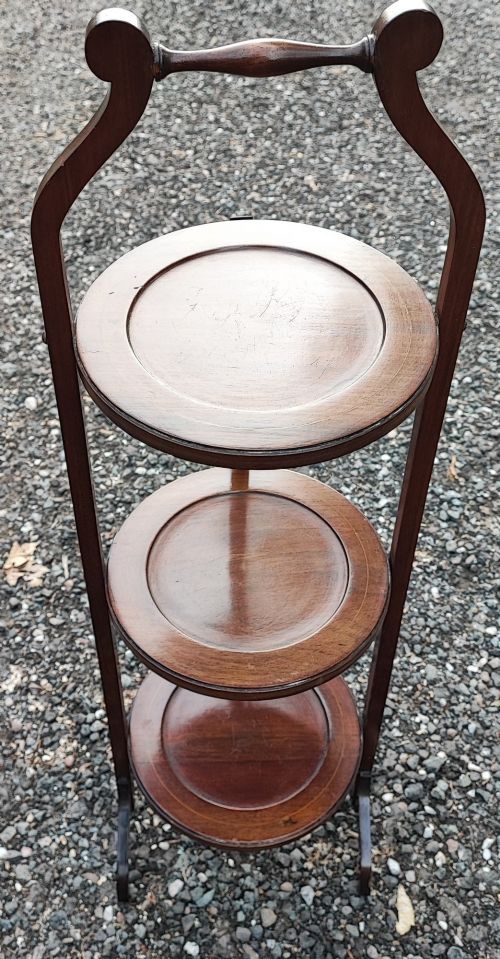


Traditional Wooden Cake Stand
A traditional wooden cake stand is a tiered or circular display piece designed for tea, and these examples combine period warmth with everyday utility.
Traditional Wooden Cake Stand
A traditional wooden cake stand is a functional serving piece designed to hold baked goods or cheese during tea service. Buyers searching this phrase encounter tiered structures and circular trays ranging across the Victorian, Edwardian, and Georgian eras.
Origins stretch from the nineteenth century into the early twentieth century, spanning periods such as Sheraton Revival and Edwardian. Forms include straightforward cake stands alongside revolving trays and tiered stands.
How they were made
Timbers such as mahogany, oak, rosewood, walnut, satinwood, and boxwood form the primary structure of these stands. Cabinetmakers selected these dense woods for stability, particularly when constructing multi-tiered frames that needed to bear weight without tipping.
Decorative embellishments often include fine inlay work and contrasting stringing, alongside functional brass hardware. Felt lining occasionally appears on circular trays to protect surfaces and the items placed upon them.
Traditional Wooden Cake Stand Retail Price Guide 2026
Typical asking prices for traditional wooden cake stand among the pieces listed under this phrase on Sellingantiques today, from the lower quarter to the upper quarter. They describe what is for sale here now, not the wider market.
Periods represented span from the nineteenth century through the Victorian and Edwardian eras into the 1920s.
What varies in quality
Quality rests in the selection of timber and the precision of the joinery across the tiers and folding mechanisms. Better examples display carefully matched grain patterns and crisp, deliberate inlay rather than hurried assembly.
The elegance of the turning on the central upright and the stability of the tiered platforms distinguish finer pieces. Structural integrity in folding frames ensures the stand remains level when opened.
The Traditional Wooden Cake Stand Glossary
- Tiered stand
- A piece featuring multiple horizontal platforms arranged vertically to hold food or small items. This design maximises display space on a crowded tea table.
- Folding cake stand
- A stand built with hinged supports that allow the tiers to collapse flat for storage. This clever mechanism typifies Edwardian utility.
- Lazy Susan
- A revolving circular tray placed on a table to allow easy access to food dishes. The version listed here is made of mahogany.
- Sheraton Revival
- A late nineteenth and early twentieth century style drawing inspiration from eighteenth-century neoclassical furniture. Pieces in this style often incorporate delicate satinwood and boxwood inlay.
Traditional Wooden Cake Stand: Frequently Asked Questions
What were traditional wooden cake stands used for?
These stands served afternoon tea by holding cakes, pastries, or small sandwiches across multiple levels. Their vertical design kept crowded tables orderly during gatherings.
Today, they function similarly in domestic settings, holding baked goods, afternoon tea spreads, or decorative items.
How do I identify an Edwardian cake stand?
Edwardian stands frequently utilise oak or inlaid mahogany, often featuring folding frames designed for easy storage in smaller spaces. They reflect the lighter domestic tastes of the early twentieth century.
Look for crisp inlay work and simpler turned uprights compared to heavier Victorian predecessors.
Can I use these stands for daily dining?
These pieces handle regular placement of dry foods, cakes, and serving dishes quite well. Their sturdy wooden construction is suited to careful everyday use.
Treat the wood with respect by avoiding excessive moisture and cleaning surfaces gently with a dry or barely damp cloth.
What is the difference between a tiered stand and a lazy susan?
A tiered stand stacks platforms vertically to save space and display multiple items at once. A lazy susan is a single revolving circular tray that sits flat on a table for passing dishes.
Both forms appear in mahogany within the current selection.