

Traditional Wooden Book Stands
Traditional wooden book stands encompass practical items like bookpresses, bookends, and lecterns designed to display or hold volumes securely.
Traditional Wooden Book Stands
Traditional wooden book stands involve useful library and desktop items such as book presses, music stands, and carved bookends. These pieces appear across various periods including the Victorian and Edwardian eras, as well as the 1920s.
Buyers frequently encounter oak and mahogany pieces configured as adjustable lecterns or carved wooden bookends. The selection also includes functional table-top presses constructed from elm and oak.
Forms range from Black Forest carved animal figures to heavy standing book presses. Each piece serves a specific role in holding or compressing volumes.
How they were made
Craftsmen built these items primarily using hardwoods like oak and mahogany, alongside softer timbers such as pine and elm. Linden wood also appears in specific carved items.
Makers utilised traditional joinery methods to assemble sturdy frames for heavy book presses and adjustable stands. Brass hardware frequently accompanies the timber components to provide functional movement.
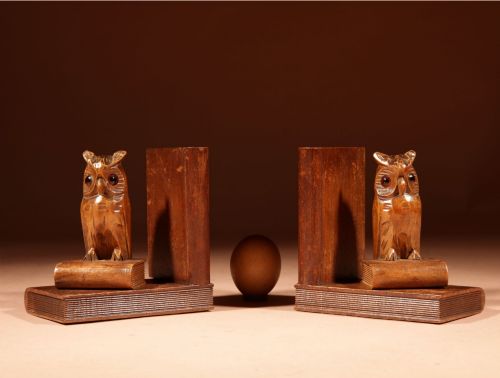
A pair of carved wooden owls stares intently from the shelf, holding up a row of heavy books with unwavering determination.
What varies in quality
The refinement of the carving work distinguishes standard items from superior pieces, particularly in decorative bookends and lecterns. Crisp detailing in the woodwork shows the skill of the maker.
Selection of timber grain and the sturdiness of adjustable mechanisms dictate the overall standard. Pieces with solid brass fittings and dense oak or mahogany demonstrate higher execution.
The Traditional Wooden Book Stands Glossary
- Book press
- A mechanical device used to flatten paper or bind volumes tightly. These typically feature a heavy wooden screw mechanism operating between upright wooden cheeks.
- Lectern
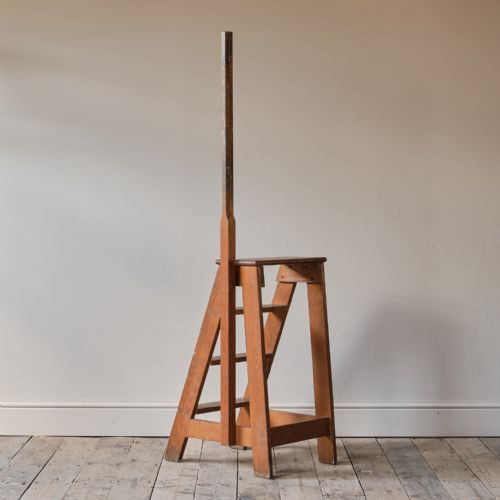
- A slanted stand designed to hold a book at a reading angle. Many examples offer adjustable heights or folding frames.
- Bookends
- A pair of heavy supports placed at the ends of a row of books to keep them upright. Carved wooden animal figures are common examples.
- Golden oak
- A bright, warm finish applied to oak furniture popular in the Edwardian period. This tone highlights the natural grain of the timber.
Traditional Wooden Book Stands: Frequently Asked Questions
What is a book press used for?
A book press applies heavy, even pressure to bound volumes or loose paper. They were utilised in libraries and binderies to flatten pages or set bindings.
Today these heavy wooden units serve practical desktop functions or act as sculptural display pieces in studies.
How do I identify an Edwardian book stand?
Edwardian pieces often feature golden oak timbers with clean, straightforward lines. They reflect the domestic utility styles popular around the turn of the twentieth century.
Look for typical construction traits and matching timber patination that indicate this specific period.
Are music stands and lecterns adjustable?
Many period music stands and lecterns incorporate moving joints or screw mechanisms to alter the height and angle. These adjustments allowed readers to position texts comfortably.
Check the brass fittings and wooden hinges to see how the adjustment mechanism operates.
What woods were used for book stands?
Makers relied heavily on durable hardwoods like oak and mahogany for structural stability. Elm, pine, and linden wood also appear in specific regional or carved items.
The choice of timber usually reflects the period style and the intended function of the stand.