


Vintage Carved Book Ends
These vintage carved book ends are solid desk accessories and library weights that keep your volumes upright while bringing character to a shelf.
Vintage Carved Book Ends
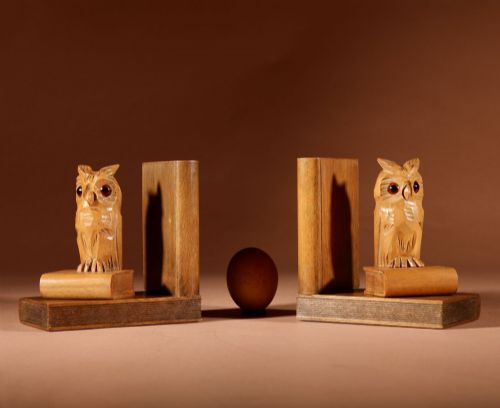
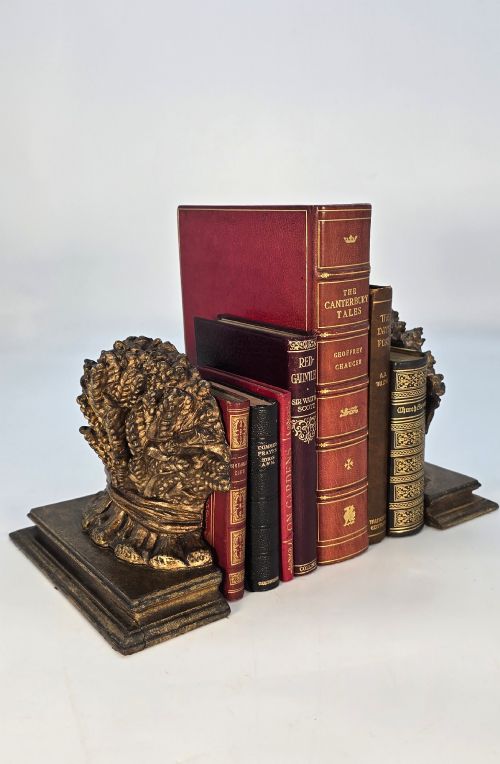
Vintage carved book ends appear in forms ranging from Black Forest animal groups to Art Deco marble profiles and classical stone reliefs. You will most frequently meet pairs carved from wood or shaped from stone, designed to anchor heavy volumes on a shelf or desk.
The selection includes specific regional styles such as Anglo-Indian teak carvings alongside European animal figures and sporting motifs. These objects served functional roles in home libraries and studies, transitioning from mere desk accessories into decorative focal points.
Materials and construction methods
The pieces rely on traditional woodworking, stone carving, and casting techniques utilising materials like linden wood, oak, walnut, teak, marble, alabaster, and cast stone. Artisans shaped these mediums by hand or through careful casting to create defined relief details and stable weighted bases.
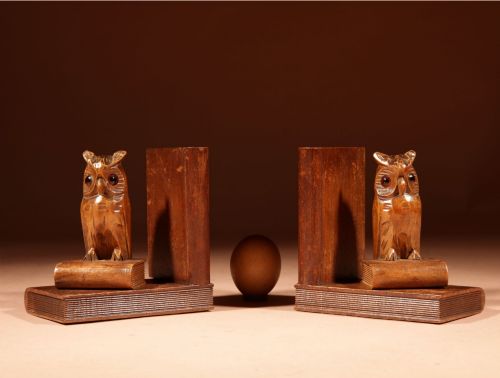
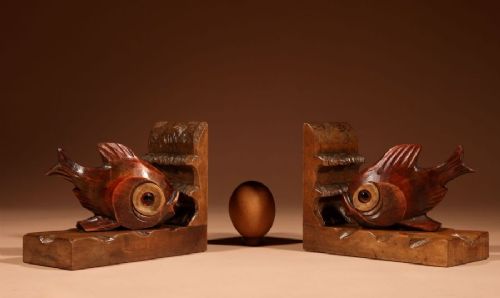
Wooden examples often feature meticulous hand-carving showing animal subjects or botanical motifs, while stone and marble versions utilise polished surfaces and heavier compositions to secure the books without sliding.
Design styles represented in the inventory include Black Forest, Art Deco, Neoclassical Revival, and Victorian Arts and Crafts.
Evaluating quality and execution
Quality rests upon the crispness of the carving and the balance of the piece, where finer examples display lively anatomical details in animals or clean geometric lines in Art Deco designs. The choice of material also dictates the tactile experience, with dense hardwoods and polished marble offering superior weight and durability compared to softer woods.
Proportion and stability distinguish superior pieces, ensuring the book ends maintain their grip on heavy volumes while presenting a harmonious silhouette on the shelf.
Thornton Smith Co.
The Vintage Carved Book Ends Glossary
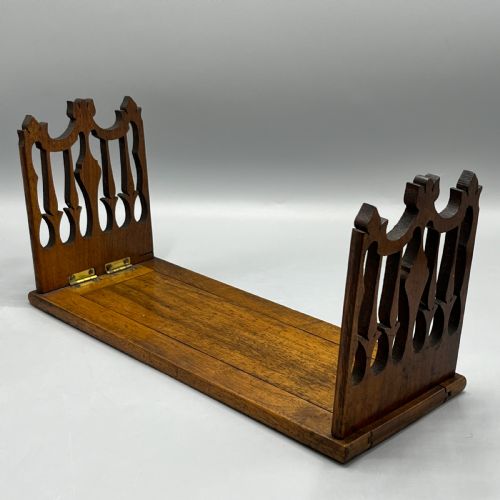
- Book slide
- An extending wooden frame designed to hold a varying number of volumes upright between two fixed or sliding ends.
- Black Forest
- A style of wood carving originating from Switzerland and Germany, typically featuring naturalistic animals rendered with glass eyes and deep relief.
- Cast stone
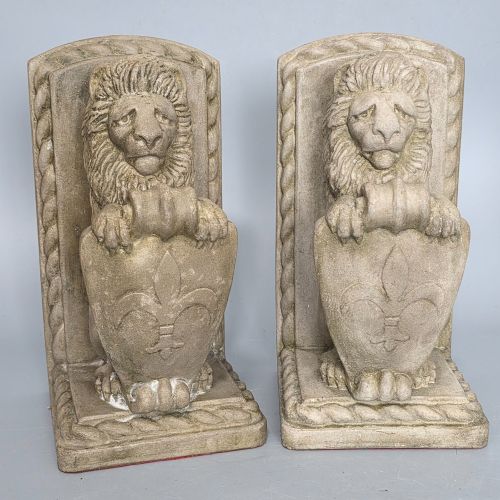
- A refined building product manufactured from aggregate and cement, used to create weighted architectural motifs and decorative reliefs.
- Anglo-Indian
- Descriptive of decorative arts produced in the Indian subcontinent during the British colonial period, frequently utilising dense teak and intricate floral carving.
Vintage Carved Book Ends: Frequently Asked Questions
How do I clean wooden book ends?
Dust the carved surfaces regularly with a soft, dry cloth to prevent dirt accumulation in the recessed details. Avoid using liquid polishes or harsh detergents, which can strip the original patina from vintage timber.
For stubborn grime, a slightly damp cloth followed immediately by thorough drying with a clean towel will protect the wood grain. Regular conditioning with appropriate wax helps maintain the lustre of older pieces.
Are these heavy enough for large books?
Many pairs utilise dense materials like marble, alabaster, and cast stone to provide the natural weight needed for heavy volumes. Lighter wooden versions often rely on a wide base design to distribute weight effectively.
When supporting particularly large or folio-sized books, selecting stone or solid hardwood pairs ensures the volumes remain securely upright without slipping.
Where should I place them?
Position the pieces at the end of a row of books on a sturdy shelf, mantelpiece, or desktop where their decorative carvings remain visible. Ensure the surface is level so the weighted base sits flush.
Keep them away from direct sunlight and radiators to prevent timber from drying out or marble from experiencing thermal stress over time.
How do I date an Art Deco piece?
Art Deco examples typically display streamlined geometries, stylized animal forms, or combinations of contrasting materials like marble and metal. These design cues point towards production during the interwar decades.
Examining the underside for tool marks, fasteners, or remnants of traditional adhesives can also provide clues regarding the manufacturing era.