

Traditional Wood Writing Table
A traditional wood writing table brings timeless utility to a room, offering a dedicated surface shaped by periods from the Georgian era to the Edwardian age.
Traditional Wood Writing Table
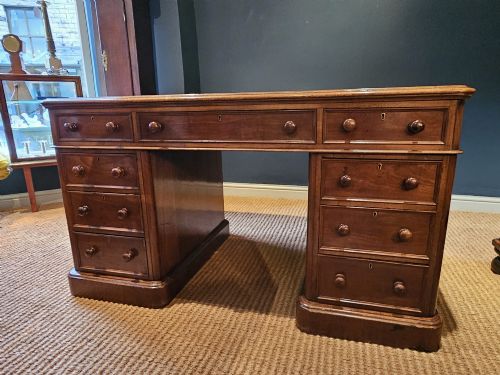
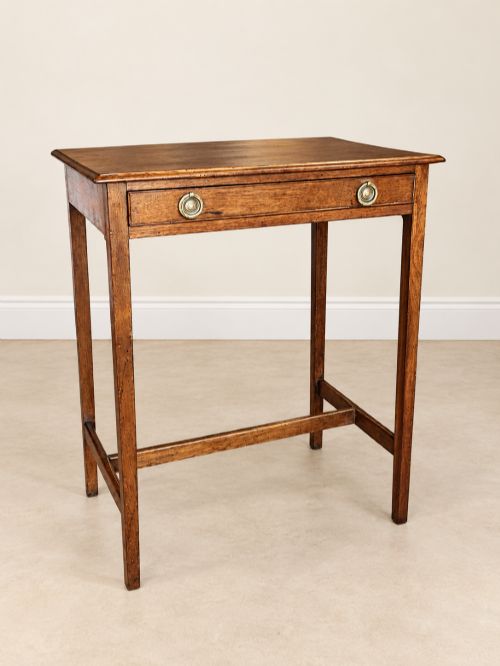
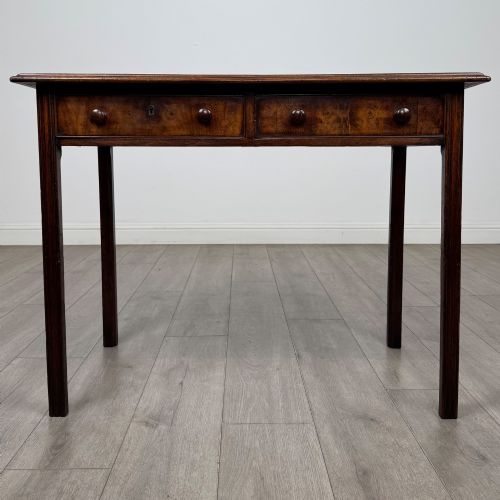
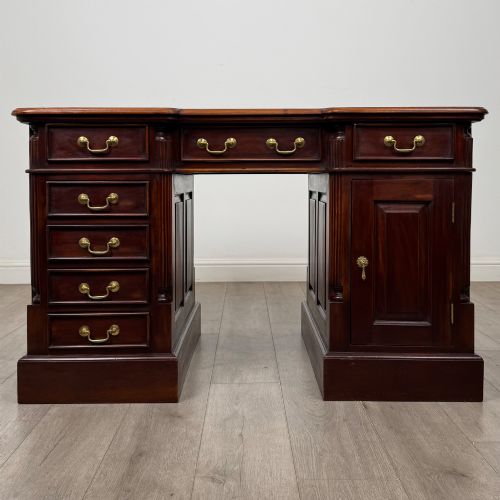
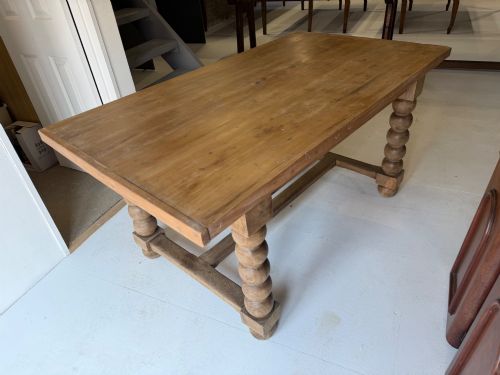
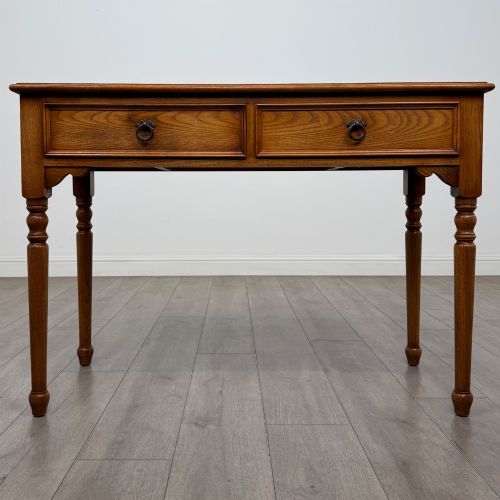
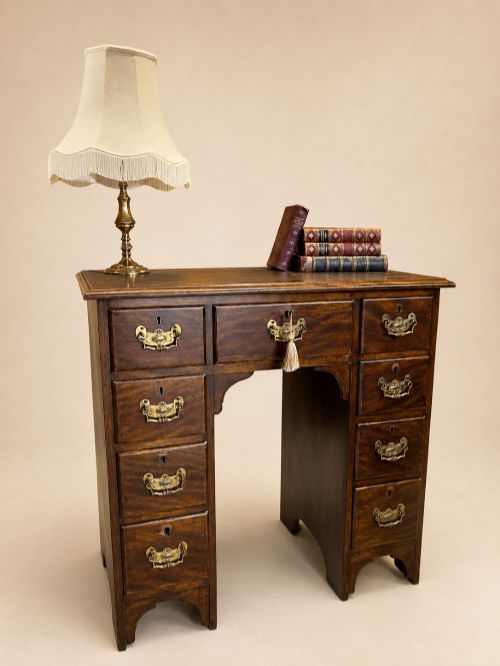
A traditional wood writing table serves as a functional workspace and a commanding centrepiece, with forms ranging from compact side tables to expansive partner desks.
Buyers encountering this selection will most frequently find Victorian and Edwardian examples fashioned from rich timbers such as mahogany and oak.
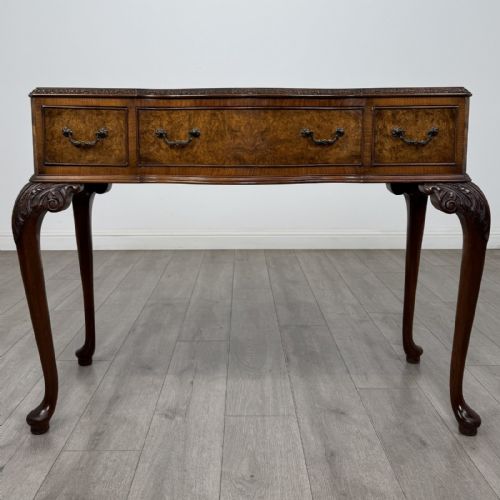
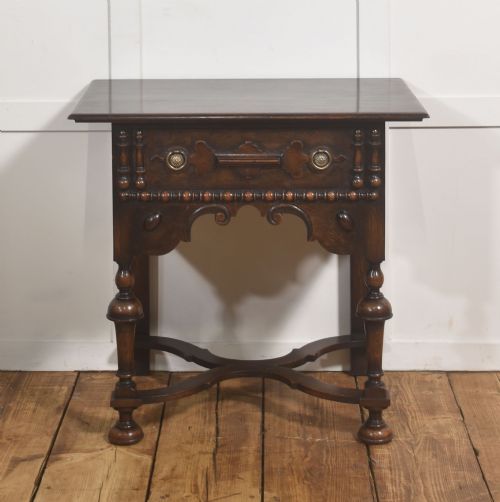
Pieces span multiple centuries, incorporating styles from Queen Anne Revival and Jacobean Revival to Georgian and Victorian designs.
Materials and Construction
Cabinet makers utilised dense hardwoods like mahogany, walnut, burr walnut, and oak to construct the frames and primary surfaces of these tables.
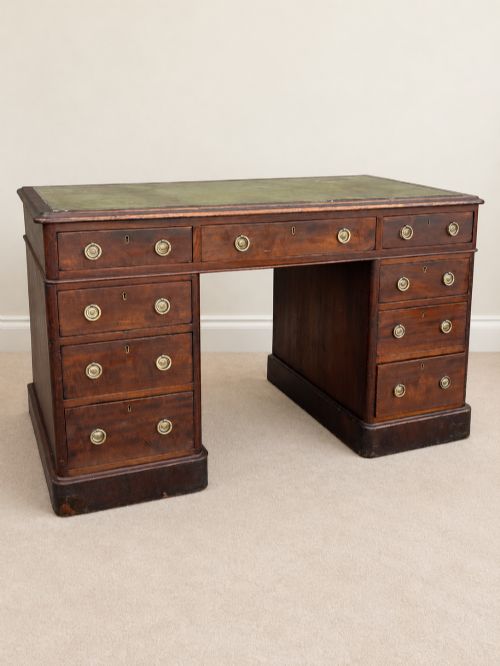
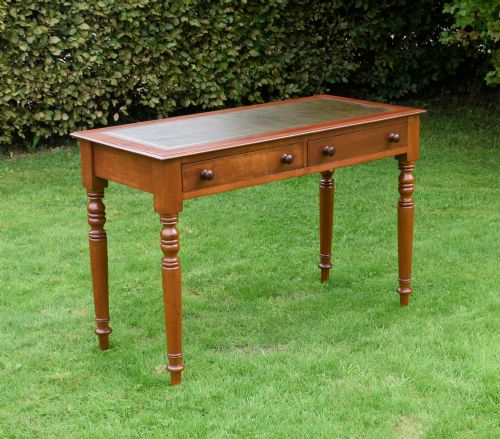
Writing surfaces frequently integrate supple leather inserts, while brass hardware provides functional handles, drawer pulls, and structural accents.
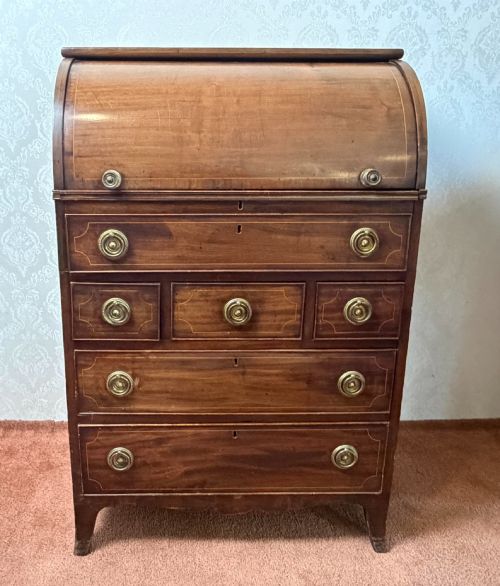
Regional workshops and established cabinet makers applied specialist techniques including inlay, tambour construction, and carved details.
Period styles represented span the 18th Century, Georgian era, Victorian period, and Edwardian age.
Assessing Quality
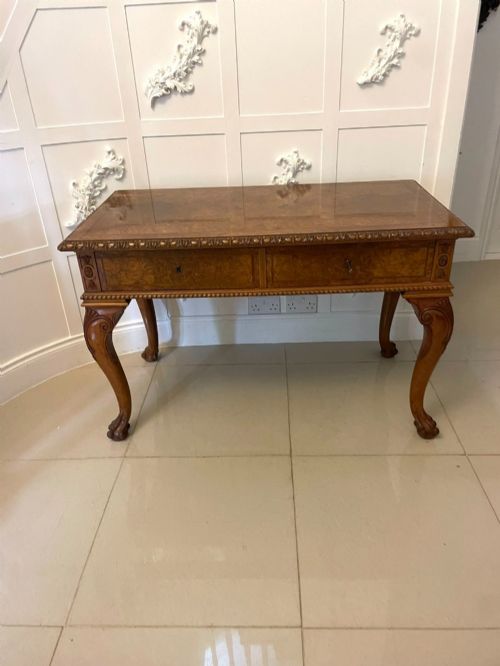
The standard of a writing table is evident in the selection of timber veneers, such as figured mahogany or burr walnut, matched across the top and drawer fronts.
Superior execution shows in the precision of joinery, the retention of original brass handles, and the condition of leather writing inserts.
Attribution to documented makers or workshops elevates a piece, demonstrating refined proportions and meticulous carving.
Trollope and sons·Gillows·J A Mein Edinburgh Cabinet Maker
The Traditional Wood Writing Table Glossary
- Tambour
- A sliding door or top constructed from narrow vertical strips of wood glued to a canvas backing. This mechanism allows a flexible cover to conceal desk compartments.
- Pedestal Desk
- A heavy writing desk supported by two matching banks of drawers forming pedestals on either side of the user. These sturdy units provide substantial storage beneath the writing surface.
- Partners Desk
- A large double-sided desk designed for two people to work opposite one another. These substantial pieces feature drawers and cupboards accessible from both faces.
- Lowboy
- A small dressing or side table with low legs, typically featuring one or more rows of drawers beneath the top. Eighteenth-century examples often display restrained cabriole legs.
- Inlay
- A decorative technique where pieces of contrasting wood or other materials are inserted into depressions in the base wood. This creates flat ornamental patterns across the surface.
Traditional Wood Writing Table: Frequently Asked Questions
What is a traditional wood writing table used for?
These tables provide a dedicated writing and working surface while serving as a decorative focal point in a study, library, or living room.
Many incorporate drawers or compartments to organise correspondence and stationery efficiently.
How do I identify a Victorian writing table?
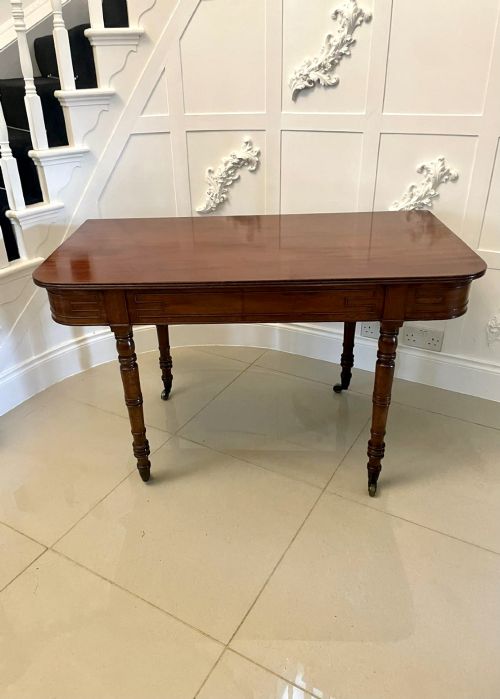
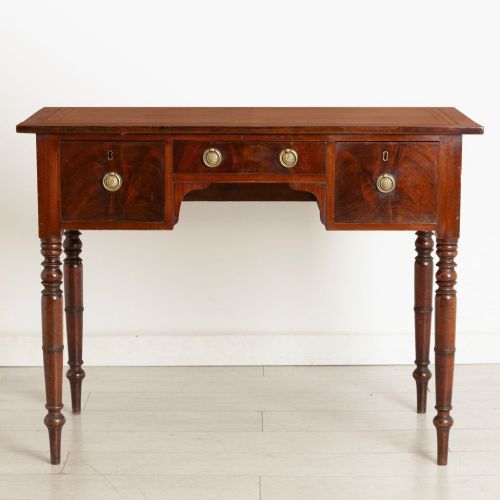
Victorian examples frequently utilise dark mahogany or walnut, often featuring turned legs, leather inserts, and substantial brass hardware.
Stylistic revivals such as Jacobean or Louis XIV elements frequently appear during this period.
Are these tables suitable for modern laptop use?
Most traditional tables offer ample surface area for contemporary writing tasks and compact electronic devices.
Buyers should verify the height and kneehole clearance to ensure comfortable daily seating.