





Traditional Wood Barometer
A traditional wood barometer brings atmospheric measurement into the home through carved oak, mahogany, and walnut cases spanning the Georgian to Edwardian eras.
Traditional Wood Barometer
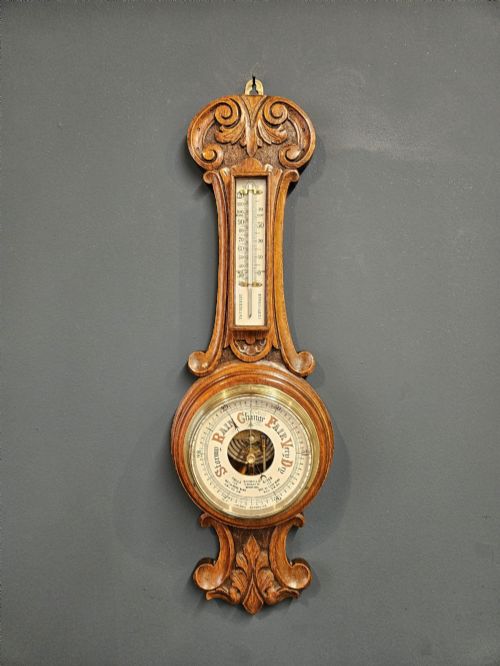
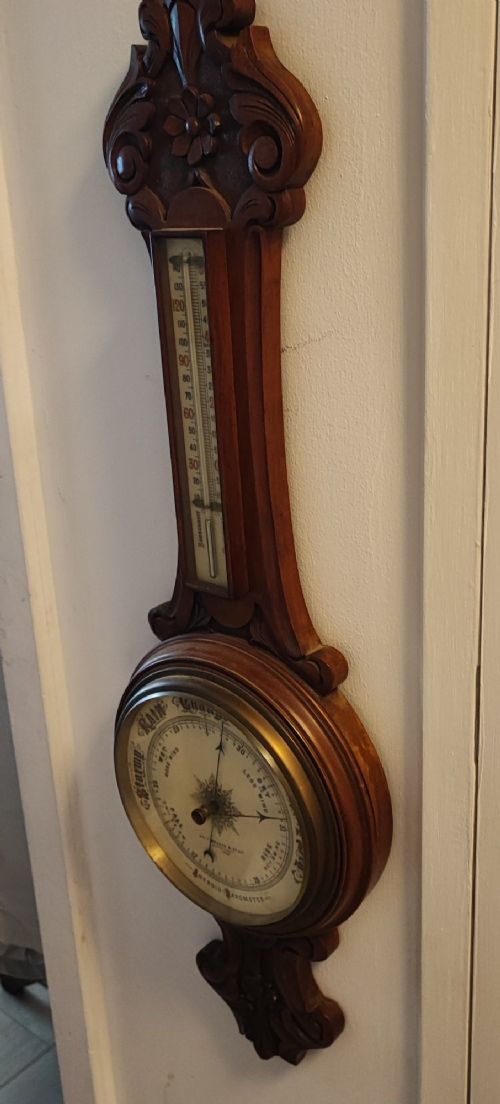
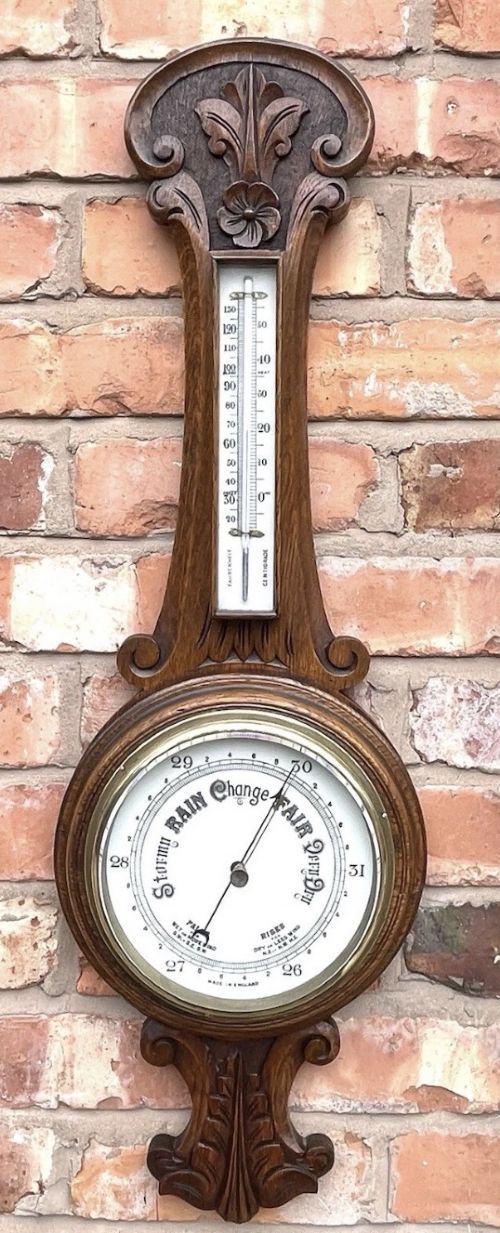
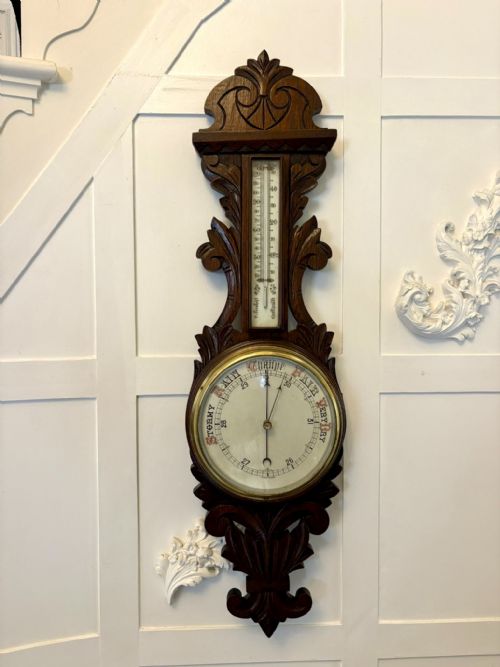
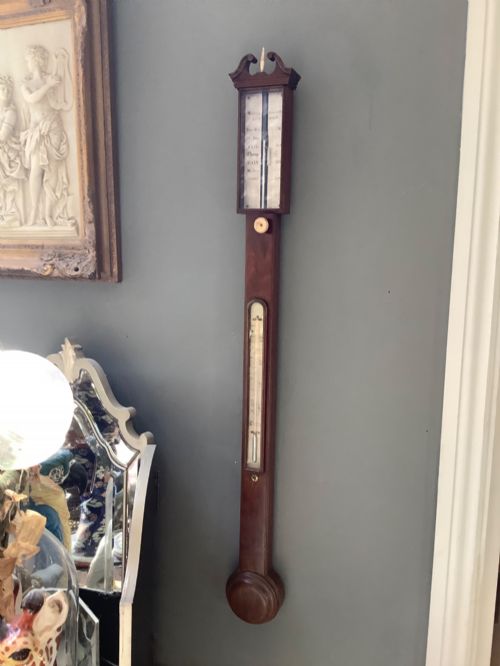
A traditional wood barometer serves both a practical and decorative purpose in the domestic interior, measuring atmospheric pressure while hanging on the wall or standing in a hallway. When searching for a traditional wood barometer, buyers encounter several distinct forms, most commonly banjo barometers with thermometer attachments, stick barometers, and wheel barometers.
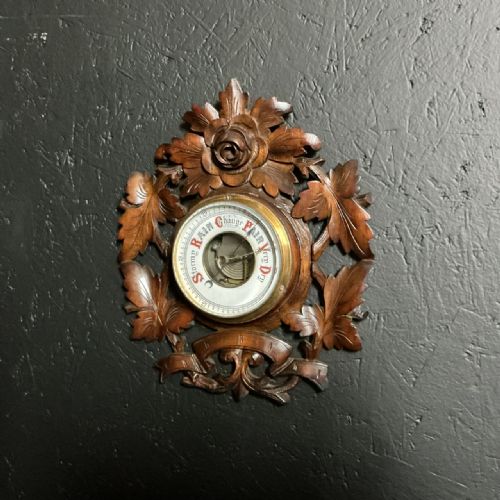
The pieces on this page span the Georgian, Victorian, and Edwardian periods, reaching back to earlier seventeenth-century examples as well as later nineteenth-century Black Forest styles. Oak, mahogany, and walnut form the primary timber bodies, often enhanced by carved details, porcelain dials, and brass bezels.
Wall barometers and combined clock barometers dominate the selection, alongside larger hall stands incorporating barometer movements. The variety ranges from simple beechwood circular instruments to elaborate carved oak banjo shapes and inlaid rosewood frames.
Materials and construction methods
Cabinet makers utilised dense hardwoods such as mahogany, oak, walnut, and rosewood to construct the cases, protecting the delicate internal glass tubes and metal movements. Carved wood details, bone indicators, and mother-of-pearl inlay frequently decorate the timber surfaces.
Internal mechanisms rely on glass columns containing mercury or aneroid capsules linked to brass dials and indicators. Porcelain dials and brass scales provide the numerical readings, protected behind hinged glass bezels.
Traditional Wood Barometer Retail Price Guide 2026
Typical asking prices for traditional wood barometer among the pieces listed under this phrase on Sellingantiques today, from the lower quarter to the upper quarter. They describe what is for sale here now, not the wider market.
Barometers recorded here range from Georgian stick models to elaborate Victorian Black Forest carved wall pieces.
Distinctions in craftsmanship and materials
The refinement of the timber carving and the complexity of the case design separate standard examples from superior pieces. Deeply hand-carved oak and burr walnut veneers demonstrate greater artisan skill than plain turned beechwood frames.
The quality of the mechanical movement, whether mercurial or aneroid, and the clarity of the porcelain or brass dial influence the overall standard. Signatures from established instrument makers on the dial or scale plate add significant distinction.
Negretti & Zambra·Jenkins Of Old Swindon·Maple & Co
The Traditional Wood Barometer Glossary
- Aneroid barometer
- An instrument that measures atmospheric pressure by the expansion and contraction of a flexible metal box, operating without liquid. This design allows for more compact and varied case shapes like the banjo barometer.
- Stick barometer
- A tall, narrow instrument enclosing a vertical glass tube filled with mercury to measure barometric pressure directly. These lean towards simpler architectural profiles, particularly during the Georgian period.
- Banjo barometer
- A wall instrument shaped like a musical banjo, featuring a circular dial at the top and a larger body tapering downwards that often houses a thermometer or hygrometer. These represent the most common wall format seen in Victorian homes.
- Wheel barometer
- A circular dial instrument connected to a siphon tube and pulley mechanism, often housed in an inlaid timber case. The pointer rotates around a large face to show atmospheric changes.
- Skeletonised movement
- A clock or barometer mechanism with cut-away plates that expose the internal gears and working parts to view. This technical display appears behind the dial glass.
Traditional Wood Barometer: Frequently Asked Questions
How do I read a mercury barometer?
Mercury barometers measure atmospheric pressure by the height of the liquid column in a sealed glass tube. Higher readings indicate settled weather, while falling columns suggest approaching rain or wind.
Most instruments include a manually set brass pointer that you align with the current mercury level to track daily changes.
Where should I hang a wall barometer?
Mount your barometer on an interior wall away from direct sunlight, central heating radiators, and draughty doors. Sudden temperature fluctuations can affect the mechanical readings and timber case.
Hallways and reception rooms provide stable conditions and offer a suitable viewing height for daily checks.
What is the difference between aneroid and mercurial?
Mercurial barometers use a column of liquid mercury in an open-ended glass tube to register atmospheric pressure directly. They require careful handling and vertical mounting.
Aneroid barometers use a sealed metal capsule that expands and contracts with pressure changes, making them more robust and suitable for varied wall cases.
How do I date a wood barometer?
Examine the timber species, case style, and fixing methods to determine the period of manufacture. Georgian pieces often feature simple mahogany or walnut stick cases, whereas Victorian examples tend towards heavily carved oak and banjo shapes.
Maker signatures on the dial plate and the type of glass bezel also help narrow down the decade.