




Traditional Winter Wall Art
Traditional winter wall art brings cold seasons indoors through oil paintings and textile works shaped by past centuries.
Traditional Winter Wall Art
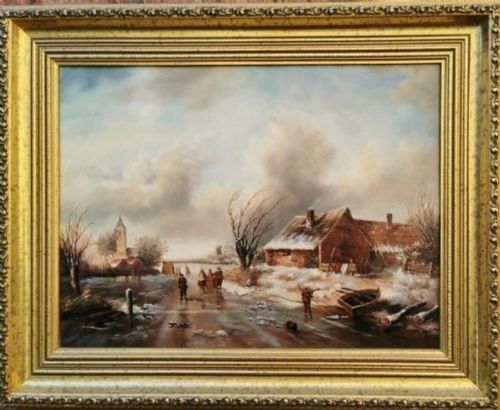
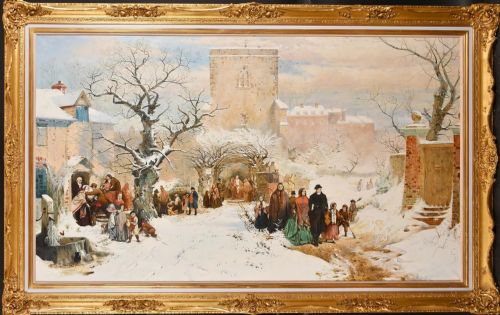
Traditional winter wall art encompasses oil paintings and textile pieces capturing cold weather scenes, snowy landscapes, and seasonal rural life. These works range from Dutch Manner winter landscapes and Victorian sporting scenes to Central Asian quilted coats and Japanese scroll paintings depicting the first snow.
Buyers encountering this group will most frequently find nineteenth-century and mid-century oil paintings on canvas depicting snow, hunting hounds, or figures collecting firewood by cottages. Examples span pastoral scenes, Dutch school influences, and Impressionist approaches to winter light.
The category bridges fine art paintings and textile art, uniting visual records of cold weather from European, Asian, and British makers. Each piece preserves a distinct historical perspective on winter, whether through sheep-droving landscapes or traditional seasonal garments.
How traditional winter wall art was made
Oil paint applied to canvas serves as the primary medium for the pictorial works in this group, often framed in giltwood. Artists built up layers of pigment to capture the pale light and deep snow of winter scenes.
Textile pieces utilise silk and cotton with quilted and padded construction techniques, designed originally for winter wear before finding display as wall art. Scroll paintings employ traditional pigments on paper or silk mounted with supporting borders.
Makers integrated gilt frames and wooden stretchers to finish oil paintings, while textile pieces rely on meticulous stitching and ikat dyeing methods. These physical structures reflect the craft traditions of their respective periods.
Listings feature works in canvas, wood, oil paint, gilt, silk, and giltwood across Victorian, Edwardian, and mid-century periods.
What varies in quality in traditional winter wall art
The handling of light, brushwork, and atmospheric perspective distinguishes finer oil paintings from simpler decorative works. Artists who successfully convey the chill and stillness of snow elevate a winter landscape.
Material preservation significantly affects the standing of each piece, particularly the integrity of canvas, paint layers, and silk threads. Original frames in giltwood add physical completeness to nineteenth-century and mid-century paintings.
The clarity of narrative detail, such as the anatomical accuracy in animal portraits or the precision of figures skating on ice, marks the distinction in figurative works. Textile pieces depend on the preservation of dye patterns and structural padding.
Fannie Moody·Arthur Winter Shaw·John Ritchie·Louis Smets·Wilson
The Traditional Winter Wall Art Glossary
- Dutch School
- Refers to the artistic traditions and stylistic approaches originating from the Netherlands, often characterised by realistic landscapes and atmospheric winter scenes. These works emphasise natural light and detailed observation.
- Giltwood
- Wood that has been treated with a thin layer of gold leaf or gilt, commonly used for traditional picture frames. It adds a reflective border that complements oil paintings.
- Ikat
- A dyeing technique where yarns are pattern-dyed before weaving, producing characteristic blurred designs found in Central Asian textile art. This method requires precise planning by the weaver.
- Oil on Canvas
- A painting medium where pigments are suspended in drying oils and applied to a stretched woven fabric surface. This combination allows for rich blending and textured brushwork.
- Scroll Painting
- A traditional Asian art format designed to be rolled up when not displayed, typically featuring ink and colour on silk or paper. They are mounted on backing materials for wall hanging.
Traditional Winter Wall Art: Frequently Asked Questions
What periods do these pieces cover?
The selection spans from the nineteenth century through the mid-twentieth century, including works from the 1870s, 1880s, 1920s, 1930s, 1950s, and 1960s.
These dates reflect both historical European art movements and traditional Asian craftsmanship preserved across generations.
How do I care for canvas oil paintings?
Keep oil paintings away from direct sunlight and fluctuating humidity to protect the canvas and paint layers from cracking. Dust gently with a soft, dry brush without applying pressure.
Avoid using liquid cleaners or hanging them near active heat sources that might dry out the wood and paint.
What is textile wall art?
Textile wall art includes functional garments, such as quilted silk coats, repurposed for display to showcase traditional dyeing and stitching techniques. These pieces bring tactile depth and rich patterns to interior spaces.
They require careful mounting support to distribute weight evenly across the fabric without causing strain.
How do I distinguish regional styles?
European pieces often feature oil on canvas landscapes and portraits following Dutch or Victorian painting traditions. Asian works include scroll paintings and ikat textiles with distinct regional motifs.
Examining the materials, framing, and signature styles helps identify the cultural origin of each item.