


Traditional Welsh Oak Sideboard
A traditional welsh oak sideboard brings centuries of rural craftsmanship and practical storage directly into a modern dining room.
Traditional Welsh Oak Sideboard
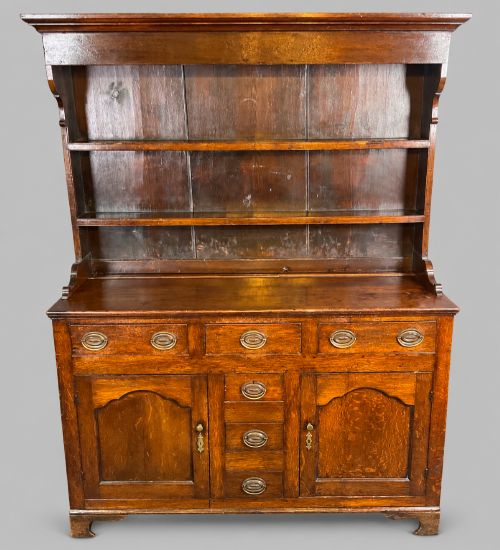
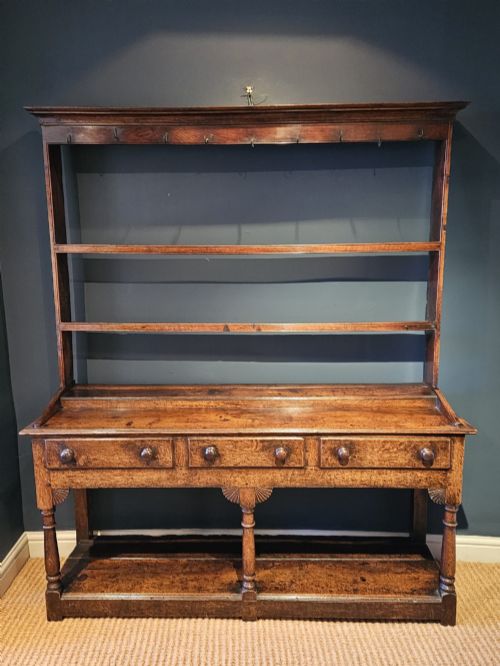
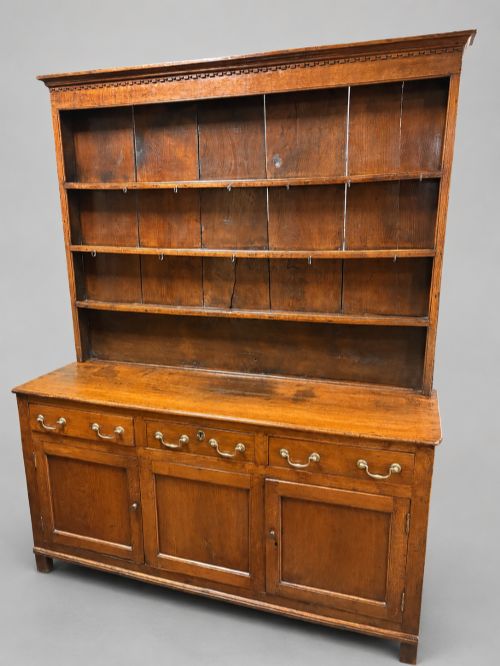
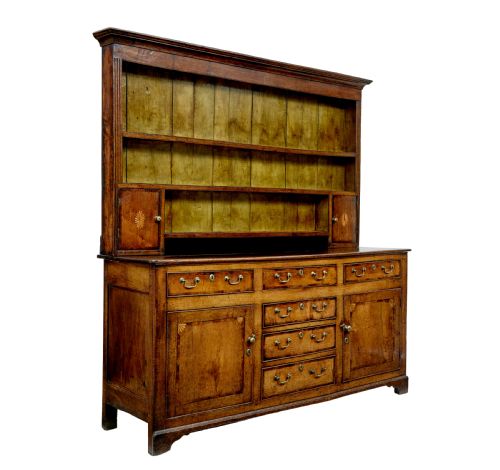
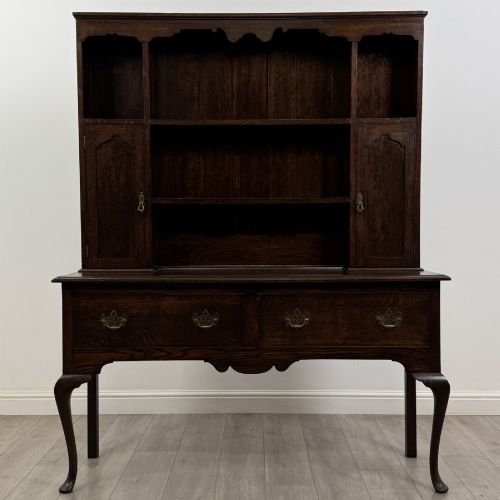
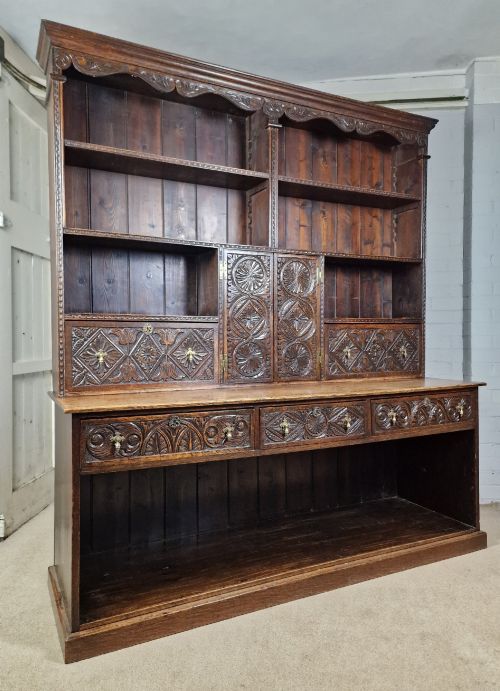
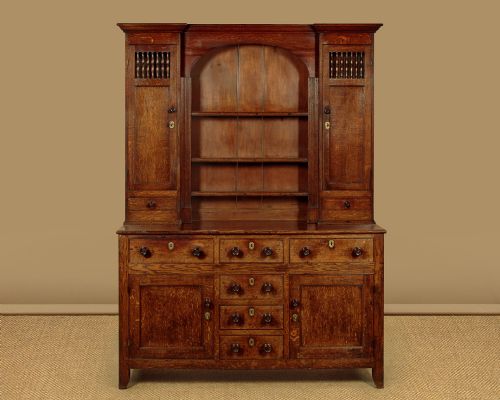
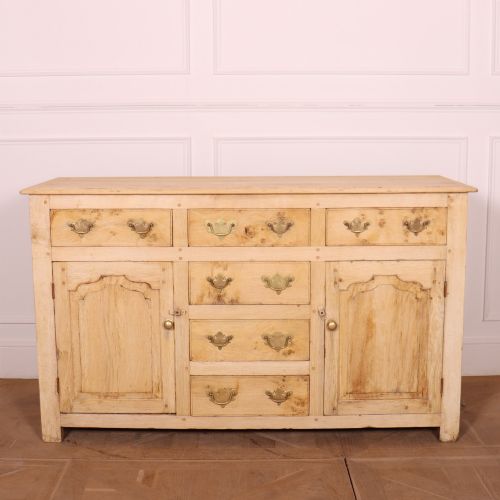
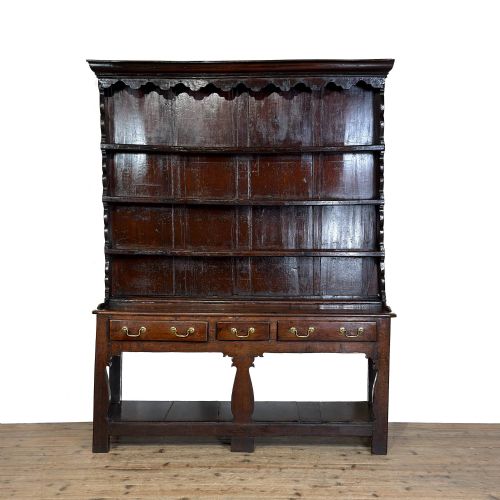
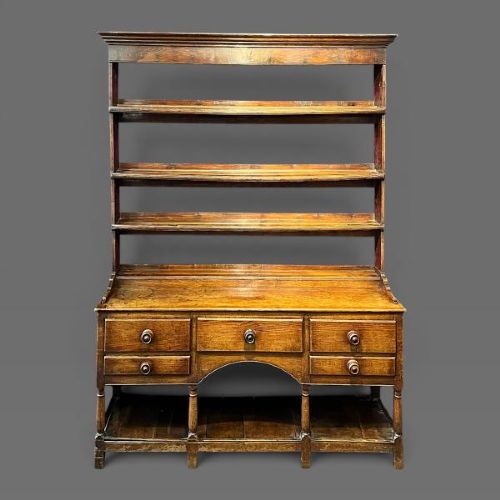
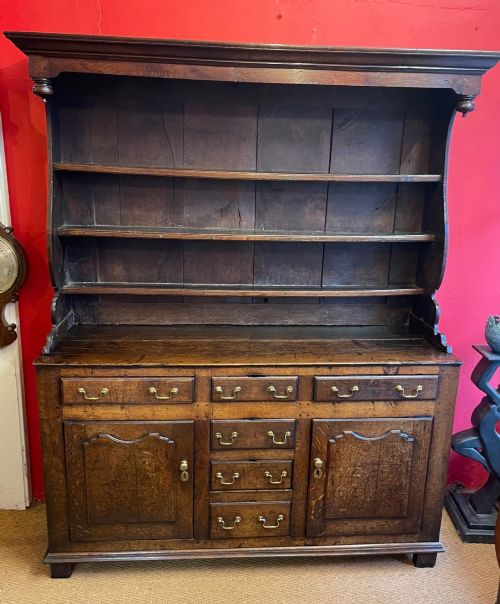
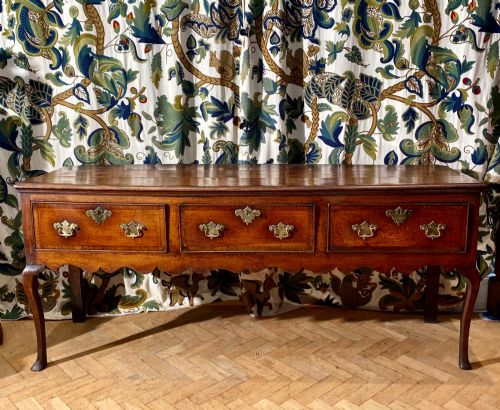
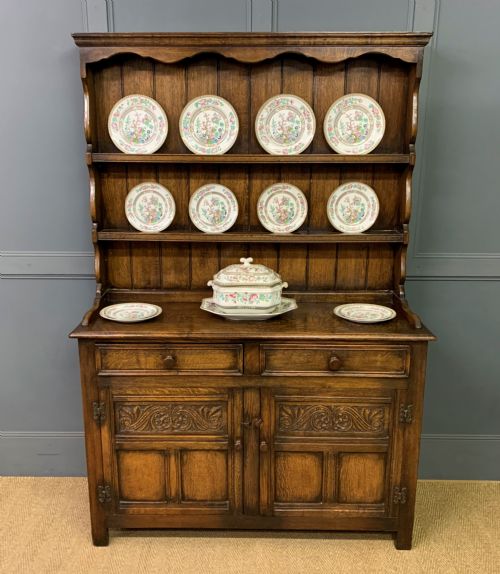
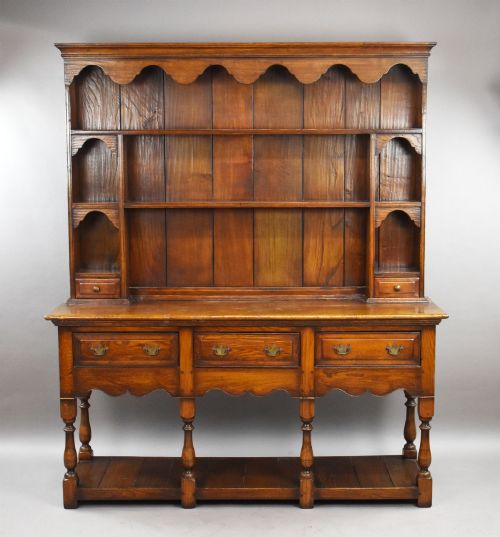
A traditional welsh oak sideboard typically takes the form of a sturdy dresser base, often paired with an upper plate rack or shelving unit. These pieces represent the backbone of rural domestic storage, originating from various regions including Snowdonia and Shropshire. Buyers frequently encounter forms featuring potboards or banks of drawers designed for everyday utility.
The pieces span periods from the mid eighteenth century through to the Edwardian era, encompassing Georgian and Victorian iterations. Vernacular styles dominate the selection, showing regional characteristics rather than formal court designs. English country and Welsh country influences appear regularly across the listings.
Forms range from simple open-backed dresser bases to complex glazed cabinet combinations incorporating mahogany elements or brass hardware. The underlying structure remains grounded in solid oak construction, sometimes complemented by secondary timbers like pine or elm.
How they were made
Makers relied principally on solid oak, selected for its resilience and abundance in British woodlands. Secondary timbers such as pine, elm, and mahogany appear in internal components, drawer linings, and decorative banding.
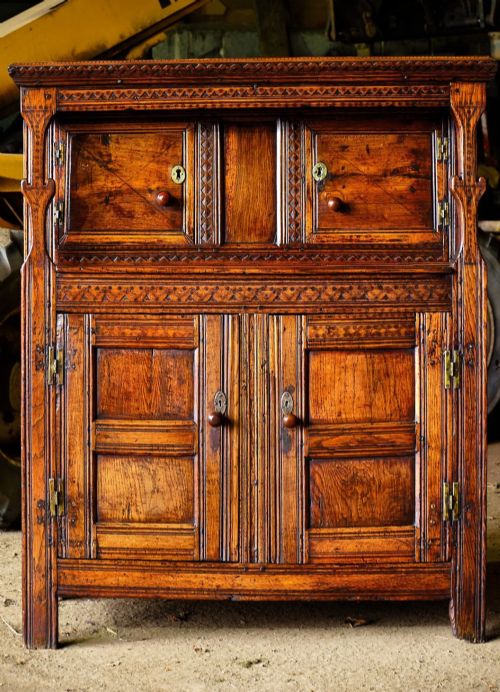
Construction techniques centre on traditional joinery, utilising pegged mortise and tenon joints to bear the weight of heavy tableware. Carved detailing, panelled doors, and brass handles or pulls complete the construction.
Traditional Welsh Oak Sideboard Retail Price Guide 2026
Typical asking prices for traditional welsh oak sideboard among the pieces listed under this phrase on Sellingantiques today, from the lower quarter to the upper quarter. They describe what is for sale here now, not the wider market.
Current listings feature oak as the primary timber, complemented by brass, pine, glass, mahogany, iron, bone, and elm across eighteenth, nineteenth, and early twentieth-century periods.
What varies in quality
The caliber of a traditional welsh oak sideboard rests on the depth of the timber's grain, the crispness of any hand-carving, and the retention of original brass hardware. Pieces retaining their original plate racks and uncompromised potboards command distinct attention from collectors.
Proportion and regional character dictate aesthetic success, with well-balanced drawer arrangements and untouched patination setting finer examples apart from plainer utilitarian workshop output.
The Traditional Welsh Oak Sideboard Glossary
- Potboard
- An open slatted lower shelf situated beneath the main body of a dresser base, traditionally used for storing pots and pans.
- Plate rack
- A set of open wall-mounted or attached wooden shelves featuring vertical grooves to display ceramic plates upright.
- Vernacular
- Architecture and furniture design rooted in local traditions, materials, and practical needs rather than high academic styles.
- Breakfront
- A cabinet or sideboard front where the central section projects forward from the flanking flanking sections.
- Tiger oak
- Oak timber displaying strong, highly figured medullary rays that resemble the stripes of a tiger.
Traditional Welsh Oak Sideboard: Frequently Asked Questions
How do I date an oak dresser?
Dating relies on examining construction methods, timber choice, and hardware styles across Georgian, Victorian, and Edwardian periods.
Hand- cut joints, pegged frames, and original brasses offer reliable clues to a piece's manufacturing era.
Are all these dressers from Wales?
While many pieces originate from Welsh regions like Snowdonia, the category also includes West Country and Shropshire examples.
Regional variations in drawer configuration and carving styles help identify where a particular workshop operated.
How should I care for old oak?
Historic oak requires minimal interference, benefiting mainly from stable room humidity and occasional applications of traditional wax polish.
Avoiding direct sunlight and excessive heat protects the timber from splitting and preserves the surface patination.