







Traditional Weather Barometer
A traditional weather barometer measures atmospheric pressure to forecast atmospheric shifts while doubling as a striking wall instrument in mahogany, oak, or walnut.
Traditional Weather Barometer
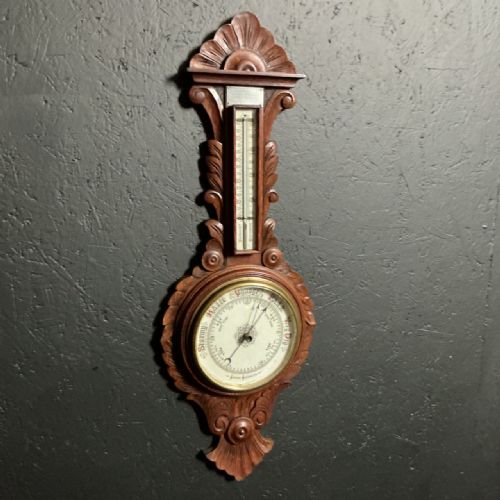
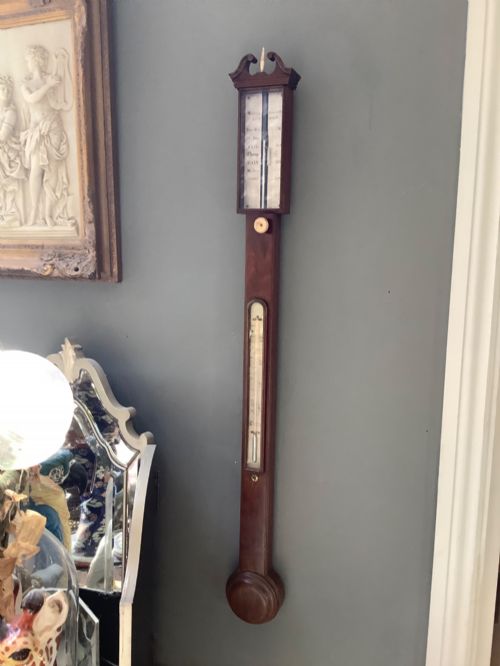
A traditional weather barometer is a scientific instrument housed in timber cabinets designed for wall hanging, recording changes in barometric pressure. When searching for a traditional weather barometer, buyers encounter banjo shapes, stick instruments, and mechanical barographs spanning the Georgian, Victorian, and Edwardian eras.
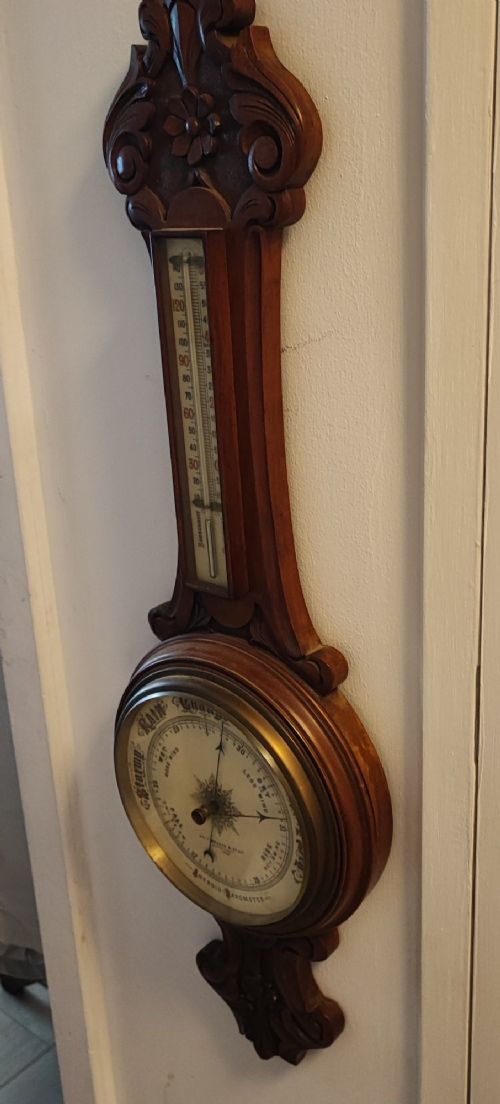
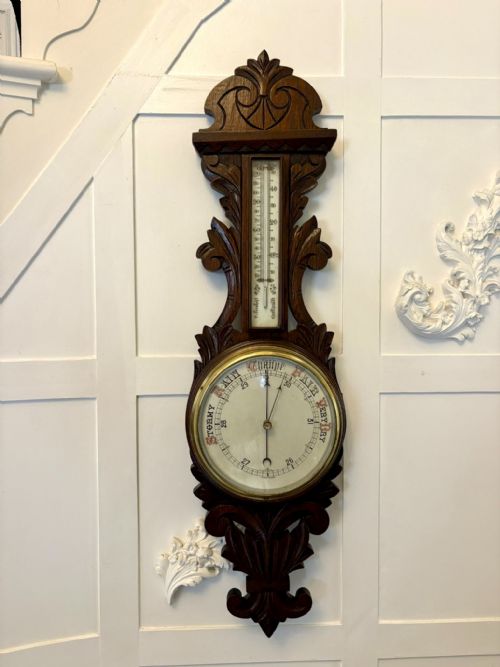
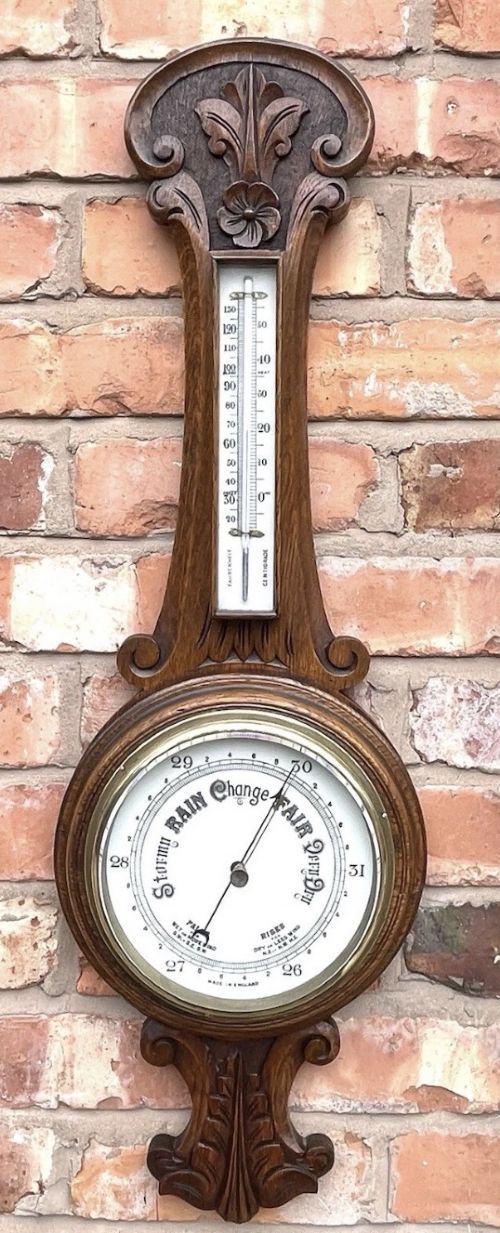
The most common form on this page is the Victorian carved oak or mahogany banjo barometer, typically combining a dial thermometer with the main pressure gauge. These domestic weatherpieces emerged from scientific roots to become standard household furnishings in the nineteenth century.
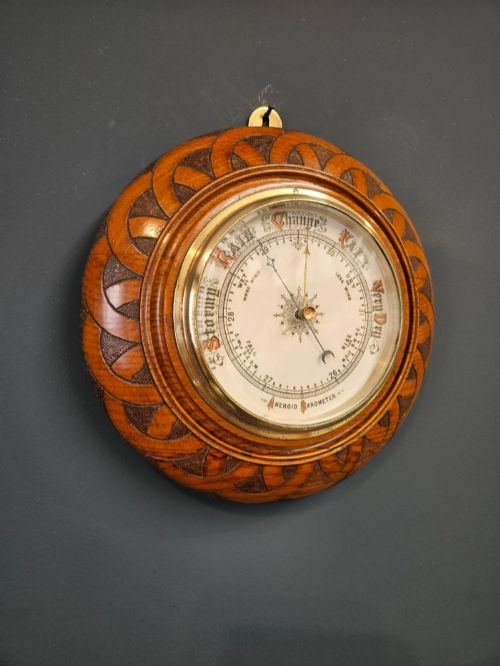
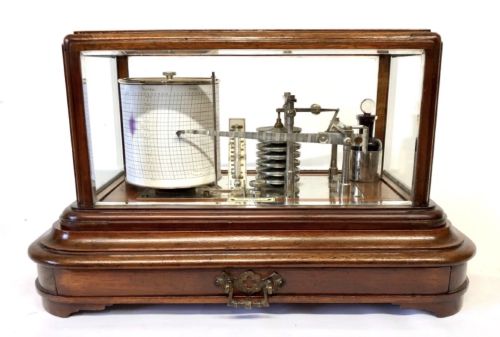
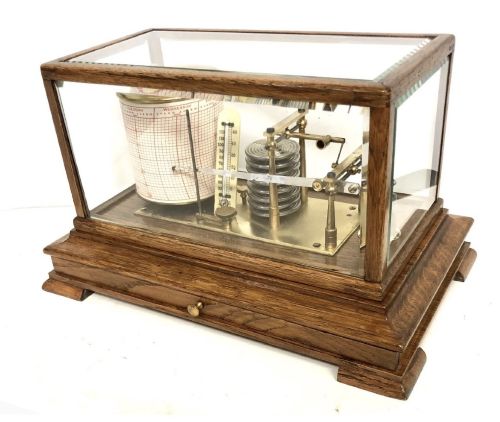
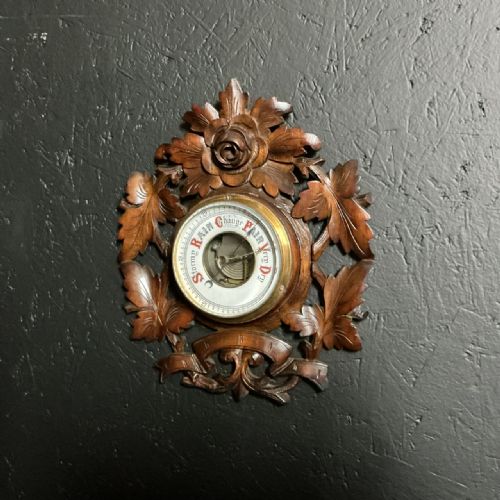
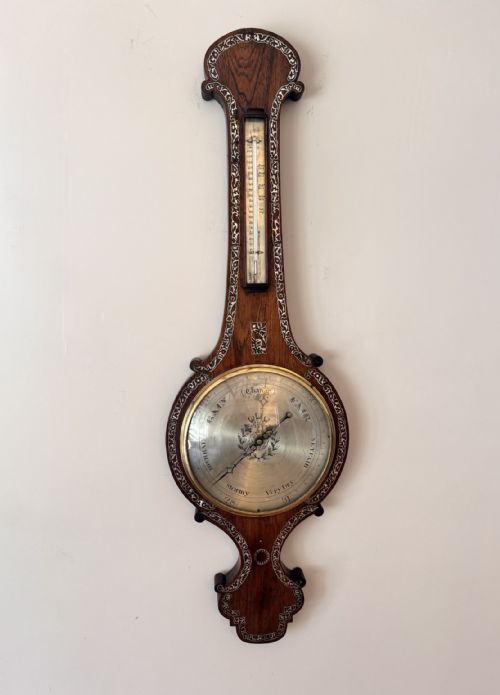
Examples also include Black Forest carved wooden cases, wheel barometers with mother of pearl inlay, and specialised recording barographs fitted with glass covers and chart drawers. Pieces originate from periods ranging from the eighteenth-century George III era through to the early twentieth century.
How they were made
Cases were fashioned from solid timbers including mahogany, oak, walnut, rosewood, and beech, frequently shaped with hand-carved ornamentation or inlaid with mother of pearl. Cabinetmakers housed delicate internal mechanics inside these wooden housings, incorporating bevelled glass panels and cast brass bezels.
Internal instrumentation relied on sensitive mechanisms such as mercury columns in stick barometers or sealed metal vacuum chambers in aneroid and android barometers. Dials were rendered in silvered metal, porcelain, or engraved brass, pairing with thermometer strips and sometimes clock movements.
Traditional Weather Barometer Retail Price Guide 2026
Typical asking prices for traditional weather barometer among the pieces listed under this phrase on Sellingantiques today, from the lower quarter to the upper quarter. They describe what is for sale here now, not the wider market.
Listings feature timber cases in mahogany, oak, walnut, and rosewood, alongside scientific brass and silvered metal dials.
What varies in quality
Quality rests in the crispness of the timber carving, the choice of cabinet wood, and the refinement of the dial face rather than mere age alone. Finer instruments feature detailed floral or foliate woodwork, matched veneers, and substantial brass fittings rather than plain pine or pressed composition ornament.
Maker attribution elevates certain pieces, with signed dials and casework from established retailers or scientific instrument makers demonstrating superior mechanical precision and cabinet construction. The integration of auxiliary instruments like thermometers, hygrometers, or clock movements also signals higher execution.
GAUPP & CO HONGKONG & SINGAPORE·Negretti & Zambra·Jenkins Of Old Swindon·Maple & Co·James H Kelly of Glasgow·Giana, Shrewsbury
The Traditional Weather Barometer Glossary
- Aneroid barometer
- An instrument that measures air pressure using a flexible-walled metal capsule rather than liquid mercury. The expansion and contraction of this sealed chamber moves the indicator hand across the dial.
- Stick barometer
- A tall, narrow wall instrument that displays atmospheric pressure via an exposed or glass-enclosed vertical column of liquid mercury. This form represents the traditional scientific configuration.
- Banjo barometer
- A domestic wall barometer housed in a case shaped broadly like a banjo, featuring a circular dial at the top and an extended trunk usually holding a thermometer.
- Barograph
- A mechanical weather station that records barometric pressure continuously onto a rotating paper chart using an ink pen attached to an aneroid mechanism.
- Silvered metal
- A brass or copper dial plate treated with a silver solution to create a bright, matte finish for engraved numbers and inscriptions.
Traditional Weather Barometer: Frequently Asked Questions
How do I read a traditional weather barometer?
Read the main dial by observing the position of the pointer relative to engraved weather descriptors like fair, change, or rain. Tapping the glass gently before reading ensures the needle settles at the true current pressure.
Compare the primary pointer against any secondary set hand to track whether pressure is rising or falling over the course of the day.
Where should I hang a wall barometer?
Hang your instrument on an interior wall away from direct sunlight, central heating radiators, and damp exterior stone. Rapid thermal fluctuations can affect the internal mechanical response and strain the wooden casework.
Ensure the mounting point is secure and stable, as these instruments contain delicate glass tubes and mechanical linkages that require a level position.
How do I tell an aneroid from a mercury barometer?
Aneroid barometers use a visible circular dial face with a pointer that sweeps across numbers and weather words. They contain no visible liquid columns.
Mercury barometers feature a vertical glass tube where a silvery fluid rises or falls along a scale, which is typical of traditional stick barometers and certain wheel designs.
What is a barograph used for?
A barograph records continuous atmospheric pressure over a full week onto a rotating drum fitted with a paper chart. The mechanical arm traces a continuous ink line showing pressure trends.
These self-contained desktop instruments were used by observers and households wanting a historical record of weather shifts rather than a single instantaneous reading.