



Traditional Watercolour Scene
A traditional watercolour scene captures a landscape or coastal view in pigment on paper, offering collectors a direct link to nineteenth and early twentieth-century rural life.
Traditional Watercolour Scene
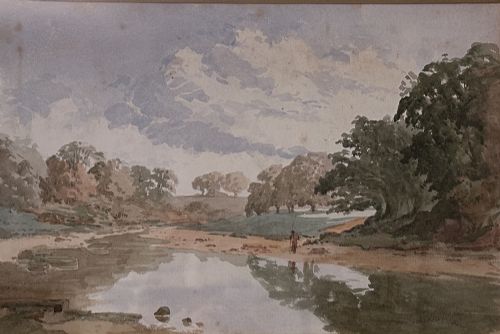
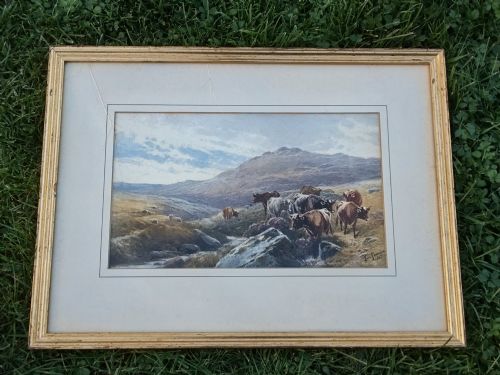
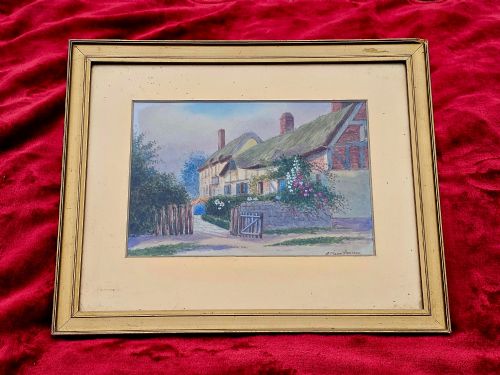
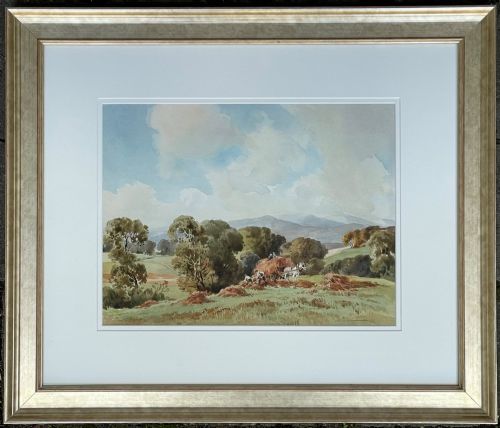
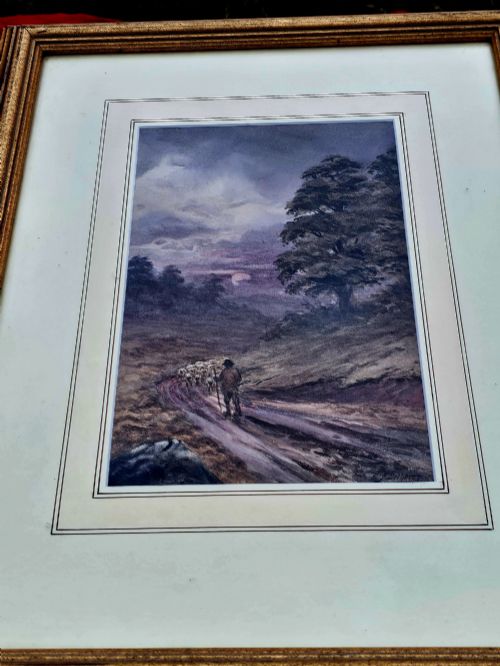
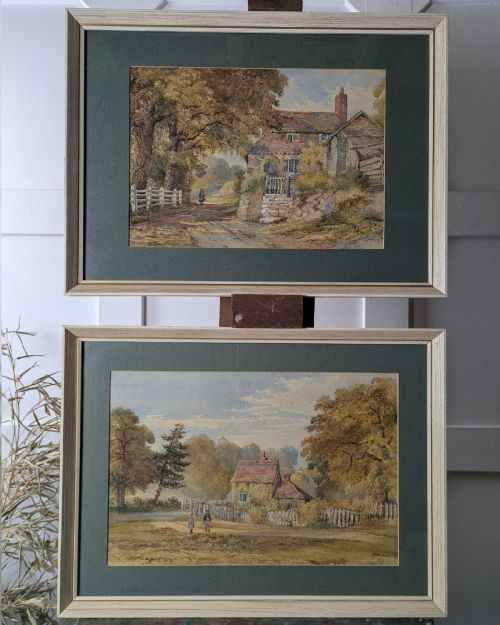
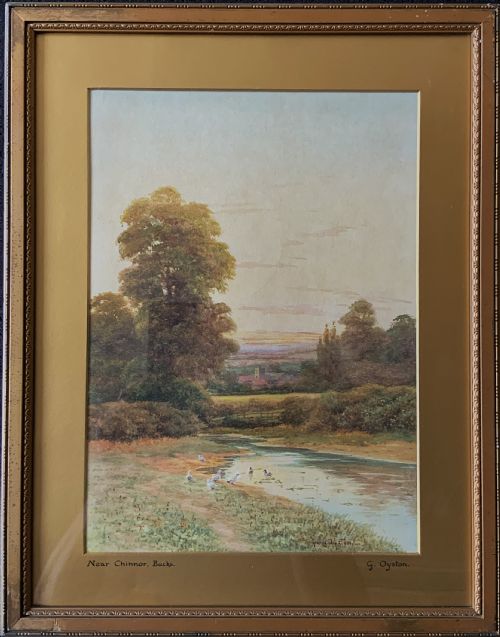
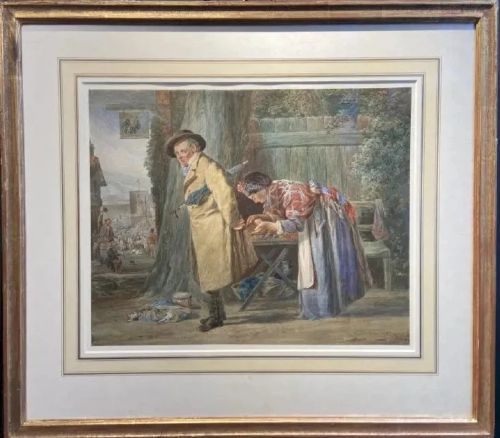
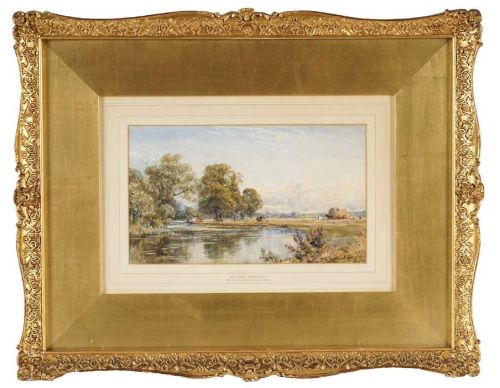
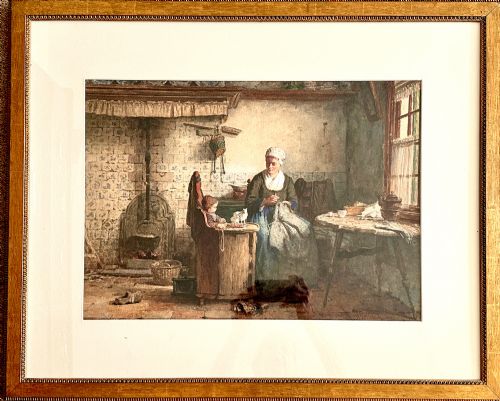
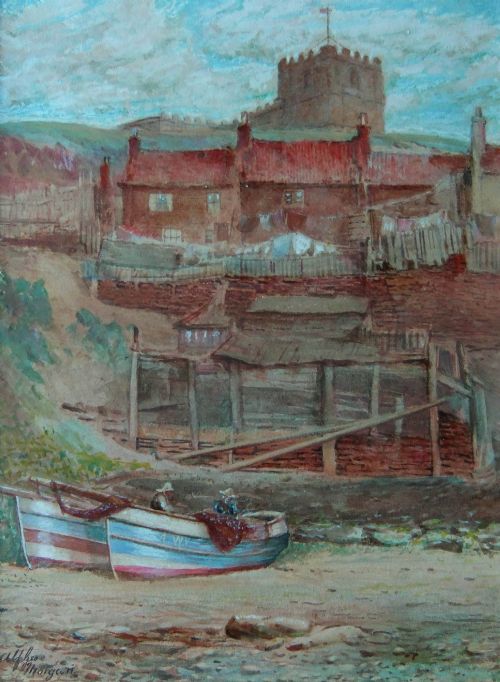
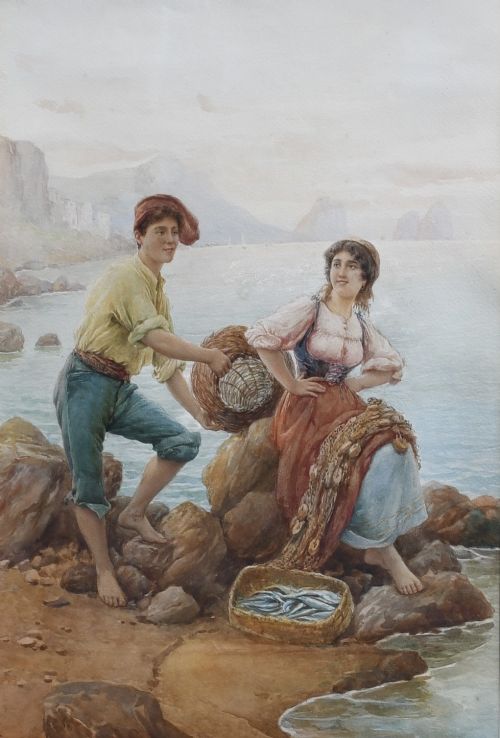
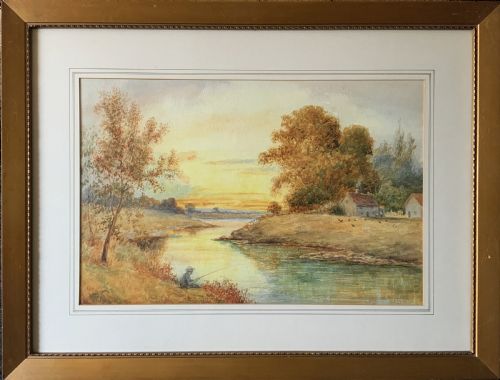
When you search for a traditional watercolour scene, you encounter framed artwork and paintings depicting pastoral landscapes, coastal harbours, and river views from the nineteenth and early twentieth centuries. These pieces record rural life, agricultural scenes, and quiet village streets through the skilled hand of named artists and regional painters.
The most common examples on this page date from the Victorian and Edwardian eras up to the nineteen-twenties, frequently rendered on paper and housed in wood and gilt frames under glass. Subjects span English country cottages, livestock markets, and riverbanks, reflecting a deep historical preference for picturesque topography.
How they were made
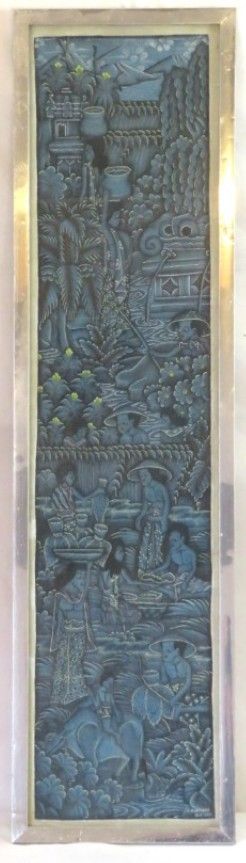
These works rely on watercolour pigment applied to paper, occasionally utilising ink or fabric as a base for specific regional studies. Artists worked with fluid washes and precise brushwork to build atmospheric depth, capturing light on water and skies over rural terrain.
Framing typically involves wood and gilt mouldings designed to protect the fragile paper surface beneath glass. The original frames often accompany the paintings, retaining period mounts and backing materials that preserve the integrity of the artwork.
Traditional Watercolour Scene Retail Price Guide 2026
Typical asking prices for traditional watercolour scene among the pieces listed under this phrase on Sellingantiques today, from the lower quarter to the upper quarter. They describe what is for sale here now, not the wider market.
Several artists clearly enjoyed painting ducks, consistently placing them near cottage ponds and riverbanks across multiple pastoral scenes.
What varies in quality
The strength of the composition and the confidence of the brushwork determine the distinction between ordinary topographical records and exceptional fine art paintings. Skilled artists captured shifting light and atmospheric movement with economy, whereas lesser hands produced stiff or formulaic village views.
The preservation of the pigment and the originality of the mounting also dictate the standing of a piece. Works retaining their vibrant colour without heavy fading, housed in period gilt wood frames, represent the upper echelon of these historical watercolours.
K. Howitt·Thomas Rowden·Alfred Young Nutt·Percy Lancaster·A. Marie Parsons·EJ Letheren·William Banks Fortescue·Robert A. Nottingham·Robert Thorne Waite·Joseph H Barnes·George Oyston·Hendrik Valkenberg·Alfred G. Morgan·Carlo Ferranti·David Cox·Henry John Kinnaird·Arthur Tucker·Thomas Bush Hardy·Frederick Septimus Lewis·James Hardy Junior·J Laporte·Louie Stanley Maurice Prince·Robert Winchester Fraser·John Atkinson·George Hamilton Constantine
The Traditional Watercolour Scene Glossary
- Watercolour
- A paint consisting of pigment suspended in a water-soluble binder, used on paper to create translucent washes of colour. It forms the primary medium for these landscape and pastoral scenes.
- Gilt wood
- Wood coated with a thin layer of gold leaf or gold paint, frequently used for traditional picture frames. This finish adds brightness and historical weight to the surrounding artwork.
- Edwardian
- Pertaining to the reign of King Edward VII, spanning from nineteen hundred to nineteen ten. Works from this period often display lighter palettes and looser brushwork than their Victorian predecessors.
- Victorian Fine Art
- Academic or professionally exhibited painting produced during the reign of Queen Victoria. These works demonstrate high technical proficiency and adherence to established artistic standards.
- British Impressionism
- An artistic movement focused on natural light and loose brushstrokes adopted by British painters around the turn of the twentieth century. It brings a vibrant immediacy to pastoral and coastal subjects.
Traditional Watercolour Scene: Frequently Asked Questions
How should I hang a watercolour painting?
Keep watercolours away from direct sunlight to prevent the pigments from fading over time. Indirect natural light or gentle artificial illumination suits these works best.
Ensure the room maintains stable humidity levels to protect the antique paper and original gilt wood frames from moisture damage.
Are these watercolours original paintings?
Yes, the listings comprise original hand-painted works created directly on paper or fabric by individual artists. Each piece represents a unique application of watercolour pigment rather than a modern reproduction.
Signatures, artist seals, and period framing further confirm the individual provenance of these historical artworks.
What subjects are most common?
Rural landscapes, river views, and coastal harbours dominate the selection, reflecting nineteenth-century tastes for pastoral scenes. Common motifs include cottages, livestock markets, and fishermen by the water.
Scenes from specific English counties and European coastal towns appear frequently across the Victorian and Edwardian periods.
How do I identify the period?
Examine the framing style, artist signatures, and any accompanying inscriptions on the reverse of the paper or mount. Victorian and Edwardian pieces often display distinct mounting techniques and handwriting from the era.
Reference the working dates of the named artists to narrow down the decade in which the landscape was painted.