


Traditional Upholstered Arm Chair
A traditional upholstered arm chair brings deep seating and period character into a room, offering the kind of comfort that modern furniture rarely matches.
Traditional Upholstered Arm Chair
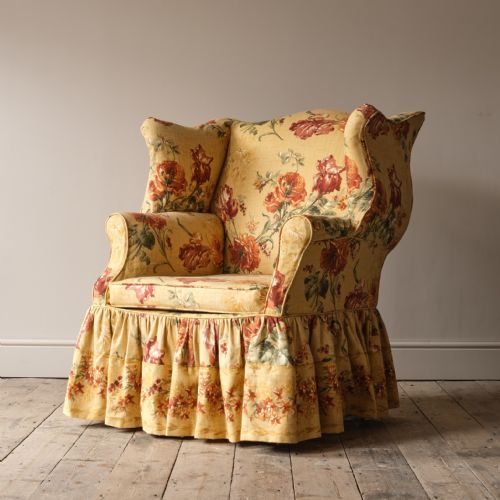
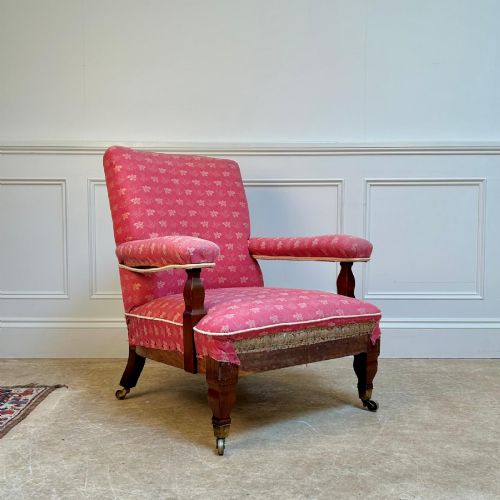
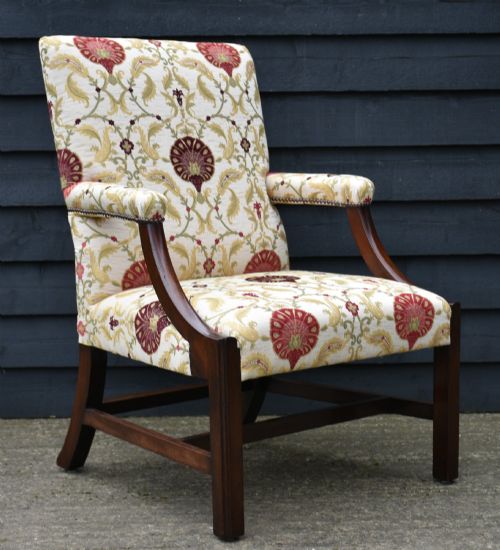
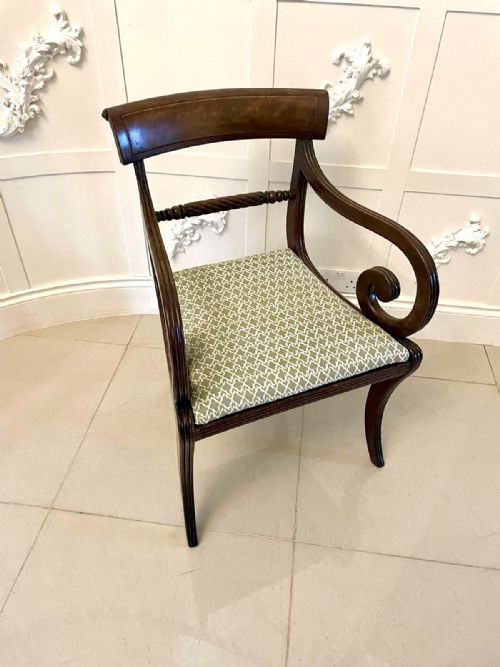
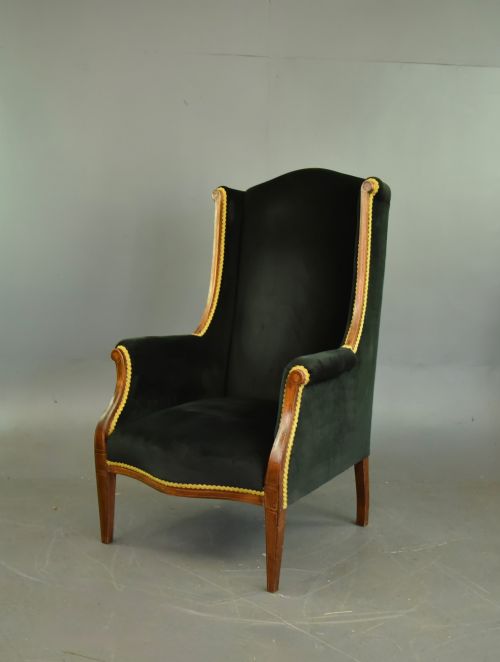
When you search for a traditional upholstered arm chair, you encounter a wide selection spanning the Georgian, Victorian and Edwardian eras. These seating pieces range from expansive country house wingbacks to compact library chairs and low-slung club styles.
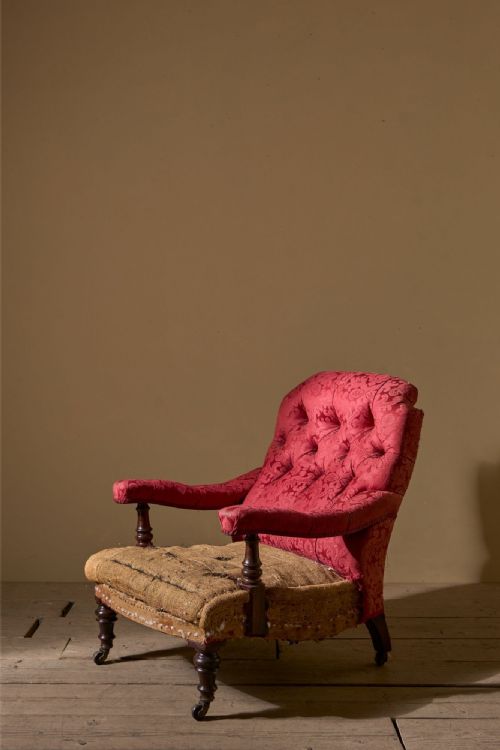
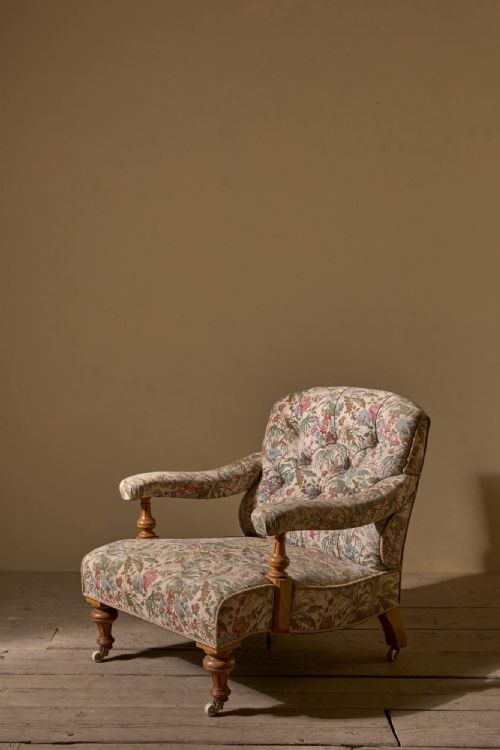
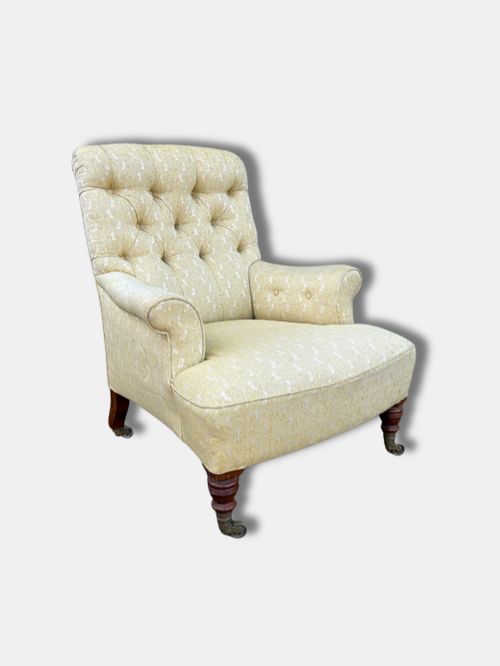
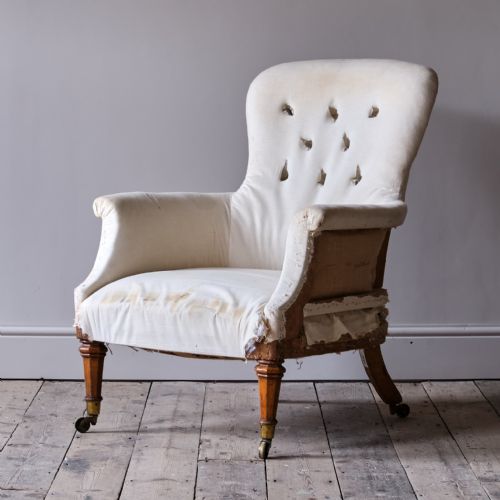
The most common examples on this page date from the nineteenth century, including Victorian button-backs, Edwardian deep-seated models and pieces reflecting earlier Georgian or Regency designs.
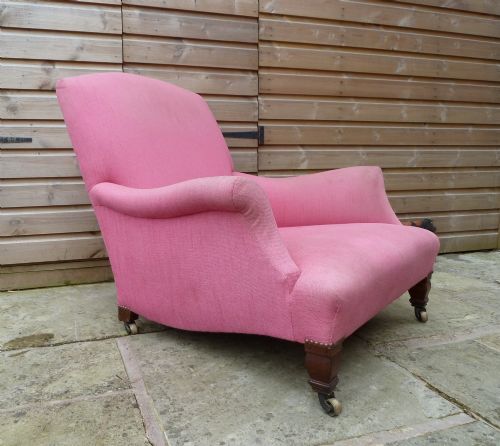
Makers often drew upon classic forms like the Gainsborough or the deep-sprung Howard style, creating chairs intended for heavy use in studies, libraries and drawing rooms.
How they were made
Makers constructed the internal frames of traditional upholstered arm chairs from sturdy hardwoods such as mahogany, walnut and timber, ensuring long-term structural integrity. These wooden skeletons were then webbed and traditionally stuffed with horsehair or wool before receiving their final layer of textile.
Outer coverings varied widely according to fashion and utility, incorporating heavy velvet, leather, calico, damask and woven fabrics, often secured with brass upholstery tacks along the borders.
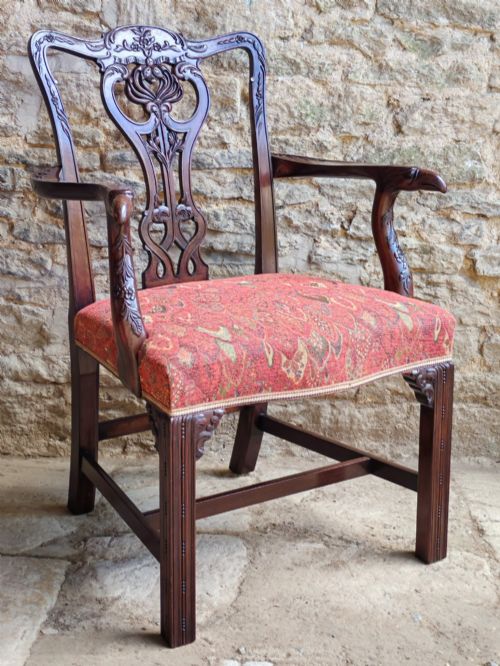
Exposed woodwork on legs, arms and knuckles was frequently carved, reeded or polished, with some chairs resting upon brass castors for ease of movement across heavy carpets.
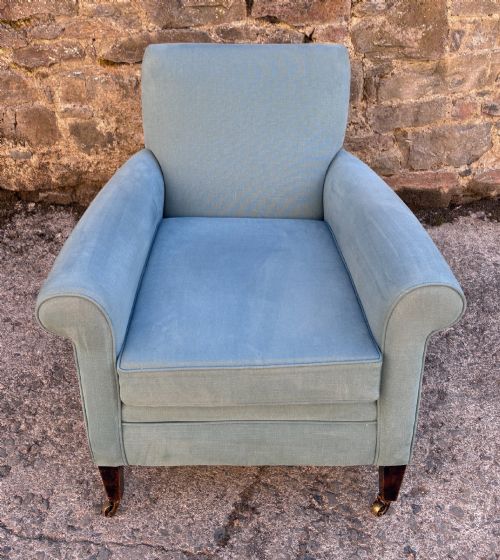
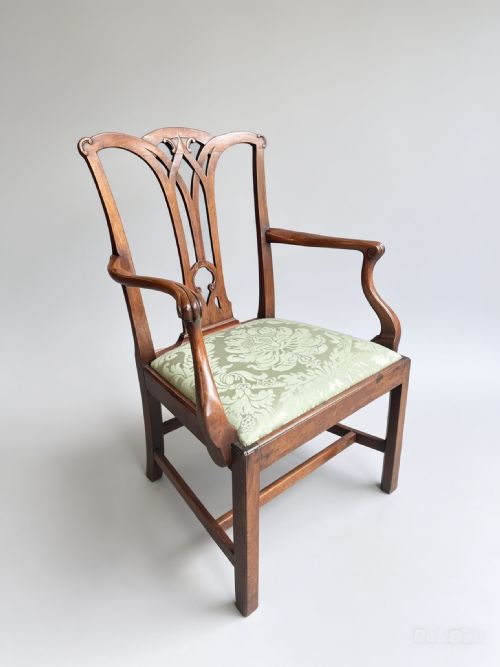
Listings feature periods spanning from Georgian mahogany designs to late Victorian button-back upholstery and Edwardian deep-seated club styles.
What varies in quality
Quality in a traditional upholstered arm chair lies primarily in the integrity of the frame construction and the depth of the initial carpentry. Chairs built with dense hardwoods and robust corner blocks maintain their rigidity far better than lighter, derivative pieces.
The sophistication of the upholstery work also dictates the tier of the piece, from standard commercial production to high-end London workshops utilising traditional spring-lashing and hand-stitched edge work.
Proportion and stance separate ordinary examples from exceptional ones, as the best items combine balanced arm heights with supportive rake angles in the backrest.
Howard and Sons·Morris and Co·Hampton and Sons
The Traditional Upholstered Arm Chair Glossary
- Wingback
- An armchair with side panels or wings attached to the back frame designed to shield the sitter from draughts. These panels also served to trap heat from an open fireplace.
- Bergère
- An enclosed armchair with stuffed upholstery on a closed wooden frame, frequently featuring cane work on the sides or back. The style originated in France during the eighteenth century.
- Carver
- An armchair, usually designed with arms to match a set of dining chairs and placed at the head of a table. Such chairs were sturdier than standard side chairs.
- Gainsborough
- A wide-seated, open-armed armchair dating from the mid-eighteenth century, typically upholstered in leather or silk. This form was favoured for writing desks and libraries.
- Reeded
- A decorative moulding consisting of parallel convex strips resembling bundled reeds. Cabinet makers used this technique to embellish the legs and arm supports of seating.
- Button-back
- An upholstery style where depressions are formed in the padding by pulling buttons deep into the stuffing. This method kept the internal filling evenly distributed.
Traditional Upholstered Arm Chair: Frequently Asked Questions
How do I date a traditional upholstered arm chair?
Dating relies heavily on examining the timber frame beneath the upholstery, the style of the legs, and the construction methods used in the joints. Earlier pieces from the Georgian era display hand-cut joinery and specific mahogany turning, while Victorian and Edwardian examples often incorporate factory-turned components and metal castors.
Upholstery materials also offer clues, though most historic chairs have been recovered multiple times. Inspecting exposed wood, stretcher placement and any maker stamps on the castors or webbing usually confirms the period.
Are these chairs comfortable for daily use?
Many traditional upholstered arm chairs provide exceptional daily comfort due to their deep-sprung seats and supportive, high backrests. Victorian and Edwardian models in particular were engineered for long hours of reading or relaxation in country houses.
If a chair retains its original horsehair stuffing and tied springs, it will feel firmer than modern foam furniture but offers superior ergonomic support. Traditional sprung seats contour well to the body over time.
Can I use modern fabric on an antique chair?
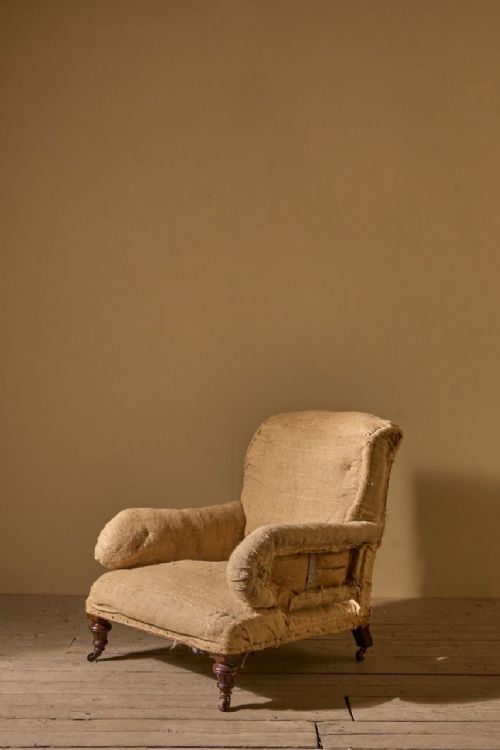
Using contemporary textiles on a period frame is a common practice that allows historic seating to fit modern interiors. Many chairs on the market are sold in transitional calico specifically so buyers can apply their own choice of top fabric.
When reupholstering, it remains important to respect the historical silhouette of the chair. Maintaining traditional stuffing depths ensures the proportions stay true to the original maker's design.