

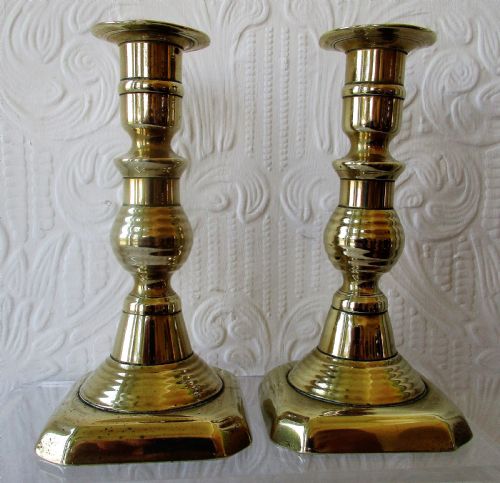


Traditional Turned Brass Light
Traditional turned brass light designs offer solid metal columns and warm metallic polish that suit both period rooms and modern interiors.
Traditional Turned Brass Light
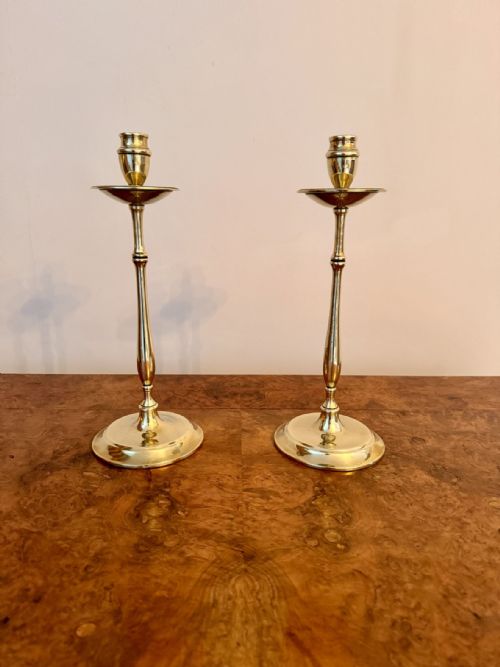
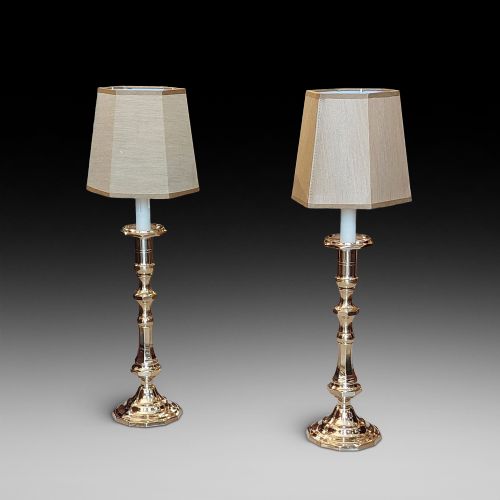
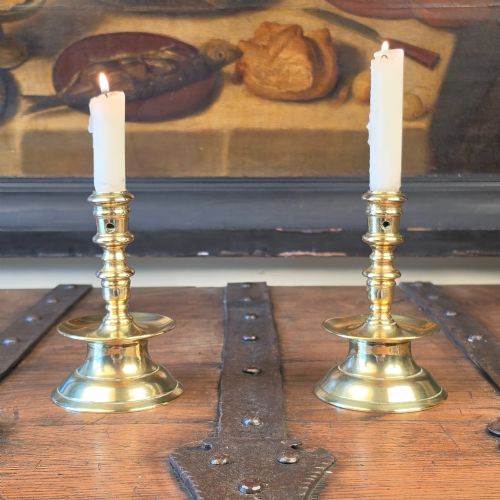
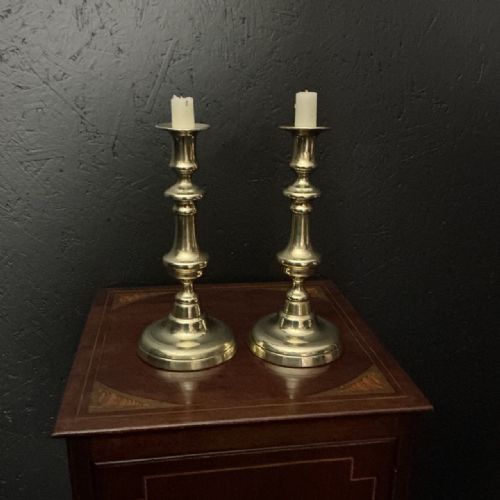
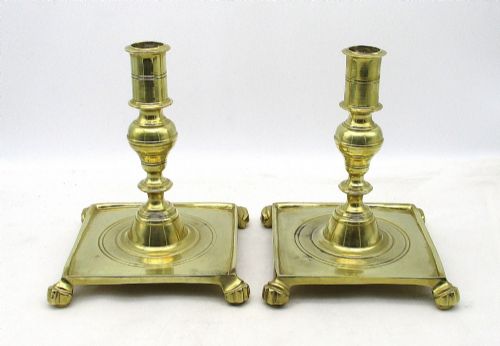
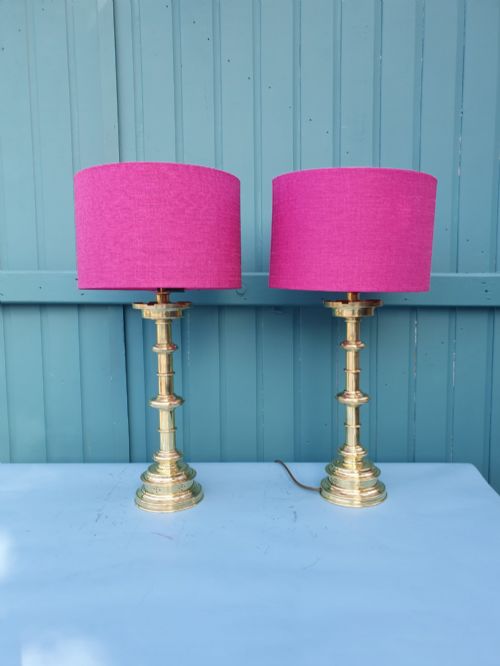
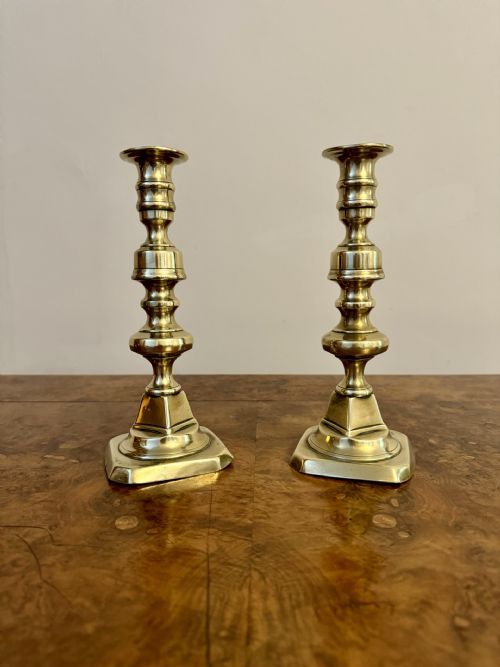
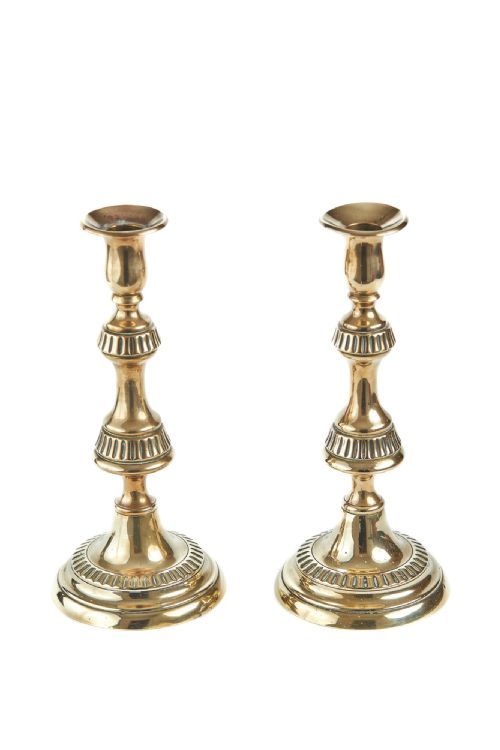
A traditional turned brass light usually takes the form of a candlestick or a table lamp, often found as matched pairs dating from the Victorian and Edwardian eras. These objects combine metal columns with weighted bases, and some examples incorporate mahogany or painted wood into their turned structures.
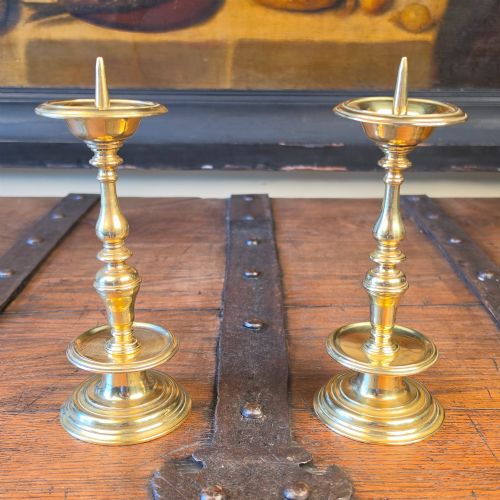
Makers produced these pieces across the nineteenth and early twentieth centuries, drawing on earlier Georgian and seventeenth-century revival styles. The most common survivals on this page are Victorian brass candlesticks and converted candlestick lamps featuring spindle-turned shafts.
Brass and timber construction
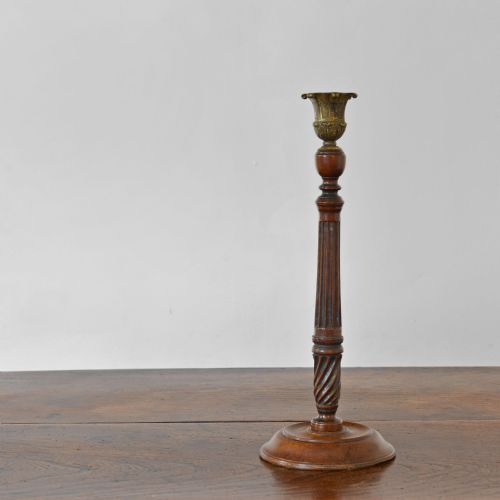
Workshops formed these pieces using solid brass shaped on a lathe, combining turned metal sections with fitted wooden bases or mahogany columns. Manufacturers utilised cast components alongside spun or turned brass tubes to build sturdy shafts and weighted bases for stability.
Surface finishes range from polished brass to painted details, occasionally accompanied by fabric cotton shades or glass elements. Makers integrated these materials with simple mechanical fittings, leading to later adaptations like rewiring for modern table use.
Traditional Turned Brass Light Retail Price Guide 2026
Typical asking prices for traditional turned brass light among the pieces listed under this phrase on Sellingantiques today, from the lower quarter to the upper quarter. They describe what is for sale here now, not the wider market.
Listings span the 18th, 19th, and early 20th centuries, featuring materials such as brass, mahogany, fabric, and glass.
Gradations in turning and weight
Quality rests in the crispness of the lathe work and the heft of the metal, where heavier solid brass components provide better balance than thin sheet metal. Finer examples display cleanly cut vase-shaped columns and well-fitted bases without distortion.
The degree of ornamentation also separates standard production from superior pieces, with ornate Victorian castings and marked maker details indicating higher workshop standards. Original paired status and retained proportions preserve the integrity of the design.
WM TONKS & SONS·Howard And Sons
The Traditional Turned Brass Light Glossary
- Turned
- Shaped on a lathe by rotating the material against cutting tools. This process creates symmetrical cylindrical or spindle columns in brass and mahogany.
- Candlestick
- A holder designed to support a wax candle with a nozzle and drip pan. Many survivors have subsequently been converted into table lamps.
- Pricket
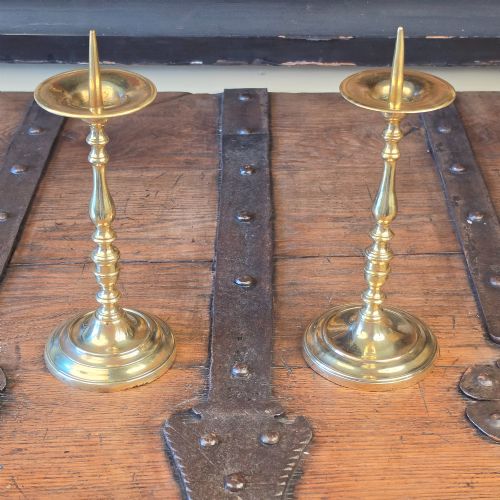
- A heavy metal spike in the centre of a drip pan designed to impale a candle. This form appears in seventeenth-century revival pieces from the nineteenth century.
- Standard lamp
- A tall floor-standing light fixture designed to illuminate a room from a vertical shaft. These often feature heavy weighted bases to support the height.
Traditional Turned Brass Light: Frequently Asked Questions
How do I date a brass candlestick?
Dating relies on stylistic markers such as column profiles, base shapes, and manufacturing techniques recorded across Victorian and Edwardian examples. Stamped registry marks or maker details can also help pinpoint the exact period of production.
Changes in metal composition and assembly methods further distinguish nineteenth-century pieces from later reproductions. Examining the wear on the base provides additional clues regarding the age of the item.
Were these lights originally electric?
Most of these pieces started life as traditional candle holders before being converted into electric lamps at a later date. Workshops adapted the original brass columns by running internal wiring through the centre.
This conversion process preserves the aesthetic of the turned metal while meeting modern lighting requirements. Rewired examples combine historic character with safe domestic operation.
What is a turned column?
A turned column is a structural shaft shaped on a lathe to create decorative rings, vase shapes, and tapering profiles. Artisans used this technique on both solid brass and mahogany components.
This method ensures structural symmetry and adds visual texture to the silhouette of the light. The precision of the turning often indicates the skill of the original workshop.
Can I use them as standard lamps?
Certain taller designs function as floor-standing standard lamps, while smaller versions serve as table or desk lighting. Each piece relies on a weighted base to maintain balance when placed on a floor or table.
Matching the scale of the light to the intended room ensures proper proportion and stability. Fabric shades are frequently paired with these stands to diffuse the light.