
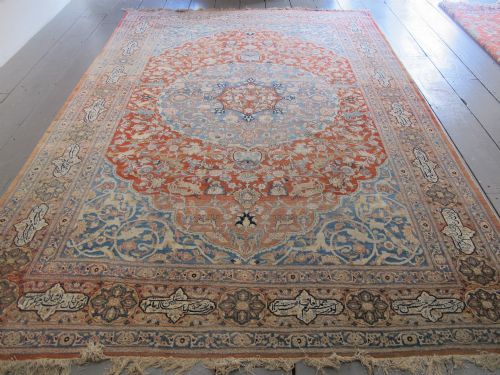


Traditional Tabriz Rug
A traditional tabriz rug brings centuries of Persian weaving heritage into a room, offering intricate floral designs and durable construction that collectors prize.
Traditional Tabriz Rug
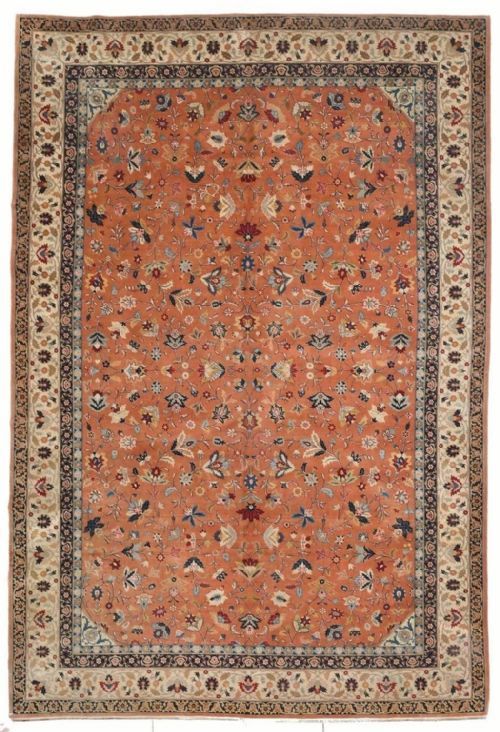
A traditional tabriz rug originates from North-West Persia and encompasses room-size carpets, large country house carpets, and smaller area rugs. These floor coverings bridge centuries of design, with examples stretching from the eighteenth century through the nineteenth and twentieth centuries.
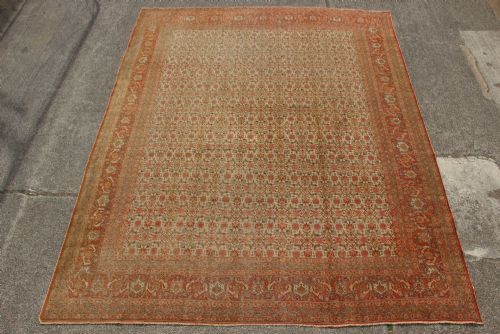
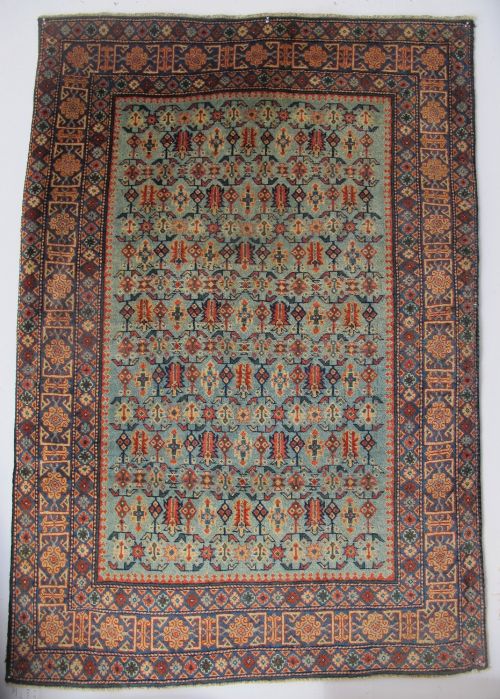
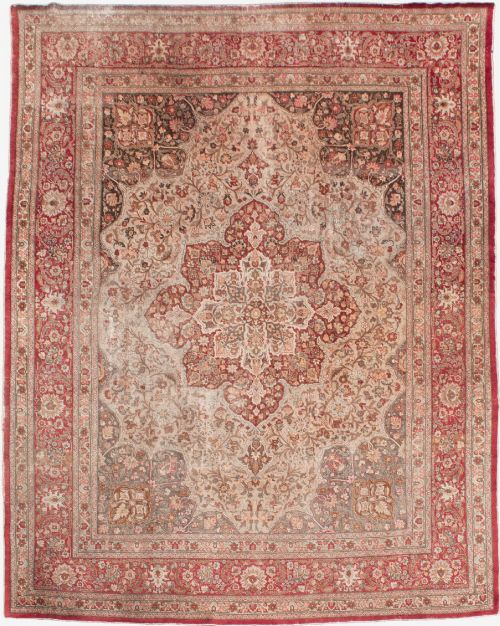
The most frequent pieces met on this page date from the nineteenth and early twentieth centuries, particularly around nineteen hundred and nineteen twenty. They include both formal workshop carpets with classic floral medallions and village pieces displaying overall patterns like the herati design.
Makers and workshops of note left distinct signatures on their pieces, while other examples remain attributable to the wider Tabriz region. Buyers encounter formats ranging from compact rugs suitable for smaller spaces to expansive carpets designed for grand reception rooms.
What Varies in Quality
Knot density and the precision of the weave set the baseline for an individual piece, separating fine workshop carpets from coarser village productions. Finer knotting allows complex curves in floral and medallion motifs to render with sharper clarity.
The choice of materials also influences the standard of a rug, with high-grade wool or pure silk yielding greater luminosity and longevity. Furthermore, the sophistication of the design, such as elaborate hunting scenes versus simpler overall patterns, determines the standing of the work.
Listings feature pieces spanning the eighteenth, nineteenth, and early twentieth centuries, utilising wool, cotton, and silk.
Haji Jalili·Benlian
The Traditional Tabriz Rug Glossary
- Herati design
- A repeating pattern composed of a central rosette enclosed by a diamond lattice and flanked by leaf motifs. It appears frequently in traditional Persian weaving.
- Medallion
- A large central ornamental design motif found on many carpets. It anchors the symmetrical layout of classical Persian compositions.
- Warp
- The vertical threads stretched tightly on the loom before knotting begins. These threads form the structural skeleton of the rug and often show as fringe at the ends.
- Weft
- The horizontal threads passed between warp threads to secure the rows of knots. They maintain the structural integrity and firmness of the woven textile.
- Pile
- The vertical cut loops of wool or silk that form the soft surface of the rug. The height and density of this layer affect both the texture and visual depth of the design.
Traditional Tabriz Rug: Frequently Asked Questions
How do I clean a traditional tabriz rug?
Professional dusting and specialist washing preserve the integrity of wool and silk piles without disturbing the foundational knots. Regular gentle vacuuming without a beater bar removes surface grit.
Avoid harsh chemical treatments or immersion washing at home, as older natural dyes can react poorly to moisture and detergents.
Where should I place a large carpet?
Expansive room-size carpets suit principal reception spaces, dining rooms, or drawing rooms where furniture can anchor the edges. Placing them away from direct, harsh sunlight prevents uneven fading of the natural dyes.
Using a quality underlay helps prevent slipping and cushions the foundation against wear from foot traffic.
What is the difference between village and workshop rugs?
Workshop carpets usually display formal, highly symmetrical designs planned on paper cartoons by master designers. They often exhibit extremely fine knot counts and intricate pictorial or floral details.
Village pieces tend to reflect more spontaneous, geometric interpretations woven from memory or local tradition, resulting in charming irregularities and robust structures.