




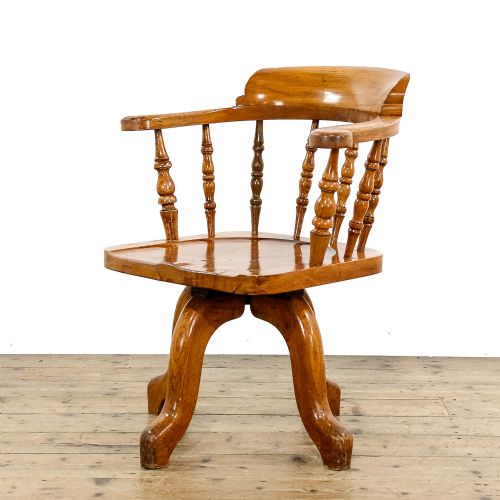
Traditional Swivel Office Armchair
A traditional swivel office armchair brings mechanical utility and handsome timber to the desk, built for long hours of correspondence.
Traditional Swivel Office Armchair
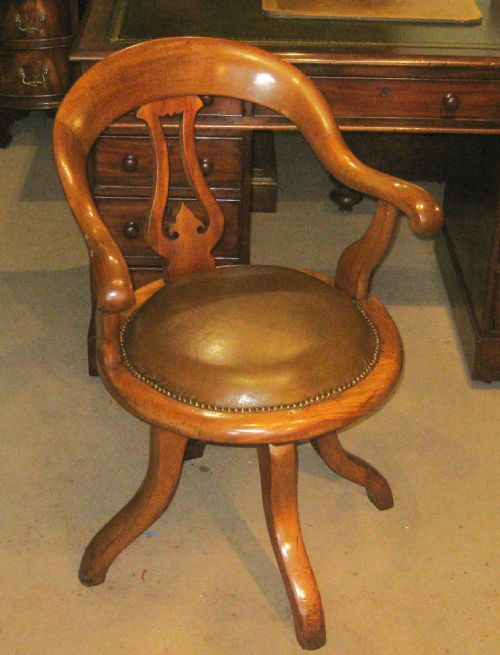
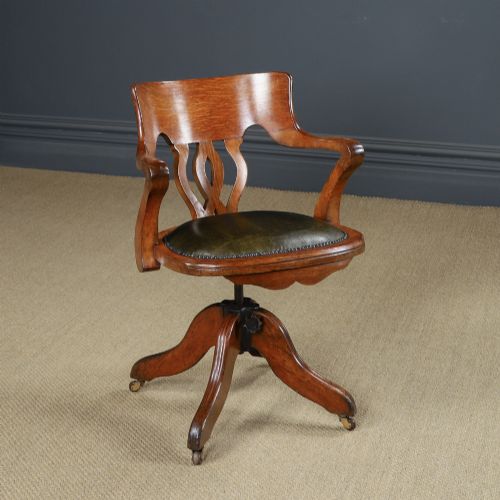
A traditional swivel office armchair is designed for the working desk, combining mobility with a supportive backrest and arms. The examples gathered here span from the late nineteenth century through the Edwardian period and up to nineteen sixty, capturing a substantial era of office seating evolution.
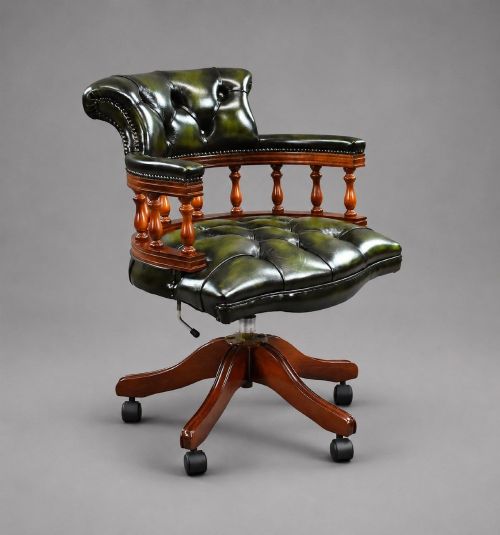
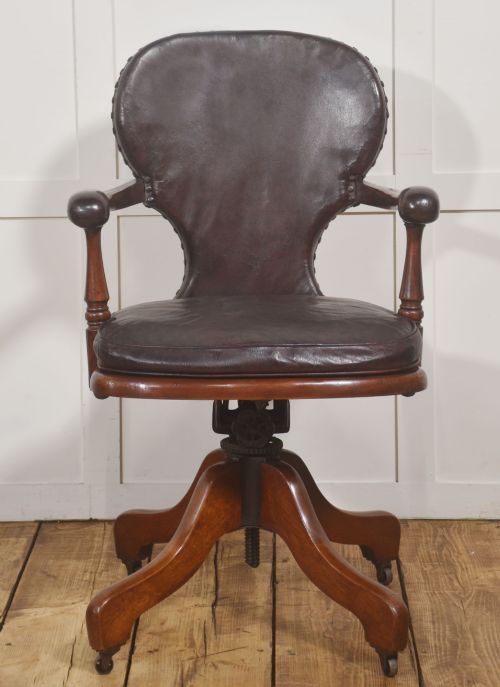
Mahogany and oak dominate the selection, frequently paired with leather upholstery or constructed entirely from timber with wooden seats. Forms range from revolving desk chairs to captain's chairs and aesthetic movement designs, reflecting both domestic studies and commercial workspaces of the past.
Assessing quality and finish
Superior pieces display thoughtful selection of grain in the mahogany or oak, alongside refined turning on the spindle supports and chair legs. The integration of the swivel mechanism into the wooden base reveals the level of care taken by the original maker.
The integrity of the revolving action and the solidity of the joints dictate the calibre of an office chair. Upholstered variants rely on the condition of the leather and the execution of the padding to maintain their seating comfort.
Traditional Swivel Office Armchair Retail Price Guide 2026
Typical asking prices for traditional swivel office armchair among the pieces listed under this phrase on Sellingantiques today, from the lower quarter to the upper quarter. They describe what is for sale here now, not the wider market.
One listed armchair carries the distinct provenance of a fine pair by George Bartholomew and Co.
George Bartholomew and Co
The Traditional Swivel Office Armchair Glossary
- Revolving desk chair
- A seating form fitted with a central spindle or mechanical pivot that allows the user to rotate without moving the base. These chairs often feature tilt mechanisms for adjusted posture during administrative work.
- Captain's chair
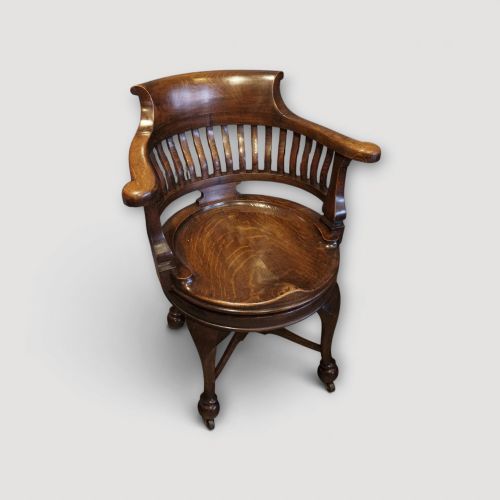
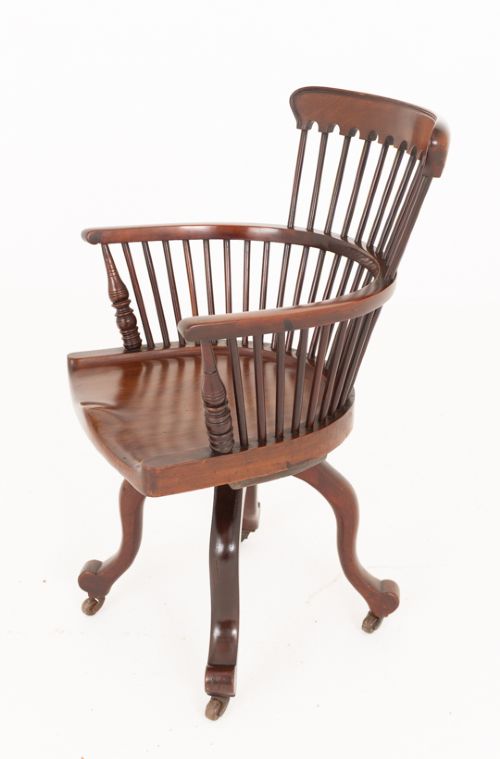
- A low-backed armchair featuring a continuous, curved wooden rail supported by spindles above the seat. This form provides lateral support while fitting neatly beneath standard writing desks.
- Aesthetic Movement
- A late nineteenth-century design style that emphasised visual beauty over narrative subject matter, often incorporating simplified forms and honest construction. Pieces from this movement display distinct artistic intent.
- Edwardian Arts and Crafts
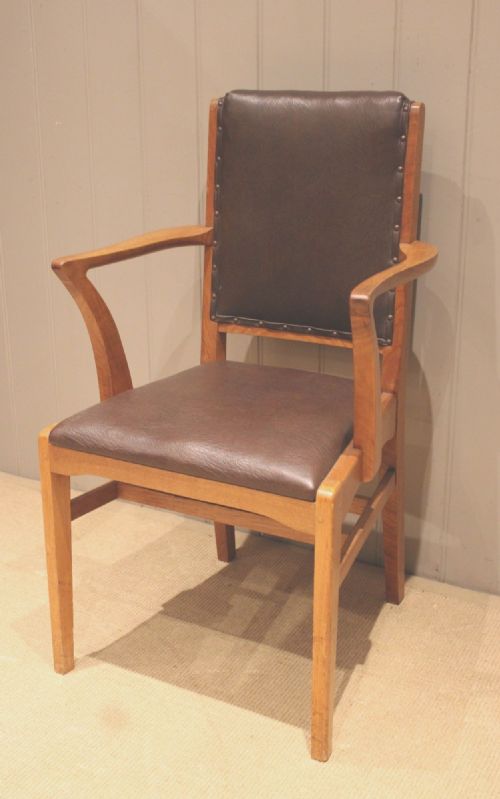
- A design philosophy prevalent in the early twentieth century that championed traditional craftsmanship and visible construction methods. Furniture from this period highlights the natural grain of oak and walnut.
Traditional Swivel Office Armchair: Frequently Asked Questions
How do I operate the swivel mechanism?
Most traditional swivel office armchairs utilise a central iron or brass spindle secured beneath the wooden seat. Turning the chair rotates the upper structure around this fixed vertical axis.
Tilt functions, where present, are typically governed by an under-seat tension screw or spring assembly that allows the backrest to lean backward.
Were these chairs used in homes?
These seating forms served dual purposes in both domestic libraries and commercial counting houses during the nineteenth and twentieth centuries. Gentlemen utilised them at partner's desks for reading and writing.
Their robust timber construction and mobility made them equally suitable for administrative offices and private studies.
How do I distinguish Victorian from Edwardian examples?
Victorian office chairs tend to utilise rich mahogany with heavier proportions and deep buttoned leather upholstery. The styling often reflects classical Revival influences or sturdy utilitarian forms.
Edwardian alternatives frequently feature oak or walnut with lighter frames, incorporating Arts and Crafts simplicity or simpler turned spindles.
Are wooden seat versions as comfortable as leather?
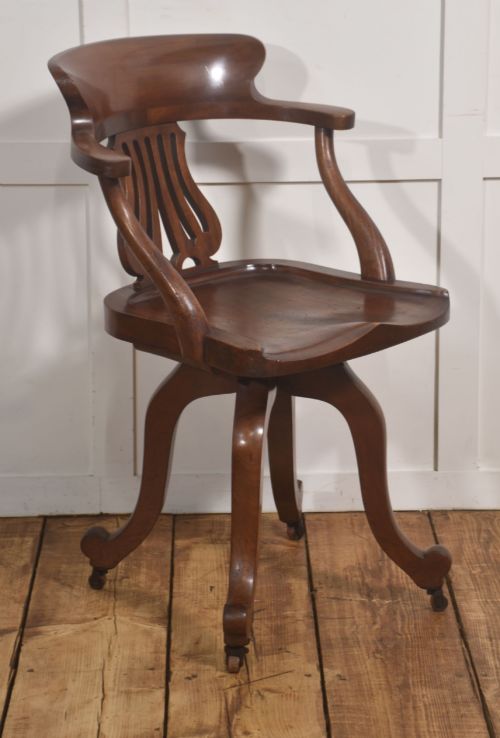
Wooden seat variants rely on ergonomically scooped saddles carved directly into the timber for support. While lacking padding, these seats offer durability and a distinct tactile quality.
Leather upholstered models provide a softer surface for extended sitting, though both types share the same underlying revolving architecture.