
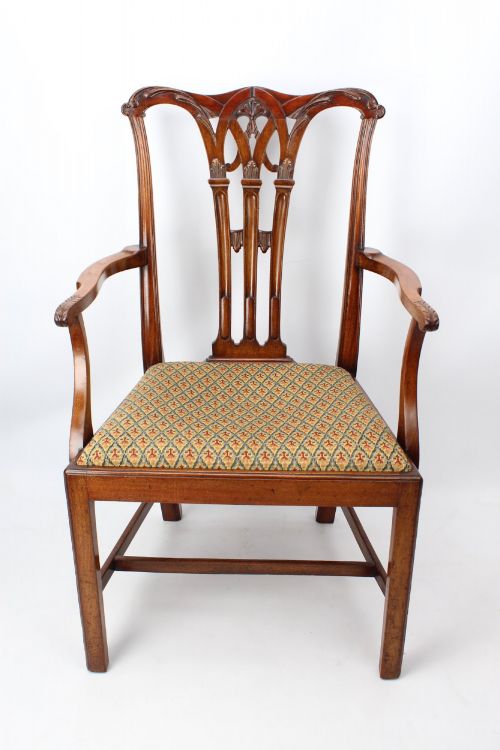


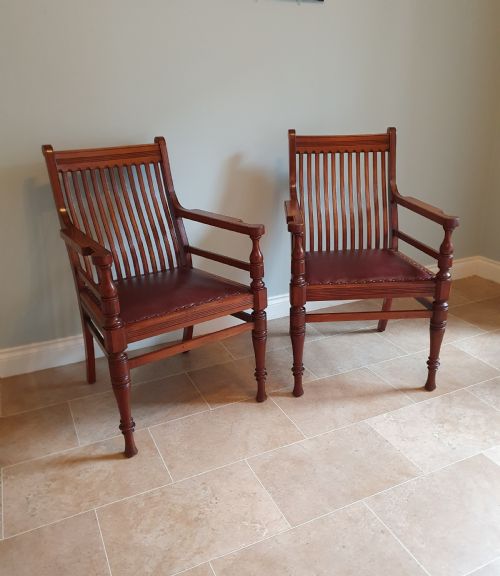


Traditional Study Seating
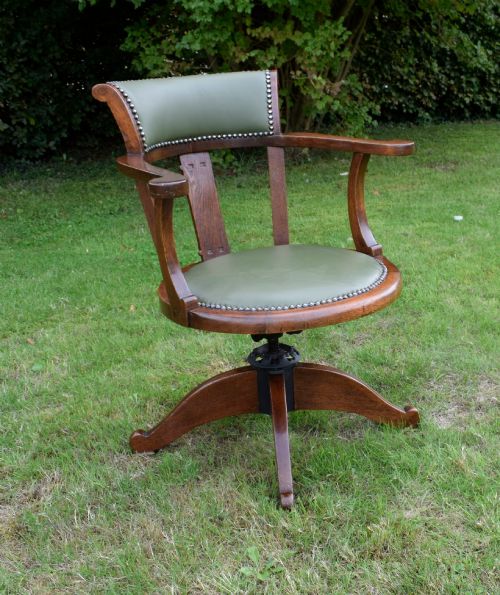
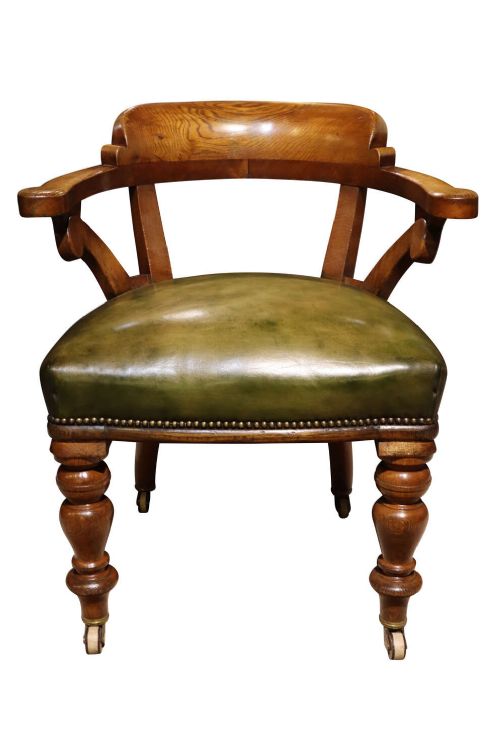
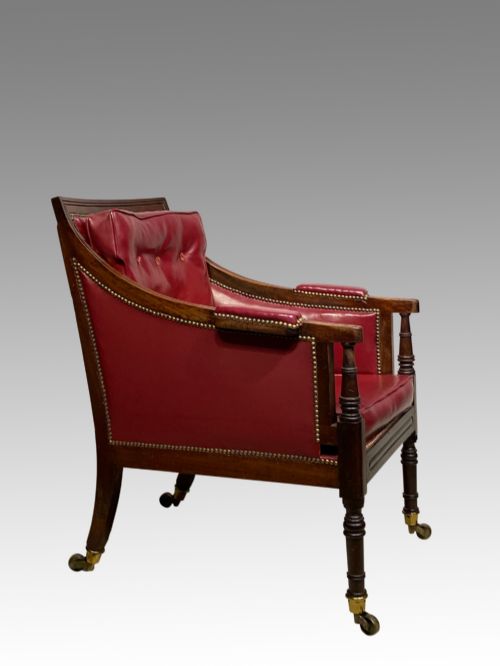
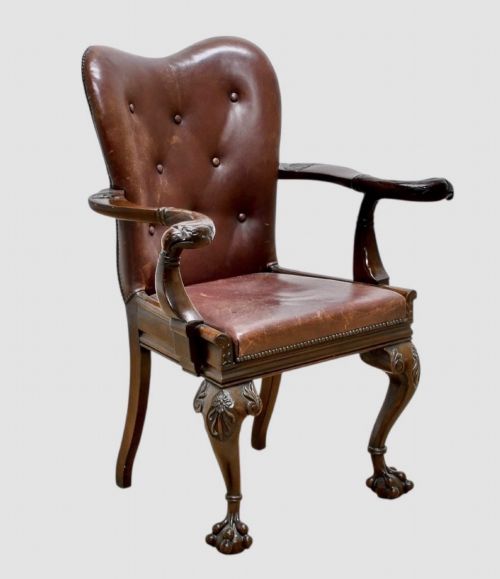
Traditional study seating comprises heavy timber library chairs and swivelling desk armchairs designed for long hours at a writing table.
Traditional Study Seating
Traditional study seating encompasses robust library chairs, revolving office armchairs, and desk chairs suited for a home workspace or library. These pieces draw from the Georgian, Regency, Victorian, and Edwardian periods, offering sturdy seats built for reading and writing.
The version most commonly encountered in traditional study seating is the mahogany or oak desk chair, frequently upholstered in leather and occasionally featuring a swivel mechanism or wooden seat. Armchairs and club elbow chairs also appear frequently among the listings.
Makers working within these styles utilise classic forms such as the Gainsborough chair and Chippendale revival models. Buyers select these items to bring period character and functional seating to a study.
How traditional study seating was made
Makers constructed traditional study seating predominantly from solid hardwoods, chiefly mahogany, oak, and walnut, ensuring structural integrity for daily use. Beech and other timbers also appear in supporting framework.
Upholstery methods involved securing leather, hide, velvet, fabric, or oil cloth over padding, often enhanced with buttoning or brass tacks. Wood carving and inlay work frequently decorated the frames of Victorian and Edwardian examples.
The selection spans Georgian, Regency, Victorian, and Edwardian periods.
What varies in quality
The grade of timber and the depth of hand-carving distinguish standard examples from finer library chairs. Superior pieces exhibit carefully selected mahogany or golden oak with crisp detail along the arms and legs.
The choice of covering material and the execution of buttoned leather upholstery indicate the standing of a desk chair. Original swivel mechanisms and robust framing systems further separate standard workshop output from exceptional furniture.
George Bartholomew and Co
The Traditional Study Seating Glossary
- Library chair
- A substantial armchair designed for reading rooms, typically featuring upholstered arms and a leather seat. These pieces often date from the Georgian and Victorian eras.
- Swivel desk chair
- A revolving office chair mounted on a central pivot, allowing movement around a desk. Early versions utilise timber frames with mechanical pivoting systems.
- Gainsborough chair
- An open-arm armchair with a wide seat and upholstered back, popular in the eighteenth century and later revived. It suits placement beside a writing table.
- Bergere armchair
- An enclosed wooden armchair featuring cane or upholstered panels on the back and sides. Regency and Edwardian makers produced refined examples of this form.
- Club elbow chair
- A sturdy low armchair offering comfortable support, frequently framed in oak or mahogany. These chairs often include leather or fabric upholstery.
Traditional Study Seating: Frequently Asked Questions
What defines a traditional study chair?
Traditional study seating includes mahogany library chairs and oak desk chairs built during the nineteenth and early twentieth centuries. These forms prioritise functional comfort during writing and reading.
They combine robust timber frames with leather or fabric upholstery to suit domestic and institutional libraries.
How do I identify a Victorian desk chair?
Victorian desk chairs frequently utilise dark mahogany or golden oak, combined with buttoned leather upholstery and carved armrests. They reflect the heavier proportions popular during the nineteenth century.
Revolving mechanisms and swivel bases also become more common in office armchairs from this era.
Are swivel chairs period correct for an antique desk?
Early twentieth-century and late nineteenth-century workshops produced revolving office chairs designed to pair with traditional writing tables. Oak and walnut swivel models match the period aesthetic of Edwardian studies.
These pieces offer mechanical movement while maintaining classic timber construction.
What is the difference between a library chair and a desk chair?
Library chairs are generally heavier armchairs upholstered entirely in leather or fabric for comfortable reading. Desk chairs are often more compact, sometimes featuring swivel bases or open wooden seats suited for writing.
Both categories form the core of traditional study seating.
How do I care for leather upholstery on antique seating?
Antique leather requires gentle cleaning and occasional conditioning to maintain its flexibility and colour. Avoid direct sunlight and excessive heat to prevent the hide from drying out.
Regular dusting preserves the surface of buttoned and tacked upholstery on period chairs.