

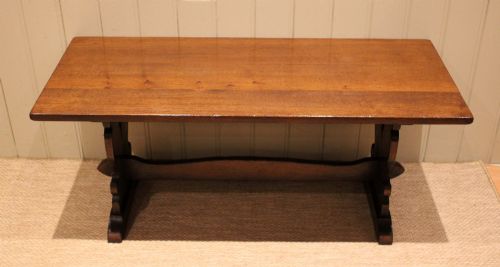
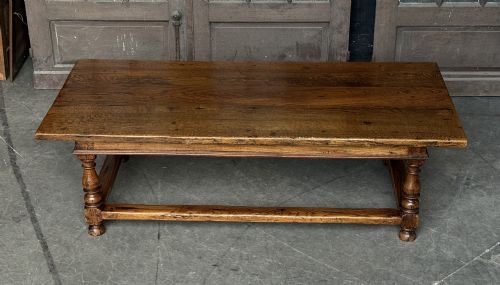
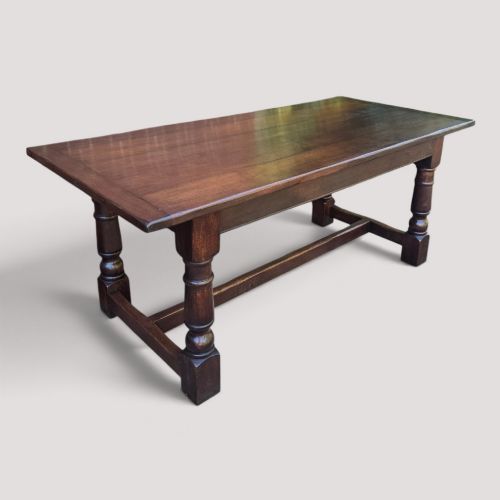
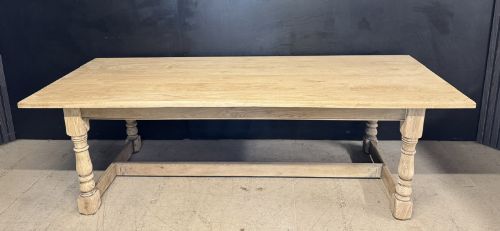

Traditional Stretcher Base Table
Traditional stretcher base tables bring grounded utility and timber character to a room, spanning rustic dining surfaces and low coffee tables.
Traditional Stretcher Base Table
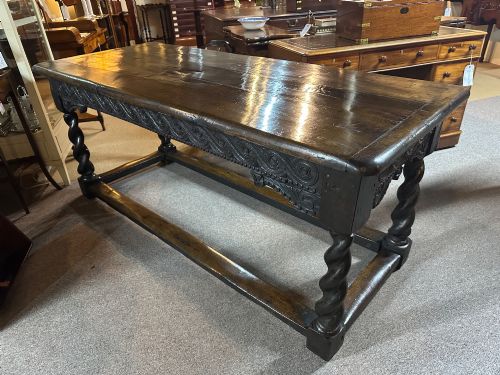
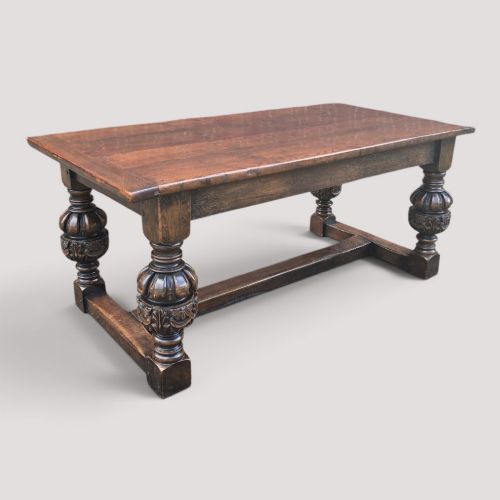
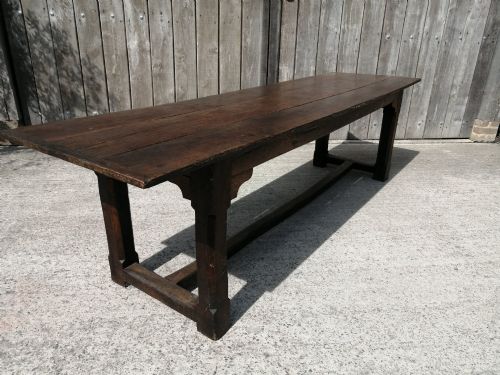
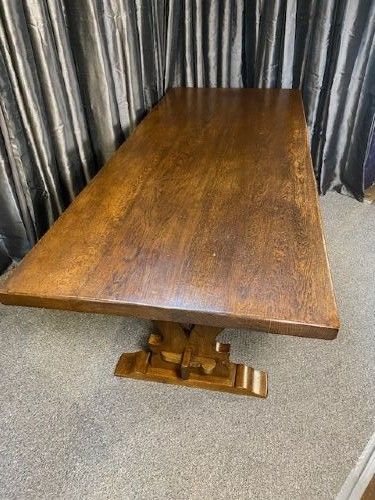
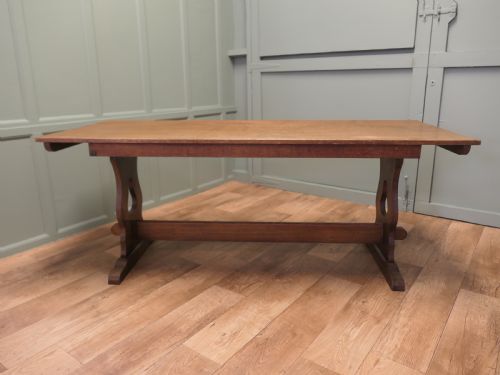
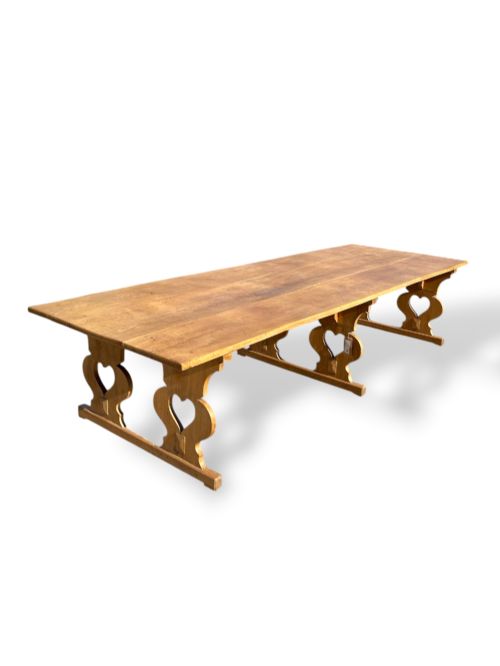
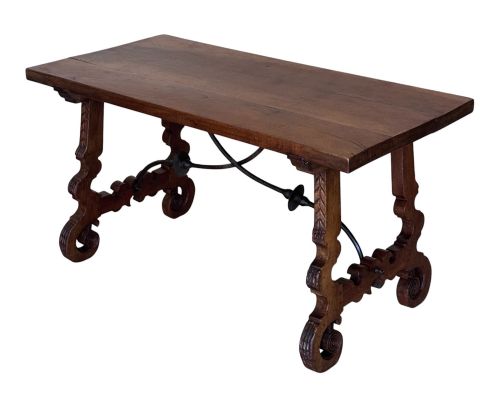
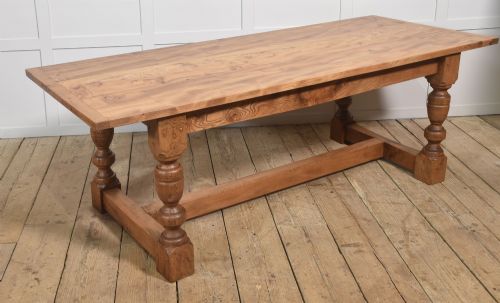
When you search for a traditional stretcher base table, you encounter heavy timber furniture designed with horizontal members connecting the lower legs for rigidity. The selection spans robust refectory dining tables, large farmhouse boards, and lower coffee tables built for daily domestic use.
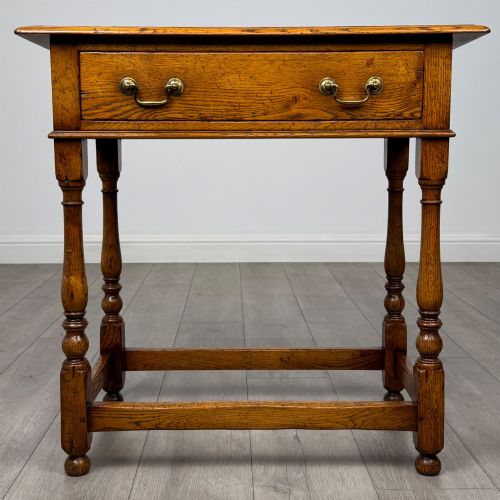
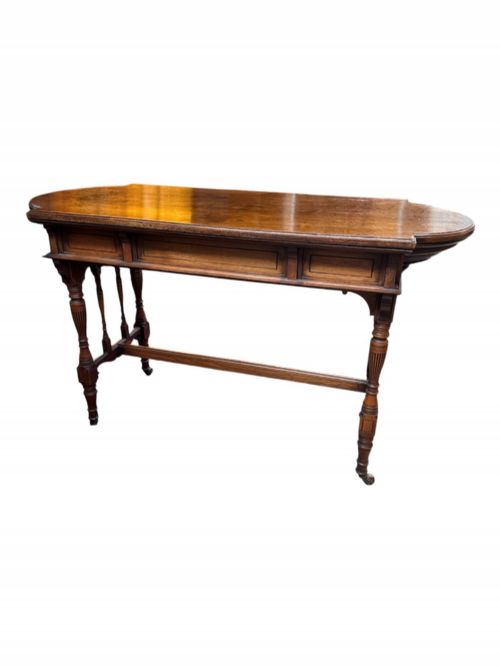
The pieces appearing on this page most frequently date from the nineteenth and early twentieth centuries, alongside earlier interpretations. Oak dominates the material record, accompanied by elm, walnut, and pine across formats including dining tables, side tables, and desks.
Materials and construction methods
Carpenters relied primarily on solid timbers such as oak, elm, and walnut for the topboards and structural frames, utilising pine for utility pieces. Joinery relied on pegged mortise and tenon joints to secure the legs to the stretchers, ensuring stability across heavy dining and refectory formats.
Surface treatments range from natural wax finishes on golden oak to bleached surfaces and painted wood. Hardware elements like brass and iron appear selectively on drawers and structural braces.
Traditional Stretcher Base Table Retail Price Guide 2026
Typical asking prices for traditional stretcher base table among the pieces listed under this phrase on Sellingantiques today, from the lower quarter to the upper quarter. They describe what is for sale here now, not the wider market.
Listings feature woods spanning oak, elm, walnut, pine, and yew wood, alongside painted surfaces and wrought iron elements.
Judging quality and timber integrity
The standard of a traditional stretcher base table rests on the selection of timber and the tightness of its joinery. Dense, figured grain in oak or elm indicates superior material selection compared to softer utility pine boards.
Proportion and structural balance dictate the visual success of the piece. Tables retaining their original stretchers and uncompromised leg turnings demonstrate greater integrity than those altered over time.
The Traditional Stretcher Base Table Glossary
- Stretcher
- A horizontal timber connecting the legs of a table near the base to provide structural rigidity. These members prevent the legs from wobbling under heavy downward pressure.
- Refectory table
- A long, narrow dining table traditionally used in monastic dining halls. Surviving examples feature substantial timber topboards and prominent stretcher rails.
- Draw leaf table
- A dining table equipped with sliding extension leaves concealed beneath the main top. Pulling the leaves outward extends the surface length.
- Trestle table
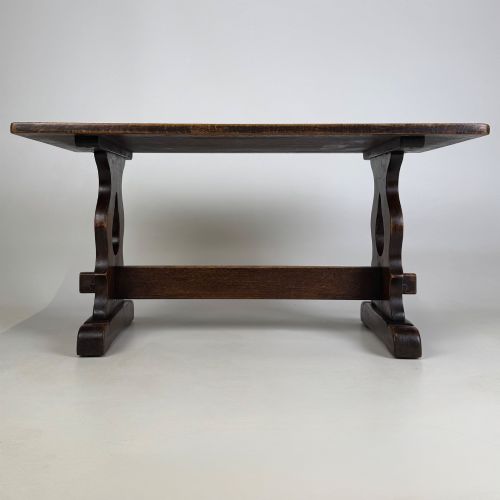
- A table consisting of two or more support frames connected by a horizontal beam or stretcher. This design allows for unobstructed legroom along the length of the board.
Traditional Stretcher Base Table: Frequently Asked Questions
Where were traditional stretcher base tables used?
These tables served primarily as communal dining surfaces in farmhouses, monasteries, and large domestic kitchens. Their robust construction handled daily food preparation and large household gatherings.
Over time, smaller iterations such as side tables and desks found places in libraries, parlours, and hallways for writing and display.
How do I care for an antique oak table?
Protect the timber surface by using coasters and placemats to prevent heat marks and moisture damage. Regular application of beeswax maintains the lustre of the wood without sealing it artificially.
Keep wooden tables away from direct heat sources and drastic humidity changes to prevent the timber topboards from splitting or warping.
What is the difference between a refectory and a farmhouse table?
Refectory tables typically exhibit a long, narrow profile with formal stretcher systems rooted in monastic or Jacobean traditions. They often showcase finer timber selection and turned or square legs.
Farmhouse tables generally offer a wider board surface, sometimes incorporating utilitarian drawers for storage, reflecting domestic vernacular manufacture in pine, oak, or elm.
Can I use a refectory table for daily dining?
Refectory tables provide sturdy, spacious surfaces well suited for everyday family meals and hosting guests. Their solid wood construction withstands regular use when properly maintained with wax.
Buyers should measure chair clearance height against the underside of the table apron and stretcher rails to ensure comfortable seating positions.