




Traditional Stone Planters
Traditional stone planters bring architectural weight and aged patina to a terrace, and these weathered garden vessels offer enduring structure for planting.
Traditional Stone Planters
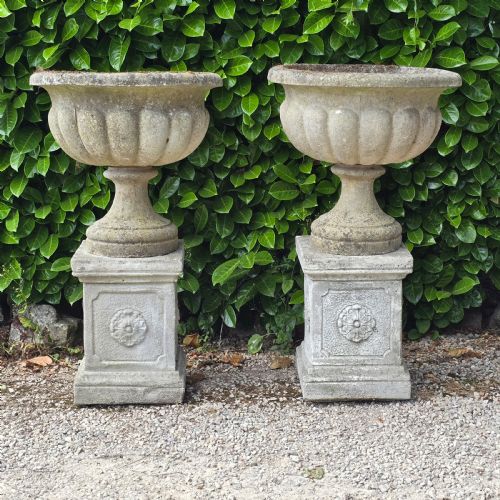
Traditional stone planters encompass robust garden troughs, campana urns, and round planters designed to hold plantings while anchoring outdoor spaces. When searching for traditional stone planters, buyers encounter pieces spanning the nineteenth century through the mid-twentieth century, with Victorian and nineteenth-century examples appearing frequently.
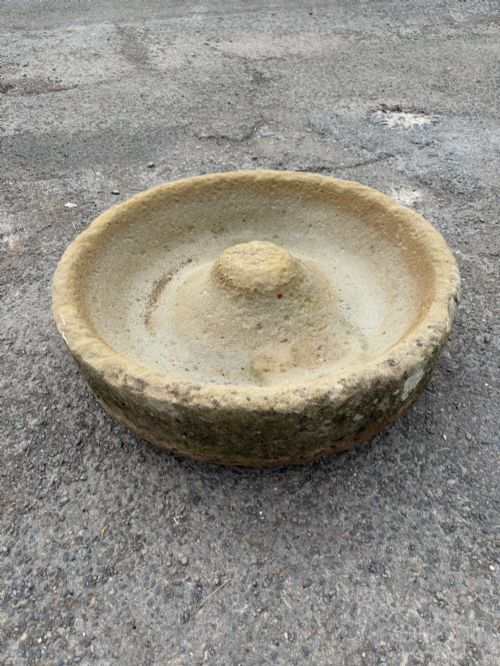
Forms range from classical urns on plinths and large classical shaped urns to simple circular planters and functional agricultural panscheons. Materials vary widely across these utilitarian and decorative garden antiques, including natural stone, sandstone, limestone, granite, and terracotta alongside cast and reconstituted alternatives.
How they were made
Masons and founders shaped these traditional stone planters using heavy natural materials such as Purbeck stone, sandstone, limestone, and granite, often carving them directly from solid blocks or fashioning them into grindstones, mill stone bases, and troughs. Alternatively, nineteenth-century and early twentieth-century makers utilised cast iron, terracotta, and early cast stone or reconstituted stone to mould classical campana profiles.
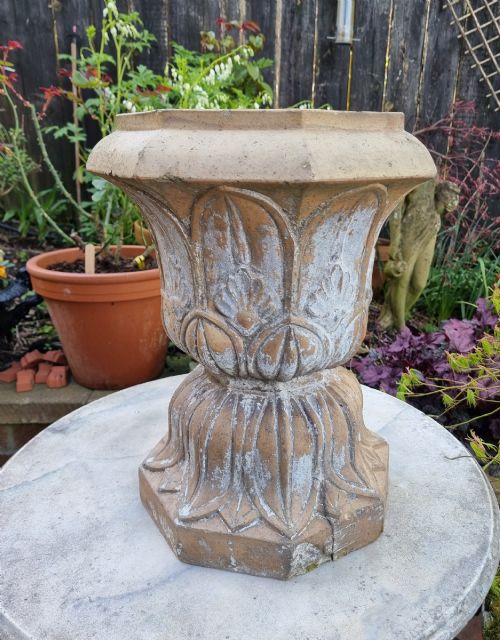
Surface finishes developed naturally through decades of exposure to the elements, resulting in well-weathered patinas on both porous terracotta bodies and dense stone surfaces. This weathering process interacts directly with the mineral composition of each vessel, creating the characteristic surfaces valued in garden antiques.
What varies in quality
The distinction between ordinary utility items and finer garden ornaments lies in the integrity of the material and the crispness of the classical detailing. Hand-carved natural stone and well-cast nineteenth-century campana urns display a structural permanence and depth of modelling that simpler mid-century pieces or generic concrete vessels lack.
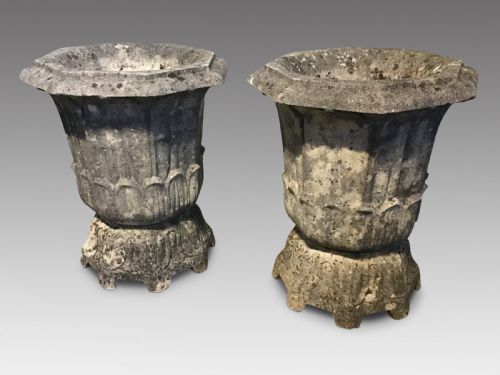
Proportion and scale dictate the visual impact of a garden planter, with symmetrical pairs and substantial pedestals commanding greater architectural presence. The character of the surface age also elevates certain pieces, where genuine weathering and lichen growth reflect long integration into a garden landscape.
Andrew Handyside
The Traditional Stone Planters Glossary
- Campana urn
- A bell-shaped garden vessel with an everted rim, typically mounted on a pedestal base. This classical form originates in antiquity and was widely revived during the nineteenth century.
- Reconstituted stone
- A durable composite material made from crushed natural stone aggregate and a binder such as cement, cast in moulds to replicate carved masonry.
- Panscheon
- A large, shallow earthenware or terracotta vessel traditionally used in dairies before finding a second life as a rustic garden planter.
- Purbeck stone
- A distinctive limestone quarried on the Isle of Purbeck in Dorset, prized for its density and fossiliferous inclusions.
- Grindstone
- A heavy circular stone disc once used for sharpening tools, repurposed in gardens for its sculptural form and weathered texture.
Traditional Stone Planters: Frequently Asked Questions
What is a campana urn?
A campana urn is a bell-shaped garden vessel featuring a distinctive flared rim and a footed base. These pieces often sit upon matching plinths to elevate plantings.
Originating from classical precedents, nineteenth-century examples were cast in iron, terracotta, or stone to adorn formal terraces and lawns.
How do I care for stone planters?
Stone and terracotta planters require adequate drainage to prevent cracking during winter frost cycles. Raising containers slightly off the ground on pot feet protects the material from sitting in stagnant water.
Routine cleaning should be gentle to preserve the accumulated moss and lichen that form an aged patina.
Are these planters frost proof?
Most dense natural stones and well-fired terracotta vessels withstand freezing temperatures, provided water drains freely through the base. Porous materials filled with wet soil can crack when ice expands.
Ensuring drainage crocks are clear helps protect older reconstituted stone and cast bodies during winter.
How do I date a stone planter?
Dating relies on identifying the material, tool marks, and stylistic characteristics consistent with specific manufacturing periods. Nineteenth-century pieces frequently display hand-finished details or foundry marks absent on modern reproductions.
Surface weathering provides additional clues, though genuine age shows deep integration of biological growth into the stone matrix.