




Traditional Standing Reading Lamp
A traditional standing reading lamp brings focused, adjustable light beside a favourite chair, pairing period metals and carved timbers with practical height.
Traditional Standing Reading Lamp
A traditional standing reading lamp is designed to illuminate books and paperwork from a fixed floor position, often utilising a tall vertical column and an adjustable mechanism. When you search for this phrase, you encounter heavy metal standards alongside carved wooden examples built during the Victorian, Edwardian, and interwar periods.
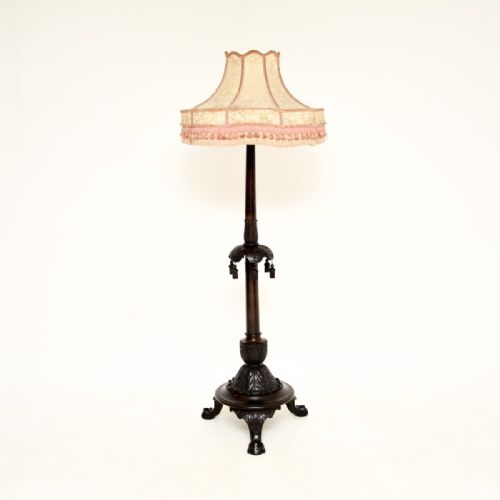
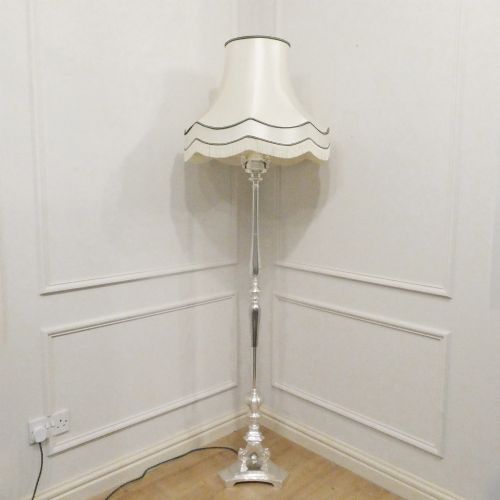
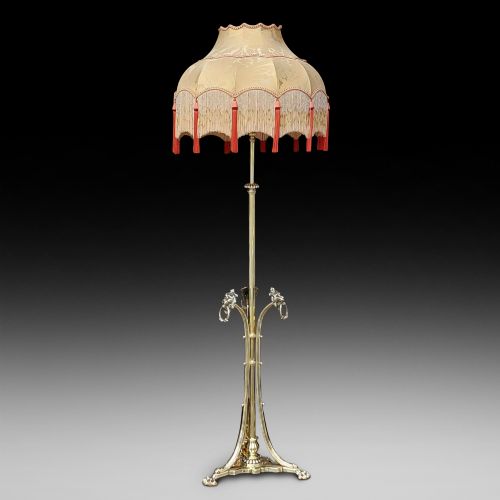
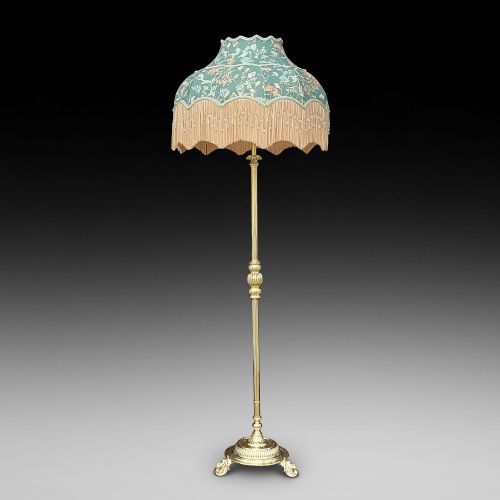
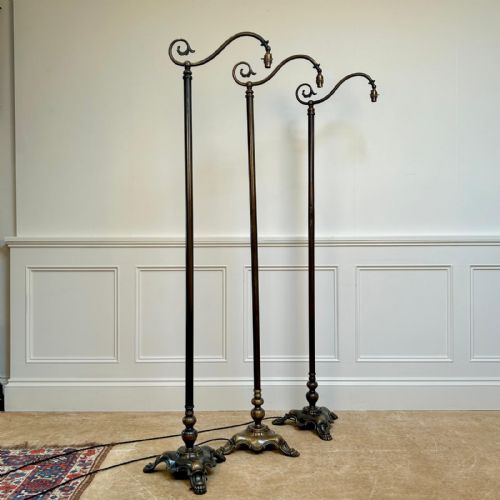
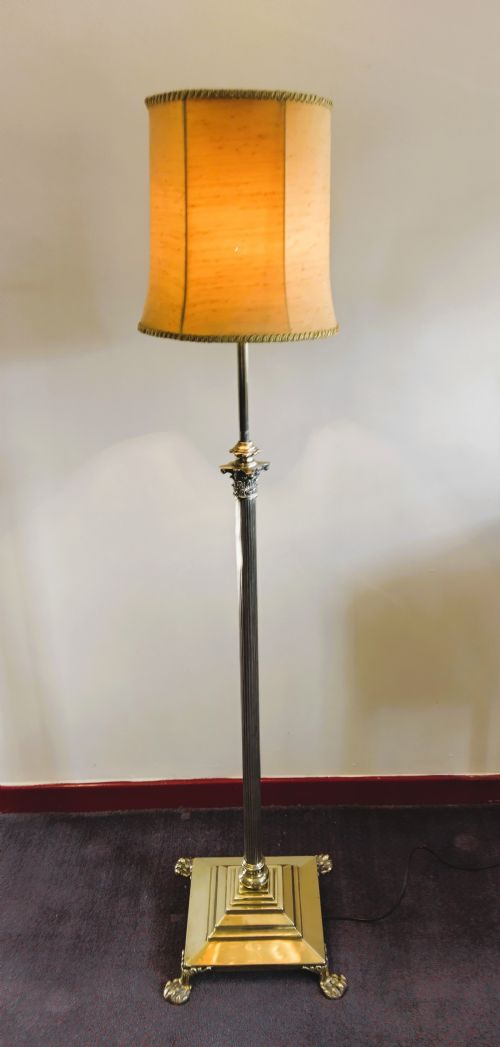
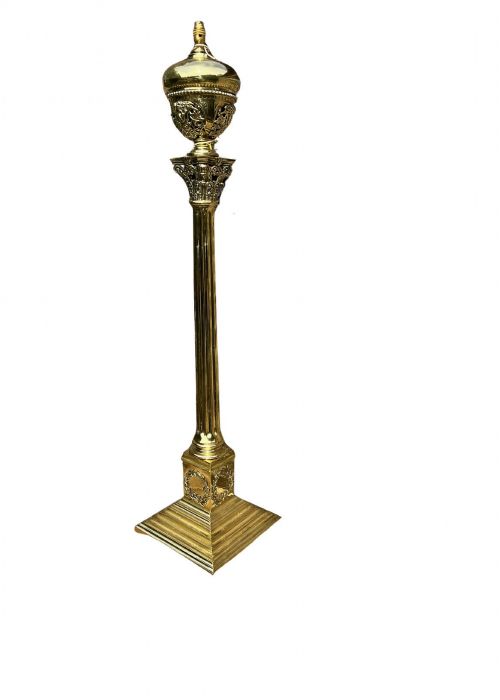
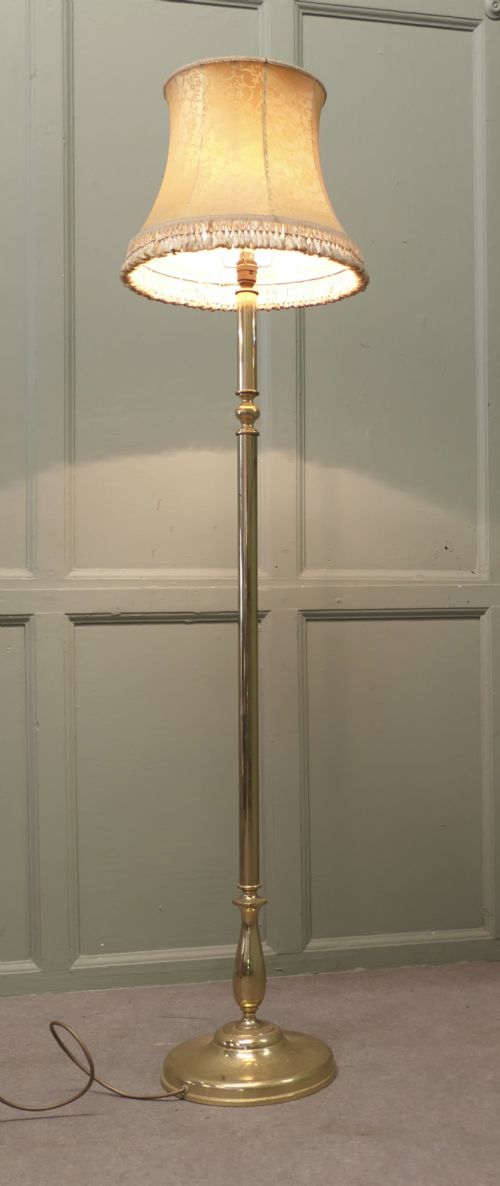
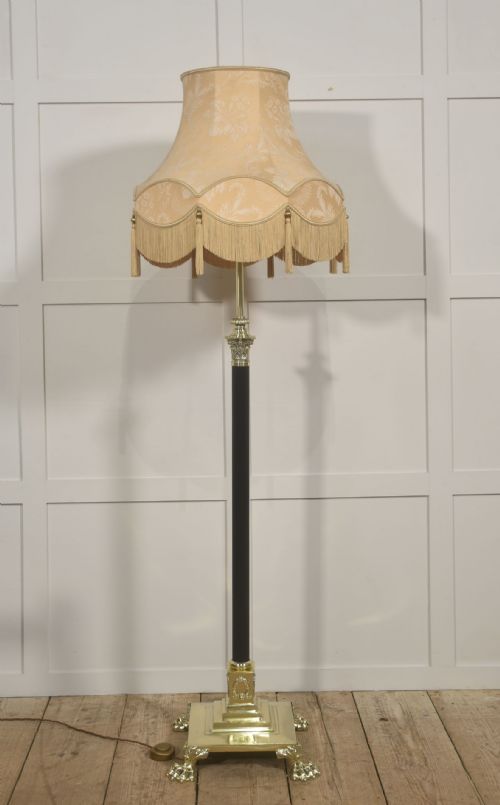
Brass is the material most frequently met on this page, appearing in polished, patinated, and Corinthian column forms alongside wrought iron, cast iron, oak, mahogany, and giltwood. Many pieces incorporate telescoping stems or adjustable arms designed to alter the height and angle of the light.
The objects span floor lamps, standard lamps, and boudoir reading lights originating from English, French, and Italian workshops. Stylistic influences range from Neoclassical and Arts and Crafts to Art Nouveau and Chinoiserie.
Materials and construction
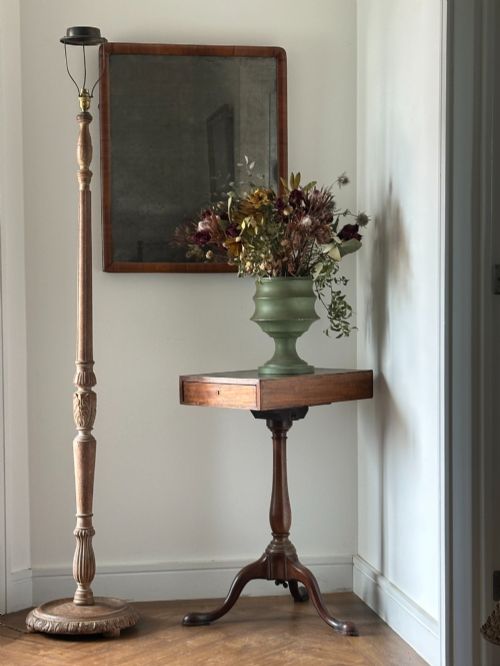
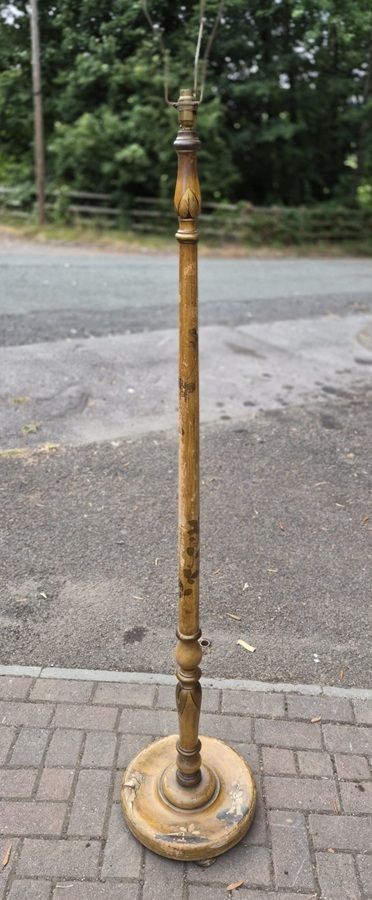
Makers utilised cast and turned brass, wrought iron, and heavy metals to provide a stable weighted base for tall upright columns. Oak and mahogany were carved, limed, or parcel-gilded to create sturdy timber shafts.
Adjustability was achieved through sliding telescopic stems, swivel joints, and mechanical screw keys that allowed users to raise or lower the lamp holder. Fabric shades in silk or patterned textiles were paired with brass frames to diffuse the light.
Variations in quality
Quality rests upon the weight and stability of the base, the precision of the mechanical adjustment mechanism, and the crispness of the casting or carving. Solid brass columns with detailed Corinthian capitals or floral openwork represent a higher standard of manufacture than lighter, plain-tubed alternatives.
The integrity of the construction shows in the thickness of the metal gauge, the smooth operation of the telescopic stem, and the harmony between the standard and its period shade. Finer pieces maintain structural balance even when fully extended.
The Traditional Standing Reading Lamp Glossary
- Standard lamp
- A tall floor-standing lamp designed to support a shade and illuminate a room or reading area. These fixtures often feature heavy weighted bases to prevent tipping.
- Telescopic
- An adjustable stem construction allowing sections of the lamp column to slide vertically inside one another. This mechanism permits the overall height to be raised or lowered.
- Corinthian column
- A classical architectural column style featuring ornate, leaf-carved capitals at the top. This form was frequently adapted for Victorian and Edwardian brass standards.
- Parcel gilt
- A decorative technique where specific carved or raised details are highlighted with gold leaf over a painted or polished ground. It appears on wooden standards from the late nineteenth and early twentieth centuries.
- Chinoiserie
- European decorative style imitating Chinese artistic motifs and lacquering techniques. Examples on this page include painted Edwardian lamp standards.
Traditional Standing Reading Lamp: Frequently Asked Questions
How do I adjust the height on these lamps?
Many traditional designs incorporate a telescopic sliding stem or a thumb screw mechanism near the upper column. Loosening the fitting allows the inner shaft to rise or lower before securing it at the desired position.
Heavier models rely on internal counterweights or friction collars to hold the standard steady at various heights without slipping.
Where should I place a standard reading lamp?
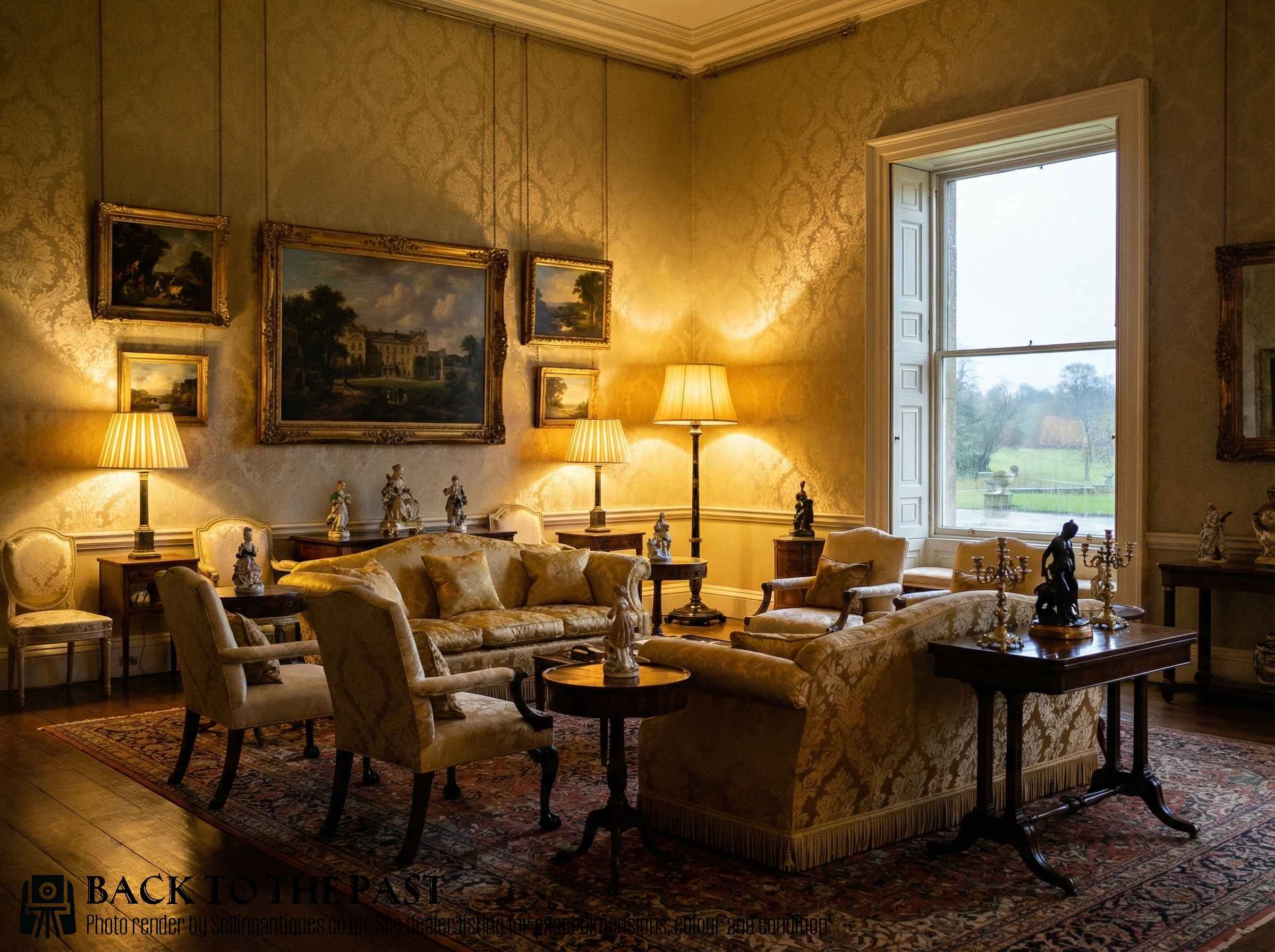
These lamps suit positions immediately beside an armchair, desk, or sofa where focused downward light is required for tasks. Their narrow footprint allows them to tuck into corners or beside furniture.
Ensure the heavy weighted base rests firmly on a level floor to maintain stability when the adjustable arm is extended.
How do I identify a Victorian standard lamp?
Victorian examples frequently display heavy cast brass construction, Corinthian column details, or converted oil lamp fittings with wick mechanisms. Rich patination and substantial weighted bases are typical of this era.
Later Edwardian and interwar pieces often introduce lighter proportions, painted Chinoiserie finishes, or oak and mahogany timbers.
Can I use modern shades on these lamps?
Most standard lamp holders accept conventional shade fixings, though vintage frames may require specific ring adapters to secure correctly. Fabric shades in silk or tailored textiles maintain the character of the period.
Proportion is the main consideration when matching a shade to a slender brass or carved wooden column.